
BuddhistCatholicContemplativeEvangelicalGeneral ChristianHinduJewishLatter-day SaintMuslimNew VisionsProgressive Christian
Beliefs
- Buddhist
- Catholic
- Contemplative
- Evangelical
- General Christian
- Hindu
- Jewish
- Latter-day Saint
- More Voices
- Muslim
- New Visions
- Pagan
- Progressive Christian
Topics
- Religion News
- Food and Religion
- Sports and Religion
- Religious Art
- Religious Music and Entertainment
- Religious Events
- History and Religion
- Style and Religion
- Politics and Religion
- Women in Religion
- Recreation Outdoors and Religion
- Business Finance and Religion
- Careers Workplace and Religion
- Education and Religion
- Family Parenting and Religion
- Health Fitness and Religion
- Home and Religion
- Relationships and Religion
- Technology and Religion
- Travel and Religion
Columnists
- Buddhist Columnists
- Business Finance and Religion Columnists
- Careers Workplace and Religion Columnists
- Catholic Columnists
- Contemplative Columnists
- Education and Religion Columnists
- Evangelists Columnists
- Family Parenting and Religion Columnists
- General Christian Columnists
- Health Fitness and Religion Columnists
- Hindu Columnists
- History and Religion Columnists
- Home and Religion Columnists
- Jewish Columnists
- More Voices Columnists
- Latter Day Columnists
- Muslim Columnists
- New Visions Columnists
- Nonreligious Columnists
- Pagan Columnists
- Politics and Religion Columnists
- Progressive Columnists
- Recreation Outdoors and Religion Columnists
- Relationships and Religion Columnists
- Religion News Columnists
- Religious Art Columnists
- Religious Events Columnists
- Religious Music and Entertainment Columnists
- Sports and Religion Columnists
- Style and Religion Columnists
- Technology and Religion Columnists
- Travel and Religion Columnists
- Women in Religion Columnists
Resource Library
- 2026 Calendar
- Library of World Religions
- The 100 Most Holy Places on Earth
- Patheos Answers
- Podcasts
- Videos
- Faith Leaders Database
- Anglican Episcopalian
- Bahai
- Baptist
- Buddhism
- Christianity
- Confucianism
- Eastern Orthodoxy
- Hinduism
- Holiness and Pentecostal
- ISKCON
- Islam
- Judaism
- Lutheran
- Methodist
- The Church of Jesus Christ of Latter-day Saints
- New Age
- Paganism
- Presbytarian and Reformed
- Protestantism
- Religion Behind the Scenes
- Roman Catholic
- Scientology
- Shia Islam
- Sikhism
- Sufism
- Sunni Islam
- Taoism
- Zen
- See all religions
Research Tools
 Ad-Free & Subscriber Log-In Subscription Support
Ad-Free & Subscriber Log-In Subscription Support
Follow Patheos 

- Trending:
- Forgiveness
- |
- Marriage
- |
- Consciousness
- |
- Death Penalty
- |
- Election
- |
- Halloween

-
Articles
- Home
- Religious Music & Entertainment
- Ethnic criminals and colour-blind casting
Ethnic criminals and colour-blind casting
Last updated on: May 25, 2013 at 8:32 am by Peter T. Chattaway
Ethnic criminals and colour-blind casting 2013-05-25T08:32:41-07:00 Peter T. Chattaway
Patheos Explore the world's faith through different perspectives on religion and spirituality! Patheos has the views of the prevalent religions and spiritualities of the world.
Warning: This post will reveal one of the key spoilers in Star Trek into Darkness. It’s not that big a spoiler, especially if you’ve been paying any attention to the buzz around that film for the past two years, but, if by any chance you have been avoiding the spoilers around that film, you may want to avoid this post, too.
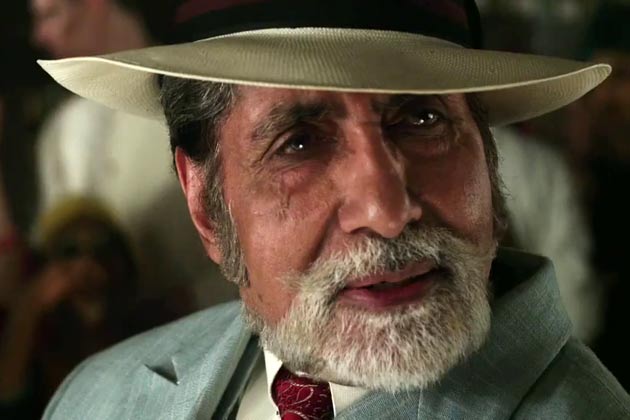 Two films in theatres right now feature significant characters who happen to be (1) villainous, or at the very least somewhat shady, and (2) members of an ethnic group that has sometimes been subject to stereotyping. In both films, the characters in question are played by members of an entirely different ethnic group — and this has puzzled some observers, who have asked if the films could have found a more creative but authentic way to navigate the issues raised by their source material.
First, Star Trek into Darkness. It was no real surprise when the film finally came out and the Benedict Cumberbatch character revealed that his real name was Khan. Given that Khan was originally played by the Latino actor Ricardo Montalban, pretty much everyone had assumed that the villain of this film would be Khan when it was revealed two years ago that J.J. Abrams wanted Benicio Del Toro for the part; when the deal with Del Toro fell through, Abrams then considered a few other Spanish or Latino actors before finally — and quite surprisingly — settling on the very English Cumberbatch.
The interesting thing here is that Khan himself is neither English nor Latino but vaguely Asian; his full name, Khan Noonien Singh, has Muslim and Sikh associations, and in the episode that introduced him back in 1967, he was described as both “probably a Sikh” and as “absolute ruler of more than a quarter of your world, from Asia through the Middle East.” Also, the superhuman beings who followed Khan were a fairly multicultural group; in one scene from that episode, Khan tries in vain to make contact with followers named Rodriguez, Ling and McPherson.
As Charlie Jane Anders wrote at i09 last year, when reports that Cumberbatch really was playing Khan began to make the rounds:
Making the ultimate representation of eugenics into a vaguely Asian villain played by a Latino was an oddly clever choice — it divorces his claims of genetic superiority from the real-life advocates of eugenics, and forces you to see the issue in a new light. For most of its history, eugenics was synoymous with “white superiority” — but Khan flies in the face of that, by giving us a eugenics experiment in which race is apparently not a factor. . . .
A color-blind eugenics program gets past the “white supremacy” aspects of eugenics to reach for the heart of why eugenics is so terrible — the very notion of one group of humans being innately better than another devalues us all. It dehumanizes all people, even the allegedly superior ones, by assigning to us a value based on arbitrary characteristics. It’s one more step into making us like cattle, who can be bred for certain characteristics. Or more like things, really.
So what happens when Khan is played by an indisputably white actor (with blue eyes, even)? And what happens when the new Star Trek film characterizes Khan not as someone who ruled over multiple racial groups with the help of an equally multi-racial band of accomplices but as someone who, in the young Spock’s words, committed “mass genocide”? You arguably lose the whole point of the character, and you undo the cleverness of the original episode by turning the villain into just another British bad guy. As Anders wrote last year, “It’s a little on the nose.”
Interestingly, the India-based website Firstpost Bollywood also devoted an entire post recently to the fact that Khan, “a superhuman from India”, was played by “the thoroughly Caucasian Benedict Cumberbatch” and not by one of the “many brown actors in the world at large and in Bollywood in particular”.
The post concludes by noting that, while the actor might not feed into current ethnic stereotypes, the character, as depicted in this film, might still do that:
Here’s what’s interesting about the choice that Abrams made: the man named Khan who reduces skyscrapers to rubble and terrorises Americans is a white man and not a bearded chap with an olive complexion who may be considered suspicious by airport security personnel in large parts of the world. He is, as Cumberbatch said in an interview, a “home-grown terrorist”. He doesn’t seem foreign, he’s doesn’t look like ‘the other’; in fact, he looks no different from the others who make up the American majority. But his name is Khan and he is here to wreak terror.
Then there is Baz Luhrman’s adaptation of The Great Gatsby. And the fascinating thing about this film appearing so close to the release of Star Trek into Darkness is that, where Abrams cast an English actor as a South Asian — possibly to avoid negative stereotyping of South Asians — Luhrman cast a South Asian actor, Amitabh Bachchan, as a Jewish gangster to avoid negative stereotyping of Jews.
As Danielle Berrin notes at JewishJournal.com, Luhrman himself has said that he cast a non-Jewish actor as Meyer Wolfsheim — a fictitious gangster modeled after real-life gangster Arnold Rothstein — because he wanted to avoid the “broad, anti-Semitic” depiction of Wolfsheim in the original novel. Berrin goes on to ask:
Was there no way to portray Fitzgerald’s Jew as a Jew without the seamy stereotypes? In casting an Indian actor, Luhrmann effectively usurped the Jewishness of the character and managed to avoid it entirely. Save for his name, Luhrmann’s Wolfsheim is not identifiable as a Jew in any meaningful way.
On some level, this constitutes a denial of historical truth on the part of the director, even as it ethnically (and perhaps creatively) reimagines the role. Is Luhrmann trying to tell us ethnicities are interchangeable? That because Fitzgerald’s character was portrayed in anti-Semitic strokes he should not be portrayed as a Jew? Perhaps some see in this betrayal of the character’s essence a triumph against stereotype. But it seems more accurate to suggest that it illustrates the director’s own confusion and lack of imagination (which is actually quite stunning considering how brilliantly fresh the rest of the film is).
Berrin also notes that the decision to cast a non-Jew as the gangster makes little sense because other characters in the film actually talk about the character’s Jewishness when he isn’t onscreen, and she asks if Luhrman could have found a more successful way through this minefield by casting a “very talented and very conspicuously Jewish actor” in the part — someone like, say, Adrien Brody.
Be all that as it may, it is striking to see this issue come up in two very different films released so close together — and it is especially striking to see how one film declined to let an Indian be the bad guy when the character was actually Indian (or at least South Asian), while the other film was quite willing to let an Indian be the bad guy (or at least the somewhat dodgy guy) when the character was quite explicitly not Indian.
Oh, and in case you’re wondering, Firstpost Bollywood critic Nikhil Taneja praised The Great Gatsby as “the most Bollywood of Baz Luhrmann’s films” and said Bachchan’s brief performance in the film was a “pleasant surprise” and “undoubtedly one of the best-acted Indian cameos in Hollywood cinema so far.”
Previous Post

May 24, 2013
Godfrey Reggio's newest film to premiere in September
Next Post
May 29, 2013 Bible movie of the week: Samson and Delilah (1949)
Browse Our Archives
Select a Category Anglican Planet Articles BC Christian News BC Report Bible Movies Bible Review Blog Books & Culture Campus Times CBC Radio Christianity Today ChristianWeek Essays Faith Today Festival Cinemas Guide Film Journals Georgia Straight Interviews MB Herald National Catholic Register Salvationist Today's Christian Two Chairs Ubyssey Uncategorized Vancouver Courier Vancouver Sun
Select a Month August 2025 April 2025 January 2025 December 2024 November 2024 May 2024 February 2024 December 2023 May 2023 March 2023 November 2022 July 2022 June 2022 May 2022 April 2022 February 2022 January 2022 December 2021 November 2021 October 2021 September 2021 August 2021 July 2021 June 2021 April 2021 March 2021 February 2021 January 2021 December 2020 November 2020 October 2020 August 2020 July 2020 June 2020 May 2020 March 2020 February 2020 January 2020 December 2019 November 2019 September 2019 July 2019 May 2019 April 2019 March 2019 February 2019 January 2019 December 2018 November 2018 October 2018 September 2018 July 2018 June 2018 May 2018 April 2018 March 2018 February 2018 January 2018 December 2017 November 2017 October 2017 September 2017 August 2017 July 2017 June 2017 May 2017 April 2017 March 2017 February 2017 January 2017 December 2016 November 2016 October 2016 September 2016 August 2016 July 2016 June 2016 May 2016 April 2016 March 2016 February 2016 January 2016 December 2015 November 2015 October 2015 September 2015 August 2015 July 2015 June 2015 May 2015 April 2015 March 2015 February 2015 January 2015 December 2014 November 2014 October 2014 September 2014 August 2014 July 2014 June 2014 May 2014 April 2014 March 2014 February 2014 January 2014 December 2013 November 2013 October 2013 September 2013 August 2013 July 2013 June 2013 May 2013 April 2013 March 2013 February 2013 January 2013 December 2012 November 2012 October 2012 September 2012 August 2012 July 2012 June 2012 April 2012 January 2012 January 2011 December 2010 November 2010 October 2010 September 2010 August 2010 July 2010 June 2010 May 2010 April 2010 March 2010 February 2010 January 2010 December 2009 November 2009 October 2009 September 2009 August 2009 July 2009 June 2009 May 2009 April 2009 March 2009 February 2009 January 2009 December 2008 November 2008 October 2008 September 2008 August 2008 July 2008 June 2008 May 2008 April 2008 March 2008 February 2008 January 2008 December 2007 November 2007 October 2007 September 2007 August 2007 July 2007 June 2007 May 2007 April 2007 March 2007 February 2007 January 2007 December 2006 November 2006 October 2006 September 2006 August 2006 July 2006 June 2006 May 2006 April 2006 March 2006 February 2006 January 2006 December 2005 November 2005 October 2005 September 2005 August 2005 July 2005 June 2005 May 2005 April 2005 March 2005 January 2005 December 2004 November 2004 October 2004 September 2004 August 2004 July 2004 June 2004 May 2004 April 2004 March 2004 February 2004 January 2004 November 2003 October 2003 August 2003 July 2003 June 2003 May 2003 January 2003 December 2002 November 2002 August 2002 July 2002 June 2002 May 2002 March 2002 January 2002 December 2001 November 2001 September 2001 August 2001 July 2001 June 2001 April 2001 March 2001 February 2001 December 2000 November 2000 October 2000 September 2000 August 2000 July 2000 June 2000 May 2000 April 2000 March 2000 January 2000 October 1999 August 1999 May 1999 April 1999 February 1999 January 1999 December 1998 November 1998 October 1998 August 1998 July 1998 June 1998 April 1998 March 1998 January 1998 November 1997 September 1997 July 1997 June 1997 April 1997 March 1997 February 1997 January 1997 December 1996 October 1996 September 1996 June 1996 March 1996 February 1996 January 1996 April 1995 November 1994 September 1994 September 1991
Follow Us!
TAKE THE
Religious Wisdom Quiz
In Hebrews, what did Moses consider more valuable than the treasures of Egypt?
Select your answer to see how you score.
The promised land Eternal life Disgrace for the sake of Christ God's covenant
Related posts from FilmChat

Joseph of Egypt – the Chosen spin-off announces...

Exclusive: A clip from Angel Studios' The King...

Exclusive: Watch a clip from Angel Studios' Brave...

Exclusive: Watch a clip from Angel Studios' Homestead
TRENDING AT PATHEOS Religious Music & Entertainment

"Les Diabolique" and Transgression
Alongside something like Arrival, Vertigo, or Charade, Les Diaboliques is a...

"The Plague Dogs" and Mortality
So, flashback to the late 70s, early 80s. Walt Disney Studios is...

With the recent and highly successful release of Christopher Nolan’s epic film,...

"L'avventura" and Human Weakness
Today's piece is going to be a little different for a few...

I first want to apologize for not posting or writing anything. I'm...

I've engaged in the multi-year project of reading through the Church Fathers,...
view all Religious Music & Entertainment blogs
Ad-Free & Subscriber Log-In Subscription Support
- About Us
- 2026 Calendar
- Videos
- Podcasts
- Library of World Religions
- Faith In Media Tracker
- Advertise With Us
- Write for Us
- Privacy Policy
- Terms of Service
- Do Not Sell My Data
- Contact Us
- Radiant Digital
- Manage Newsletter Subscriptions
- Unsubscribe From Notifications
- Sitemap
Copyright 2008-2026, Patheos. All rights reserved.
Subscription Support Ad-Free & Subscriber Log-In
Follow Patheos