
BuddhistCatholicContemplativeEvangelicalGeneral ChristianHinduJewishLatter-day SaintMuslimNew VisionsProgressive Christian
Beliefs
- Buddhist
- Catholic
- Contemplative
- Evangelical
- General Christian
- Hindu
- Jewish
- Latter-day Saint
- More Voices
- Muslim
- New Visions
- Pagan
- Progressive Christian
Topics
- Religion News
- Food and Religion
- Sports and Religion
- Religious Art
- Religious Music and Entertainment
- Religious Events
- History and Religion
- Style and Religion
- Politics and Religion
- Women in Religion
- Recreation Outdoors and Religion
- Business Finance and Religion
- Careers Workplace and Religion
- Education and Religion
- Family Parenting and Religion
- Health Fitness and Religion
- Home and Religion
- Relationships and Religion
- Technology and Religion
- Travel and Religion
Columnists
- Buddhist Columnists
- Business Finance and Religion Columnists
- Careers Workplace and Religion Columnists
- Catholic Columnists
- Contemplative Columnists
- Education and Religion Columnists
- Evangelists Columnists
- Family Parenting and Religion Columnists
- General Christian Columnists
- Health Fitness and Religion Columnists
- Hindu Columnists
- History and Religion Columnists
- Home and Religion Columnists
- Jewish Columnists
- More Voices Columnists
- Latter Day Columnists
- Muslim Columnists
- New Visions Columnists
- Nonreligious Columnists
- Pagan Columnists
- Politics and Religion Columnists
- Progressive Columnists
- Recreation Outdoors and Religion Columnists
- Relationships and Religion Columnists
- Religion News Columnists
- Religious Art Columnists
- Religious Events Columnists
- Religious Music and Entertainment Columnists
- Sports and Religion Columnists
- Style and Religion Columnists
- Technology and Religion Columnists
- Travel and Religion Columnists
- Women in Religion Columnists
Resource Library
- 2026 Calendar
- Library of World Religions
- The 100 Most Holy Places on Earth
- Patheos Answers
- Podcasts
- Videos
- Faith Leaders Database
- Anglican Episcopalian
- Bahai
- Baptist
- Buddhism
- Christianity
- Confucianism
- Eastern Orthodoxy
- Hinduism
- Holiness and Pentecostal
- ISKCON
- Islam
- Judaism
- Lutheran
- Methodist
- The Church of Jesus Christ of Latter-day Saints
- New Age
- Paganism
- Presbytarian and Reformed
- Protestantism
- Religion Behind the Scenes
- Roman Catholic
- Scientology
- Shia Islam
- Sikhism
- Sufism
- Sunni Islam
- Taoism
- Zen
- See all religions
Research Tools
 Ad-Free & Subscriber Log-In Subscription Support
Ad-Free & Subscriber Log-In Subscription Support
Follow Patheos 

- Trending:
- Forgiveness
- |
- Marriage
- |
- Consciousness
- |
- Death Penalty
- |
- Election
- |
- Halloween

-
Articles
- Home
- Religious Music & Entertainment
- Review: Angels & Demons (dir. Ron Howard, 2009)
Review: Angels & Demons (dir. Ron Howard, 2009)
Last updated on: April 19, 2014 at 2:49 pm by Peter T. Chattaway
Review: Angels & Demons (dir. Ron Howard, 2009) 2014-04-19T14:49:42-07:00 Peter T. Chattaway
Patheos Explore the world's faith through different perspectives on religion and spirituality! Patheos has the views of the prevalent religions and spiritualities of the world.
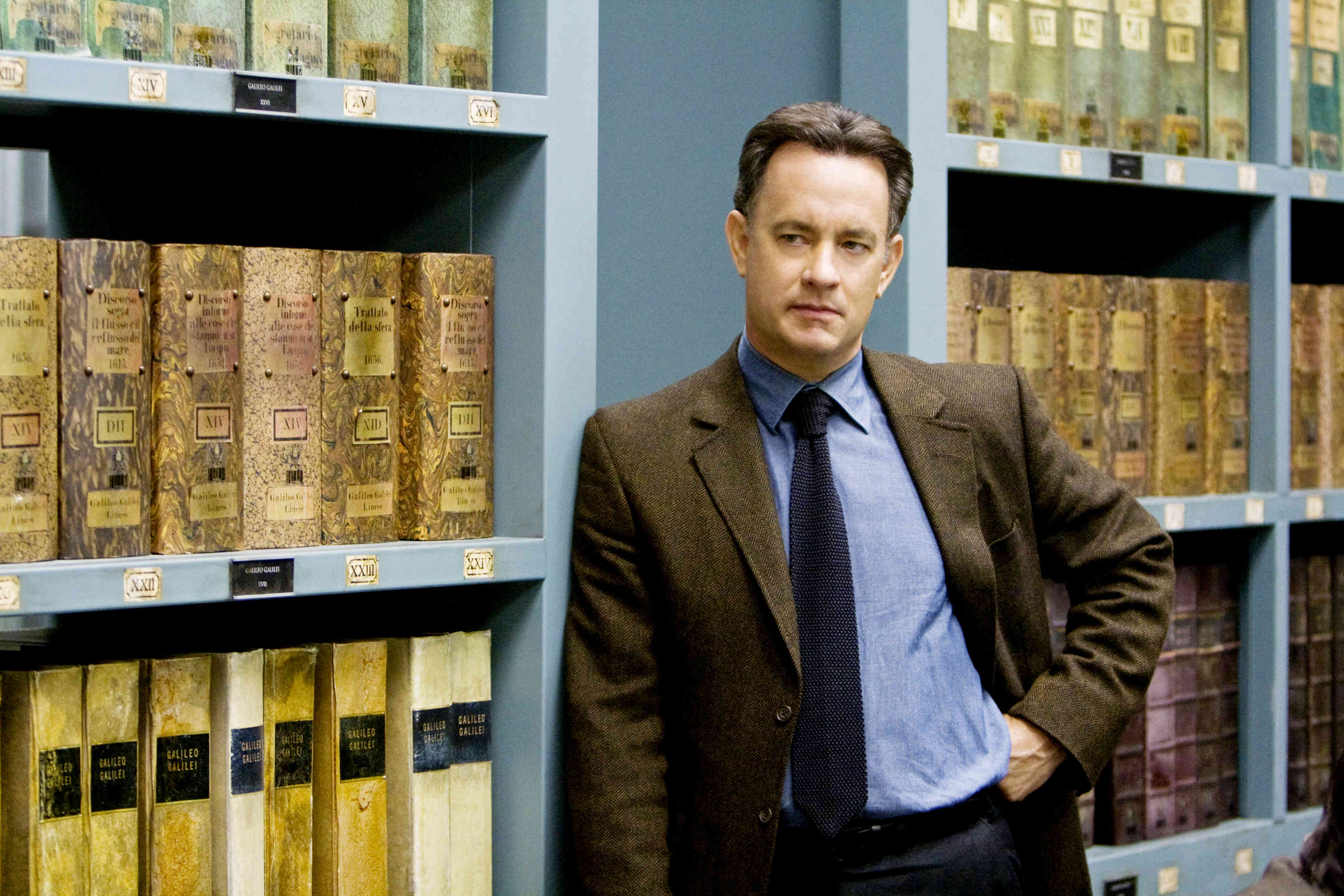 It may have been boring and heretical, but the film version of The Da Vinci Code was also one of the biggest international hits of all time when it came out three years ago — bigger than The Passion of The Christ, bigger than the Narnia movies, bigger even than at least one of the Star Wars movies. So it was pretty much inevitable that Tom Hanks and director Ron Howard would reunite for an adaptation of the other Dan Brown novel that features Harvard symbologist Robert Langdon. (A third novel is now due to come out later this year.)
It was also pretty much inevitable that reporters looking for a story — and the filmmakers, looking for publicity — would try to stir up some controversy around the sequel, which is called Angels & Demons. But for most people, the new movie could be fairly easy to ignore, and not just because there have been fewer calls for boycotts and the like this time.
For one thing, the new story just doesn’t push the same kind of buttons that the old one did. The Da Vinci Code made bogus claims about Jesus himself, and thus had something to offend Christians of every denominational stripe. But Angels & Demons focuses entirely on the relationship between modern science and Roman Catholicism — and thus many people, especially non-Catholics, may be inclined to just yawn and shrug the movie off.
Those who do see the film could very well find their eyes rolling within the first few minutes. As the story begins, the Pope has just died, and cardinals from around the world have come to the Vatican to elect his successor — and a voice-over, possibly that of a reporter, gravely informs us that Catholics around the world “now find their church at a crossroads, their ancient traditions threatened by a modern world.” Really? The church has never come to this “crossroads” before? And how does the death of one man expose the church to this “threat”? Is not the conclave that brings the cardinals together a sign that the church’s “ancient traditions” are carrying on pretty much as they always have?
Four of these cardinals, we are told, are considered front-runners for the papacy — and they are kidnapped right away by a character known only as the Assassin (Nikolaj Lie Kaas), who will go on to torture and kill them in excruciatingly painful ways. In the original novel, this villain was a member of the Muslim Hassassin sect and saw what he did as payback for the Crusades, but for some reason the filmmakers have turned him into a Danish hitman who does what he does purely for the money. Apparently, after indulging in certain stereotypes when it came to Catholics and albinos (remember the killer monk in the previous movie?), the filmmakers figured they had to be sensitive and draw the line somewhere.
Anyway, the Assassin issues a statement to the Vatican and its police, claiming to speak on behalf of the Illuminati, a secret society that supposedly included many top artists and scientists from the Renaissance and beyond. In his statement, the Assassin reveals that he will kill one cardinal per hour in a public place, before destroying the Vatican (and presumably much of Rome) with a piece of antimatter (yes, antimatter) that he stole from the CERN particle-physics laboratory in Switzerland. Fortunately, the Vatican police have already brought Robert Langdon (Hanks) in from the U.S. to help decipher the symbols that could lead to the Assassin’s hiding place, and they have also brought in Vittoria Vetra (Ayelet Zurer), a scientist who was working on the antimatter just before it was stolen.
Thus begins a frantic search for the “Path of Illumination,” a series of buildings, sculptures and engravings that the Illuminati supposedly hid in plain sight all over Rome so that the free-thinkers of their day could meet with them in secret, far from the church’s punishing eye. To follow the clues, Langdon must make a few trips to the high-security Vatican archives, drive at high speeds through crowded Roman streets, and occasionally dodge bullets when he and the cops who join him happen to get too close to the Assassin. And because everyone is racing to beat the clock before the bomb goes off and takes both Rome and all of the Catholic church’s top leaders with it, Langdon’s adventures in this film are inherently more dynamic and engaging than the rather dull comings and goings of The Da Vinci Code.
But if Angels & Demons is more entertaining than The Da Vinci Code on one level, it is less enjoyable on another. Put simply, the previous film was almost saved by the late appearance of Ian McKellen as one of Langdon’s colleagues; while everyone around him acted so serious, you could tell that McKellen was having fun, at least, perhaps because he recognized how campy and ridiculous the whole thing was. Alas, no such irreverence is to be found in Angels & Demons, partly because the supporting actors keep a straight face throughout.
Stellan Skarsgård plays the pious but sarcastic Swiss Guard officer who looks just a little too offended when scientists use expressions like “the God particle” in his presence; Ewan McGregor plays an earnest priest known as the “Camerlengo,” who served as the previous Pope’s assistant and retains a certain amount of authority around Vatican City until the next Pope has been picked; Pierfrancesco Favino plays Inspector Olivetti, the policeman who whisks Langdon and Vittoria all over Rome; and Armin Mueller-Stahl plays Cardinal Strauss, the man who presides over the conclave where the next Pope will be elected.
You could write a book — and indeed, many people have — about the many errors that crop up in Brown’s novel and thus in the film as well, with regard to the Catholic church’s history and self-organization; but as far as the film’s general attitude toward Christianity is concerned, Angels & Demons might be a slight improvement on its predecessor. For one thing, there are no more lurid flashbacks depicting the atrocities, fictitious or otherwise, that Langdon says an earlier generation of Christians committed. And Langdon, who once suggested that there might be no difference between humanity and divinity, is now compelled to admit that he doesn’t believe in God — and he doesn’t really know what to say when one ticked-off Catholic tells him, “My church comforts the sick and dying. My church feeds the hungry. What does your church do? That’s right, you don’t have one.”
On the other hand, without giving too much away, the movie also paints a consistently poor picture of Catholic piety, from a murderous fanatic who thinks modern science is “blasphemy” to the easily duped cardinals and laypeople who are not only tricked into thinking highly of one of the villains, but believe it is God’s will that honors be bestowed upon him. Cardinal Strauss even refuses to evacuate Vatican City, upon learning of the antimatter bomb, partly because he doesn’t want to cause any sort of panic, but also because, as he puts it, all those pilgrims outside are all going to heaven eventually anyway — and he’s supposed to be one of the more sympathetic Catholic characters in this film!
And of course, all that business from the first film, about the Catholic church “covering up” the “truth” about Jesus, still lurks in the background of this one. (When the Vatican first approaches Langdon for help, he says he’s surprised because he didn’t think the events of the previous film had endeared him to them.) So in its own way, Angels and Demons just perpetuates the first film’s assertion that the church consists, on the one hand, of gullible people who will believe any lies that are fed to them, and, on the other hand, of leaders who, perhaps even with the best of intentions, are content to let those lies sit there.
Some people have defended this film by saying it’s “only fiction,” but that argument only goes so far. From Uncle Tom’s Cabin to This Present Darkness, fiction has had a profound effect on the way people think and act — so an argument can certainly be made that we ought to take this movie, and the book on which it is based, at least somewhat seriously. On the other hand, the movie remains pretty silly, even though it omits some of the novel’s goofiest elements — so shrugging it off may be the better option after all.
2 stars (out of 4)
–
Talk About It
Discussion starters
1. The movie suggests there is a clash between “ancient traditions” and the “modern world.” Do you think this is true? Even in non-Catholic settings? What traditions in your own church would you say are “ancient”? Does the modern world affect which traditions you keep?
2. What do you make of the film’s references to the Illuminati and “their new god Science”? Is science “new”? Do you think the church has had time to figure out a way to relate to modern scientific endeavors? In what ways is the church still behind? Is it possible that the church played any part in encouraging scientific inquiry over the years? Give examples.
3. Why does the scientist (who is also a priest) say “We’re in God’s hands now” after he helps to create the antimatter? Is he feeling remorse? Should research like his be done? Why or why not?
4. Langdon says “faith is a gift that I’ve yet to receive.” What would you say in reply to that, if anything?
5. One cardinal says that if the rest of them agree to do something, then it must be “God’s will”; another cardinal says they would be “giving in to frenzy.” How can you discern when God is speaking through a person or group of persons? (Consider, for example, the apostles’ use of the phrase “It seemed good to the Holy Spirit and to us” when explaining their decisions after the Council of Jerusalem, in Acts 15:28.)
The Family Corner
For parents to consider
Angels & Demons is rated PG-13 for sequences of violence (people are shot, burned to death, drowned and branded like horses), disturbing images (a dead man and his eyeball are found in different places, rats eat the face of one corpse, blood flies out of the holes in a man’s chest when someone tries to resuscitate him) and thematic material (pious Catholics are generally portrayed in a negative light, with a few complicated exceptions).
— A version of this review was first published at Christianity Today Movies.
Previous Post

May 14, 2009
Star Trek does Star Wars
Next Post
May 15, 2009 Angels & Demons -- the review's up!
Browse Our Archives
Select a Category Anglican Planet Articles BC Christian News BC Report Bible Movies Bible Review Blog Books & Culture Campus Times CBC Radio Christianity Today ChristianWeek Essays Faith Today Festival Cinemas Guide Film Journals Georgia Straight Interviews MB Herald National Catholic Register Salvationist Today's Christian Two Chairs Ubyssey Uncategorized Vancouver Courier Vancouver Sun
Select a Month August 2025 April 2025 January 2025 December 2024 November 2024 May 2024 February 2024 December 2023 May 2023 March 2023 November 2022 July 2022 June 2022 May 2022 April 2022 February 2022 January 2022 December 2021 November 2021 October 2021 September 2021 August 2021 July 2021 June 2021 April 2021 March 2021 February 2021 January 2021 December 2020 November 2020 October 2020 August 2020 July 2020 June 2020 May 2020 March 2020 February 2020 January 2020 December 2019 November 2019 September 2019 July 2019 May 2019 April 2019 March 2019 February 2019 January 2019 December 2018 November 2018 October 2018 September 2018 July 2018 June 2018 May 2018 April 2018 March 2018 February 2018 January 2018 December 2017 November 2017 October 2017 September 2017 August 2017 July 2017 June 2017 May 2017 April 2017 March 2017 February 2017 January 2017 December 2016 November 2016 October 2016 September 2016 August 2016 July 2016 June 2016 May 2016 April 2016 March 2016 February 2016 January 2016 December 2015 November 2015 October 2015 September 2015 August 2015 July 2015 June 2015 May 2015 April 2015 March 2015 February 2015 January 2015 December 2014 November 2014 October 2014 September 2014 August 2014 July 2014 June 2014 May 2014 April 2014 March 2014 February 2014 January 2014 December 2013 November 2013 October 2013 September 2013 August 2013 July 2013 June 2013 May 2013 April 2013 March 2013 February 2013 January 2013 December 2012 November 2012 October 2012 September 2012 August 2012 July 2012 June 2012 April 2012 January 2012 January 2011 December 2010 November 2010 October 2010 September 2010 August 2010 July 2010 June 2010 May 2010 April 2010 March 2010 February 2010 January 2010 December 2009 November 2009 October 2009 September 2009 August 2009 July 2009 June 2009 May 2009 April 2009 March 2009 February 2009 January 2009 December 2008 November 2008 October 2008 September 2008 August 2008 July 2008 June 2008 May 2008 April 2008 March 2008 February 2008 January 2008 December 2007 November 2007 October 2007 September 2007 August 2007 July 2007 June 2007 May 2007 April 2007 March 2007 February 2007 January 2007 December 2006 November 2006 October 2006 September 2006 August 2006 July 2006 June 2006 May 2006 April 2006 March 2006 February 2006 January 2006 December 2005 November 2005 October 2005 September 2005 August 2005 July 2005 June 2005 May 2005 April 2005 March 2005 January 2005 December 2004 November 2004 October 2004 September 2004 August 2004 July 2004 June 2004 May 2004 April 2004 March 2004 February 2004 January 2004 November 2003 October 2003 August 2003 July 2003 June 2003 May 2003 January 2003 December 2002 November 2002 August 2002 July 2002 June 2002 May 2002 March 2002 January 2002 December 2001 November 2001 September 2001 August 2001 July 2001 June 2001 April 2001 March 2001 February 2001 December 2000 November 2000 October 2000 September 2000 August 2000 July 2000 June 2000 May 2000 April 2000 March 2000 January 2000 October 1999 August 1999 May 1999 April 1999 February 1999 January 1999 December 1998 November 1998 October 1998 August 1998 July 1998 June 1998 April 1998 March 1998 January 1998 November 1997 September 1997 July 1997 June 1997 April 1997 March 1997 February 1997 January 1997 December 1996 October 1996 September 1996 June 1996 March 1996 February 1996 January 1996 April 1995 November 1994 September 1994 September 1991
Follow Us!
TAKE THE
Religious Wisdom Quiz
What caused the sailors to throw Jonah overboard?
Select your answer to see how you score.
A vision A prophecy A mutiny A violent storm
Related posts from FilmChat

Exclusive: Mister Rogers chronicler Tom Junod on prayer,...
20 things about The Prince of Egypt, which...
Box office: Beauty and the Beast has the...

Review: Stay (dir. Marc Forster, 2005)
TRENDING AT PATHEOS Religious Music & Entertainment

"Les Diabolique" and Transgression
Alongside something like Arrival, Vertigo, or Charade, Les Diaboliques is a...

"The Plague Dogs" and Mortality
So, flashback to the late 70s, early 80s. Walt Disney Studios is...

With the recent and highly successful release of Christopher Nolan’s epic film,...

"L'avventura" and Human Weakness
Today's piece is going to be a little different for a few...

I first want to apologize for not posting or writing anything. I'm...

I've engaged in the multi-year project of reading through the Church Fathers,...
view all Religious Music & Entertainment blogs
Ad-Free & Subscriber Log-In Subscription Support
- About Us
- 2026 Calendar
- Videos
- Podcasts
- Library of World Religions
- Faith In Media Tracker
- Advertise With Us
- Write for Us
- Privacy Policy
- Terms of Service
- Do Not Sell My Data
- Contact Us
- Radiant Digital
- Manage Newsletter Subscriptions
- Unsubscribe From Notifications
- Sitemap
Copyright 2008-2026, Patheos. All rights reserved.
Subscription Support Ad-Free & Subscriber Log-In
Follow Patheos