
BuddhistCatholicContemplativeEvangelicalGeneral ChristianHinduJewishLatter-day SaintMuslimNew VisionsProgressive Christian
Beliefs
- Buddhist
- Catholic
- Contemplative
- Evangelical
- General Christian
- Hindu
- Jewish
- Latter-day Saint
- More Voices
- Muslim
- New Visions
- Pagan
- Progressive Christian
Topics
- Religion News
- Food and Religion
- Sports and Religion
- Religious Art
- Religious Music and Entertainment
- Religious Events
- History and Religion
- Style and Religion
- Politics and Religion
- Women in Religion
- Recreation Outdoors and Religion
- Business Finance and Religion
- Careers Workplace and Religion
- Education and Religion
- Family Parenting and Religion
- Health Fitness and Religion
- Home and Religion
- Relationships and Religion
- Technology and Religion
- Travel and Religion
Columnists
- Buddhist Columnists
- Business Finance and Religion Columnists
- Careers Workplace and Religion Columnists
- Catholic Columnists
- Contemplative Columnists
- Education and Religion Columnists
- Evangelists Columnists
- Family Parenting and Religion Columnists
- General Christian Columnists
- Health Fitness and Religion Columnists
- Hindu Columnists
- History and Religion Columnists
- Home and Religion Columnists
- Jewish Columnists
- More Voices Columnists
- Latter Day Columnists
- Muslim Columnists
- New Visions Columnists
- Nonreligious Columnists
- Pagan Columnists
- Politics and Religion Columnists
- Progressive Columnists
- Recreation Outdoors and Religion Columnists
- Relationships and Religion Columnists
- Religion News Columnists
- Religious Art Columnists
- Religious Events Columnists
- Religious Music and Entertainment Columnists
- Sports and Religion Columnists
- Style and Religion Columnists
- Technology and Religion Columnists
- Travel and Religion Columnists
- Women in Religion Columnists
Resource Library
- 2026 Calendar
- Library of World Religions
- The 100 Most Holy Places on Earth
- Patheos Answers
- Podcasts
- Videos
- Faith Leaders Database
- Anglican Episcopalian
- Bahai
- Baptist
- Buddhism
- Christianity
- Confucianism
- Eastern Orthodoxy
- Hinduism
- Holiness and Pentecostal
- ISKCON
- Islam
- Judaism
- Lutheran
- Methodist
- The Church of Jesus Christ of Latter-day Saints
- New Age
- Paganism
- Presbytarian and Reformed
- Protestantism
- Religion Behind the Scenes
- Roman Catholic
- Scientology
- Shia Islam
- Sikhism
- Sufism
- Sunni Islam
- Taoism
- Zen
- See all religions
Research Tools
 Ad-Free & Subscriber Log-In Subscription Support
Ad-Free & Subscriber Log-In Subscription Support
Follow Patheos 

- Trending:
- Forgiveness
- |
- Marriage
- |
- Consciousness
- |
- Death Penalty
- |
- Election
- |
- Halloween

-
Articles
- Home
- Religious Music & Entertainment
- Review: The Chronicles of Narnia: Prince Caspian (dir. Andrew Adamson, 2008)
Review: The Chronicles of Narnia: Prince Caspian (dir. Andrew Adamson, 2008)
Last updated on: January 13, 2016 at 4:12 pm by Peter T. Chattaway
Review: The Chronicles of Narnia: Prince Caspian (dir. Andrew Adamson, 2008) 2016-01-13T16:12:54-08:00 Peter T. Chattaway
Patheos Explore the world's faith through different perspectives on religion and spirituality! Patheos has the views of the prevalent religions and spiritualities of the world.
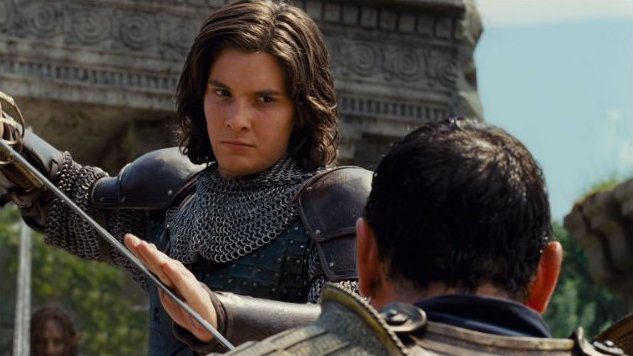 For all their talk of staying true to the spirit of C. S. Lewis’s novels, the makers of the Narnia films have frequently deviated from the books in ways both big and small, and the liberties they take with Prince Caspian — which echo but go far, far beyond the liberties they took with The Lion, the Witch and the Wardrobe — both help the film and hurt it. They help because you can sense that co-writer and director Andrew Adamson is finally making the big epic fantasy battle movie that he really wanted to make the first time around, and his devotion to that vision holds Prince Caspian together and makes it a more consistent, and consistently entertaining, sort of film than Wardrobe was. But in steering the film closer to his own vision, Adamson steers it away from Lewis’s, and so it loses some of the book’s core spiritual themes.
The basic storyline is still there, though it has been re-arranged somewhat. Instead of beginning in England, with the four Pevensie children sitting at a train station, the film begins in Narnia, with a woman giving birth and a man, Prince Caspian (Ben Barnes), being woken in the middle of the night and told that he must flee for his life. It turns out the woman in question is Caspian’s aunt, and she has just given birth to a son, and this gives her husband, Lord Miraz (Sergio Castellitto), the opportunity he needs to seize the throne that has been vacant ever since Caspian’s father died. But first Caspian has to hide — in a wardrobe! — from assassins with crossbows who enter his room only to find that he is not in bed. And then he has to ride, ride, ride into the night while being pursued by several of Miraz’s soldiers.
Meanwhile, back in England, the four Pevensie children are getting ready to go back to school. One year has passed since their adventures in Narnia, and they are still getting used to the fact that they are no longer grown-up kings and queens of some far-off magical land but, rather, children who still have to deal with kids their own age. Peter (William Moseley), in particular, resents the fact that he is no longer High King, and he is all too eager to get into fights with other boys — fights that he apparently cannot win until his younger brother Edmund (Skandar Keynes) steps in and bails him out. But then, far away in Narnia, Caspian calls for help by blowing on the magic horn that once belonged to Queen Susan (Anna Popplewell), and suddenly the four Pevensie children find themselves whisked away to their former castle.
However, while only one year has gone by in our world, over a thousand years have passed in Narnia, and so the castle that once belonged to the Pevensies is now in ruins. What’s more, it turns out that the humans who now rule Narnia — a race known as the Telmarines — have driven the magical creatures of Narnia so deep into hiding that many people simply assume that the minotaurs, centaurs and other creatures are nothing more than “fairy tales.” Even the Narnians themselves have lost their magic. One of the things this movie gets very right is the dismay Lucy (Georgie Henley) feels when she realizes the trees no longer “dance” the way they used to, or the way Susan — who had difficulty believing in talking animals in the first film — is now caught off-guard by the sight of a bear that doesn’t talk.
Moments like these hint at the themes that Lewis explored in his book. For Lewis, the modern world was a lot like the world that Caspian had grown up in — a world that had cast aside myth and magic and reduced the world to little more than a collection of parts. (In The Voyage of the Dawn Treader, Eustace declares that stars in our world are nothing more than flaming balls of gas, and he is told that, no, even in our world, that is not what a star is but only what it is made of.) Lewis wanted to give his readers — including Christians who had unthinkingly bought into modernity — a taste of the spiritual realm that animates our physical world. And since he believed that the pagan, pre-Christian man had a greater aptitude for the spiritual realm, and was thus easier to convert, than the secular, post-Christian man, Lewis wrote the Narnia books to introduce his readers to a “baptized” form of paganism. Nowhere is this more explicit than in the original book version of Prince Caspian, in which the Christ-figure Aslan literally dances with the Greco-Roman god Bacchus.
But Adamson and his co-writers, Christopher Markus and Stephen McFeely, show no interest in that particular theme. Gone from this film are any and all references to Bacchus, Silenus or the Maenads — figures as important to this story as Father Christmas was to Wardrobe — and gone too are the scenes in which Aslan and his followers trash the schools that teach Narnian children not to believe in myths and fairy tales. And because those scenes are missing, the divine lion Aslan (voice of Liam Neeson) has very little to do. Indeed, Aslan is almost entirely written out of the movie altogether. His first appearance — an actual encounter with Lucy in the book — is here heavily abbreviated, and quickly revealed to be a dream. It is only in the film’s final reels that Aslan indisputably steps onto the stage and takes action.
Because Aslan is so remote from them, the Pevensies are forced to figure things out for themselves, with varying results. Peter’s hunger for power and glory leads him to act just as rashly in Narnia as he had been acting in England — but since he is leading armies into battle now, his rashness has lethal, devastating consequences. What’s more, he is strongly, strongly tempted to make a deal with the devil, as it were, to achieve his goals. (This may be the biggest, most potentially controversial change to a once-noble character since Faramir felt the lure of the Ring in Peter Jackson’s version of The Two Towers.) However, some important and powerful themes do emerge, as Lucy reminds Peter that they need to actually look for Aslan and be faithful to what they already know of him, if they are ever to actually see him.
The supporting characters, including the pessimistic dwarf Trumpkin (Peter Dinklage) and the amusing but lethal warrior mouse Reepicheep (voice of Eddie Izzard), are nicely handled — Reepicheep has one encounter with a cat that is even funnier when you recall that Adamson co-directed Antonio Banderas’s Puss in Boots in Shrek 2 — and the battle scenes include at least one brilliant tactic that I don’t think we have seen in any of the other recent ancient or medieval war movies.
As a director, Adamson is still borrowing from Jackson and other filmmakers — note the flying-arrow shot lifted straight out of Robin Hood: Prince of Thieves — but his direction is also more assured this time, perhaps because he gives himself greater freedom to change things as he sees fit. It helps that Prince Caspian, as written by Lewis himself, is a more complex story, with political intrigue among the villains and a deeper sense of Narnian history. Some oddities still creep in, though, from the abundance of crossbows, which everyone brandishes as though they were as easy to use as automatic weapons, to a flirtation between Susan and Caspian that seems to come from out of nowhere late in the story. (Popplewell told NarniaWeb the film did have a romantic subplot at one point, but most of it got left on the cutting-room floor.)
And then there is the swordplay, which is so pervasive that it begins to get a little tiring. (I found myself thinking of The Matrix Reloaded, and how the characters there seemed to get into extended martial-arts scenes simply to say “hello.”) But on a summer-popcorn-movie level, it all works. Prince Caspian is a reasonably enjoyable and diverting bit of entertainment, and it may satisfy people who have been waiting for a worthy successor to the movie version of The Lord of the Rings but felt the previous Narnia movie wasn’t quite it. And if it lacks Lewis’ message, oh well, with any luck, it will turn people on to the book, which is where the real magic lies.
2.5 out of 4 stars
–
Talk About It
Discussion starters
1. When Lucy says that she saw Aslan, Peter asks why he didn’t see Aslan too. Lucy replies, “Maybe you weren’t looking.” Was Lucy looking? In what way? Do we have to prepare ourselves in any way to see God? Can he reveal himself to us if we are not looking for him?
2. In another scene, Peter says he wishes Aslan had given them some “proof” of his presence in the forest, and Lucy replies, “Maybe we’re the ones who need to prove ourselves to him.” What do you make of that response? How do we “prove ourselves” to God? Does he ever ask us to “prove ourselves”? Why or why not?
3. Caspian tells Aslan, “I do not think I am ready [to become King of Narnia],” to which Aslan replies, “It’s for that reason, I know you are.” How does this compare to Peter’s desire for the glory and power that come with being High King? What does this film say about leadership and the kinds of leaders who are worthy of it?
4. In the film, Aslan tells Lucy, “Every year you grow, so shall I.” In the book, Aslan says, “Every year you grow, you will find me bigger.” Is this a significant change? In another scene, the film version of Aslan tells Lucy, “We can never know what would have happened.” In the book, he says, “Nobody is ever told that.” Is this a significant change? Do changes like these affect our understanding of Aslan’s divinity? If so, how? If not, why not?
The Family Corner
For parents to consider
Prince Caspian is rated PG for epic battle action and violence. There are lots of shootings (with crossbows, not guns) and swordfights throughout the film, as well as a few people getting stabbed in the back, etc. — but all of it is kept fairly bloodless and non-explicit. A scene in which a hag and a werewolf try to bring the White Witch back from the dead may also be too scary for very young children.
— A version of this review was first published at Christianity Today Movies.
Previous Post

May 15, 2008
Note the bit where the guy says "Romance!"
Next Post
May 17, 2008 The Muppets take Hollywood!
Browse Our Archives
Select a Category Anglican Planet Articles BC Christian News BC Report Bible Movies Bible Review Blog Books & Culture Campus Times CBC Radio Christianity Today ChristianWeek Essays Faith Today Festival Cinemas Guide Film Journals Georgia Straight Interviews MB Herald National Catholic Register Salvationist Today's Christian Two Chairs Ubyssey Uncategorized Vancouver Courier Vancouver Sun
Select a Month August 2025 April 2025 January 2025 December 2024 November 2024 May 2024 February 2024 December 2023 May 2023 March 2023 November 2022 July 2022 June 2022 May 2022 April 2022 February 2022 January 2022 December 2021 November 2021 October 2021 September 2021 August 2021 July 2021 June 2021 April 2021 March 2021 February 2021 January 2021 December 2020 November 2020 October 2020 August 2020 July 2020 June 2020 May 2020 March 2020 February 2020 January 2020 December 2019 November 2019 September 2019 July 2019 May 2019 April 2019 March 2019 February 2019 January 2019 December 2018 November 2018 October 2018 September 2018 July 2018 June 2018 May 2018 April 2018 March 2018 February 2018 January 2018 December 2017 November 2017 October 2017 September 2017 August 2017 July 2017 June 2017 May 2017 April 2017 March 2017 February 2017 January 2017 December 2016 November 2016 October 2016 September 2016 August 2016 July 2016 June 2016 May 2016 April 2016 March 2016 February 2016 January 2016 December 2015 November 2015 October 2015 September 2015 August 2015 July 2015 June 2015 May 2015 April 2015 March 2015 February 2015 January 2015 December 2014 November 2014 October 2014 September 2014 August 2014 July 2014 June 2014 May 2014 April 2014 March 2014 February 2014 January 2014 December 2013 November 2013 October 2013 September 2013 August 2013 July 2013 June 2013 May 2013 April 2013 March 2013 February 2013 January 2013 December 2012 November 2012 October 2012 September 2012 August 2012 July 2012 June 2012 April 2012 January 2012 January 2011 December 2010 November 2010 October 2010 September 2010 August 2010 July 2010 June 2010 May 2010 April 2010 March 2010 February 2010 January 2010 December 2009 November 2009 October 2009 September 2009 August 2009 July 2009 June 2009 May 2009 April 2009 March 2009 February 2009 January 2009 December 2008 November 2008 October 2008 September 2008 August 2008 July 2008 June 2008 May 2008 April 2008 March 2008 February 2008 January 2008 December 2007 November 2007 October 2007 September 2007 August 2007 July 2007 June 2007 May 2007 April 2007 March 2007 February 2007 January 2007 December 2006 November 2006 October 2006 September 2006 August 2006 July 2006 June 2006 May 2006 April 2006 March 2006 February 2006 January 2006 December 2005 November 2005 October 2005 September 2005 August 2005 July 2005 June 2005 May 2005 April 2005 March 2005 January 2005 December 2004 November 2004 October 2004 September 2004 August 2004 July 2004 June 2004 May 2004 April 2004 March 2004 February 2004 January 2004 November 2003 October 2003 August 2003 July 2003 June 2003 May 2003 January 2003 December 2002 November 2002 August 2002 July 2002 June 2002 May 2002 March 2002 January 2002 December 2001 November 2001 September 2001 August 2001 July 2001 June 2001 April 2001 March 2001 February 2001 December 2000 November 2000 October 2000 September 2000 August 2000 July 2000 June 2000 May 2000 April 2000 March 2000 January 2000 October 1999 August 1999 May 1999 April 1999 February 1999 January 1999 December 1998 November 1998 October 1998 August 1998 July 1998 June 1998 April 1998 March 1998 January 1998 November 1997 September 1997 July 1997 June 1997 April 1997 March 1997 February 1997 January 1997 December 1996 October 1996 September 1996 June 1996 March 1996 February 1996 January 1996 April 1995 November 1994 September 1994 September 1991
Follow Us!
TAKE THE
Religious Wisdom Quiz
Which city did David conquer and make his capital?
Select your answer to see how you score.
Bethel Gibeon Jerusalem Hebron
Related posts from FilmChat
Review: The Most Reluctant Convert: The Untold Story...

Review: Stay (dir. Marc Forster, 2005)

Moses at the Movies / When we trace...
Sony's TriStar to produce the fourth Narnia film...
TRENDING AT PATHEOS Religious Music & Entertainment

"Les Diabolique" and Transgression
Alongside something like Arrival, Vertigo, or Charade, Les Diaboliques is a...

"The Plague Dogs" and Mortality
So, flashback to the late 70s, early 80s. Walt Disney Studios is...

With the recent and highly successful release of Christopher Nolan’s epic film,...

"L'avventura" and Human Weakness
Today's piece is going to be a little different for a few...

I first want to apologize for not posting or writing anything. I'm...

I've engaged in the multi-year project of reading through the Church Fathers,...
view all Religious Music & Entertainment blogs
Ad-Free & Subscriber Log-In Subscription Support
- About Us
- 2026 Calendar
- Videos
- Podcasts
- Library of World Religions
- Faith In Media Tracker
- Advertise With Us
- Write for Us
- Privacy Policy
- Terms of Service
- Do Not Sell My Data
- Contact Us
- Radiant Digital
- Manage Newsletter Subscriptions
- Unsubscribe From Notifications
- Sitemap
Copyright 2008-2026, Patheos. All rights reserved.
Subscription Support Ad-Free & Subscriber Log-In
Follow Patheos