
BuddhistCatholicContemplativeEvangelicalGeneral ChristianHinduJewishLatter-day SaintMuslimNew VisionsProgressive Christian
Beliefs
- Buddhist
- Catholic
- Contemplative
- Evangelical
- General Christian
- Hindu
- Jewish
- Latter-day Saint
- More Voices
- Muslim
- New Visions
- Pagan
- Progressive Christian
Topics
- Religion News
- Food and Religion
- Sports and Religion
- Religious Art
- Religious Music and Entertainment
- Religious Events
- History and Religion
- Style and Religion
- Politics and Religion
- Women in Religion
- Recreation Outdoors and Religion
- Business Finance and Religion
- Careers Workplace and Religion
- Education and Religion
- Family Parenting and Religion
- Health Fitness and Religion
- Home and Religion
- Relationships and Religion
- Technology and Religion
- Travel and Religion
Columnists
- Buddhist Columnists
- Business Finance and Religion Columnists
- Careers Workplace and Religion Columnists
- Catholic Columnists
- Contemplative Columnists
- Education and Religion Columnists
- Evangelists Columnists
- Family Parenting and Religion Columnists
- General Christian Columnists
- Health Fitness and Religion Columnists
- Hindu Columnists
- History and Religion Columnists
- Home and Religion Columnists
- Jewish Columnists
- More Voices Columnists
- Latter Day Columnists
- Muslim Columnists
- New Visions Columnists
- Nonreligious Columnists
- Pagan Columnists
- Politics and Religion Columnists
- Progressive Columnists
- Recreation Outdoors and Religion Columnists
- Relationships and Religion Columnists
- Religion News Columnists
- Religious Art Columnists
- Religious Events Columnists
- Religious Music and Entertainment Columnists
- Sports and Religion Columnists
- Style and Religion Columnists
- Technology and Religion Columnists
- Travel and Religion Columnists
- Women in Religion Columnists
Resource Library
- 2026 Calendar
- Library of World Religions
- The 100 Most Holy Places on Earth
- Patheos Answers
- Podcasts
- Videos
- Faith Leaders Database
- Anglican Episcopalian
- Bahai
- Baptist
- Buddhism
- Christianity
- Confucianism
- Eastern Orthodoxy
- Hinduism
- Holiness and Pentecostal
- ISKCON
- Islam
- Judaism
- Lutheran
- Methodist
- The Church of Jesus Christ of Latter-day Saints
- New Age
- Paganism
- Presbytarian and Reformed
- Protestantism
- Religion Behind the Scenes
- Roman Catholic
- Scientology
- Shia Islam
- Sikhism
- Sufism
- Sunni Islam
- Taoism
- Zen
- See all religions
Research Tools
 Ad-Free & Subscriber Log-In Subscription Support
Ad-Free & Subscriber Log-In Subscription Support
Follow Patheos 

- Trending:
- Forgiveness
- |
- Marriage
- |
- Consciousness
- |
- Death Penalty
- |
- Election
- |
- Halloween

-
Articles
- Home
- Religious Music & Entertainment
- Review: The Nativity Story (dir. Catherine Hardwicke, 2006)
Review: The Nativity Story (dir. Catherine Hardwicke, 2006)
Last updated on: November 28, 2013 at 9:46 am by Peter T. Chattaway
Review: The Nativity Story (dir. Catherine Hardwicke, 2006) 2013-11-28T09:46:58-08:00 Peter T. Chattaway
Patheos Explore the world's faith through different perspectives on religion and spirituality! Patheos has the views of the prevalent religions and spiritualities of the world.
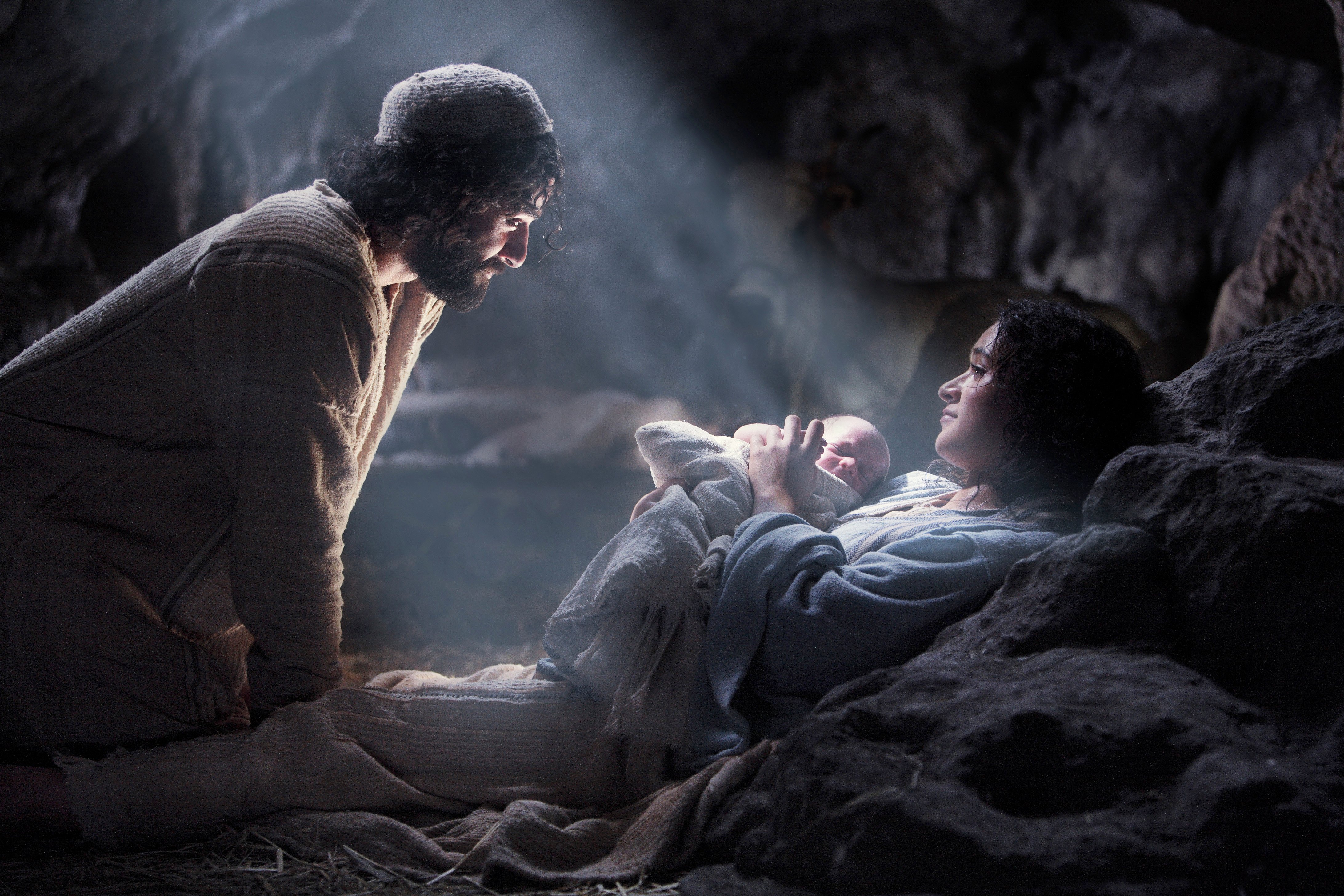 The Passion of The Christ was an independent movie, paid for entirely out of Mel Gibson’s pocket. The Prince of Egypt was an animated film that emphasized the common ground between Jews, Christians and Muslims. The Last Temptation of Christ was a low-budget art-house flick based on a heretical novel.
You would have to go back at least as far as King David, the mid-1980s box-office flop starring Richard Gere, to find another live-action movie produced by a major Hollywood studio and based directly on the Bible. And you would have to go back even further — to the bathrobe epics of the 1960s, at least — to find a mainstream biblical movie that was as blatantly Christian as The Nativity Story.
The film begins by quoting a prophecy, from the Book of Jeremiah, that is said to be troubling King Herod the Great (Ciarán Hinds). We then see Herod and his son Antipas (Alessandro Giuggioli) as they preside over the slaughter of the innocents in Bethlehem. By this point, Mychael Danna’s score has invoked the medieval hymn ‘O Come, O Come, Emmanuel,’ and scenes like these lay out the messianic hope by reminding us that Israel was indeed a “captive” in need of “ransoming.”
The movie then jumps back a year and then some to the beginning of the story, as the angel Gabriel (Alexander Siddig) appears to the priest Zechariah (Stanley Townsend) to tell him that his wife Elizabeth (Shohreh Aghdashloo) will have a son despite being well past the age of childbearing. Actually, Gabriel does not “appear” to Zechariah, as such; in one of the film’s several minor deviations from the Bible, Gabriel reveals only his voice to Zechariah — although, in a nifty special effect, the angel’s breath does seem to part the smoke that rises from the altar.
After this, we meet Mary (Keisha Castle-Hughes), a young girl who likes to play and laugh with her friends, but, like the teens of today, she has to cope with oh-so-serious parents — Joaquim (Shaun Toub) and Anna (Hiam Abbass, who really was born in Nazareth!) — who interrupt her fun to remind her to do her chores. (The film imagines that the ancestors of Christ made and sold cheese, which kind of gives a new spin to that old Monty Python line, “Blessed are the cheesemakers!”)
Here is where the tension between the film’s ancient and modern sensibilities is at its most obvious. Director Catherine Hardwicke spent years as a production designer before she got behind the camera, and her quest for authenticity is all over The Nativity Story‘s set design, especially when she throws in brief educational cutaway shots of peasants treading grapes or milking goats. But the film also gives Mary and her parents a taste of the intergenerational friction that was a major theme in Hardwicke’s previous directorial efforts, Thirteen and Lords of Dogtown — and at times, the interactions within Mary’s family feel a tad anachronistic.
There is also a tension of sorts in Mike Rich’s screenplay, which oscillates between the need to be faithful to the biblical text, on the one hand, and the freedom to create dramatically compelling characters and scenes, on the other.
While Rich trims out some of the dialogue that appears in the Bible, the parts that he keeps are presented almost exactly as written, yet these sections of the film — especially the Annunciation and the restoration of speech to Zechariah — feel rushed and anticlimactic, and are never quite woven into the rest of the drama. Compare the first scene between Mary and Elizabeth, which is straight out of the Gospel of Luke (minus the Magnificat), with their later conversations; it’s a little like watching Rosencrantz & Guildenstern Are Dead, in which the heroes use modern English until they wander into a scene from Hamlet and start talking all Shakespearean.
Of course, there isn’t all that much information about the Nativity in the Bible to begin with, so the filmmakers have plenty of room in which to create a thematic and dramatic arc for their story — and many of their ideas are quite interesting.
As Mary, Castle-Hughes is a bit of a blank, but there is still something compelling about her portrait of a child who finds herself thrust into a supremely adult role, first when her parents push her into an arranged marriage with Joseph (Oscar Isaac), and then when Gabriel tells her that she will bear the Son of God. The film even brings certain aspects of Terrence Malick’s The New World to mind, as Mary expresses her thoughts in voice-over and comes to appreciate her husband’s love for her.
But the real hero of this movie is Joseph, who, as played by Isaac, may be the most attractive embodiment of goodness and self-giving devotion that we have seen in a movie since Sean Astin played Sam in The Lord of the Rings. The trick to Isaac’s performance is that he lets us see Joseph’s darker side, even as he shows Joseph bravely keeping it under control. When a total stranger meets Joseph and the pregnant Mary, and remarks that there is nothing like seeing your own face in the face of your child, the pained look on Joseph’s face speaks volumes: he knows that with this child, at least, this is one aspect of fatherhood that he will never enjoy.
The depth and roundedness of Joseph’s character is also evident in the way he handles the crisis that emerges when Mary’s pregnancy becomes obvious to their neighbors, who shun Mary and her family as a result. Joseph sheds tears and wrestles with his own feelings of betrayal, but he also uses humor to buoy Mary’s spirits, particularly when the two of them leave Nazareth for Bethlehem.
The film also makes some interesting allusions to people and events from the future ministry of Jesus. As Mary and Joseph make the arduous journey to Bethlehem for the census, they buy one of their meals from a Galilean fisherman — might his name be Jonah (father of Peter and Andrew) or Zebedee (father of James and John)? — and as they pass by the Temple in Jerusalem, Joseph expresses his disgust with the hucksters there, the same hucksters that Jesus will chase out one day. Even better, when Herod’s troops attack the babies in Bethlehem, one soldier looks inside the cave where Jesus was born, and finds an empty manger — an image that brings to mind the empty clothes that Jesus’ disciples will one day find in his tomb.
For all the talk of “realism” and “authenticity” that has surrounded this film, it is still very much a family-friendly Christmas pageant, a Christmas crèche brought to theatrical life. While Mary does experience labor pains, the birth of Jesus is remarkably clean, with no placenta or umbilical cord in sight. The Magi, who trek for months, are the comic relief — more like the Three Amigos than the Three Wise Men — and they show up at the cave on the night of Jesus’ birth, instead of months or even years later, as many interpreters would insist. (For one thing, if they arrived on the night of the birth itself, with Herod’s soldiers only a few days behind them, it wouldn’t leave much time for Joseph and Mary to dedicate Jesus or to meet Simeon and Anna at the Temple in Jerusalem — an episode that is missing from this film.)
But it’s perfectly okay to take those kinds of liberties with a story like this, especially if it allows the filmmakers to express spiritual truths that go beyond mere historical facts. As Gaspar (Stefan Kalipha), one of the Magi, says when he sees the Christ child, the baby in Mary’s arms is “God made into flesh.” It is unlikely that a pagan astrologer would have thought in such clearly incarnational terms, so many years before any actual Christians did, but it is still kind of neat to hear him express that belief. I mean, when was the last time you heard that in a mainstream movie?
3 stars (out of 4)
–
Talk About It
Discussion starters
1. A recurring theme in this film is the story of Elijah hearing God’s “still small voice” (1 Kings 19). Why does the film refer to this story? In what way is Mary, or Joseph, or Jesus, a “still small voice”? What “still small voices” have you heard in your own spiritual walk?
2. What does this film reveal about love? What kind of love does Joseph have for Mary? Is it romantic, or something else? What about Elizabeth’s love for Zechariah, or for Mary? What examples of fatherly love does the film show? Does Mary come to love Joseph, and if so, what sort of love does she have for him?
3. Consider how the people of Nazareth treat Mary, her parents, and Joseph after they learn that she is pregnant. When have you judged people without knowing their story? When have you stood by people who were being judged by others?
4. The film underscores the political oppression suffered by the Jews under King Herod, and it ends with Mary reciting the Magnificat in a voiceover (“He has brought down rulers from their thronesbut has lifted up the humble,” etc.). How is the birth of Jesus an answer to this oppression? Does the film make this point clear?
The Family Corner
For parents to consider
The Nativity Story is rated PG for some violent content (Herod’s soldiers kill the babies in Bethlehem, though most of the violence is kept out of frame and no blood is shown; Jewish rebels are pursued by soldiers and later seen crucified, though the act of crucifixion itself is kept offscreen). There are also two scenes of childbirth and one scene in which a baby boy is circumcised, and parents may need to explain to very young children why the people of Nazareth ostracize Mary and her family for her pregnancy. The film is probably too mature for preschoolers and young elementary age, but should be suitable for ages 8 or 9 and up.
— A version of this review first appeared on the Christianity Today Movies website.
rosencrantz and guildenstern are dead
Previous Post

November 30, 2006
The Nativity Story -- will it sell tickets?
Next Post
December 1, 2006 The Nativity Story -- the review's up!
Browse Our Archives
Select a Category Anglican Planet Articles BC Christian News BC Report Bible Movies Bible Review Blog Books & Culture Campus Times CBC Radio Christianity Today ChristianWeek Essays Faith Today Festival Cinemas Guide Film Journals Georgia Straight Interviews MB Herald National Catholic Register Salvationist Today's Christian Two Chairs Ubyssey Uncategorized Vancouver Courier Vancouver Sun
Select a Month August 2025 April 2025 January 2025 December 2024 November 2024 May 2024 February 2024 December 2023 May 2023 March 2023 November 2022 July 2022 June 2022 May 2022 April 2022 February 2022 January 2022 December 2021 November 2021 October 2021 September 2021 August 2021 July 2021 June 2021 April 2021 March 2021 February 2021 January 2021 December 2020 November 2020 October 2020 August 2020 July 2020 June 2020 May 2020 March 2020 February 2020 January 2020 December 2019 November 2019 September 2019 July 2019 May 2019 April 2019 March 2019 February 2019 January 2019 December 2018 November 2018 October 2018 September 2018 July 2018 June 2018 May 2018 April 2018 March 2018 February 2018 January 2018 December 2017 November 2017 October 2017 September 2017 August 2017 July 2017 June 2017 May 2017 April 2017 March 2017 February 2017 January 2017 December 2016 November 2016 October 2016 September 2016 August 2016 July 2016 June 2016 May 2016 April 2016 March 2016 February 2016 January 2016 December 2015 November 2015 October 2015 September 2015 August 2015 July 2015 June 2015 May 2015 April 2015 March 2015 February 2015 January 2015 December 2014 November 2014 October 2014 September 2014 August 2014 July 2014 June 2014 May 2014 April 2014 March 2014 February 2014 January 2014 December 2013 November 2013 October 2013 September 2013 August 2013 July 2013 June 2013 May 2013 April 2013 March 2013 February 2013 January 2013 December 2012 November 2012 October 2012 September 2012 August 2012 July 2012 June 2012 April 2012 January 2012 January 2011 December 2010 November 2010 October 2010 September 2010 August 2010 July 2010 June 2010 May 2010 April 2010 March 2010 February 2010 January 2010 December 2009 November 2009 October 2009 September 2009 August 2009 July 2009 June 2009 May 2009 April 2009 March 2009 February 2009 January 2009 December 2008 November 2008 October 2008 September 2008 August 2008 July 2008 June 2008 May 2008 April 2008 March 2008 February 2008 January 2008 December 2007 November 2007 October 2007 September 2007 August 2007 July 2007 June 2007 May 2007 April 2007 March 2007 February 2007 January 2007 December 2006 November 2006 October 2006 September 2006 August 2006 July 2006 June 2006 May 2006 April 2006 March 2006 February 2006 January 2006 December 2005 November 2005 October 2005 September 2005 August 2005 July 2005 June 2005 May 2005 April 2005 March 2005 January 2005 December 2004 November 2004 October 2004 September 2004 August 2004 July 2004 June 2004 May 2004 April 2004 March 2004 February 2004 January 2004 November 2003 October 2003 August 2003 July 2003 June 2003 May 2003 January 2003 December 2002 November 2002 August 2002 July 2002 June 2002 May 2002 March 2002 January 2002 December 2001 November 2001 September 2001 August 2001 July 2001 June 2001 April 2001 March 2001 February 2001 December 2000 November 2000 October 2000 September 2000 August 2000 July 2000 June 2000 May 2000 April 2000 March 2000 January 2000 October 1999 August 1999 May 1999 April 1999 February 1999 January 1999 December 1998 November 1998 October 1998 August 1998 July 1998 June 1998 April 1998 March 1998 January 1998 November 1997 September 1997 July 1997 June 1997 April 1997 March 1997 February 1997 January 1997 December 1996 October 1996 September 1996 June 1996 March 1996 February 1996 January 1996 April 1995 November 1994 September 1994 September 1991
Follow Us!
TAKE THE
Religious Wisdom Quiz
Why did Joseph's brothers sell him?
Select your answer to see how you score.
Poverty Mercy Love Jealousy
Related posts from FilmChat

Joseph of Egypt – the Chosen spin-off announces...

Exclusive: A clip from Angel Studios' The King...
Oscar Isaac, Forest Whitaker join animated Jesus movie

Watch: The Chosen's creators on Season 4's big...
TRENDING AT PATHEOS Religious Music & Entertainment

"Les Diabolique" and Transgression
Alongside something like Arrival, Vertigo, or Charade, Les Diaboliques is a...

"The Plague Dogs" and Mortality
So, flashback to the late 70s, early 80s. Walt Disney Studios is...

With the recent and highly successful release of Christopher Nolan’s epic film,...

"L'avventura" and Human Weakness
Today's piece is going to be a little different for a few...

I first want to apologize for not posting or writing anything. I'm...

I've engaged in the multi-year project of reading through the Church Fathers,...
view all Religious Music & Entertainment blogs
Ad-Free & Subscriber Log-In Subscription Support
- About Us
- 2026 Calendar
- Videos
- Podcasts
- Library of World Religions
- Faith In Media Tracker
- Advertise With Us
- Write for Us
- Privacy Policy
- Terms of Service
- Do Not Sell My Data
- Contact Us
- Radiant Digital
- Manage Newsletter Subscriptions
- Unsubscribe From Notifications
- Sitemap
Copyright 2008-2026, Patheos. All rights reserved.
Subscription Support Ad-Free & Subscriber Log-In
Follow Patheos