
BuddhistCatholicContemplativeEvangelicalGeneral ChristianHinduJewishLatter-day SaintMuslimNew VisionsProgressive Christian
Beliefs
- Buddhist
- Catholic
- Contemplative
- Evangelical
- General Christian
- Hindu
- Jewish
- Latter-day Saint
- More Voices
- Muslim
- New Visions
- Pagan
- Progressive Christian
Topics
- Religion News
- Food and Religion
- Sports and Religion
- Religious Art
- Religious Music and Entertainment
- Religious Events
- History and Religion
- Style and Religion
- Politics and Religion
- Women in Religion
- Recreation Outdoors and Religion
- Business Finance and Religion
- Careers Workplace and Religion
- Education and Religion
- Family Parenting and Religion
- Health Fitness and Religion
- Home and Religion
- Relationships and Religion
- Technology and Religion
- Travel and Religion
Columnists
- Buddhist Columnists
- Business Finance and Religion Columnists
- Careers Workplace and Religion Columnists
- Catholic Columnists
- Contemplative Columnists
- Education and Religion Columnists
- Evangelists Columnists
- Family Parenting and Religion Columnists
- General Christian Columnists
- Health Fitness and Religion Columnists
- Hindu Columnists
- History and Religion Columnists
- Home and Religion Columnists
- Jewish Columnists
- More Voices Columnists
- Latter Day Columnists
- Muslim Columnists
- New Visions Columnists
- Nonreligious Columnists
- Pagan Columnists
- Politics and Religion Columnists
- Progressive Columnists
- Recreation Outdoors and Religion Columnists
- Relationships and Religion Columnists
- Religion News Columnists
- Religious Art Columnists
- Religious Events Columnists
- Religious Music and Entertainment Columnists
- Sports and Religion Columnists
- Style and Religion Columnists
- Technology and Religion Columnists
- Travel and Religion Columnists
- Women in Religion Columnists
Resource Library
- 2026 Calendar
- Library of World Religions
- The 100 Most Holy Places on Earth
- Patheos Answers
- Podcasts
- Videos
- Faith Leaders Database
- Anglican Episcopalian
- Bahai
- Baptist
- Buddhism
- Christianity
- Confucianism
- Eastern Orthodoxy
- Hinduism
- Holiness and Pentecostal
- ISKCON
- Islam
- Judaism
- Lutheran
- Methodist
- The Church of Jesus Christ of Latter-day Saints
- New Age
- Paganism
- Presbytarian and Reformed
- Protestantism
- Religion Behind the Scenes
- Roman Catholic
- Scientology
- Shia Islam
- Sikhism
- Sufism
- Sunni Islam
- Taoism
- Zen
- See all religions
Research Tools
 Ad-Free & Subscriber Log-In Subscription Support
Ad-Free & Subscriber Log-In Subscription Support
Follow Patheos 

- Trending:
- Forgiveness
- |
- Marriage
- |
- Consciousness
- |
- Death Penalty
- |
- Election
- |
- Halloween

-
Articles
- Home
- Religious Music & Entertainment
- From Temptation to the Code
From Temptation to the Code
Last updated on: April 19, 2014 at 3:01 pm by Peter T. Chattaway
From Temptation to the Code 2014-04-19T15:01:00-07:00 Peter T. Chattaway
Patheos Explore the world's faith through different perspectives on religion and spirituality! Patheos has the views of the prevalent religions and spiritualities of the world.
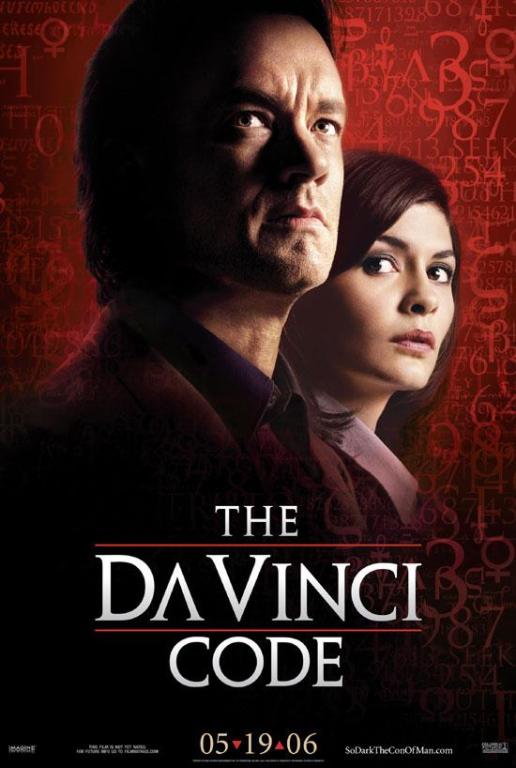 In 1988, Christians picketed theaters that showed The Last Temptation of Christ*. Today, they’re trying to find ways to “engage” a new controversial movie —* The Da Vinci Code*.*
Two decades ago, Christians took a stand against Martin Scorsese’s The Last Temptation of Christ. When a draft of the script was made public, protestors compelled Paramount to abandon the project, and when Universal produced the movie a few years later, in 1988, Campus Crusade for Christ founder Bill Bright offered the studio some $10 million to buy the movie and destroy it. And then, when the film was released, Christians staged a number of boycotts and pickets outside theatres — a noisy tactic some believers now regret.
But today, churches are taking a different approach to controversial films, including The Da Vinci Code, Ron Howard’s film adaptation of the Dan Brown bestseller, which releases May 19. Pastors, scholars and teachers are writing books, preparing sermon series and Sunday school lessons, and creating websites devoted to “engaging” this pop-cultural artifact as part of an ongoing “dialogue.”
Michael Licona, director of apologetics and interfaith evangelism for the Southern Baptist Convention’s North American Mission Board, created a 65-minute video lecture (available here) to foster discussion about some of the book’s claims. He remembers telling people to avoid The Last Temptation, but he says he would definitely not take that approach now.
“I think we made a mistake back then,” Licona says. “I think we communicated that we’re not interested in having critical discussions — that if you mention Jesus in a negative way we’re just going to pick up our ball and go home — and I think that has hurt us as Christians.
“If you look at Acts 17, Paul was very familiar with the secular poets, because he quoted them. When he spoke to the philosophers at Athens, he never quoted the Scriptures, he quoted their own poets. And if we’re going to relate to non-believers as Christians, we need to be familiar with what’s coming out, movies and books.”
The dialogue moves online
In addition to the many Da Vinci Code-related books filling Christian bookstores, several resources have sprung up online. Outreach, Inc. has posted sermon ideas and other resources, including some hosted by Josh McDowell and Lee Strobel, while Catholic apologists have set up websites like JesusDecoded and Da Vinci Outreach.
In addition, over 40 commentators representing Protestant, Catholic and Orthodox churches have written critical essays for The Da Vinci Dialogue, a website sponsored by Sony Pictures Entertainment, the studio behind The Da Vinci Code, in conjunction with Grace Hill Media, a company that promotes movies to the religious media.
Darrell Bock, a professor of New Testament studies at Dallas Theological Seminary and a contributor to the The Da Vinci Dialogue site, once advised people to avoid The Last Temptation, and he would do the same with The Da Vinci Code if the public had not already “embraced” the book and its ideas to such a large degree. But because the novel has “penetrated the cultural consciousness,” he says a completely different response is called for today.
“I have a very strong feeling that we should read the book,” he says. “If we’re going to engage the culture and interact with a point of view, we need to read the point of view that we are interacting with. It undermines our credibility to say that we have never read the point of view or seen it.”
However, some observers take a dimmer view of the opportunities for “dialogue” created by the upcoming movie and the book on which it is based. Barbara Nicolosi, executive director of the Act One screenwriting program in Los Angeles, says Christians have become so concerned about appearing “hip” and not being rejected by the secular world that they have allowed themselves to be co-opted by the corporate forces behind the movie.
“Is slander an opportunity for dialogue?” she asks. “Everything is an opportunity for dialogue, but the question is, are we framing the dialogue? And the answer is no, and anybody who thinks otherwise is kidding themselves. The dialogue is completely being framed by Sony Pictures and Dan Brown.”
Nicolosi says she is concerned that pastors and teachers are sending their fellow Christians to a spiritually harmful movie without ensuring first that they know enough history and theology to counter the story’s erroneous claims about the divinity of Christ, the formation of the New Testament, and the church’s treatment of women.
She also takes issue with the notion that the people attracted to this story are “seeking the truth,” as the movie poster claims. “If people were seeking the truth, they would be buying the Catechism and enrolling in theology courses,” she says.
A whole new audience
Still, some scholars say they’ve found a whole new audience thanks to The Da Vinci Code and the fans who may, indeed, be seeking the truth after all.
Ward Gasque, a Washington-based church historian, says he’s been “having an awful lot of fun” giving dozens of lectures about The Da Vinci Code over the last few years. “If the event is publicized widely, about a third of the audience will be from outside of the sponsoring church — some of them from other churches, but some of them totally unchurched. Now, when I give lectures on the Book of Acts, nobody shows up who is unchurched.”
Gasque says Dan Brown’s book has been so successful partly because people don’t know their history — and that includes Christians. He points to a recent survey which found that approximately one out of six Canadians and one out of eight Americans believes that Jesus faked his death, got married, and had a family — a statistic that has been attributed to the influence of The Da Vinci Code, even though the novel does not deny the crucifixion.
“The reason 17 percent of all Canadians believe this, and it’s true virtually worldwide, is that they don’t know anything about history,” says Gasque. “But that’s true of most active Christians as well. They don’t know anything about what happened between the end of the first century and the Protestant Reformation, and therefore it seems plausible.”
Amy Welborn, author of De-Coding Da Vinci, says many Catholics who have come across the story are equally ignorant of church history. “I was involved in Catholic education for a long time,” she says, “and we in the past 40 years have become very present-oriented in our catechesis. Most people don’t do any religious education after they’re confirmed.
“So I thoroughly blame Christian churches for leaving their people bereft of an anchoring in Christian roots, for whatever reasons, and I really don’t think if The Da Vinci Code had come out 60 years ago that Catholics who had any sort of education would have been taken in by it. I think this Da Vinci Code business has been a real eye-opener for a lot of people involved in ministry in the Catholic church. They are now seeing the consequences of this eviscerating of religious education. This is the fruit.”
Nonetheless, says Gasque, that “fruit” can serve to motivate Christians to educate themselves about the origins of the faith.
“Christians need to have an understanding of history,” he says, “and the church is not serving the Christian community well by not teaching them the basic essence of Christianity. Therefore they don’t have the resources to respond very intelligently to this.” He recommends that churches devote entire study groups to this subject.
Bock agrees that Christians should know their church history first. “I think the opening up of these issues has been a very good thing,” he says, “and if it produces the kind of dialogue about the real Jesus that it can generate, and if the church can get itself into a position to understand its own history and theology, that will be a good thing for the church.”
Licona says it is important that Christians do their homework because skeptical scholars with actual academic credibility will take advantage of the media spotlight generated by The Da Vinci Code to promote their own versions of revisionist church history — an example of which was recently provided by the much-hyped, so-called Gospel of Judas.
“When the book mentions that Jesus was not thought of as the divine Son of God until the Council of Nicea in 325, that is easily refuted, because the deity of Jesus is peppered throughout the New Testament,” Licona says. “But even though the major claims of The Da Vinci Code can be answered easily, more moderate forms of those claims are presented by radical scholars such as Bart Ehrman and Elaine Pagels, and these need to be addressed.”
Licona adds, “I know there are Christians who will say, ‘I don’t want to give money to Hollywood and I know they’re doing it for the money,’ and they’re absolutely right, and this is something they’ll have to follow their consciences on. For myself, I think the outreach opportunities outweigh the negative of giving money to Hollywood and Dan Brown.”
— A version of this article was first published on the Christianity Today website. A shorter version appeared in the magazine.
Previous Post

May 9, 2006
I'm number four! I'm number four! (again)
Next Post
May 10, 2006 The Da Vinci Code -- the article's up!
Browse Our Archives
Select a Category Anglican Planet Articles BC Christian News BC Report Bible Movies Bible Review Blog Books & Culture Campus Times CBC Radio Christianity Today ChristianWeek Essays Faith Today Festival Cinemas Guide Film Journals Georgia Straight Interviews MB Herald National Catholic Register Salvationist Today's Christian Two Chairs Ubyssey Uncategorized Vancouver Courier Vancouver Sun
Select a Month August 2025 April 2025 January 2025 December 2024 November 2024 May 2024 February 2024 December 2023 May 2023 March 2023 November 2022 July 2022 June 2022 May 2022 April 2022 February 2022 January 2022 December 2021 November 2021 October 2021 September 2021 August 2021 July 2021 June 2021 April 2021 March 2021 February 2021 January 2021 December 2020 November 2020 October 2020 August 2020 July 2020 June 2020 May 2020 March 2020 February 2020 January 2020 December 2019 November 2019 September 2019 July 2019 May 2019 April 2019 March 2019 February 2019 January 2019 December 2018 November 2018 October 2018 September 2018 July 2018 June 2018 May 2018 April 2018 March 2018 February 2018 January 2018 December 2017 November 2017 October 2017 September 2017 August 2017 July 2017 June 2017 May 2017 April 2017 March 2017 February 2017 January 2017 December 2016 November 2016 October 2016 September 2016 August 2016 July 2016 June 2016 May 2016 April 2016 March 2016 February 2016 January 2016 December 2015 November 2015 October 2015 September 2015 August 2015 July 2015 June 2015 May 2015 April 2015 March 2015 February 2015 January 2015 December 2014 November 2014 October 2014 September 2014 August 2014 July 2014 June 2014 May 2014 April 2014 March 2014 February 2014 January 2014 December 2013 November 2013 October 2013 September 2013 August 2013 July 2013 June 2013 May 2013 April 2013 March 2013 February 2013 January 2013 December 2012 November 2012 October 2012 September 2012 August 2012 July 2012 June 2012 April 2012 January 2012 January 2011 December 2010 November 2010 October 2010 September 2010 August 2010 July 2010 June 2010 May 2010 April 2010 March 2010 February 2010 January 2010 December 2009 November 2009 October 2009 September 2009 August 2009 July 2009 June 2009 May 2009 April 2009 March 2009 February 2009 January 2009 December 2008 November 2008 October 2008 September 2008 August 2008 July 2008 June 2008 May 2008 April 2008 March 2008 February 2008 January 2008 December 2007 November 2007 October 2007 September 2007 August 2007 July 2007 June 2007 May 2007 April 2007 March 2007 February 2007 January 2007 December 2006 November 2006 October 2006 September 2006 August 2006 July 2006 June 2006 May 2006 April 2006 March 2006 February 2006 January 2006 December 2005 November 2005 October 2005 September 2005 August 2005 July 2005 June 2005 May 2005 April 2005 March 2005 January 2005 December 2004 November 2004 October 2004 September 2004 August 2004 July 2004 June 2004 May 2004 April 2004 March 2004 February 2004 January 2004 November 2003 October 2003 August 2003 July 2003 June 2003 May 2003 January 2003 December 2002 November 2002 August 2002 July 2002 June 2002 May 2002 March 2002 January 2002 December 2001 November 2001 September 2001 August 2001 July 2001 June 2001 April 2001 March 2001 February 2001 December 2000 November 2000 October 2000 September 2000 August 2000 July 2000 June 2000 May 2000 April 2000 March 2000 January 2000 October 1999 August 1999 May 1999 April 1999 February 1999 January 1999 December 1998 November 1998 October 1998 August 1998 July 1998 June 1998 April 1998 March 1998 January 1998 November 1997 September 1997 July 1997 June 1997 April 1997 March 1997 February 1997 January 1997 December 1996 October 1996 September 1996 June 1996 March 1996 February 1996 January 1996 April 1995 November 1994 September 1994 September 1991
Follow Us!
TAKE THE
Religious Wisdom Quiz
What does "Immanuel" mean?
Select your answer to see how you score.
God rules God with us God leads God redeems
Related posts from FilmChat
New apostle-themed projects coming from Scorsese & Schrader...
20 things about The Prince of Egypt, which...

Review: Stay (dir. Marc Forster, 2005)

Box office: Tyler Perry says Boo! to Tom...
TRENDING AT PATHEOS Religious Music & Entertainment

"Les Diabolique" and Transgression
Alongside something like Arrival, Vertigo, or Charade, Les Diaboliques is a...

"The Plague Dogs" and Mortality
So, flashback to the late 70s, early 80s. Walt Disney Studios is...

With the recent and highly successful release of Christopher Nolan’s epic film,...

"L'avventura" and Human Weakness
Today's piece is going to be a little different for a few...

I first want to apologize for not posting or writing anything. I'm...

I've engaged in the multi-year project of reading through the Church Fathers,...
view all Religious Music & Entertainment blogs
Ad-Free & Subscriber Log-In Subscription Support
- About Us
- 2026 Calendar
- Videos
- Podcasts
- Library of World Religions
- Faith In Media Tracker
- Advertise With Us
- Write for Us
- Privacy Policy
- Terms of Service
- Do Not Sell My Data
- Contact Us
- Radiant Digital
- Manage Newsletter Subscriptions
- Unsubscribe From Notifications
- Sitemap
Copyright 2008-2026, Patheos. All rights reserved.
Subscription Support Ad-Free & Subscriber Log-In
Follow Patheos