
BuddhistCatholicContemplativeEvangelicalGeneral ChristianHinduJewishLatter-day SaintMuslimNew VisionsProgressive Christian
Beliefs
- Buddhist
- Catholic
- Contemplative
- Evangelical
- General Christian
- Hindu
- Jewish
- Latter-day Saint
- More Voices
- Muslim
- New Visions
- Pagan
- Progressive Christian
Topics
- Religion News
- Food and Religion
- Sports and Religion
- Religious Art
- Religious Music and Entertainment
- Religious Events
- History and Religion
- Style and Religion
- Politics and Religion
- Women in Religion
- Recreation Outdoors and Religion
- Business Finance and Religion
- Careers Workplace and Religion
- Education and Religion
- Family Parenting and Religion
- Health Fitness and Religion
- Home and Religion
- Relationships and Religion
- Technology and Religion
- Travel and Religion
Columnists
- Buddhist Columnists
- Business Finance and Religion Columnists
- Careers Workplace and Religion Columnists
- Catholic Columnists
- Contemplative Columnists
- Education and Religion Columnists
- Evangelists Columnists
- Family Parenting and Religion Columnists
- General Christian Columnists
- Health Fitness and Religion Columnists
- Hindu Columnists
- History and Religion Columnists
- Home and Religion Columnists
- Jewish Columnists
- More Voices Columnists
- Latter Day Columnists
- Muslim Columnists
- New Visions Columnists
- Nonreligious Columnists
- Pagan Columnists
- Politics and Religion Columnists
- Progressive Columnists
- Recreation Outdoors and Religion Columnists
- Relationships and Religion Columnists
- Religion News Columnists
- Religious Art Columnists
- Religious Events Columnists
- Religious Music and Entertainment Columnists
- Sports and Religion Columnists
- Style and Religion Columnists
- Technology and Religion Columnists
- Travel and Religion Columnists
- Women in Religion Columnists
Resource Library
- 2026 Calendar
- Library of World Religions
- The 100 Most Holy Places on Earth
- Patheos Answers
- Podcasts
- Videos
- Faith Leaders Database
- Anglican Episcopalian
- Bahai
- Baptist
- Buddhism
- Christianity
- Confucianism
- Eastern Orthodoxy
- Hinduism
- Holiness and Pentecostal
- ISKCON
- Islam
- Judaism
- Lutheran
- Methodist
- The Church of Jesus Christ of Latter-day Saints
- New Age
- Paganism
- Presbytarian and Reformed
- Protestantism
- Religion Behind the Scenes
- Roman Catholic
- Scientology
- Shia Islam
- Sikhism
- Sufism
- Sunni Islam
- Taoism
- Zen
- See all religions
Research Tools
 Ad-Free & Subscriber Log-In Subscription Support
Ad-Free & Subscriber Log-In Subscription Support
Follow Patheos 

- Trending:
- Forgiveness
- |
- Marriage
- |
- Consciousness
- |
- Death Penalty
- |
- Election
- |
- Halloween

-
Articles
- Home
- Religious Music & Entertainment
- Top Ten Jesus Movies
Top Ten Jesus Movies
Last updated on: March 3, 2014 at 7:56 pm by Peter T. Chattaway
Top Ten Jesus Movies 2014-03-03T19:56:43-08:00 Peter T. Chattaway
Patheos Explore the world's faith through different perspectives on religion and spirituality! Patheos has the views of the prevalent religions and spiritualities of the world.
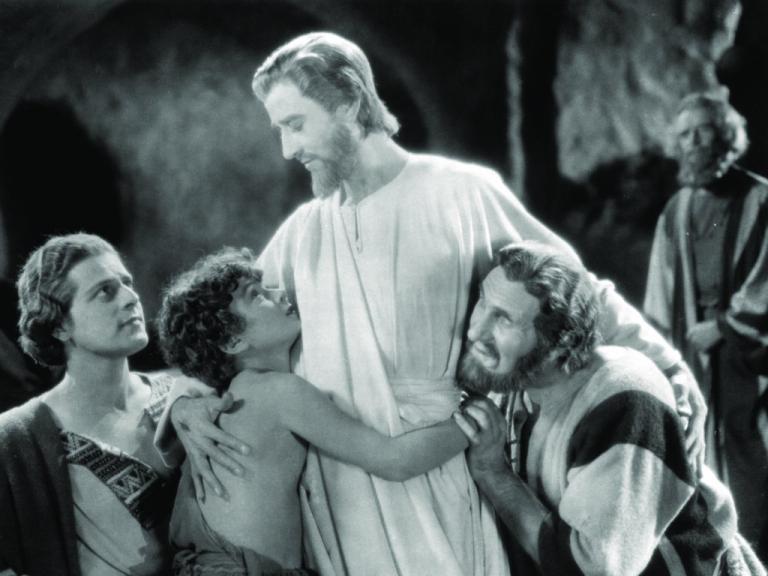 They’ve been making films about the Son of God for over a century. Here’s one man’s list of those that ascend to the top of the cinematic pack.
Of the making of movies about Jesus, there is no end. In the first three months of this year alone: Son of Man, which casts a black man as Christ and sets his life in modern South Africa, got positive reviews at Sundance; the makers of Color of the Cross, which also casts a black man as Christ, established a website with trailers for their work-in-progress; and New Line Cinema announced that Oscar nominees Keisha Castle-Hughes (Whale Rider) and Shohreh Aghdashloo (House of Sand and Fog) will star as the Virgin Mary and her cousin Elizabeth in a new movie about the Nativity, to be released in time for Christmas.
Some of this activity can be credited to The Passion of The Christ, which shattered box-office records and sparked interest in religious films when it came out in 2004. But movies about Jesus have always been popular, especially in times of heightened spiritual interest — the countercultural craze of the 1970s, the millennial anxiety of the late 1990s, etc.
No interpretation of the life of Christ can ever tell the full story. That is, indeed, one of the reasons we have four Gospels; each one paints a unique portrait of the Savior and emphasizes a different set of themes. Similarly, no mere movie about Jesus can capture the fullness of his divinity, or the fullness of his humanity, no matter how sincere its makers are; but the better films can help us to see a small part of the bigger picture.
This list is limited to those that focus mainly on Jesus’ life story as told in the Gospels; thus, it does not include films about characters who are only peripherally connected to Jesus, such as Ben-Hur (1925, 1959). Also, because each film has its strengths and weaknesses, they are listed in simple chronological order; no ranking is implied.
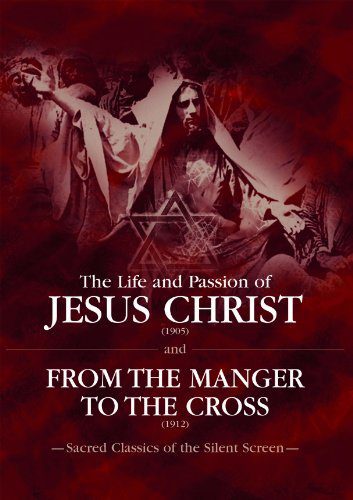 The Life and Passion of Jesus Christ (1902-05)
Film was a new medium, only a few years old, when the Pathé company in France produced this series of short tableaux illustrating scenes from the Gospels. Like a series of icons brought to life, or a passion play enhanced by the odd special effect, The Life and Passion of Jesus Christ never pretends to be a drama; instead, it is a uniquely visual work of art which underscores the supernatural context within which Jesus’ life and ministry took place. At times, the film borrows from later, post-biblical legends, but it also emphasizes Jesus’ place within the Trinity, and it concludes with a fantastic (if a tad rickety by modern standards) shot of the Ascension and Jesus seated at God’s right hand in the heavenly court.
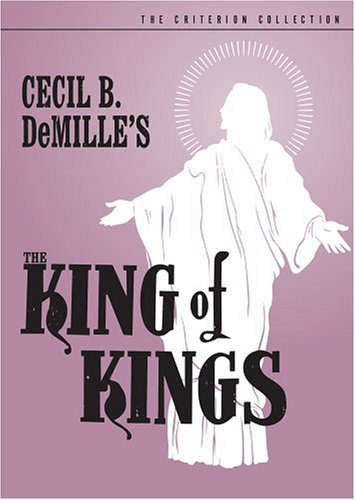 The King of Kings (1927)
All of Cecil B. DeMille’s best and worst instincts are on display in this, his last silent movie. Fortunately, he gets the tawdry stuff out of the way pretty fast. The ludicrous opening sequence features a scantily-clad Mary Magdalene hosting a banquet and asking what has happened to her lover Judas Iscariot; but once Jesus casts the seven demons out of her — one of several biblical details included here that most films omit — the film relies on the Gospels for most of its content. That said, DeMille also rearranges episodes from the Bible in ways that are startlingly original yet quite effective. Re-issued in the 1930s with a music and sound-effects track, The King of Kings was such a big hit that no Hollywood studio would make another life-of-Jesus movie until the 1960s, after DeMille had passed away.
 The Gospel According to St. Matthew (1964)
Right from its very first frames — when a visibly upset Joseph beholds a very pregnant Mary — this film challenges the soft-focus piety that affects many adaptations of the Gospels. Director Pier Paolo Pasolini, a gay Marxist atheist who was famous for his poetry before he turned to filmmaking, certainly wanted to confront the conventional spirituality of his day, and his Jesus is more aggressive than most. But nearly every single line of dialogue comes from Matthew’s Gospel (a pattern that would be followed decades later by Campus Crusade’s adaptation of Luke and the Visual Bible’s adaptations of Matthew and John), and the film’s gritty, down-to-earth realism underscores the revolutionary nature of Christ’s message; you can believe the authorities would want to crucify this guy. While the film is often hailed for stripping the story down to its basics, it also reflects Pasolini’s belief in finding transcendence within the everyday — an effect that is especially achieved on the eclectic soundtrack, which includes Bach, Negro spirituals, and the Missa Luba.
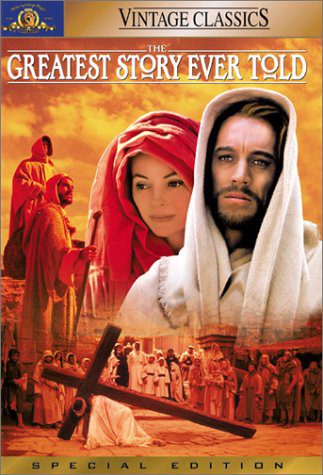 The Greatest Story Ever Told (1965)
Some will say that this expensive flop, produced by the devoutly Christian George Stevens (The Diary of Anne Frank, Shane), represents everything that is wrong with Hollywood adaptations of the Gospels: it’s too pretty, it’s too stilted, it’s too American, it’s too lavish to be an authentic depiction of first-century Galilean peasant society, and it’s got too many distracting cameos, culminating in John Wayne’s brief, out-of-nowhere appearance as the centurion at the crucifixion. And they would have a point. But the cinematography is gorgeous, and many of the performances are quite good, especially that of Max von Sydow (as Jesus), whose austerity is leavened with moments of deeply felt emotion. Note how he cries outside Lazarus’s tomb, or the warm, robust smile he gives when he meets James the Lesser.
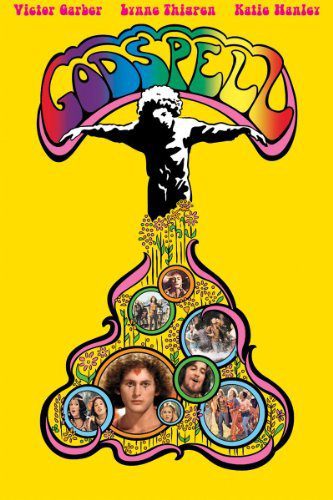 Godspell (1973)
Prepare ye the way of the Lord! In some ways, Godspell, one of three musical Jesus movies released in 1973 (the others were Andrew Lloyd Webber’s agnostic, angst-ridden Jesus Christ Superstar and Johnny Cash’s The Gospel Road), may not belong on this list. For one thing, it’s set in modern New York — or rather, it uses modern New York as a backdrop; one sequence even takes place on the roofs of the then-brand-new World Trade Center towers. It is also less concerned with the life of Jesus than with his sayings, especially the parables and the Sermon on the Mount, and how they resonated with the countercultural mood of that time. But it is precisely this focus on the teachings of Christ that makes the film unique. Its comical approach to the parables, and its depiction of Christ as a clown in make-up, were controversial at the time, but that debate seems quaint now in the age of VeggieTales. The giddy, and at times prayerful, music is by Stephen Schwartz (The Prince of Egypt).
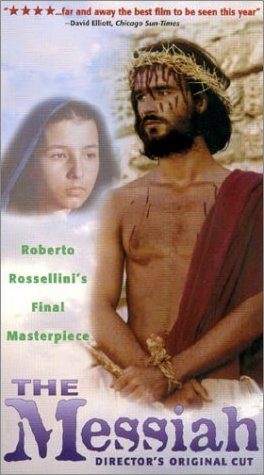 The Messiah (1976)
Roberto Rossellini was one of the pioneers of post-war Italian neorealism, in films like Open City (1945), and his controversial film The Miracle (1948) prompted a landmark American court case which ultimately led to movies being recognized, for the first time, as an art form protected by free-speech laws. Toward the end of his life, he made a series of “didactic” historical biopics focusing on characters like Socrates, St. Augustine, and Blaise Pascal, and one of his very last films was this portrait of Jesus. Rossellini did not believe in “seducing” the audience with dramatic effects, so he downplays the miracles and the violence — all the stuff that other filmmakers revel in — even while he acknowledges that they occur. His version of the story emphasizes the brotherhood of men more than Christian faith, per se, but in doing so it also underscores the fact, often ignored by films in this genre, that the disciples went out and spread Jesus’ message even while the Master was still alive.
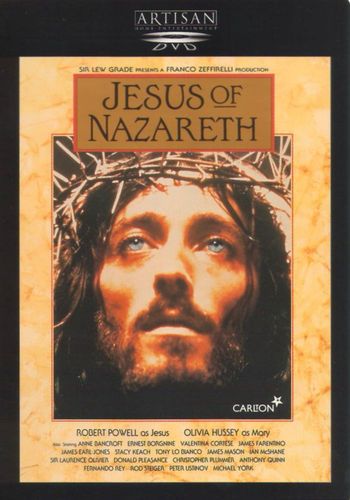 Jesus of Nazareth (1977)
Some would say this is the best Jesus film; it is certainly the most. At six and a half hours, Franco Zeffirelli’s mini-series gets to explore the Gospels at greater length than usual, and it fleshes out the supporting characters in ways that convey the breadth and depth of the impact Jesus had on his contemporaries. The film alternates, somewhat awkwardly, between everyday naturalism and pious theatricality; this may be the first film to show the Virgin Mary going into labor, but after her pains have ended, some shepherds arrive and speak portentously about their encounter with the angels, finishing each other’s sentences as they do so. Also, as Jesus, Robert Powell has the British accent, blue eyes, and John Lennon hair that have become something of a cliché. Still, this film is supported by a fine cast (no distracting cameos here!), as well as some stirring music by Lawrence of Arabia’s Maurice Jarre, and it emphasizes the Jewishness of Jesus like few others — not only to remind us of his ethnicity, but to underscore the prophecies that he fulfilled.
 Jesus (1999)
Produced as part of Lux Vide’s “Bible Collection” series, this two-part TV-movie is kind of like The Last Temptation of Christ without the heresy. That is, it presents Jesus as a haunted and vulnerable human being who struggles with romantic attractions (to Mary of Bethany, this time) and a growing awareness of his destiny — but instead of fleeing God, he always chooses God’s will for his life. Some viewers found Jeremy Sisto’s interpretation of Christ a little too casual and buddy-ish, but this is one of the few Jesus films to understand that being human is about more than having emotions and dancing at parties; it is about finding God’s will, and following it to the best of our ability. Note also the scene where Satan visits Jesus in Gethsemane and, taunting him with visions of nations and churches committing atrocities in Jesus’ name, tries to convince him his death on the cross will be in vain; this is a far more sobering “last temptation” than anything imagined by Martin Scorsese.
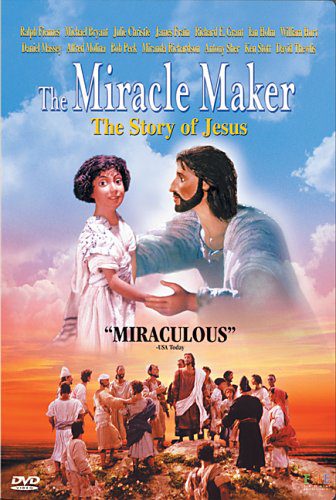 The Miracle Maker (2000)
Shown in theatres in Europe and on television in North America, this follow-up to the Welsh-Russian TV series Testament: The Bible in Animation was the first major animated film about the life of Jesus. Like the series that preceded it, The Miracle Maker employs a mix of animation techniques, and in a very purposeful way. The day-to-day experiences of Jesus and his followers are depicted with stop-motion puppets, while the parables, flashbacks, memories and spiritual encounters are depicted the traditional, hand-drawn way; the scene in which Jesus casts the demons out of Mary Magdalene is especially striking, as it segues from one style of animation to the other. Co-produced by Mel Gibson’s Icon Productions and written by Christian author Murray Watts, the film stars the voice of Ralph Fiennes, whose Jesus is by turns tender, humorous, exasperated, and above all very, very engaging.
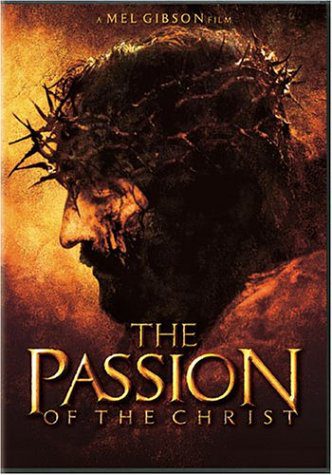 The Passion of the Christ (2004)
Mel Gibson’s highly controversial, and highly personal, meditation on the death of Christ is a work of profound Catholic devotion, inspired by sources as diverse as the Stations of the Cross and the visions of Sister Anne Catherine Emmerich, a stigmatic German nun; it is also possibly the boldest, starkest portrayal of evil, both human and supernatural, since The Exorcist. The Latin and Aramaic dialogue now seem like a merely Gibsonian conceit, given the all-Mayan script for his upcoming follow-up Apocalypto; but they do contribute to the film’s otherworldly and at times shockingly surreal tone. The violence aside, Gibson makes strikingly effective use of objective and subjective cinematic techniques to convey the divinity and humanity of Christ, respectively; and, more than any recent director, Gibson captures the grand supernatural conflict which gives the death of Christ its meaning.
— A version of this article first appeared at Christianity Today Movies.
gospel according to st matthew
life and passion of jesus christ
Previous Post

April 11, 2006
Newsbites: Materials! Page! Dolores!
Next Post
April 12, 2006 Terrence Malick -- in smell-o-vision!
Browse Our Archives
Select a Category Anglican Planet Articles BC Christian News BC Report Bible Movies Bible Review Blog Books & Culture Campus Times CBC Radio Christianity Today ChristianWeek Essays Faith Today Festival Cinemas Guide Film Journals Georgia Straight Interviews MB Herald National Catholic Register Salvationist Today's Christian Two Chairs Ubyssey Uncategorized Vancouver Courier Vancouver Sun
Select a Month August 2025 April 2025 January 2025 December 2024 November 2024 May 2024 February 2024 December 2023 May 2023 March 2023 November 2022 July 2022 June 2022 May 2022 April 2022 February 2022 January 2022 December 2021 November 2021 October 2021 September 2021 August 2021 July 2021 June 2021 April 2021 March 2021 February 2021 January 2021 December 2020 November 2020 October 2020 August 2020 July 2020 June 2020 May 2020 March 2020 February 2020 January 2020 December 2019 November 2019 September 2019 July 2019 May 2019 April 2019 March 2019 February 2019 January 2019 December 2018 November 2018 October 2018 September 2018 July 2018 June 2018 May 2018 April 2018 March 2018 February 2018 January 2018 December 2017 November 2017 October 2017 September 2017 August 2017 July 2017 June 2017 May 2017 April 2017 March 2017 February 2017 January 2017 December 2016 November 2016 October 2016 September 2016 August 2016 July 2016 June 2016 May 2016 April 2016 March 2016 February 2016 January 2016 December 2015 November 2015 October 2015 September 2015 August 2015 July 2015 June 2015 May 2015 April 2015 March 2015 February 2015 January 2015 December 2014 November 2014 October 2014 September 2014 August 2014 July 2014 June 2014 May 2014 April 2014 March 2014 February 2014 January 2014 December 2013 November 2013 October 2013 September 2013 August 2013 July 2013 June 2013 May 2013 April 2013 March 2013 February 2013 January 2013 December 2012 November 2012 October 2012 September 2012 August 2012 July 2012 June 2012 April 2012 January 2012 January 2011 December 2010 November 2010 October 2010 September 2010 August 2010 July 2010 June 2010 May 2010 April 2010 March 2010 February 2010 January 2010 December 2009 November 2009 October 2009 September 2009 August 2009 July 2009 June 2009 May 2009 April 2009 March 2009 February 2009 January 2009 December 2008 November 2008 October 2008 September 2008 August 2008 July 2008 June 2008 May 2008 April 2008 March 2008 February 2008 January 2008 December 2007 November 2007 October 2007 September 2007 August 2007 July 2007 June 2007 May 2007 April 2007 March 2007 February 2007 January 2007 December 2006 November 2006 October 2006 September 2006 August 2006 July 2006 June 2006 May 2006 April 2006 March 2006 February 2006 January 2006 December 2005 November 2005 October 2005 September 2005 August 2005 July 2005 June 2005 May 2005 April 2005 March 2005 January 2005 December 2004 November 2004 October 2004 September 2004 August 2004 July 2004 June 2004 May 2004 April 2004 March 2004 February 2004 January 2004 November 2003 October 2003 August 2003 July 2003 June 2003 May 2003 January 2003 December 2002 November 2002 August 2002 July 2002 June 2002 May 2002 March 2002 January 2002 December 2001 November 2001 September 2001 August 2001 July 2001 June 2001 April 2001 March 2001 February 2001 December 2000 November 2000 October 2000 September 2000 August 2000 July 2000 June 2000 May 2000 April 2000 March 2000 January 2000 October 1999 August 1999 May 1999 April 1999 February 1999 January 1999 December 1998 November 1998 October 1998 August 1998 July 1998 June 1998 April 1998 March 1998 January 1998 November 1997 September 1997 July 1997 June 1997 April 1997 March 1997 February 1997 January 1997 December 1996 October 1996 September 1996 June 1996 March 1996 February 1996 January 1996 April 1995 November 1994 September 1994 September 1991
Follow Us!
TAKE THE
Religious Wisdom Quiz
What Christian denomination is known for circuit riders and revival meetings in America?
Select your answer to see how you score.
Methodist Catholic Presbyterian Episcopalian
Related posts from FilmChat

Exclusive: A clip from Angel Studios' The King...
Oscar Isaac, Forest Whitaker join animated Jesus movie

Watch: The Chosen's creators on Season 4's big...

Which Bible movies are getting the most views...
TRENDING AT PATHEOS Religious Music & Entertainment

"Les Diabolique" and Transgression
Alongside something like Arrival, Vertigo, or Charade, Les Diaboliques is a...

"The Plague Dogs" and Mortality
So, flashback to the late 70s, early 80s. Walt Disney Studios is...

With the recent and highly successful release of Christopher Nolan’s epic film,...

"L'avventura" and Human Weakness
Today's piece is going to be a little different for a few...

I first want to apologize for not posting or writing anything. I'm...

I've engaged in the multi-year project of reading through the Church Fathers,...
view all Religious Music & Entertainment blogs
Ad-Free & Subscriber Log-In Subscription Support
- About Us
- 2026 Calendar
- Videos
- Podcasts
- Library of World Religions
- Faith In Media Tracker
- Advertise With Us
- Write for Us
- Privacy Policy
- Terms of Service
- Do Not Sell My Data
- Contact Us
- Radiant Digital
- Manage Newsletter Subscriptions
- Unsubscribe From Notifications
- Sitemap
Copyright 2008-2026, Patheos. All rights reserved.
Subscription Support Ad-Free & Subscriber Log-In
Follow Patheos