
BuddhistCatholicContemplativeEvangelicalGeneral ChristianHinduJewishLatter-day SaintMuslimNew VisionsProgressive Christian
Beliefs
- Buddhist
- Catholic
- Contemplative
- Evangelical
- General Christian
- Hindu
- Jewish
- Latter-day Saint
- More Voices
- Muslim
- New Visions
- Pagan
- Progressive Christian
Topics
- Religion News
- Food and Religion
- Sports and Religion
- Religious Art
- Religious Music and Entertainment
- Religious Events
- History and Religion
- Style and Religion
- Politics and Religion
- Women in Religion
- Recreation Outdoors and Religion
- Business Finance and Religion
- Careers Workplace and Religion
- Education and Religion
- Family Parenting and Religion
- Health Fitness and Religion
- Home and Religion
- Relationships and Religion
- Technology and Religion
- Travel and Religion
Columnists
- Buddhist Columnists
- Business Finance and Religion Columnists
- Careers Workplace and Religion Columnists
- Catholic Columnists
- Contemplative Columnists
- Education and Religion Columnists
- Evangelists Columnists
- Family Parenting and Religion Columnists
- General Christian Columnists
- Health Fitness and Religion Columnists
- Hindu Columnists
- History and Religion Columnists
- Home and Religion Columnists
- Jewish Columnists
- More Voices Columnists
- Latter Day Columnists
- Muslim Columnists
- New Visions Columnists
- Nonreligious Columnists
- Pagan Columnists
- Politics and Religion Columnists
- Progressive Columnists
- Recreation Outdoors and Religion Columnists
- Relationships and Religion Columnists
- Religion News Columnists
- Religious Art Columnists
- Religious Events Columnists
- Religious Music and Entertainment Columnists
- Sports and Religion Columnists
- Style and Religion Columnists
- Technology and Religion Columnists
- Travel and Religion Columnists
- Women in Religion Columnists
Resource Library
- 2026 Calendar
- Library of World Religions
- The 100 Most Holy Places on Earth
- Patheos Answers
- Podcasts
- Videos
- Faith Leaders Database
- Anglican Episcopalian
- Bahai
- Baptist
- Buddhism
- Christianity
- Confucianism
- Eastern Orthodoxy
- Hinduism
- Holiness and Pentecostal
- ISKCON
- Islam
- Judaism
- Lutheran
- Methodist
- The Church of Jesus Christ of Latter-day Saints
- New Age
- Paganism
- Presbytarian and Reformed
- Protestantism
- Religion Behind the Scenes
- Roman Catholic
- Scientology
- Shia Islam
- Sikhism
- Sufism
- Sunni Islam
- Taoism
- Zen
- See all religions
Research Tools
 Ad-Free & Subscriber Log-In Subscription Support
Ad-Free & Subscriber Log-In Subscription Support
Follow Patheos 

- Trending:
- Forgiveness
- |
- Marriage
- |
- Consciousness
- |
- Death Penalty
- |
- Election
- |
- Halloween

-
Articles
- Home
- Religious Music & Entertainment
- Review: Are We There Yet? (dir. Brian Levant, 2005)
Review: Are We There Yet? (dir. Brian Levant, 2005)
Last updated on: April 16, 2016 at 7:12 pm by Peter T. Chattaway
Review: Are We There Yet? (dir. Brian Levant, 2005) 2016-04-16T19:12:42-07:00 Peter T. Chattaway
Patheos Explore the world's faith through different perspectives on religion and spirituality! Patheos has the views of the prevalent religions and spiritualities of the world.
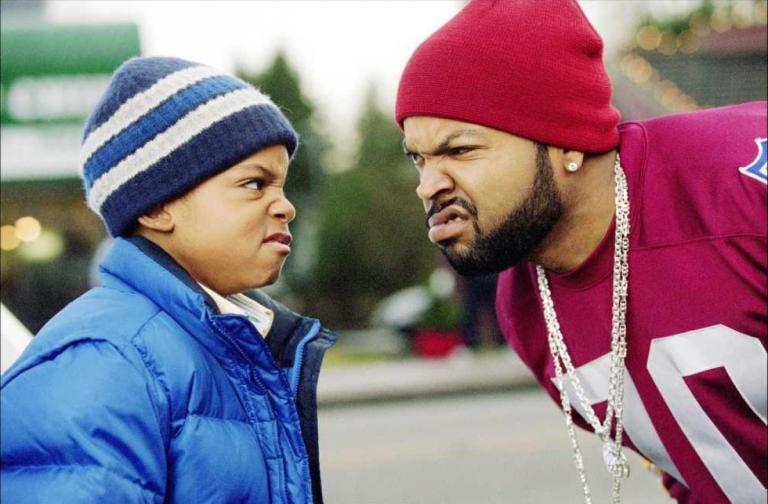 Since long before the invention of the automobile — and no doubt since long before the invention of the wheel itself — children the world over have had to cope with the fact that grown-ups will often try their patience by taking them on long and boring journeys. And now, thanks to so-called family films like Are We There Yet?, children have plenty of opportunities to return the favor, as they drag their parents and guardians to the multiplex and compel them to sit through mediocre, cliché-ridden comedies about such journeys.
There are two things potential audience members need to know about Are We There Yet?. First, the film was originally developed as a vehicle, so to speak, for Adam Sandler, who ultimately passed on the project. In other words, the movie — which now stars rapper-turned-filmmaker Ice Cube as a playboy bachelor who hates kids but gives two precocious little tykes a ride just to impress their mother — is a hand-me-down, a film that failed to meet Sandler’s own not-so-high standards. Second, the film is set, for the most part, on New Year’s Eve, and may have been intended for the holidays — but the studio didn’t release it until three weeks later, when box–office competition is pretty soft. Perhaps this suggests a lack of confidence on the studio’s part?
It helps, at least, that the stars have a fair bit of charisma. However R-rated the bulk of his films might be, Ice Cube has in recent years been moving towards the family-friendly mainstream, first with the PG-13 Barbershop movies — in which he plays a married father who is profoundly aware of the legacy he has inherited from his own old man — and now with this, his first solid PG effort. His character, Nick Persons, still has a bit of gangsta in him, and his attraction to Suzanne Kingston (Nia Long), the divorced mother he tries to impress, is primarily sexual, but Ice Cube has that easygoing movie-star quality that lets you know there is nothing to worry about; Nick’s got a heart of gold. Likewise, Aleisha Allen and Philip Bolden are amusing as Lindsey and Kevin, the children who bedevil Nick and drive him to distraction while he drives them to Vancouver to meet their mother.
Still, personality only goes so far, and Are We There Yet? is more interested in crass humor than in creating remotely believable characters that we might actually care about. Sometimes the lowbrow approach works, as when Lindsey and Kevin set up a series of elaborate booby traps to ward off the men who would dare to come knocking on their mother’s door. Sometimes it’s just painful; as Home Alone proved so many years ago, children like nothing more than to see a man get hit in the groin, and this film does aim to please. And sometimes the gags just seem inappropriate for a “family film”, particularly when both Nick and his talking Satchel Paige bobblehead doll (voice of Tracy Morgan) — don’t ask — make admiring remarks about Suzanne’s breasts. (For that matter, what is Nichelle Nichols, aka Star Trek’s Lt. Uhura, doing here as a lusty old babysitter who farts in her sleep and promises Nick “a guided tour of Sin City”!?)
But it isn’t all innuendo, slapstick humor and physical abuse. The filmmakers — including director Brian Levant (Beethoven, Snow Dogs, both Flintstones movies) and at least four credited writers — know enough about family films to know that a movie in this genre must impart some sort of lesson to the audience, as well. And so they come up with a few worthy themes: Nick, who values material possessions above all else, must endure the gradual destruction of his Lincoln Navigator in order to learn what really matters, while the children must learn to let go of the father who abandoned them, and so on. The problem is, these moments of enlightenment are delivered in a rather clunky manner, and they don’t really fit in with all the chaos and mayhem that comes before and after them; instead of allowing one scene to grow organically into the next, the film feels like it was carelessly patched together from a list of obligatory ingredients.
The film’s slapdash style only intensifies in its later scenes, in which, among other things, Nick comes to blows with a startled deer, takes a call on his cell phone while chasing a train on horseback, teaches Kevin how to deal with bullies by making nasty facial expressions at them, and contends with a trucker who thinks the children need rescuing because one of them put a “Help us!” sign in the window of Nick’s SUV. Suffice to say the film, short as it is, has so much padding — none of which really holds together, in the end — that parents may well spend the last few reels checking their watches and itching to ask their children, “Is it over yet?”
1.5 stars (out of 4)
–
Talk About It
Discussion starters
1. Nick holds on to his material possessions, while the children hold on to the hope that their father will be reunited to their mother. How do these forms of “holding on” compare to one another? Should both sets of characters let go of the things they are holding on to? How do you know when it’s better to let go than to hold on?
2. Do you think Nick and Suzanne know each other well enough to have any sort of relationship yet? What about the way the children interfere with their mother’s dating prospects? Should she have to get their approval? Why or why not?
3. How do we teach patience to children, whether on long drives or in other situations? How do we learn it ourselves?
The Family Corner
For parents to consider
Are We There Yet? is rated PG for language and rude humor. Nick utters a few mild oaths, but is challenged on this by the children. Nick and his talking bobblehead doll also make fairly frank references to Suzanne’s sexual attractiveness. In addition, there are scenes of children vomiting and urinating at comically inappropriate moments; there is a fair bit of property damage, particularly to Nick’s car; and the film exploits Asian and Amish stereotypes for quick throwaway gags.
— A version of this review was first published at Christianity Today Movies.
Previous Post

January 1, 2005
Forget Me Not / Movies and memory.
Next Post
March 4, 2005 Review: Dear Frankie (dir. Shona Auerbach, 2004)
Browse Our Archives
Select a Category Anglican Planet Articles BC Christian News BC Report Bible Movies Bible Review Blog Books & Culture Campus Times CBC Radio Christianity Today ChristianWeek Essays Faith Today Festival Cinemas Guide Film Journals Georgia Straight Interviews MB Herald National Catholic Register Salvationist Today's Christian Two Chairs Ubyssey Uncategorized Vancouver Courier Vancouver Sun
Select a Month August 2025 April 2025 January 2025 December 2024 November 2024 May 2024 February 2024 December 2023 May 2023 March 2023 November 2022 July 2022 June 2022 May 2022 April 2022 February 2022 January 2022 December 2021 November 2021 October 2021 September 2021 August 2021 July 2021 June 2021 April 2021 March 2021 February 2021 January 2021 December 2020 November 2020 October 2020 August 2020 July 2020 June 2020 May 2020 March 2020 February 2020 January 2020 December 2019 November 2019 September 2019 July 2019 May 2019 April 2019 March 2019 February 2019 January 2019 December 2018 November 2018 October 2018 September 2018 July 2018 June 2018 May 2018 April 2018 March 2018 February 2018 January 2018 December 2017 November 2017 October 2017 September 2017 August 2017 July 2017 June 2017 May 2017 April 2017 March 2017 February 2017 January 2017 December 2016 November 2016 October 2016 September 2016 August 2016 July 2016 June 2016 May 2016 April 2016 March 2016 February 2016 January 2016 December 2015 November 2015 October 2015 September 2015 August 2015 July 2015 June 2015 May 2015 April 2015 March 2015 February 2015 January 2015 December 2014 November 2014 October 2014 September 2014 August 2014 July 2014 June 2014 May 2014 April 2014 March 2014 February 2014 January 2014 December 2013 November 2013 October 2013 September 2013 August 2013 July 2013 June 2013 May 2013 April 2013 March 2013 February 2013 January 2013 December 2012 November 2012 October 2012 September 2012 August 2012 July 2012 June 2012 April 2012 January 2012 January 2011 December 2010 November 2010 October 2010 September 2010 August 2010 July 2010 June 2010 May 2010 April 2010 March 2010 February 2010 January 2010 December 2009 November 2009 October 2009 September 2009 August 2009 July 2009 June 2009 May 2009 April 2009 March 2009 February 2009 January 2009 December 2008 November 2008 October 2008 September 2008 August 2008 July 2008 June 2008 May 2008 April 2008 March 2008 February 2008 January 2008 December 2007 November 2007 October 2007 September 2007 August 2007 July 2007 June 2007 May 2007 April 2007 March 2007 February 2007 January 2007 December 2006 November 2006 October 2006 September 2006 August 2006 July 2006 June 2006 May 2006 April 2006 March 2006 February 2006 January 2006 December 2005 November 2005 October 2005 September 2005 August 2005 July 2005 June 2005 May 2005 April 2005 March 2005 January 2005 December 2004 November 2004 October 2004 September 2004 August 2004 July 2004 June 2004 May 2004 April 2004 March 2004 February 2004 January 2004 November 2003 October 2003 August 2003 July 2003 June 2003 May 2003 January 2003 December 2002 November 2002 August 2002 July 2002 June 2002 May 2002 March 2002 January 2002 December 2001 November 2001 September 2001 August 2001 July 2001 June 2001 April 2001 March 2001 February 2001 December 2000 November 2000 October 2000 September 2000 August 2000 July 2000 June 2000 May 2000 April 2000 March 2000 January 2000 October 1999 August 1999 May 1999 April 1999 February 1999 January 1999 December 1998 November 1998 October 1998 August 1998 July 1998 June 1998 April 1998 March 1998 January 1998 November 1997 September 1997 July 1997 June 1997 April 1997 March 1997 February 1997 January 1997 December 1996 October 1996 September 1996 June 1996 March 1996 February 1996 January 1996 April 1995 November 1994 September 1994 September 1991
Follow Us!
TAKE THE
Religious Wisdom Quiz
What is the main theme of the Parable of the Two Sons?
Select your answer to see how you score.
Obedience is proved by actions Honesty is best Repentance is easy Firstborns are favored
Related posts from FilmChat

Review: Stay (dir. Marc Forster, 2005)

Moses at the Movies / When we trace...

Review: Wanted (dir. Timur Bekmambetov, 2008)

Box office: The Jungle Book exceeds expectations, while...
TRENDING AT PATHEOS Religious Music & Entertainment

"Les Diabolique" and Transgression
Alongside something like Arrival, Vertigo, or Charade, Les Diaboliques is a...

"The Plague Dogs" and Mortality
So, flashback to the late 70s, early 80s. Walt Disney Studios is...

With the recent and highly successful release of Christopher Nolan’s epic film,...

"L'avventura" and Human Weakness
Today's piece is going to be a little different for a few...

I first want to apologize for not posting or writing anything. I'm...

I've engaged in the multi-year project of reading through the Church Fathers,...
view all Religious Music & Entertainment blogs
Ad-Free & Subscriber Log-In Subscription Support
- About Us
- 2026 Calendar
- Videos
- Podcasts
- Library of World Religions
- Faith In Media Tracker
- Advertise With Us
- Write for Us
- Privacy Policy
- Terms of Service
- Do Not Sell My Data
- Contact Us
- Radiant Digital
- Manage Newsletter Subscriptions
- Unsubscribe From Notifications
- Sitemap
Copyright 2008-2026, Patheos. All rights reserved.
Subscription Support Ad-Free & Subscriber Log-In
Follow Patheos