
BuddhistCatholicContemplativeEvangelicalGeneral ChristianHinduJewishLatter-day SaintMuslimNew VisionsProgressive Christian
Beliefs
- Buddhist
- Catholic
- Contemplative
- Evangelical
- General Christian
- Hindu
- Jewish
- Latter-day Saint
- More Voices
- Muslim
- New Visions
- Pagan
- Progressive Christian
Topics
- Religion News
- Food and Religion
- Sports and Religion
- Religious Art
- Religious Music and Entertainment
- Religious Events
- History and Religion
- Style and Religion
- Politics and Religion
- Women in Religion
- Recreation Outdoors and Religion
- Business Finance and Religion
- Careers Workplace and Religion
- Education and Religion
- Family Parenting and Religion
- Health Fitness and Religion
- Home and Religion
- Relationships and Religion
- Technology and Religion
- Travel and Religion
Columnists
- Buddhist Columnists
- Business Finance and Religion Columnists
- Careers Workplace and Religion Columnists
- Catholic Columnists
- Contemplative Columnists
- Education and Religion Columnists
- Evangelists Columnists
- Family Parenting and Religion Columnists
- General Christian Columnists
- Health Fitness and Religion Columnists
- Hindu Columnists
- History and Religion Columnists
- Home and Religion Columnists
- Jewish Columnists
- More Voices Columnists
- Latter Day Columnists
- Muslim Columnists
- New Visions Columnists
- Nonreligious Columnists
- Pagan Columnists
- Politics and Religion Columnists
- Progressive Columnists
- Recreation Outdoors and Religion Columnists
- Relationships and Religion Columnists
- Religion News Columnists
- Religious Art Columnists
- Religious Events Columnists
- Religious Music and Entertainment Columnists
- Sports and Religion Columnists
- Style and Religion Columnists
- Technology and Religion Columnists
- Travel and Religion Columnists
- Women in Religion Columnists
Resource Library
- 2026 Calendar
- Library of World Religions
- The 100 Most Holy Places on Earth
- Patheos Answers
- Podcasts
- Videos
- Faith Leaders Database
- Anglican Episcopalian
- Bahai
- Baptist
- Buddhism
- Christianity
- Confucianism
- Eastern Orthodoxy
- Hinduism
- Holiness and Pentecostal
- ISKCON
- Islam
- Judaism
- Lutheran
- Methodist
- The Church of Jesus Christ of Latter-day Saints
- New Age
- Paganism
- Presbytarian and Reformed
- Protestantism
- Religion Behind the Scenes
- Roman Catholic
- Scientology
- Shia Islam
- Sikhism
- Sufism
- Sunni Islam
- Taoism
- Zen
- See all religions
Research Tools
 Ad-Free & Subscriber Log-In Subscription Support
Ad-Free & Subscriber Log-In Subscription Support
Follow Patheos 

- Trending:
- Forgiveness
- |
- Marriage
- |
- Consciousness
- |
- Death Penalty
- |
- Election
- |
- Halloween

-
Articles
- Home
- Religious Music & Entertainment
- Comment: The Passion is more complex than critics, supporters may admit
Comment: The Passion is more complex than critics, supporters may admit
Last updated on: February 1, 2014 at 12:35 pm by Peter T. Chattaway
Comment: The Passion is more complex than critics, supporters may admit 2014-02-01T12:35:06-08:00 Peter T. Chattaway
Patheos Explore the world's faith through different perspectives on religion and spirituality! Patheos has the views of the prevalent religions and spiritualities of the world.
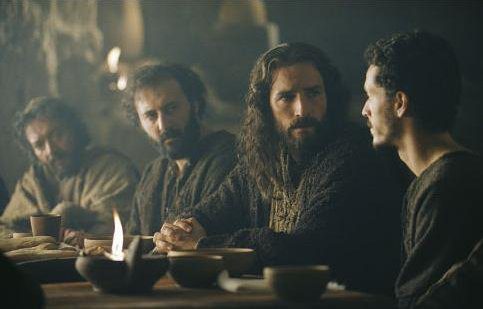 EVERYTHING you know about The Passion of the Christ is wrong. For over a year, the film’s most vocal critics have said Mel Gibson’s movie about the death of Jesus is anti-Semitic, while its most vocal supporters have said no, it’s only an accurate representation of scripture and history. In truth, the film is neither.
First, the charges of anti-Semitism. It is true that Gibson’s film tends to divide the Jewish race into those who follow Christ and those who try to have him killed; and it is true that The Passion, like many other films in this genre, is too soft on Pontius Pilate (in contrast to the callous, vicious figure portrayed by Luke and Philo), which has the unfortunate effect of making the Jews seem just that much more responsible for Jesus’ death.
But Gibson also goes out of his way to emphasize the Jewishness of Jesus and his followers. The first time we see his mother and Mary Magdalene, they recite a key passage from the Passover seder about being set free from slavery; and when the Roman soldiers force Simon of Cyrene to carry Jesus’ cross, one practically spits the word “Jew” at him. While Gibson could have gone further with this than he did, he never lets us forget that the Jews at this time were the victims of oppression.
In addition, a look at Gibson’s earlier films reveals he is anything but anti-Semitic. In his 1993 directorial debut, The Man without a Face, Gibson plays a classics tutor who feels dehumanized by his community, partly because one side of his body is covered in burn scars, and the first Shakespeare passage he recites is Shylock’s “Hath not a Jew eyes?” speech from The Merchant of Venice. Thus, Gibson draws an implicit link between his marginalized character and a Jewish character who also feels cut off from society.
So both Gibson and his film are a lot more complex than their critics give them credit for. But The Passion is also more complex than its supporters seem to recognize.
It is quite telling that the only way many Christians know how to defend a work of art is to assert that it is an “accurate” adaptation of scripture, as if to minimize its artistry or creativity. It is even more telling that many Christians make this assertion even when the work of art in question contains several elements that are quite definitely not accurate.
In his portrayal of the crucifixion, Gibson rejects modern historical scholarship wherever it interferes with the details of his medieval vision. He also erroneously identifies Mary Magdalene with the woman caught in adultery; and where Luke tells us an angel visited and strengthened Jesus in Gethsemane, Gibson has Satan pay Jesus a visit and taunt him instead. There isn’t necessarily anything wrong with these sorts of artistic decisions — but they are not exactly “accurate”.
And of course, Gibson puts a lot of violence in his film that is nowhere to be found in the gospels, or even in the visions of Sr. Anne Catherine Emmerich, the stigmatic nun whose Dolorous Passion partly inspired this film — so much so that you can’t help wondering whether Gibson, who won Oscars for producing and directing the gory medieval revenge epic Braveheart (1995), is indulging his more sadistic side.
As Hollywood Worldviews author Brian Godawa rightly points out, every film about Jesus is a product of its time, and that is as true of The Passion as it is of the others. But The Passion is also a highly personal film on Gibson’s part, so it also reflects his own artistic and theological inclinations. And in order to fully appreciate this film, we will have to talk about it in those terms.
This column is not a review of the film, which will be released to theatres across the country February 25. But to help put the film in some sort of broader artistic context, here are a few points to consider.
First, recent war movies like Saving Private Ryan, Black Hawk Down and the Gibson-starring We Were Soldiers have gone out of their way to be more violent than the movies that came before them — but why? Is a film more truthful just because it is bloodier than the others? Martin Scorsese’s The Last Temptation of Christ and the Visual Bible’s adaptation of Matthew were also once hailed for their grisly crucifixion scenes; does the law of diminishing returns apply to the violence of Jesus films, too?
Second, just as Braveheart was about nothing if not the definition of masculinity, Gibson seems to want his Jesus to be more manly than the others — that is, to be more tough. Jesus commits the film’s first violent act, as he crushes a snake underfoot, and he practically invites a second round of flogging by standing up straight and showing the soldiers he can take their abuse. Has Gibson perhaps reinvented Jesus in his own masochistic image?
Third, as Thomas Hibbs argues in his excellent book on nihilism in pop culture, Shows About Nothing, recent films have tried to find a sense of meaning by boldly proclaiming the existence of evil. If evil exists, then good must exist too, right? Gibson’s film, with its vivid depiction of human and demonic cruelty, seems to fit that pattern, but should a movie about Christ settle for that sort of message?
Fourth, the film’s poster says, “Dying was his reason for living,” and there is some truth to that. But did not Jesus rise from the dead? Did he not say he came that we might have life abundantly? Frederica Mathewes-Green notes that the church fathers tend to speak of Jesus’ death within the broader context of his Incarnation — so might it not be more accurate to say that living was Jesus’ reason for dying?
Finally, note this film’s use of flashbacks and point-of-view shots. Traditionally, films about Jesus have protected his divinity by objectifying him and keeping him at a distance; more recent films have explored his humanity by treating him more subjectively — we see his dreams and hear his thoughts — but they have also tended to lose sight of his divine authority. How does The Passion deal with these matters?
It is by asking questions like these that we can go beyond merely “using” the film as a ministry “tool” and truly engage with both the art and theology of Mel Gibson’s disturbing, inspiring, and always challenging cinematic vision.
— A version of this article was first published by BC Christian News.
Previous Post

January 30, 2004
Star Trek VI: The Undiscovered Country: the two-disc DVD
Next Post
February 25, 2004 Review: The Passion of the Christ (dir. Mel Gibson, 2004)
Browse Our Archives
Select a Category Anglican Planet Articles BC Christian News BC Report Bible Movies Bible Review Blog Books & Culture Campus Times CBC Radio Christianity Today ChristianWeek Essays Faith Today Festival Cinemas Guide Film Journals Georgia Straight Interviews MB Herald National Catholic Register Salvationist Today's Christian Two Chairs Ubyssey Uncategorized Vancouver Courier Vancouver Sun
Select a Month August 2025 April 2025 January 2025 December 2024 November 2024 May 2024 February 2024 December 2023 May 2023 March 2023 November 2022 July 2022 June 2022 May 2022 April 2022 February 2022 January 2022 December 2021 November 2021 October 2021 September 2021 August 2021 July 2021 June 2021 April 2021 March 2021 February 2021 January 2021 December 2020 November 2020 October 2020 August 2020 July 2020 June 2020 May 2020 March 2020 February 2020 January 2020 December 2019 November 2019 September 2019 July 2019 May 2019 April 2019 March 2019 February 2019 January 2019 December 2018 November 2018 October 2018 September 2018 July 2018 June 2018 May 2018 April 2018 March 2018 February 2018 January 2018 December 2017 November 2017 October 2017 September 2017 August 2017 July 2017 June 2017 May 2017 April 2017 March 2017 February 2017 January 2017 December 2016 November 2016 October 2016 September 2016 August 2016 July 2016 June 2016 May 2016 April 2016 March 2016 February 2016 January 2016 December 2015 November 2015 October 2015 September 2015 August 2015 July 2015 June 2015 May 2015 April 2015 March 2015 February 2015 January 2015 December 2014 November 2014 October 2014 September 2014 August 2014 July 2014 June 2014 May 2014 April 2014 March 2014 February 2014 January 2014 December 2013 November 2013 October 2013 September 2013 August 2013 July 2013 June 2013 May 2013 April 2013 March 2013 February 2013 January 2013 December 2012 November 2012 October 2012 September 2012 August 2012 July 2012 June 2012 April 2012 January 2012 January 2011 December 2010 November 2010 October 2010 September 2010 August 2010 July 2010 June 2010 May 2010 April 2010 March 2010 February 2010 January 2010 December 2009 November 2009 October 2009 September 2009 August 2009 July 2009 June 2009 May 2009 April 2009 March 2009 February 2009 January 2009 December 2008 November 2008 October 2008 September 2008 August 2008 July 2008 June 2008 May 2008 April 2008 March 2008 February 2008 January 2008 December 2007 November 2007 October 2007 September 2007 August 2007 July 2007 June 2007 May 2007 April 2007 March 2007 February 2007 January 2007 December 2006 November 2006 October 2006 September 2006 August 2006 July 2006 June 2006 May 2006 April 2006 March 2006 February 2006 January 2006 December 2005 November 2005 October 2005 September 2005 August 2005 July 2005 June 2005 May 2005 April 2005 March 2005 January 2005 December 2004 November 2004 October 2004 September 2004 August 2004 July 2004 June 2004 May 2004 April 2004 March 2004 February 2004 January 2004 November 2003 October 2003 August 2003 July 2003 June 2003 May 2003 January 2003 December 2002 November 2002 August 2002 July 2002 June 2002 May 2002 March 2002 January 2002 December 2001 November 2001 September 2001 August 2001 July 2001 June 2001 April 2001 March 2001 February 2001 December 2000 November 2000 October 2000 September 2000 August 2000 July 2000 June 2000 May 2000 April 2000 March 2000 January 2000 October 1999 August 1999 May 1999 April 1999 February 1999 January 1999 December 1998 November 1998 October 1998 August 1998 July 1998 June 1998 April 1998 March 1998 January 1998 November 1997 September 1997 July 1997 June 1997 April 1997 March 1997 February 1997 January 1997 December 1996 October 1996 September 1996 June 1996 March 1996 February 1996 January 1996 April 1995 November 1994 September 1994 September 1991
Follow Us!
TAKE THE
Religious Wisdom Quiz
Who said, "Surely this man was the Son of God!" at Jesus' crucifixion?
Select your answer to see how you score.
Peter Judas A Roman centurion Pilate
Related posts from FilmChat

Exclusive: A clip from Angel Studios' The King...
Oscar Isaac, Forest Whitaker join animated Jesus movie

Watch: The Chosen's creators on Season 4's big...
Which Bible movies are getting the most views...
TRENDING AT PATHEOS Religious Music & Entertainment

"Les Diabolique" and Transgression
Alongside something like Arrival, Vertigo, or Charade, Les Diaboliques is a...

"The Plague Dogs" and Mortality
So, flashback to the late 70s, early 80s. Walt Disney Studios is...

With the recent and highly successful release of Christopher Nolan’s epic film,...

"L'avventura" and Human Weakness
Today's piece is going to be a little different for a few...

I first want to apologize for not posting or writing anything. I'm...

I've engaged in the multi-year project of reading through the Church Fathers,...
view all Religious Music & Entertainment blogs
Ad-Free & Subscriber Log-In Subscription Support
- About Us
- 2026 Calendar
- Videos
- Podcasts
- Library of World Religions
- Faith In Media Tracker
- Advertise With Us
- Write for Us
- Privacy Policy
- Terms of Service
- Do Not Sell My Data
- Contact Us
- Radiant Digital
- Manage Newsletter Subscriptions
- Unsubscribe From Notifications
- Sitemap
Copyright 2008-2026, Patheos. All rights reserved.
Subscription Support Ad-Free & Subscriber Log-In
Follow Patheos