
BuddhistCatholicContemplativeEvangelicalGeneral ChristianHinduJewishLatter-day SaintMuslimNew VisionsProgressive Christian
Beliefs
- Buddhist
- Catholic
- Contemplative
- Evangelical
- General Christian
- Hindu
- Jewish
- Latter-day Saint
- More Voices
- Muslim
- New Visions
- Pagan
- Progressive Christian
Topics
- Religion News
- Food and Religion
- Sports and Religion
- Religious Art
- Religious Music and Entertainment
- Religious Events
- History and Religion
- Style and Religion
- Politics and Religion
- Women in Religion
- Recreation Outdoors and Religion
- Business Finance and Religion
- Careers Workplace and Religion
- Education and Religion
- Family Parenting and Religion
- Health Fitness and Religion
- Home and Religion
- Relationships and Religion
- Technology and Religion
- Travel and Religion
Columnists
- Buddhist Columnists
- Business Finance and Religion Columnists
- Careers Workplace and Religion Columnists
- Catholic Columnists
- Contemplative Columnists
- Education and Religion Columnists
- Evangelists Columnists
- Family Parenting and Religion Columnists
- General Christian Columnists
- Health Fitness and Religion Columnists
- Hindu Columnists
- History and Religion Columnists
- Home and Religion Columnists
- Jewish Columnists
- More Voices Columnists
- Latter Day Columnists
- Muslim Columnists
- New Visions Columnists
- Nonreligious Columnists
- Pagan Columnists
- Politics and Religion Columnists
- Progressive Columnists
- Recreation Outdoors and Religion Columnists
- Relationships and Religion Columnists
- Religion News Columnists
- Religious Art Columnists
- Religious Events Columnists
- Religious Music and Entertainment Columnists
- Sports and Religion Columnists
- Style and Religion Columnists
- Technology and Religion Columnists
- Travel and Religion Columnists
- Women in Religion Columnists
Resource Library
- 2026 Calendar
- Library of World Religions
- The 100 Most Holy Places on Earth
- Patheos Answers
- Podcasts
- Videos
- Faith Leaders Database
- Anglican Episcopalian
- Bahai
- Baptist
- Buddhism
- Christianity
- Confucianism
- Eastern Orthodoxy
- Hinduism
- Holiness and Pentecostal
- ISKCON
- Islam
- Judaism
- Lutheran
- Methodist
- The Church of Jesus Christ of Latter-day Saints
- New Age
- Paganism
- Presbytarian and Reformed
- Protestantism
- Religion Behind the Scenes
- Roman Catholic
- Scientology
- Shia Islam
- Sikhism
- Sufism
- Sunni Islam
- Taoism
- Zen
- See all religions
Research Tools
 Ad-Free & Subscriber Log-In Subscription Support
Ad-Free & Subscriber Log-In Subscription Support
Follow Patheos 

- Trending:
- Forgiveness
- |
- Marriage
- |
- Consciousness
- |
- Death Penalty
- |
- Election
- |
- Halloween

-
Articles
- Home
- Religious Music & Entertainment
- Harry Potter’s Christian fans come to his defense
Harry Potter’s Christian fans come to his defense
Last updated on: April 25, 2013 at 12:47 pm by Peter T. Chattaway
Harry Potter’s Christian fans come to his defense 2013-04-25T12:47:31-07:00 Peter T. Chattaway
Patheos Explore the world's faith through different perspectives on religion and spirituality! Patheos has the views of the prevalent religions and spiritualities of the world.
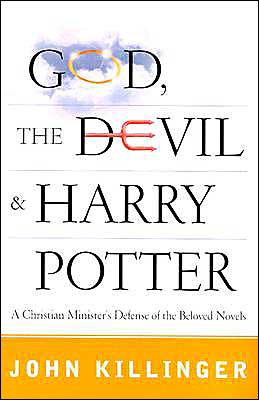 • John Killinger: God, the Devil & Harry Potter, St. Martin’s, 2002.
• Connie Neal: The Gospel According to Harry Potter, Westminster John Knox, 2002.
• John Granger: The Hidden Key to Harry Potter, Zossima, 2002.
CHRISTIAN Harry Potter fans, unite!
It has been over two years since Richard Abanes wrote Harry Potter and the Bible: The Menace behind the Magick, a scathing critique of just about everything to do with J.K. Rowling’s bestselling series about an orphaned English boy who goes to a boarding school for witches and wizards.
Since then, no one has really added to Abanes’s criticisms, but quite a few Christians have lined up to defend Rowling and her books against the accusation that they are simply trying to warm children up to the sort of real-life occultic practices that are forbidden in the Bible.
Three recent books underscore the positive, and even Christian, elements in the Harry Potter books, but they do so from very different points of view.
John Killinger, a Congregationalist minister with doctorates in theology and literature, takes the liberal Christian approach in God, the Devil & Harry Potter. He says Rowling’s books grow out of a Christian understanding of the world but ultimately point to a spirituality that transcends any particular religion.
According to Killinger, Greeks and Romans saw the world as a series of struggles but did not think of the struggle as one between good and evil until Christianity came along; and he says the Potter books appeal to children because they, unlike many adults, still have a deep awareness of this hidden struggle within our world.
Killinger notes how many of the creatures and symbols in Rowling’s books actually come from medieval Christianity; and, borrowing a phrase from Henri Nouwen, he argues that Harry Potter, who bears a scar on his forehead from his first encounter with the evil Lord Voldemort, may be a “wounded healer” like Christ.
The Harry Potter books, Killinger says, are a hit because they go beyond the materialist assumptions of our age and they put us in touch with “the magic and mystery of life, the dimension beyond the ordinary, the sense of wonder that makes even commonplace experiences shine with the brilliance of celestial bodies.”
So far, so good. However, Christians of a more traditional persuasion may take issue with Killinger’s theological reliance on Marcus Borg and Matthew Fox; with his historical skepticism regarding the Gospel of John; or with the way he waffles on the resurrection and says the appearances of Christ are just one example of how the dead stay in touch with the living.
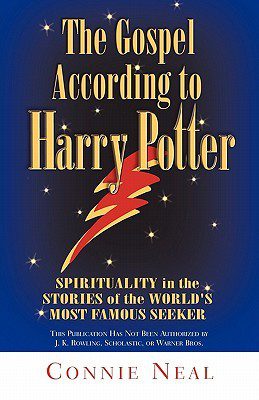 Connie Neal takes a more evangelical approach in The Gospel According to Harry Potter, though she does not offer a critical analysis of Rowling’s books per se — she already did that two years ago, in What’s a Christian to Do with Harry Potter? Instead, this time, she quite openly reads her Christian faith into the books.
According to Neal, the magic in Rowling’s books is pure make-believe, and if Abanes and other critics see real-world occultism in the books, then it is because they really want to find it there and they are reading the books selectively to prove their point. In response, Neal asks whether it is possible to use this approach to find the gospel in Rowling’s books as well.
Neal certainly draws some interesting parallels between the books and Christian faith, noting, for example, that people will try to flee God just as the Dursleys tried to flee Dumbledore’s letters, and that the tension between choice and destiny in Harry’s experiences with the Sorting Hat reflects the deeply Christian paradox of free will and predestination.
However, despite the valid analogies she draws, Neal’s book does suffer from a tendency towards utilitarianism — rather than explore the Potter books as literature on their own terms, she looks for ways that Christians can use them to explain the faith or to make converts.
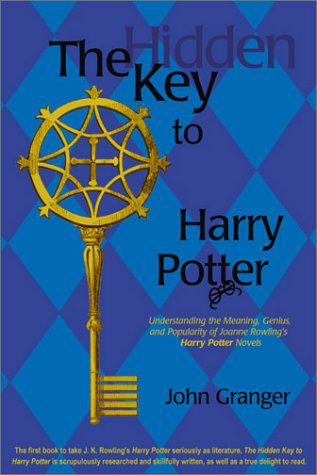 Those seeking deeper insights into the Potter series should check out The Hidden Key to Harry Potter by Orthodox author John Granger (no relation to Harry’s friend Hermione!). Granger is a shameless self-promoter and his writing style is a tad insouciant for my tastes, but he does the best job so far of unpacking the Christian themes that underlie these stories.
Whether Rowling intends for her books to have these Christian themes, or whether they simply reflect her love of British culture and tradition, is of course open to debate. For his part, Granger argues that Rowling is a “closeted Inkling”, that is, a Christian writer like C.S. Lewis or J.R.R. Tolkien who hopes to baptize the imagination through Christian symbols and by encouraging the reader to choose virtue just as Harry Potter does.
Like Killinger, Granger notes that many of the creatures and objects in the Potter books have special Christian significance, especially when they are seen through a medieval lense. Griffins, unicorns, centaurs, stags, the phoenix, even the philosopher’s stone — all of these things represent Christ in some way, he argues.
Granger also notes that every book so far ends with Harry symbolically going through death and resurrection, usually by descending underground to confront the villain and then rising to the surface again; and he makes a compelling argument that the relationship between Harry and his two best friends, Ron and Hermione, symbolizes classical Christian beliefs about the need for harmony between spirit, body, and mind.
Granger’s book does have its own weaknesses. Of course, it is too early to gauge the accuracy of his predictions for the remaining three books — though the next one, The Order of the Phoenix, comes out this Saturday — but some of his other guesses, like his theory that the vain professor Gilderoy Lockhart was inspired by the anti-Christian children’s author Philip Pullman, seem like a stretch.
Granger also claims Rowling’s books are a “broadside, Christian attack” against the naturalistic assumptions of modernity, but I wonder how accurate it is to label the books “anti-modern”, as Granger does. Lewis and Tolkien may fit that label, but not all that is critical of modernity is traditional, and it is at least possible that these books might best be described as “post-modern”; however, this is one option Granger never considers.
It is tempting to argue that all three of these authors have been caught up in the hype and are seeing what they want to see in the Harry Potter books. All three of them praise Rowling’s storytelling, and if there are any weaknesses in her stories — and I think there are, though I do like the books myself — you would hardly know it from reading these commentaries.
We’re still waiting for a more balanced critical appraisal of the Potter books. But positive Christian responses such as these do provide a welcome antidote to Potter’s more hypercritical opponents.
— A version of this article was first published in BC Christian News*.*
gospel according to harry potter
harry potter and the order of the phoenix
whats a christian to do with harry potter
Previous Post

May 15, 2003
Review: The Matrix Reloaded (dir. the Wachowskis, 2003)
Next Post
July 30, 2003 Comment: Mel Gibson's Jesus movie sparks controversy
Browse Our Archives
Select a Category Anglican Planet Articles BC Christian News BC Report Bible Movies Bible Review Blog Books & Culture Campus Times CBC Radio Christianity Today ChristianWeek Essays Faith Today Festival Cinemas Guide Film Journals Georgia Straight Interviews MB Herald National Catholic Register Salvationist Today's Christian Two Chairs Ubyssey Uncategorized Vancouver Courier Vancouver Sun
Select a Month August 2025 April 2025 January 2025 December 2024 November 2024 May 2024 February 2024 December 2023 May 2023 March 2023 November 2022 July 2022 June 2022 May 2022 April 2022 February 2022 January 2022 December 2021 November 2021 October 2021 September 2021 August 2021 July 2021 June 2021 April 2021 March 2021 February 2021 January 2021 December 2020 November 2020 October 2020 August 2020 July 2020 June 2020 May 2020 March 2020 February 2020 January 2020 December 2019 November 2019 September 2019 July 2019 May 2019 April 2019 March 2019 February 2019 January 2019 December 2018 November 2018 October 2018 September 2018 July 2018 June 2018 May 2018 April 2018 March 2018 February 2018 January 2018 December 2017 November 2017 October 2017 September 2017 August 2017 July 2017 June 2017 May 2017 April 2017 March 2017 February 2017 January 2017 December 2016 November 2016 October 2016 September 2016 August 2016 July 2016 June 2016 May 2016 April 2016 March 2016 February 2016 January 2016 December 2015 November 2015 October 2015 September 2015 August 2015 July 2015 June 2015 May 2015 April 2015 March 2015 February 2015 January 2015 December 2014 November 2014 October 2014 September 2014 August 2014 July 2014 June 2014 May 2014 April 2014 March 2014 February 2014 January 2014 December 2013 November 2013 October 2013 September 2013 August 2013 July 2013 June 2013 May 2013 April 2013 March 2013 February 2013 January 2013 December 2012 November 2012 October 2012 September 2012 August 2012 July 2012 June 2012 April 2012 January 2012 January 2011 December 2010 November 2010 October 2010 September 2010 August 2010 July 2010 June 2010 May 2010 April 2010 March 2010 February 2010 January 2010 December 2009 November 2009 October 2009 September 2009 August 2009 July 2009 June 2009 May 2009 April 2009 March 2009 February 2009 January 2009 December 2008 November 2008 October 2008 September 2008 August 2008 July 2008 June 2008 May 2008 April 2008 March 2008 February 2008 January 2008 December 2007 November 2007 October 2007 September 2007 August 2007 July 2007 June 2007 May 2007 April 2007 March 2007 February 2007 January 2007 December 2006 November 2006 October 2006 September 2006 August 2006 July 2006 June 2006 May 2006 April 2006 March 2006 February 2006 January 2006 December 2005 November 2005 October 2005 September 2005 August 2005 July 2005 June 2005 May 2005 April 2005 March 2005 January 2005 December 2004 November 2004 October 2004 September 2004 August 2004 July 2004 June 2004 May 2004 April 2004 March 2004 February 2004 January 2004 November 2003 October 2003 August 2003 July 2003 June 2003 May 2003 January 2003 December 2002 November 2002 August 2002 July 2002 June 2002 May 2002 March 2002 January 2002 December 2001 November 2001 September 2001 August 2001 July 2001 June 2001 April 2001 March 2001 February 2001 December 2000 November 2000 October 2000 September 2000 August 2000 July 2000 June 2000 May 2000 April 2000 March 2000 January 2000 October 1999 August 1999 May 1999 April 1999 February 1999 January 1999 December 1998 November 1998 October 1998 August 1998 July 1998 June 1998 April 1998 March 1998 January 1998 November 1997 September 1997 July 1997 June 1997 April 1997 March 1997 February 1997 January 1997 December 1996 October 1996 September 1996 June 1996 March 1996 February 1996 January 1996 April 1995 November 1994 September 1994 September 1991
Follow Us!
TAKE THE
Religious Wisdom Quiz
But you, Bethlehem Ephrathah, though you are small, out of you will come a ruler over Israel. What makes this town significant?
Select your answer to see how you score.
A place of prophecy The birthplace of the Messiah David's hometown A holy city
Related posts from FilmChat

Review: Fantastic Beasts: The Secrets of Dumbledore (dir....

Review: The Most Reluctant Convert: The Untold Story...

Box office: Fantastic Beasts underperforms Harry Potter in...

The New World a feast for the senses...
TRENDING AT PATHEOS Religious Music & Entertainment

"Les Diabolique" and Transgression
Alongside something like Arrival, Vertigo, or Charade, Les Diaboliques is a...

"The Plague Dogs" and Mortality
So, flashback to the late 70s, early 80s. Walt Disney Studios is...

With the recent and highly successful release of Christopher Nolan’s epic film,...

"L'avventura" and Human Weakness
Today's piece is going to be a little different for a few...

I first want to apologize for not posting or writing anything. I'm...

I've engaged in the multi-year project of reading through the Church Fathers,...
view all Religious Music & Entertainment blogs
Ad-Free & Subscriber Log-In Subscription Support
- About Us
- 2026 Calendar
- Videos
- Podcasts
- Library of World Religions
- Faith In Media Tracker
- Advertise With Us
- Write for Us
- Privacy Policy
- Terms of Service
- Do Not Sell My Data
- Contact Us
- Radiant Digital
- Manage Newsletter Subscriptions
- Unsubscribe From Notifications
- Sitemap
Copyright 2008-2026, Patheos. All rights reserved.
Subscription Support Ad-Free & Subscriber Log-In
Follow Patheos