
BuddhistCatholicContemplativeEvangelicalGeneral ChristianHinduJewishLatter-day SaintMuslimNew VisionsProgressive Christian
Beliefs
- Buddhist
- Catholic
- Contemplative
- Evangelical
- General Christian
- Hindu
- Jewish
- Latter-day Saint
- More Voices
- Muslim
- New Visions
- Pagan
- Progressive Christian
Topics
- Religion News
- Food and Religion
- Sports and Religion
- Religious Art
- Religious Music and Entertainment
- Religious Events
- History and Religion
- Style and Religion
- Politics and Religion
- Women in Religion
- Recreation Outdoors and Religion
- Business Finance and Religion
- Careers Workplace and Religion
- Education and Religion
- Family Parenting and Religion
- Health Fitness and Religion
- Home and Religion
- Relationships and Religion
- Technology and Religion
- Travel and Religion
Columnists
- Buddhist Columnists
- Business Finance and Religion Columnists
- Careers Workplace and Religion Columnists
- Catholic Columnists
- Contemplative Columnists
- Education and Religion Columnists
- Evangelists Columnists
- Family Parenting and Religion Columnists
- General Christian Columnists
- Health Fitness and Religion Columnists
- Hindu Columnists
- History and Religion Columnists
- Home and Religion Columnists
- Jewish Columnists
- More Voices Columnists
- Latter Day Columnists
- Muslim Columnists
- New Visions Columnists
- Nonreligious Columnists
- Pagan Columnists
- Politics and Religion Columnists
- Progressive Columnists
- Recreation Outdoors and Religion Columnists
- Relationships and Religion Columnists
- Religion News Columnists
- Religious Art Columnists
- Religious Events Columnists
- Religious Music and Entertainment Columnists
- Sports and Religion Columnists
- Style and Religion Columnists
- Technology and Religion Columnists
- Travel and Religion Columnists
- Women in Religion Columnists
Resource Library
- 2026 Calendar
- Library of World Religions
- The 100 Most Holy Places on Earth
- Patheos Answers
- Podcasts
- Videos
- Faith Leaders Database
- Anglican Episcopalian
- Bahai
- Baptist
- Buddhism
- Christianity
- Confucianism
- Eastern Orthodoxy
- Hinduism
- Holiness and Pentecostal
- ISKCON
- Islam
- Judaism
- Lutheran
- Methodist
- The Church of Jesus Christ of Latter-day Saints
- New Age
- Paganism
- Presbytarian and Reformed
- Protestantism
- Religion Behind the Scenes
- Roman Catholic
- Scientology
- Shia Islam
- Sikhism
- Sufism
- Sunni Islam
- Taoism
- Zen
- See all religions
Research Tools
 Ad-Free & Subscriber Log-In Subscription Support
Ad-Free & Subscriber Log-In Subscription Support
Follow Patheos 

- Trending:
- Forgiveness
- |
- Marriage
- |
- Consciousness
- |
- Death Penalty
- |
- Election
- |
- Halloween

-
Articles
- Home
- Religious Music & Entertainment
- Interview: Darren Aronofsky (π, 1998)
Interview: Darren Aronofsky (π, 1998)
Last updated on: April 8, 2016 at 9:31 pm by Peter T. Chattaway
Interview: Darren Aronofsky (π, 1998) 2016-04-08T21:31:43-07:00 Peter T. Chattaway
Patheos Explore the world's faith through different perspectives on religion and spirituality! Patheos has the views of the prevalent religions and spiritualities of the world.
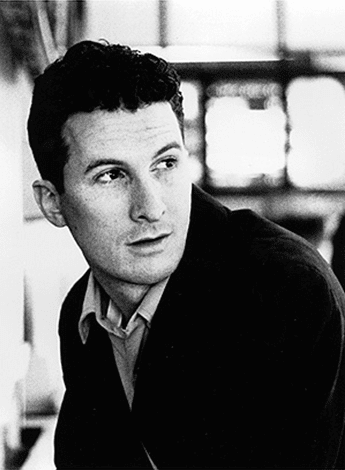 Darren Aronofsky shot his brilliant debut feature film Pi for a paltry U.S. $60,000, a sum he raised partly by asking everyone he knew to give him $100 in exchange for a place in the film’s credits.
The film concerns a brainy mathematician named Max who is convinced that there is a pattern — perhaps of divine origin — underlying the apparently chaotic universe. Wall Street brokers and Kabbalistic Jews agree, and they want to use the secrets locked inside Max’s brain.
Inventive imagery, creative montage and, above all, some truly interesting ideas raise this film above the more pedestrian flicks that fall under the “independent film” umbrella these days. Aronofsky discussed some of those ideas with Two Chairs during a phone interview shortly before his film opened at the Fifth Avenue theatre.
PTC: How did you get the idea for the film? Where is it from?
DA: It’s sort of a scrapbook of experiences I’ve had, stories I’ve heard, things I’ve read. I sort of had a deck full of stuff and shuffled them and out came Pi.
PTC: Have you studied mathematics yourself?
DA: Not really. I studied mathematics in high school, stopped doing mathematics when I was a junior. You know, the film’s not really about math. It’s more about mystical math. It’s about using numbers [when] searching for God. Those ideas really intrigued me.
PTC: Have you got any sort of religious background?
DA: Not really. I just thought the Kabbala was very interesting stuff when I experienced it, and I learned some of it when I was in Israel, visiting, and I just found it intriguing. All the Kabbala stuff in the movie, by the way, is completely true. A lot of people think I made that stuff up, but it’s really one hundred percent true. People live by that and die by that stuff.
PTC: Well, I’ve taken a couple of courses on Jewish literature, and the Kabbala has come up in there before —
DA: Oh, cool.
PTC: — and the fact that letters count as numbers and so forth. I notice that your website for Pi has a link to an article on the “Bible code”. Do you see that as a nice sort of coincidence?
DA: It’s so strange, the synchronicity of pop culture is always happening to me. When we were almost finished cutting Pi, I heard about Bible codes, and three weeks later I hear that Madonna is doing Kabbala, and it’s very strange how people are all sort of interested in the same thing as the same time.
PTC: What about yourself? Do you put much stock in that sort of thing?
DA: Into Kabbala?
PTC: That, yeah, or Bible codes.
DA: I find it very intriguing, and when I was doing research for the film, I saw stuff that really, really blew my mind, stuff that I just couldn’t explain, and it was very interesting.
PTC: Oh-kay. Anything more specific than that?
DA: Y’know, I could, but it’s about a 45-minute discussion. I need paper and pen. But I saw stuff, these sort of big mystics, or these sort of Jewish shamans, that go around and perform small miracles.
PTC: Interesting. Performing small miracles with numbers and stuff, or something more empirical?
DA: Something more.
PTC: Okay. One of the things I wasn’t quite sure about while watching the film — and this may be one of those things you want people to discuss — was the question of whether there actually is a pattern or if it’s simply a matter of somebody perceiving a pattern. How much of that pattern is actually there, and how much of it is people just thinking they see one?
DA: Well, that’s exactly the big question of the film. That’s what we want people walking away with, discussing. The best part is when audience members actually start looking for patterns within the movie, which there are some.
PTC: Intentional?
DA: Oh yeah, that’s always great, when people respond to those.
PTC: How much of those patterns was intentional and how much was accidental?
DA: Some people come up with theories about Pi that are way out there! (laughter) That I had no clue what was going on. Some things, y’know, like, the whole structure is constructed like a puzzle. There’s repeating themes and repeating locations and repeating thoughts.
PTC: Emulating the spiral pattern, coming back to things?
DA: Some of the structural things we did do relate back to the spirals and also to the Fibonacci sequence. For instance, we even shot the film in a ratio called 1.68 which is rarely ever shot. It’s shot sometimes in Europe, but it’s never really shot in America, and the reason we shot that is because that’s the Golden Ratio.
PTC: I was wondering about that.
DA: It’s a very strange shape, the screen. I mean, most 16mm films are usually 1.33, which is a TV set, and most feature Hollywood films are 1.85, and we shot it somewhere in the middle. The Golden Ratio supposedly, theoretically, has this well-balanced form, which intrigued me, and that’s why I shot it in that ratio, because, y’know, Pythagoras discovered this, and DaVinci and all the scholars in the 17th century started to pencil it into all their paintings, and now it’s followed through so that credit cards are actually 1.68 ratio, which is kind of weird.
PTC: Would you say that you yourself see a pattern in the world, and if there is a pattern in the world, does that necessarily indicate anything beyond?
DA: Well, think about it. It’s kind of weird that our DNA and the Milky Way are both the same shape, that the smallest building block of our bodies and the largest shape of our home are the same shape. That’s just a little too strange. And, y’know, the circle’s another repeating pattern you see everywhere. You see it in your lover’s eyeballs and the sun, the moon, and it’s just kind of strange that there are these repeating patterns everywhere.
PTC: Yeah, okay, they’re there, but can one go beyond that, though?
DA: And say what?
PTC: Either that there is a purpose or a God apart from that?
DA: Well, I’m not sure if the spiral is the pattern that represents God or the circle is, but it definitely makes you wonder why that is. There clearly is an order beneath the chaos, and it’s a matter of wondering what that order is. Is the ultimate order God? I don’t know, that’s a hard one to answer. (laughter) People have been asking that question since the beginning of time, but, y’know, maybe.
PTC: Are you familiar with Contact — the novel, not the film?
DA: I actually have never read the book, but I did see the movie.
PTC: Have you heard about the role that pi plays in the book?
DA: I heard that that’s the actual first message that they beam to us or something.
PTC: I think they start with prime numbers, actually, and that’s how we know that we’re getting an intelligently coded message, but in the last pages, if I can spoil the ending —
DA: No, that’s fine.
PTC: — in the book, the Jodie Foster character discovers a message coded in pi. Somewhere down the string of digits, she discovers a long sequence of zeroes, and then a sequence of prime numbers, and because it’s a transcendent number, this sequence of digits must be a coded message from God, is the idea.
DA: Wow.
PTC: And I was just wondering if you were familiar with that at all.
DA: No, that’s great, that’s exactly what intrigued us about the number. You have this very simple shape, a circle, and then you take the circumference and divide it by the number — a very, very simple operation — but then suddenly you have this immense complexity, you have the number 3.14 that stretches off into infinity, and the question is, What is in that infinite string of numbers? Is the name of God there? Is it the universe’s DNA?
PTC: But another question that occurs to me — and I’m wondering what you’d make of this — is, if there is an infinite string of numbers, you know the old saying that if you get an infinite number of monkeys on an infinite number of typewriters eventually one of them will produce the works of Shakespeare?
DA: Oh yeah, and you don’t even need an infinite. All you need is one monkey for infinity sitting in front of a typewriter and all literature is there.
PTC: Right, so if you have this long, infinite sequence of numbers, can you really say that you find it? ’cause there is the one professor in your film who’s trying to find a pattern in pi, and if you have an infinite number of numbers, can you really say you have a pattern when, really, you should maybe expect to find everything?
DA: Well, maybe you could get closer — maybe you don’t need every single digit to find the pattern. Maybe the pattern is repeating and you only need a certain amount of numbers to actually get to that repeating pattern, or maybe actually it’s approaching what the pattern is, and maybe it’s the human aspect of our souls that takes the final leap from the numbers to the full understanding of the order.
PTC: (laughter) Okay.
DA: Did that make any sense? A little? Maybe.
PTC: It sounded like you were trying to transcend the transcendent number there, but okay.
DA: Well, I think once you do get the transcendent number, you do transcend. That’s my point, that, basically, the question of why are we here, once it’s answered, the question no longer exists.
PTC: Oh, interesting.
DA: It’s true, though. That’s what Max is all about. That’s what the white void scene is about.
PTC: You mentioned that all the Kabbala stuff was true. Does that include the idea that the true name of God is 216 letters long?
DA: That’s true. You wanna hear something weird, though, about that? Where it comes from is there are 72 three-letter names of God, and I was talking to a Hindu scholar about this, and he was like, “That’s weird,” because in Hindu numerology, you add the numbers up, so 216 would be 6 plus 1 plus 2 which equals 9, right? And he said 9 is the number of the apocalypse. And I said, “Oh, that’s interesting.” And I told him about 72 times 3, and he said 7 plus 2 is 9, and I said, “Hmmm, that’s interesting.” Then, later, I’m talking to another friend who is a neuroscientist, and he’s like, “Y’know, I never realized where you got the 216 number from.” And I said, “Oh, it’s from the Kabbala.” And he’s like, “Oh, did you realize it’s also 6 times 6 times 6.” It’s a little weird, right? No? You don’t buy it? Okay, hold on, I got one more for you. I just read this somewhere. Someone at Artisan figured this out. It says “Pi: Did You Know?” and it’s all these different things, like Albert Einstein was born on the day of pi, which is the first seven numbers of pi, March 14 1879 — it’s true, though. Anyway, the next thing is, the first 144 digits of pi — now I don’t know if you remember, but 144 was a significant number we brought up in Pi, it’s actually a Fibonacci number, it was the one that meant the Garden of Eden — and I didn’t write this, they put this together at Artisan and I just read it today — it says the first 144 digits of pi add up to 666.
PTC: No way.
DA: Yes, it’s right in front of me. And then it says, “Of course, 144 equals 6 plus 6 times 6 plus 6 — 12 times 12.” Kinda weird. But the weird thing is I didn’t even know that. That tripped me out. It just shows you you can find meaning anywhere, and I’m not saying that necessarily this meaning is in pi, but it goes to that whole speech that Sol says, that as soon as you go looking for order, you can find it anywhere. So I don’t know, maybe we’re all insane or we’ll all on the brink of discovering what God is.
PTC: Looking at your diary on the website, you said one of your rules for writing was, “No breaks for confusion — type through it.” And I was wondering if there might be a sense of that, just spew whatever comes out of your fingertips and then look for order perhaps within that chaos.
DA: (laughter) That’s interesting. Yeah, what I find is, more about the writing process, though, is like — I dunno, you’re a writer, so you must know that at times when you feel frustrated and you can’t write, but that if you actually just work through it sometimes great things come out from that, y’know?
PTC: Sometimes.
DA: Sometimes, yeah, I know, but sometimes not. But I just find, keep digging away.
PTC: You say there have been some way-out-there theories. What’s your favorite totally-unexpected theory about what Pi was all about, that you’ve heard?
DA: I’ve heard one that the original height of the main pyramid at Giza, if you take the original height before erosion and divide it by the base, you get pi. And why it’s significantly interesting is because the ancient Egyptians were at about 3.12. And people have used that to argue that we have been visited by aliens. (hums Twilight Show motif) I don’t think the aliens — I have no problem with aliens, I just have a problem with them being personified. It just seems so strange that these humanoid creatures would come down and build structures for humans. I buy more that — I don’t know if you remember Liquid Sky, it was a New York movie in the ’80s?
PTC: No, I haven’t seen that.
DA: Anyway, the aliens were these energy forces flying in a spaceship the size of a frisbee, and I was like, “That’s more interesting!” Because that’s probably what they would be, something totally different than what we think they are.
PTC: How about the making of the film itself? How much did it cost to actually make the film?
DA: $60,000 U.S., which is, what, ten million dollars Canadian?
PTC: Be nice!
DA: I’m joking!
PTC: And I hear that you made it on the sly, shooting without permits and so on.
DA: Oh yeah. The whole movie was a cyberpunk film. We tried to make the first cyberpunk movie in America — actually, I should say the United States, ’cause I guess Cronenberg did it in Canada way before anyone — but we tried to do that in New York City, and the whole attitude was, we are going to make this movie by any means necessary, so we did a lot of guerrilla filmmaking.
PTC: Were you ever caught?
DA: Uh, there was one time when a cop gave us a little hassle, but, y’know, Giuliani’s cops, you give ’em five bucks and they walk away. (laughter) But no, we didn’t really have any problems. We were very smart about avoiding police.
PTC: And they never asked you why you had brains on the staircase and everything?
DA: Actually, I was gonna not tell you that story, ’cause it was a long story, but I’ll tell it to you ’cause it actually happened. What happened is, we were shooting that sequence with the brains on the steps in a subway in Brooklyn, and there was blood everywhere, and every time a train would pull in, we’d have to stop production and cover the brain and ask people to watch out for the blood, y’know? And we had lookouts and everything, and we really tried to be on the tip, being hiding out. And finally I’m off thinking about a shot, and my first A.D. Laura comes up to me, she’s like, “Darren, how many stops to Coney Island?” And I’m like, “Laura, we’re not going to Coney Island until tomorrow.” And she’s like, “No, how many more stops to Coney Island?” And she’s pointing, and it’s a cop, New York City’s finest, staring at the brain, and I’m like, “Fuck!” The cop just nods and walks away, and I’m like, “Goddamn! New York City’s finest is so great, so awesome!” Anyway, we keep filming, we finish the scene, and we go back upstairs, and my producer Eric Watson is sitting in the van, and I tell Eric the story, and it turns out that Woody Allen is shooting across the street in Prospect Park, and she must’ve thought we were the second unit for him. So thank you, Woody Allen.
— A version of this interview first appeared in Two Chairs magazine.
Previous Post

July 1, 1998
Amnesiacs Anonymous
Next Post
August 25, 1998 Review: π (dir. Darren Aronofsky, 1998)
Browse Our Archives
Select a Category Anglican Planet Articles BC Christian News BC Report Bible Movies Bible Review Blog Books & Culture Campus Times CBC Radio Christianity Today ChristianWeek Essays Faith Today Festival Cinemas Guide Film Journals Georgia Straight Interviews MB Herald National Catholic Register Salvationist Today's Christian Two Chairs Ubyssey Uncategorized Vancouver Courier Vancouver Sun
Select a Month August 2025 April 2025 January 2025 December 2024 November 2024 May 2024 February 2024 December 2023 May 2023 March 2023 November 2022 July 2022 June 2022 May 2022 April 2022 February 2022 January 2022 December 2021 November 2021 October 2021 September 2021 August 2021 July 2021 June 2021 April 2021 March 2021 February 2021 January 2021 December 2020 November 2020 October 2020 August 2020 July 2020 June 2020 May 2020 March 2020 February 2020 January 2020 December 2019 November 2019 September 2019 July 2019 May 2019 April 2019 March 2019 February 2019 January 2019 December 2018 November 2018 October 2018 September 2018 July 2018 June 2018 May 2018 April 2018 March 2018 February 2018 January 2018 December 2017 November 2017 October 2017 September 2017 August 2017 July 2017 June 2017 May 2017 April 2017 March 2017 February 2017 January 2017 December 2016 November 2016 October 2016 September 2016 August 2016 July 2016 June 2016 May 2016 April 2016 March 2016 February 2016 January 2016 December 2015 November 2015 October 2015 September 2015 August 2015 July 2015 June 2015 May 2015 April 2015 March 2015 February 2015 January 2015 December 2014 November 2014 October 2014 September 2014 August 2014 July 2014 June 2014 May 2014 April 2014 March 2014 February 2014 January 2014 December 2013 November 2013 October 2013 September 2013 August 2013 July 2013 June 2013 May 2013 April 2013 March 2013 February 2013 January 2013 December 2012 November 2012 October 2012 September 2012 August 2012 July 2012 June 2012 April 2012 January 2012 January 2011 December 2010 November 2010 October 2010 September 2010 August 2010 July 2010 June 2010 May 2010 April 2010 March 2010 February 2010 January 2010 December 2009 November 2009 October 2009 September 2009 August 2009 July 2009 June 2009 May 2009 April 2009 March 2009 February 2009 January 2009 December 2008 November 2008 October 2008 September 2008 August 2008 July 2008 June 2008 May 2008 April 2008 March 2008 February 2008 January 2008 December 2007 November 2007 October 2007 September 2007 August 2007 July 2007 June 2007 May 2007 April 2007 March 2007 February 2007 January 2007 December 2006 November 2006 October 2006 September 2006 August 2006 July 2006 June 2006 May 2006 April 2006 March 2006 February 2006 January 2006 December 2005 November 2005 October 2005 September 2005 August 2005 July 2005 June 2005 May 2005 April 2005 March 2005 January 2005 December 2004 November 2004 October 2004 September 2004 August 2004 July 2004 June 2004 May 2004 April 2004 March 2004 February 2004 January 2004 November 2003 October 2003 August 2003 July 2003 June 2003 May 2003 January 2003 December 2002 November 2002 August 2002 July 2002 June 2002 May 2002 March 2002 January 2002 December 2001 November 2001 September 2001 August 2001 July 2001 June 2001 April 2001 March 2001 February 2001 December 2000 November 2000 October 2000 September 2000 August 2000 July 2000 June 2000 May 2000 April 2000 March 2000 January 2000 October 1999 August 1999 May 1999 April 1999 February 1999 January 1999 December 1998 November 1998 October 1998 August 1998 July 1998 June 1998 April 1998 March 1998 January 1998 November 1997 September 1997 July 1997 June 1997 April 1997 March 1997 February 1997 January 1997 December 1996 October 1996 September 1996 June 1996 March 1996 February 1996 January 1996 April 1995 November 1994 September 1994 September 1991
Follow Us!
TAKE THE
Religious Wisdom Quiz
Who was crucified and rose again after three days?
Select your answer to see how you score.
Paul John the Baptist Moses Jesus
Related posts from FilmChat

Watch: The Chosen's creators on Season 4's big...
Interview: Emilio Estevez on immersive travel, the road...
Interview: David Helling on directing His Only Son
Interview: Vanessa Benavente on playing Jesus' mother in...
TRENDING AT PATHEOS Religious Music & Entertainment

"Les Diabolique" and Transgression
Alongside something like Arrival, Vertigo, or Charade, Les Diaboliques is a...

"The Plague Dogs" and Mortality
So, flashback to the late 70s, early 80s. Walt Disney Studios is...

With the recent and highly successful release of Christopher Nolan’s epic film,...

"L'avventura" and Human Weakness
Today's piece is going to be a little different for a few...

I first want to apologize for not posting or writing anything. I'm...

I've engaged in the multi-year project of reading through the Church Fathers,...
view all Religious Music & Entertainment blogs
Ad-Free & Subscriber Log-In Subscription Support
- About Us
- 2026 Calendar
- Videos
- Podcasts
- Library of World Religions
- Faith In Media Tracker
- Advertise With Us
- Write for Us
- Privacy Policy
- Terms of Service
- Do Not Sell My Data
- Contact Us
- Radiant Digital
- Manage Newsletter Subscriptions
- Unsubscribe From Notifications
- Sitemap
Copyright 2008-2026, Patheos. All rights reserved.
Subscription Support Ad-Free & Subscriber Log-In
Follow Patheos