
BuddhistCatholicContemplativeEvangelicalGeneral ChristianHinduJewishLatter-day SaintMuslimNew VisionsProgressive Christian
Beliefs
- Buddhist
- Catholic
- Contemplative
- Evangelical
- General Christian
- Hindu
- Jewish
- Latter-day Saint
- More Voices
- Muslim
- New Visions
- Pagan
- Progressive Christian
Topics
- Religion News
- Food and Religion
- Sports and Religion
- Religious Art
- Religious Music and Entertainment
- Religious Events
- History and Religion
- Style and Religion
- Politics and Religion
- Women in Religion
- Recreation Outdoors and Religion
- Business Finance and Religion
- Careers Workplace and Religion
- Education and Religion
- Family Parenting and Religion
- Health Fitness and Religion
- Home and Religion
- Relationships and Religion
- Technology and Religion
- Travel and Religion
Columnists
- Buddhist Columnists
- Business Finance and Religion Columnists
- Careers Workplace and Religion Columnists
- Catholic Columnists
- Contemplative Columnists
- Education and Religion Columnists
- Evangelists Columnists
- Family Parenting and Religion Columnists
- General Christian Columnists
- Health Fitness and Religion Columnists
- Hindu Columnists
- History and Religion Columnists
- Home and Religion Columnists
- Jewish Columnists
- More Voices Columnists
- Latter Day Columnists
- Muslim Columnists
- New Visions Columnists
- Nonreligious Columnists
- Pagan Columnists
- Politics and Religion Columnists
- Progressive Columnists
- Recreation Outdoors and Religion Columnists
- Relationships and Religion Columnists
- Religion News Columnists
- Religious Art Columnists
- Religious Events Columnists
- Religious Music and Entertainment Columnists
- Sports and Religion Columnists
- Style and Religion Columnists
- Technology and Religion Columnists
- Travel and Religion Columnists
- Women in Religion Columnists
Resource Library
- 2026 Calendar
- Library of World Religions
- The 100 Most Holy Places on Earth
- Patheos Answers
- Podcasts
- Videos
- Faith Leaders Database
- Anglican Episcopalian
- Bahai
- Baptist
- Buddhism
- Christianity
- Confucianism
- Eastern Orthodoxy
- Hinduism
- Holiness and Pentecostal
- ISKCON
- Islam
- Judaism
- Lutheran
- Methodist
- The Church of Jesus Christ of Latter-day Saints
- New Age
- Paganism
- Presbytarian and Reformed
- Protestantism
- Religion Behind the Scenes
- Roman Catholic
- Scientology
- Shia Islam
- Sikhism
- Sufism
- Sunni Islam
- Taoism
- Zen
- See all religions
Research Tools
 Ad-Free & Subscriber Log-In Subscription Support
Ad-Free & Subscriber Log-In Subscription Support
Follow Patheos 

- Trending:
- Forgiveness
- |
- Marriage
- |
- Consciousness
- |
- Death Penalty
- |
- Election
- |
- Halloween

-
Articles
- Home
- Religious Music & Entertainment
- The Bible Code — God’s fingerprints?
The Bible Code — God’s fingerprints?
Last updated on: April 2, 2014 at 4:02 pm by Peter T. Chattaway
The Bible Code — God’s fingerprints? 2014-04-02T16:02:06-07:00 Peter T. Chattaway
Patheos Explore the world's faith through different perspectives on religion and spirituality! Patheos has the views of the prevalent religions and spiritualities of the world.
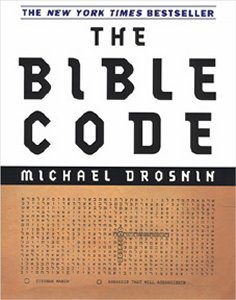 According to Michael Drosnin, author of the bestselling book The Bible Code, there are secret messages lurking in the Torah that only a computer can detect.
And thanks largely to his claim to have warned Israeli prime minister Yitzhak Rabin of his impending assassination, Drosnin’s 15 minutes of fame have stretched out to three months and beyond, while his book continues to sit high atop the bestseller list.
But Drosnin has his detractors, and they have begun to speak out. The August 1997 issue of Bible Review featured sharp critiques of Drosnin’s book from two scholars: Ronald Hendel, an expert on the Hebrew Bible who teaches at Southern Methodist University, and Shlomo Sternberg, an Orthodox rabbi who teaches mathematics at Harvard University.
As with many popular books on religion, Drosnin’s stands on the shoulders of more qualified scholars. In his book, Drosnin reprints a paper by Israeli mathematicians Eliyahu Rips and Doron Witztum that originally appeared in the August 1994 issue of Statistical Science.
Rips and Witztum claimed that, if the text of Genesis were treated as one long, uninterrupted string of Hebrew letters, it was possible to find words secretly encoded in the Hebrew text. According to the principle of Equidistant Letter Spacing (ELS), a single word may stretch across verses, even chapters, in the Bible if a consistent number of random Hebrew letters appears between each of the letters in the coded word.
Moreover, Rips and Witztum claimed that pairs of related words such as “hammer” and “anvil” were encoded in close proximity to one another. They also claimed that the names of various rabbis could be found encoded in the text close to the dates of their deaths, even though these rabbis died hundreds of years after Genesis had been written down.
The findings of Rips and Witztum were first popularized in an article by Jeffrey B. Satinover in the October 1995 issue of Bible Review — ironically, the same magazine that is spearheading the current rebuttal.
These early articles prompted Jewish and Christian apologists — including Canadian author Grant Jeffrey, whose book The Signature of God devotes a few chapters to the Bible code — to argue that this research constituted “scientific proof” of the existence of God and the infallibility of the Hebrew Bible.
Although no one has yet tried to find a similar proof for the New Testament, some Christians saw in this research a confirmation of Jesus’ words in Matthew 5:18: “I tell you the truth, until heaven and earth disappear, not the smallest letter, not the least stroke of a pen, will by any means disappear from the Law until everything is accomplished.”
Drosnin goes beyond the claims of Rips, Witztum, Satinover and Jeffrey. Those authors are careful to note that the Torah forbids divination of any kind; according to them, the Bible code cannot predict the future, but can only confirm events that have already taken place.
Drosnin, however, claims to have predicted Rabin’s assassination. He also claims to have found predictions of, among other things, earthquakes in Los Angeles and nuclear war in Israel.
But Drosnin is not above hedging his bets. Among the dire predictions buried in the text is one message that reads, “Code will save.”
“It is not a promise of divine salvation,” Drosnin writes. “It is not a threat of inevitable doom. It is just information. The message of the Bible code is that we can save ourselves. In the end, what we do determines the outcome. So we are left where we have always been, with one big difference — we now know that we are not alone.”
Some scholars who ignored the earlier claims of Rips and Witztum are taking decisive steps to rebut them, now that Drosnin’s book has ushered them into the popular culture. But not all scholars are following the hype.
Regent College professor Bruce Waltke says the search for coded messages is as old as the Kabbala, a form of Jewish mysticism, and he, for one, does not feel the need to offer a point by point refutation of Drosnin’s claims. “The whole kabbalistic way of doing things is wrong-headed and, I think, demonic,” Waltke says, “and I don’t want to be involved with it.”
Other scholars have pointed out possible flaws in Drosnin’s approach. For one thing, the Bible is not the only text in which computers may find coded prophecies. Sternberg, together with Australian mathematician Brendan McKay, claims to have found the names of Indian Prime Minister Indira Gandhi and Nicaraguan President Anastasio Somoza encoded in the text of Moby Dick, overlapping such phrases as “the bloody deed” and “he was shot.”
In addition, Hendel claims that Drosnin can’t even get the surface meanings of the text right. In Deuteronomy 4:42, the verse that supposedly predicts Yitzhak Rabin’s assassination, the Hebrew words that Drosnin translates “assassin that will assassinate” should, in fact, read “murderer who murders inadvertently.” And that, says Hendel, is just one of many such mistranslations in Drosnin’s book.
Moreover, Hendel notes that Rips and Witztum performed their original research on the textus receptus, a manuscript which did not become the standard Hebrew Bible until the invention of the printing press in the 16th century. Before that, manuscripts were copied by hand, and even if the words did not change, the spelling — and therefore the number of letters — did.
“Like Shakespearean English, Hebrew spelling was never entirely uniform,” Hendel writes. “These differences in spelling make no difference in the meaning of a word; they are just alternative spellings.”
Martin Abegg Jr., director of the Dead Sea Scrolls Institute at Trinity Western University, echoes Hendel’s concerns, and says he has heard at least one person claim that future editions of the standard Hebrew text should be tailored to make the patterns easier to detect.
“If you start to have to make text-critical choices in order to make these patterns happen, that is troublesome,” says Abegg. “It just shows your bias, and to some degree it becomes circular because then there are things you have to do to the text to maintain the pattern.”
According to Abegg, similar codes have allegedly been found in phone books, and he says it is “foolish” to place too much emphasis on such findings. “We really should expect to see these sorts of things, even in DNA molecules or Moby Dick,” says Abegg. “If you can’t do that, then I suppose you would have to give some credence to what Jeffrey and Drosnin are saying, or look at it seriously. But if you can find these sorts of patterns in other sorts of literature, then I’d say it’s meaningless.”
— A version of this article was first published in BC Christian News*.*
Previous Post

July 27, 1997
Review: Contact (dir. Robert Zemeckis, 1997)
Next Post
November 12, 1997 Interview: Errol Morris (Fast, Cheap & Out of Control, 1997)
Browse Our Archives
Select a Category Anglican Planet Articles BC Christian News BC Report Bible Movies Bible Review Blog Books & Culture Campus Times CBC Radio Christianity Today ChristianWeek Essays Faith Today Festival Cinemas Guide Film Journals Georgia Straight Interviews MB Herald National Catholic Register Salvationist Today's Christian Two Chairs Ubyssey Uncategorized Vancouver Courier Vancouver Sun
Select a Month August 2025 April 2025 January 2025 December 2024 November 2024 May 2024 February 2024 December 2023 May 2023 March 2023 November 2022 July 2022 June 2022 May 2022 April 2022 February 2022 January 2022 December 2021 November 2021 October 2021 September 2021 August 2021 July 2021 June 2021 April 2021 March 2021 February 2021 January 2021 December 2020 November 2020 October 2020 August 2020 July 2020 June 2020 May 2020 March 2020 February 2020 January 2020 December 2019 November 2019 September 2019 July 2019 May 2019 April 2019 March 2019 February 2019 January 2019 December 2018 November 2018 October 2018 September 2018 July 2018 June 2018 May 2018 April 2018 March 2018 February 2018 January 2018 December 2017 November 2017 October 2017 September 2017 August 2017 July 2017 June 2017 May 2017 April 2017 March 2017 February 2017 January 2017 December 2016 November 2016 October 2016 September 2016 August 2016 July 2016 June 2016 May 2016 April 2016 March 2016 February 2016 January 2016 December 2015 November 2015 October 2015 September 2015 August 2015 July 2015 June 2015 May 2015 April 2015 March 2015 February 2015 January 2015 December 2014 November 2014 October 2014 September 2014 August 2014 July 2014 June 2014 May 2014 April 2014 March 2014 February 2014 January 2014 December 2013 November 2013 October 2013 September 2013 August 2013 July 2013 June 2013 May 2013 April 2013 March 2013 February 2013 January 2013 December 2012 November 2012 October 2012 September 2012 August 2012 July 2012 June 2012 April 2012 January 2012 January 2011 December 2010 November 2010 October 2010 September 2010 August 2010 July 2010 June 2010 May 2010 April 2010 March 2010 February 2010 January 2010 December 2009 November 2009 October 2009 September 2009 August 2009 July 2009 June 2009 May 2009 April 2009 March 2009 February 2009 January 2009 December 2008 November 2008 October 2008 September 2008 August 2008 July 2008 June 2008 May 2008 April 2008 March 2008 February 2008 January 2008 December 2007 November 2007 October 2007 September 2007 August 2007 July 2007 June 2007 May 2007 April 2007 March 2007 February 2007 January 2007 December 2006 November 2006 October 2006 September 2006 August 2006 July 2006 June 2006 May 2006 April 2006 March 2006 February 2006 January 2006 December 2005 November 2005 October 2005 September 2005 August 2005 July 2005 June 2005 May 2005 April 2005 March 2005 January 2005 December 2004 November 2004 October 2004 September 2004 August 2004 July 2004 June 2004 May 2004 April 2004 March 2004 February 2004 January 2004 November 2003 October 2003 August 2003 July 2003 June 2003 May 2003 January 2003 December 2002 November 2002 August 2002 July 2002 June 2002 May 2002 March 2002 January 2002 December 2001 November 2001 September 2001 August 2001 July 2001 June 2001 April 2001 March 2001 February 2001 December 2000 November 2000 October 2000 September 2000 August 2000 July 2000 June 2000 May 2000 April 2000 March 2000 January 2000 October 1999 August 1999 May 1999 April 1999 February 1999 January 1999 December 1998 November 1998 October 1998 August 1998 July 1998 June 1998 April 1998 March 1998 January 1998 November 1997 September 1997 July 1997 June 1997 April 1997 March 1997 February 1997 January 1997 December 1996 October 1996 September 1996 June 1996 March 1996 February 1996 January 1996 April 1995 November 1994 September 1994 September 1991
Follow Us!
TAKE THE
Religious Wisdom Quiz
What famous basilica is in Vatican City?
Select your answer to see how you score.
St. Basil's Notre Dame St. Peter's Basilica St. Paul's
Related posts from FilmChat

The New World a feast for the senses...

Review: Revelation (dir. André van Heerden, 1999)

Review: The Chronicles of Narnia: The Lion, the...

Review: Avatar (dir. James Cameron, 2009)
TRENDING AT PATHEOS Religious Music & Entertainment

"Les Diabolique" and Transgression
Alongside something like Arrival, Vertigo, or Charade, Les Diaboliques is a...

"The Plague Dogs" and Mortality
So, flashback to the late 70s, early 80s. Walt Disney Studios is...

With the recent and highly successful release of Christopher Nolan’s epic film,...

"L'avventura" and Human Weakness
Today's piece is going to be a little different for a few...

I first want to apologize for not posting or writing anything. I'm...

I've engaged in the multi-year project of reading through the Church Fathers,...
view all Religious Music & Entertainment blogs
Ad-Free & Subscriber Log-In Subscription Support
- About Us
- 2026 Calendar
- Videos
- Podcasts
- Library of World Religions
- Faith In Media Tracker
- Advertise With Us
- Write for Us
- Privacy Policy
- Terms of Service
- Do Not Sell My Data
- Contact Us
- Radiant Digital
- Manage Newsletter Subscriptions
- Unsubscribe From Notifications
- Sitemap
Copyright 2008-2026, Patheos. All rights reserved.
Subscription Support Ad-Free & Subscriber Log-In
Follow Patheos