
BuddhistCatholicContemplativeEvangelicalGeneral ChristianHinduJewishLatter-day SaintMuslimNew VisionsProgressive Christian
Beliefs
- Buddhist
- Catholic
- Contemplative
- Evangelical
- General Christian
- Hindu
- Jewish
- Latter-day Saint
- More Voices
- Muslim
- New Visions
- Pagan
- Progressive Christian
Topics
- Religion News
- Food and Religion
- Sports and Religion
- Religious Art
- Religious Music and Entertainment
- Religious Events
- History and Religion
- Style and Religion
- Politics and Religion
- Women in Religion
- Recreation Outdoors and Religion
- Business Finance and Religion
- Careers Workplace and Religion
- Education and Religion
- Family Parenting and Religion
- Health Fitness and Religion
- Home and Religion
- Relationships and Religion
- Technology and Religion
- Travel and Religion
Columnists
- Buddhist Columnists
- Business Finance and Religion Columnists
- Careers Workplace and Religion Columnists
- Catholic Columnists
- Contemplative Columnists
- Education and Religion Columnists
- Evangelists Columnists
- Family Parenting and Religion Columnists
- General Christian Columnists
- Health Fitness and Religion Columnists
- Hindu Columnists
- History and Religion Columnists
- Home and Religion Columnists
- Jewish Columnists
- More Voices Columnists
- Latter Day Columnists
- Muslim Columnists
- New Visions Columnists
- Nonreligious Columnists
- Pagan Columnists
- Politics and Religion Columnists
- Progressive Columnists
- Recreation Outdoors and Religion Columnists
- Relationships and Religion Columnists
- Religion News Columnists
- Religious Art Columnists
- Religious Events Columnists
- Religious Music and Entertainment Columnists
- Sports and Religion Columnists
- Style and Religion Columnists
- Technology and Religion Columnists
- Travel and Religion Columnists
- Women in Religion Columnists
Resource Library
- 2026 Calendar
- Library of World Religions
- The 100 Most Holy Places on Earth
- Patheos Answers
- Podcasts
- Videos
- Faith Leaders Database
- Anglican Episcopalian
- Bahai
- Baptist
- Buddhism
- Christianity
- Confucianism
- Eastern Orthodoxy
- Hinduism
- Holiness and Pentecostal
- ISKCON
- Islam
- Judaism
- Lutheran
- Methodist
- The Church of Jesus Christ of Latter-day Saints
- New Age
- Paganism
- Presbytarian and Reformed
- Protestantism
- Religion Behind the Scenes
- Roman Catholic
- Scientology
- Shia Islam
- Sikhism
- Sufism
- Sunni Islam
- Taoism
- Zen
- See all religions
Research Tools
 Ad-Free & Subscriber Log-In Subscription Support
Ad-Free & Subscriber Log-In Subscription Support
Follow Patheos 

- Trending:
- Forgiveness
- |
- Marriage
- |
- Consciousness
- |
- Death Penalty
- |
- Election
- |
- Halloween

-
Articles
- Home
- Religious Music & Entertainment
- Interview: Kenneth Branagh, director of Hamlet (1996)
Interview: Kenneth Branagh, director of Hamlet (1996)
Last updated on: April 8, 2016 at 9:33 pm by Peter T. Chattaway
Interview: Kenneth Branagh, director of Hamlet (1996) 2016-04-08T21:33:40-07:00 Peter T. Chattaway
Patheos Explore the world's faith through different perspectives on religion and spirituality! Patheos has the views of the prevalent religions and spiritualities of the world.
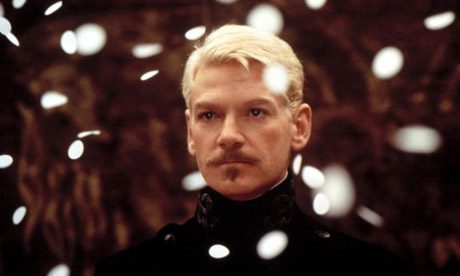 Date: January 10, 1997
Place: Hotel Vancouver, Vancouver, BC
This interview was conducted when Kenneth Branagh was in Vancouver to promote his four-hour movie version of Hamlet. It was a joint interview with two other student reporters; Robin Yeatman and I represented The Ubyssey*, and Marci Drimer represented* The Campus Times*. Branagh had to catch a plane right after the interview, and he tended to speak really fast, lowering his voice sometimes as he did so, so it’s hard to make out some bits on the tape; those portions are marked *** .*
KENNETH BRANAGH: Okay. Right, fire away. Anyone mind if I smoke? I hate myself.
(laughter)
MARCI DRIMER: Okay, I guess I can start. What made you change the setting to the nineteenth century?
KB: Actually, the very first production of Hamlet I was in when I was 20, which was in drama school, was more or less set in this period, though it was a very, very spare production. It always felt right to me. I saw a film called Mayerling in the late ’60s, which was about a scandal in the 19th century involving the Austro-Hungarian royal family and a prince who got involved with a kind of illegitimate child, and the world of that film was all candles and mirrors and corruption. I just felt it was very, very decadent, and it seemed to be very right for Hamlet, which I wanted to get right away from the kind of gothic, gloomy, glowering castles and things, which has been done, and done very well in previous versions, so over the years I was always kind of pursuing how to try and bring that on, and obviously various places like Versailles. The hall of mirrors in Versailles is an extraordinary thing. That whole place makes you understand why there was a revolution in France, it’s just so extraordinary, and it’s full of hidden doors, it’s full of ways of getting through rooms that makes you feel that the people in those places must have felt incredibly paranoid and concerned with their privacy. All of those things seemed like a great backdrop. And you know, in the 19th century, borders were always changing, countries were changing hands with intermarriages and things. It was all very unstable, lots of military movement and stuff, so it felt like a good place to get right away from gothic gloom and into something that was a bit more vibrant.
MD: You filmed the exteriors in Blenheim —
KB: Blenheim Palace.
MD: — and that was the Duke of Marlborough’s palace?
KB: Yeah, that’s right. It’s where Winston Churchill was born, and it’s a pretty extraordinary place anyway. Wonderful garden, lake, it took them years and years and years to build it. But I wanted a palace that looked, when you saw it, as though these people run a country. They’re very, very powerful, the fate of nations is decided behind these walls, and I wanted the actors to feel as though that was going on, that they had a very strong sense of their position and their power. That changes people’s personality, so it was important in that sense, that opulence and that splendour ***
PETER T. CHATTAWAY: In your autobiography, you said that Hamlet made you feel “terrified, intimidated and small”, which I found interesting given that this film has really huge sets. It’s just a very big sort of film.
KB: Yeah. Well, I suppose I got to the point where I felt I understood enough to have a go at kind of engaging, really, in a major way. I suppose I felt small and intimidated because the play is so vast, and the more I did it, the closer it seemed to get, and also it felt like there was a necessity to give it size and splendour, to make the connection — which you are able to do in a *** version — between the intimate personal lives of a small family and events that end up changing the head of state, the ruler. So it’s a fantastic thing to be able to do in a play, to say, almost from the problems between a mother and son, an entire nation changes hands by the end of the play. These people in positions of privilege and power, which we seem to be continually fascinated by shows me how — Shakespeare certainly was in Henry V — about how, if you’re a piece of flesh and blood, you’re going to feel all things other people feel. You have to deal with losing parents, you’re going to have to deal with being hurt in love affairs, and yet you’ve got all this responsibility and power, so every reaction you have to these perfectly ordinary, nevertheless traumatic, events is under a microscope. And you see it today, you see it especially with Clinton’s personal life, especially the personal lives of our own royal family. We get a vicarious thrill out of seeing people who, we begin to understand more and more, are just people. They weren’t born with a larger heart, a bigger brain. They have privilege and position, but they pay a price for it. And that sort of study of the nature of power is in there. That’s one of the things that makes the play big, and that resonance, and I came around to the idea that a full-length version of all of that had to be engaged with, so I guess (laughs slightly) I felt less intimidated.
ROBIN YEATMAN: I noticed your interpretation of Hamlet was distinct from many others, because your Hamlet is a lot more choleric, rather than melancholic, and I’m just wondering what gave you that kind of, or turned you on to that kind of, character.
KB: Well, when you meet him, he is rather bitter, rather angry. His grief seems to express itself in the outrage that he feels about how swiftly his mother has married after the death of his father. He feels it’s unreasonable, irrational, insensitive. He’s all angry and bitter, but in that first speech he never says “poor me”, “what about me”. It’s just all about, “Jesus, *** a man who’s so wonderful is not given a chance to be mourned properly.” And the play seems to contain a plea for that. Old Hamlet doesn’t seem to get a proper period of mourning, Ophelia doesn’t get a decent burial, Polonius doesn’t get a decent burial. There seems to be a kind of plea in the play to mark the moment of passing of those people you love, and he starts with a very angry attitude towards that, and immediately there’s even less chance for him to sink into that kind of self-indulgence because he’s told the ghost of his father is walking, and he’s involved in action, and he goes into a period of inaction when he pretends to be mad, and isn’t sure what to do, wonders whether the ghost is in fact the devil, but all of it is quite active and curious. In a sense, the only soliloquy that doesn’t advance the plot in some way is the “To be or not to be” soliloquy, which is like a parenthetical, reflective, meditative thing. If you took “To be or not to be” out of the play, it would not affect the story one iota. It’s the moment between saying “I’ll do the play” and doing the play. It’s like the afternoon before the performance when he’s going to discover it; it’s a sort of philosophical reflection. That’s the one point which is kind of truly meditative, in a general sense, that is not linked specifically; he doesn’t refer, in that speech, to anything specific about what’s happening with him, as he does in the (here, Branagh rambles some very quick quotes). All these bits have references to his story, but not that one. So it seemed to me you had to play all these very specific reactions which seemed human and real. I haven’t met anybody who wouldn’t find it a difficult thing to deal with, to find your mother had married your uncle inside of a month of your father’s death. So I believe his angry reactions were rational and real, and I wanted to get away from a Hamlet who was predisposed to be melancholy, who you felt was a langorous creature hanging around that palace, with a kind of permanently world-weary aspect. When Claudius calls Rosencrantz and Guildenstern in to spy on him, it’s because Hamlet is being unlike himself. And you see, occasionally, when the players come, the kind of fire in the eye, this sort of excitement this man has, this interest. In his rooms, we tried to establish pictorially the kind of spread of his interest and mind: theatre, globes, books, you know, the interests of a Renaissance man, somebody who would have been interested in anything, very curious and very full of potential — could have been a great king! I don’t know why he wasn’t made king, actually; very murky in the play, that. Maybe he was away in Wittenburg and Claudius just got in very quickly and married his mother and then they became a great team. If Hamlet had taken on the throne, she’d have been the Queen Mother and there wouldn’t have been a Queen, so there may have been some political expedient thing there that was another reason for Hamlet to get angry, and another problem for him. But my basic resistance is to a Hamlet who is self-indulgent, self-absorbed.
MD: Is that why you filled the room with mirrors and had him talk to his own reflection?
KB: I wanted him to literally talk to himself, but also to see reflections of self elsewhere. In the speech of the players, in advising the actors, Hamlet talks about what drama does, and he says it holds the mirror up to nature, so I suppose we took that quite literally, and I also wanted to play this ambiguous thing. In the theatre, what happens when the actor coming on the “To be or not to be”, when that section occurs, often the actor is so aware of having to deal with a very famous line, a very famous speech, that they forget — and I’ve certainly been guilty of it — but in the previous scene, Polonius says to Ophelia, “We have closely sent for Hamlet hither, that he may here affront Ophelia, and we’ll watch.” And so when Hamlet comes into that scene, he really ought to be playing, in some sense, “Where are they? Why have I been sent for when no one’s around?” So we play a bit of that, where he walks into the hall and the music goes *** and when he starts that soliloquy, he knows they might be listening, and trying to put that quality under it.
PTC: So you’ve worked that soliloquy back into the plot, then?
KB: Yeah, and maybe you could explain why he doesn’t mention anything to do with the specifics of his story. He never mentions Claudius, he never mentions his father in that speech. He just sort of throws out the idea that he is considering whether actually being alive is a very good option, given the whips and scorns of time, the oppressor’s wrong, the pangs of despised love, and all that kind of stuff.
PTC: A question out of left field, maybe, but was your interpretation influenced at all by cartoons?
KB: Cartoons?
PTC: Well, the kiss you give Claudius is very, almost, Bugs Bunnyish. Some of Hamlet’s antics seem rather —
KB: Well, I think influences come from all over the place, and it might well be — not consciously, I don’t think, although a certain silliness, a certain absurdity, is appropriate in Shakespeare, and he often undercuts things with humour, and there’s this extremely intense nature of events in that palace, particularly on that night, with the death of Polonius, the death of the prime minister. You imagine, you know, if somebody killed John Major in the middle of the night and suddenly the body was taken away, and no one knew what was going on, and then being chased through the palace by Rosencrantz and Guildenstern. At the beginning of that, we do a silly little kind of tip-toeing kind of thing, hiding away from them, and then in the scene with Claudius, when he says, “Where is the body?” “Well, you know, he’s in the chapel under the stairs, and oh, by the way, he will stay until you come.” That kind of humour, madness, black, black irony runs all the way through, so who knows where it’s come from? God knows I’ve seen enough cartoons in my life!
MD: One of the things that struck me about Much Ado about Nothing was how you mixed American and English actors, and you do the same thing here, and I’m wondering how those actors, with an American slant, influenced it.
KB: Well, it gets you a very different atmosphere on the set, people coming at things from a different point of view. People who have worked with a camera a lot, I think they have a very particular sort of radar for the truth. English actors, from the theatrical tradition, are prone to be very energized and full of volume, so they’re always there from [snaps finger] take one, or rehearsal, or whatever. American actors will tend to feel their way towards it, and not commit themselves in the same way. In a sense, in rehearsal sometimes, you want to get one to do a bit more of what the other does, you get the English actors to pull back a bit, and you get the American actors to come up a bit, but they often come from quite different sort of approaches. Some English actors will be very, very hot on the text itself, some American actors will talk more generally about the kind of person it is, which may be imagined from elsewhere, brought onto the English actors, always looking for some way of colouring individual lines. So both those approaches are quite valid, but something as big as this, we want every kind of tool that we could have to break it down and then we feel.
MD: Did you get a sense that the American actors approached this with some kind of intimidation, because this was Shakespeare?
KB: Yes, definitely, a lot of vulnerability and nervousness, but equally from the other side, from the English actors’ point of view. There was concern about being in a movie, exposed, and worried about whether the acting style would be right. You can be overfamiliar with things sometimes. I think it all levelled out; everyone was aware that this was a sort of one-off project and that it was something everyone wanted to get right. So there was a certain kind of healthy pressure.
RY: Curious: it’s not very often that student papers have the chance to discuss something like this with such a great voice from the film industry, and I’m just wondering if there’s any particular reason why you feel you’d like to speak to us from the university.
KB: Well, there’s a huge audience there that I think I’d like to see the film, and also it’s a very discerning audience. Usually you’re so very informed or you have a very wide range of tastes, so you can make some connection with that group of people, which is very important for the film. It’s the major filmgoing group, you know — I don’t know what age you guys all are, frightfully young and sexy and marvelous, clearly — but it’s more to do with the fact that it’s a real lively audience and it’s that kind of — it’s just important for this kind of movie. You’re often being forced to study this stuff, anyway, so a kind of live example, a living example, of something that kind of needs to be reinvented on the screen regularly. If you look at the films of Orson Welles and Olivier now, brilliant though they are, they are definitely of their time and they are at some distance from us, both in the way they’re delivered and in the way they’re filmed. That’s part of fifty years between us and them, now. There’s just many more developments. You see that spectacularly in Baz Luhrmann’s Romeo + Juliet, just in terms of the filming style. It’s just not something that was available, or even in the imaginative vocabulary, and yet it’s something that’s very much in the vocabulary of what we begin to see, and it keeps it alive. So I think that’s a pretty lively audience to show it too, and I think it’s important because I’d rather, quite frankly, have the main bump in our audience from them than from some knee-jerk — with no disrespect for such people — some knee-jerk kind of snob value thing. It’s very easy for people — and I’ve benefitted from it enormously and spuriously — to be aggrandized by an assocation with Shakespeare. Some people will assume that I am far more intelligent than I know myself to be, because Shakespeare can make those people look much cleverer than they are, and that happens with some kinds of audiences. They congratulate themselves on having seen it.
PTC: Do you ever worry about being typecast with Shakespeare, in the sense that even when you’re just acting, in Othello, or just directing, in A Midwinter’s Tale, that people won’t let you do anything else?
KB: No, I don’t worry about it, because you just have to follow your nose, and you get typecast in the last thing that was successful is what happens, I think. And there are worse things to be typecast as, so that’s just the way things go. I mean, in the same way that some people find some of the American actors difficult to accept, them speaking Shakespeare when they’ve got baggage from other parts or other screen personas. It may be that I’m dogged in future by people who find it difficult to accept me in a modern role when they think I should have a pair of black tights on.
PTC: They’ll want you to play Zeus in a remake of Clash of the Titans.
KB: Oh, well, I don’t know about that. (laughs) I saw Clash of the Titans, isn’t it? With Harry Hamlin? Maggie Smith’s in that as well, with all the gods up there — they’re all looking into that wee pool, weren’t they? That was Ray Harryhausen, wasn’t it, who did — did you ever see Jason and the Argonauts? I loved that. It’s a great picture. It still holds up, even though the special effects are what they are, it still holds up, all those little skeleton men, and that big bird.
MD: You know, I have to commend you. During the entire four hours, personally, there are so many bits and pieces that I had never seen. Even reading the text from start to finish, you can’t envision it, but seeing it on the screen, and when the Player King is reciting, and even the parts with *** coming. And I was wondering if you were going to keep the four hours, or if you’d been testing the audiences.
KB: No, I think the four-hour version is what people see in this country theatrically and on video, and there are no plans to release the short version. There is a short version, and it may end up on the airlines or on television, potentially in the odd country that simply won’t run a film of this length, but I was only interested in doing a short version until I knew that the long version was going to have its life, and there was some concern about that after a while. But then we established that, not only were we able to follow up on what we originally hoped to do, but actually audiences wanted that, wanted the event of the film. I mean, people might in the end want to compare and contrast; there may be a short version on video at some stage, as well people can have a look at what you might cut. I mean, it’s amazing to know how well it works in a version that is two hours and five minutes long. It’s hard to imagine what’s cut, isn’t it? You have to be extraordinarily savage, and yet somehow the story does work. But I’m glad we did the long version.
RY: I was very impressed that you didn’t play on the Freudian Oedipus complex thing too much.
KB: Well thank you. When that comes up, you get a big kiss on the lips, and it’s very effective, and it kind of works in a way, but it’s not supported actually by anything in the text. He never says, “I fancy my mother.” There’s certainly a grumpy bit of revulsion about the fact that she’s got a physical relationship with Claudius so early after the death of old Hamlet, but I just don’t get that from it. And I think the relationship with Ophelia is the one that’s important. The hectoring of his mother in that scene is done with a certain amount of guilt. Both of them are engaged in physical relationships so shortly after the father’s death. I just didn’t believe it.
PTC: Derek Jacobi directed you on stage before, as Hamlet, and now you’ve directed him as Claudius. Did you ever clash over what to do?
KB: No, Derek’s pretty good. I think in both cases, you basically get behind the captain of the ship. You come with a lot of things yourself, anyway. In this case, he was so tunnel-visioned about Claudius, which he felt he was not necessarily ideal casting for, not conventional casting, he worried a great deal about that. He’s a great worrying actor. So we only talked about the characterization of Hamlet as and when I asked him in moments of distress, “Do you think I should do this like this?” or “Is there anything you can suggest?” or whatever. But we liked each other very much. We’re great pals.
PTC: But he never said, “Ken, I told you not to do this ten years ago!”
KB: He didn’t say it. (laughter) He may have thought — I’m sure there are tons of things that he would disagree with in my performance, but I think, like me, he believes these things change and evolve, and what you do ten years on is different. I tried to, having played it a lot and thought about it a lot, from take to take, just react in the moment. Try and react to what someone has said to me as though I just thought of it, and not repeat anything or try and capture anything that I’ve done on stage. I felt confident enough to just do it, and let the play and the part speak for itself. It’s a risky business. You really do have to have done the work to let the part play you, that sort of magic state we all want to get to where it’s surprising, it’s just coming out, you haven’t planned anything, and it’s spontaneous and real, and you get to that stage having worked very hard on what it means and having practiced it a lot. I think Derek feels that, and he’s one of those actors who’s happy to give away things. Might have worked on one take, but throw it away this time and try something else. Trust is the thing.
MD: Being so central and doing Hamlet, I’m wondering if directing gave you the chance to get the scope of the whole play.
KB: Well, I’m sure at times, not. But in the pre-production for a film, and this one had a long period of pre-production in one way or another, you get reality checks every now and then. You get very submerged in the specifics of it, and you lose a sense of the overall thing, and every now and again you have to explain it to someone, you will make yourself see the whole thing. But doing both jobs undeniably blurs the edge of objectivity. But that’s pretty hard even if you’re just acting. To make a film is a very intense experience, and even the lowest-budget things I’ve been involved with, short films and things like that, they all take on the same proportion and energy. It sounds mad, but I feel as if I’ve spent as much energy doing Fringe shows in the theatre as I did on this. At the time, it’s all you know. Things seem enormous. And when I did my first lunchtime play, directing, where to put a light or how you cued things, what a stage manager did, I had as much anxiety then about doing it as I did about walking onto a set with 350 actors and a hungry make-up crew and catering for nine million *** . You pull your brown trousers on and get on with it.
PTC: Another completely left-of-field question: the rumours about you playing Obi-Wan Kenobi in the upcoming Star Wars prequel trilogy —
KB: Yeah, I’ll tell you where that started. It was on a trading card. An Australian artist drew a picture of me saying — a few years ago, when the prequels were just a notion — “Wouldn’t it be nice if Ken Branagh played young Alec Guinness in this?” And that was picked up all over the place, to the point where we actually had to ring George Lucas’s people and say, “Look, we’re not lobbying for the part, it didn’t come from us.” So it is no more than a rumour that came from that source.
PTC: But he didn’t say, “Well, while you’re on the phone — ”
KB: I didn’t want to have that conversation! I didn’t want to embarrass him or me, by him having to say, “You couldn’t possibly play this! How dare you!” So no, we just — but, you know, if they give me a call, I’m taking the call, there’s no question. But so far it’s just a rumour.
Next Post

January 17, 1997 Interview: Dan Ireland (The Whole Wide World, 1996)
Browse Our Archives
Select a Category Anglican Planet Articles BC Christian News BC Report Bible Movies Bible Review Blog Books & Culture Campus Times CBC Radio Christianity Today ChristianWeek Essays Faith Today Festival Cinemas Guide Film Journals Georgia Straight Interviews MB Herald National Catholic Register Salvationist Today's Christian Two Chairs Ubyssey Uncategorized Vancouver Courier Vancouver Sun
Select a Month August 2025 April 2025 January 2025 December 2024 November 2024 May 2024 February 2024 December 2023 May 2023 March 2023 November 2022 July 2022 June 2022 May 2022 April 2022 February 2022 January 2022 December 2021 November 2021 October 2021 September 2021 August 2021 July 2021 June 2021 April 2021 March 2021 February 2021 January 2021 December 2020 November 2020 October 2020 August 2020 July 2020 June 2020 May 2020 March 2020 February 2020 January 2020 December 2019 November 2019 September 2019 July 2019 May 2019 April 2019 March 2019 February 2019 January 2019 December 2018 November 2018 October 2018 September 2018 July 2018 June 2018 May 2018 April 2018 March 2018 February 2018 January 2018 December 2017 November 2017 October 2017 September 2017 August 2017 July 2017 June 2017 May 2017 April 2017 March 2017 February 2017 January 2017 December 2016 November 2016 October 2016 September 2016 August 2016 July 2016 June 2016 May 2016 April 2016 March 2016 February 2016 January 2016 December 2015 November 2015 October 2015 September 2015 August 2015 July 2015 June 2015 May 2015 April 2015 March 2015 February 2015 January 2015 December 2014 November 2014 October 2014 September 2014 August 2014 July 2014 June 2014 May 2014 April 2014 March 2014 February 2014 January 2014 December 2013 November 2013 October 2013 September 2013 August 2013 July 2013 June 2013 May 2013 April 2013 March 2013 February 2013 January 2013 December 2012 November 2012 October 2012 September 2012 August 2012 July 2012 June 2012 April 2012 January 2012 January 2011 December 2010 November 2010 October 2010 September 2010 August 2010 July 2010 June 2010 May 2010 April 2010 March 2010 February 2010 January 2010 December 2009 November 2009 October 2009 September 2009 August 2009 July 2009 June 2009 May 2009 April 2009 March 2009 February 2009 January 2009 December 2008 November 2008 October 2008 September 2008 August 2008 July 2008 June 2008 May 2008 April 2008 March 2008 February 2008 January 2008 December 2007 November 2007 October 2007 September 2007 August 2007 July 2007 June 2007 May 2007 April 2007 March 2007 February 2007 January 2007 December 2006 November 2006 October 2006 September 2006 August 2006 July 2006 June 2006 May 2006 April 2006 March 2006 February 2006 January 2006 December 2005 November 2005 October 2005 September 2005 August 2005 July 2005 June 2005 May 2005 April 2005 March 2005 January 2005 December 2004 November 2004 October 2004 September 2004 August 2004 July 2004 June 2004 May 2004 April 2004 March 2004 February 2004 January 2004 November 2003 October 2003 August 2003 July 2003 June 2003 May 2003 January 2003 December 2002 November 2002 August 2002 July 2002 June 2002 May 2002 March 2002 January 2002 December 2001 November 2001 September 2001 August 2001 July 2001 June 2001 April 2001 March 2001 February 2001 December 2000 November 2000 October 2000 September 2000 August 2000 July 2000 June 2000 May 2000 April 2000 March 2000 January 2000 October 1999 August 1999 May 1999 April 1999 February 1999 January 1999 December 1998 November 1998 October 1998 August 1998 July 1998 June 1998 April 1998 March 1998 January 1998 November 1997 September 1997 July 1997 June 1997 April 1997 March 1997 February 1997 January 1997 December 1996 October 1996 September 1996 June 1996 March 1996 February 1996 January 1996 April 1995 November 1994 September 1994 September 1991
Follow Us!
TAKE THE
Religious Wisdom Quiz
Which harvest festival is also called the Feast of Booths?
Select your answer to see how you score.
Sukkot Hanukkah Purim Passover
Related posts from FilmChat

Exclusive: A clip from Angel Studios' The King...
Oscar Isaac, Forest Whitaker join animated Jesus movie

Watch: The Chosen's creators on Season 4's big...
Interview: Emilio Estevez on immersive travel, the road...
TRENDING AT PATHEOS Religious Music & Entertainment

"Les Diabolique" and Transgression
Alongside something like Arrival, Vertigo, or Charade, Les Diaboliques is a...

"The Plague Dogs" and Mortality
So, flashback to the late 70s, early 80s. Walt Disney Studios is...

With the recent and highly successful release of Christopher Nolan’s epic film,...

"L'avventura" and Human Weakness
Today's piece is going to be a little different for a few...

I first want to apologize for not posting or writing anything. I'm...

I've engaged in the multi-year project of reading through the Church Fathers,...
view all Religious Music & Entertainment blogs
Ad-Free & Subscriber Log-In Subscription Support
- About Us
- 2026 Calendar
- Videos
- Podcasts
- Library of World Religions
- Faith In Media Tracker
- Advertise With Us
- Write for Us
- Privacy Policy
- Terms of Service
- Do Not Sell My Data
- Contact Us
- Radiant Digital
- Manage Newsletter Subscriptions
- Unsubscribe From Notifications
- Sitemap
Copyright 2008-2026, Patheos. All rights reserved.
Subscription Support Ad-Free & Subscriber Log-In
Follow Patheos