
BuddhistCatholicContemplativeEvangelicalGeneral ChristianHinduJewishLatter-day SaintMuslimNew VisionsProgressive Christian
Beliefs
- Buddhist
- Catholic
- Contemplative
- Evangelical
- General Christian
- Hindu
- Jewish
- Latter-day Saint
- More Voices
- Muslim
- New Visions
- Pagan
- Progressive Christian
Topics
- Religion News
- Food and Religion
- Sports and Religion
- Religious Art
- Religious Music and Entertainment
- Religious Events
- History and Religion
- Style and Religion
- Politics and Religion
- Women in Religion
- Recreation Outdoors and Religion
- Business Finance and Religion
- Careers Workplace and Religion
- Education and Religion
- Family Parenting and Religion
- Health Fitness and Religion
- Home and Religion
- Relationships and Religion
- Technology and Religion
- Travel and Religion
Columnists
- Buddhist Columnists
- Business Finance and Religion Columnists
- Careers Workplace and Religion Columnists
- Catholic Columnists
- Contemplative Columnists
- Education and Religion Columnists
- Evangelists Columnists
- Family Parenting and Religion Columnists
- General Christian Columnists
- Health Fitness and Religion Columnists
- Hindu Columnists
- History and Religion Columnists
- Home and Religion Columnists
- Jewish Columnists
- More Voices Columnists
- Latter Day Columnists
- Muslim Columnists
- New Visions Columnists
- Nonreligious Columnists
- Pagan Columnists
- Politics and Religion Columnists
- Progressive Columnists
- Recreation Outdoors and Religion Columnists
- Relationships and Religion Columnists
- Religion News Columnists
- Religious Art Columnists
- Religious Events Columnists
- Religious Music and Entertainment Columnists
- Sports and Religion Columnists
- Style and Religion Columnists
- Technology and Religion Columnists
- Travel and Religion Columnists
- Women in Religion Columnists
Resource Library
- 2026 Calendar
- Library of World Religions
- The 100 Most Holy Places on Earth
- Patheos Answers
- Podcasts
- Videos
- Faith Leaders Database
- Anglican Episcopalian
- Bahai
- Baptist
- Buddhism
- Christianity
- Confucianism
- Eastern Orthodoxy
- Hinduism
- Holiness and Pentecostal
- ISKCON
- Islam
- Judaism
- Lutheran
- Methodist
- The Church of Jesus Christ of Latter-day Saints
- New Age
- Paganism
- Presbytarian and Reformed
- Protestantism
- Religion Behind the Scenes
- Roman Catholic
- Scientology
- Shia Islam
- Sikhism
- Sufism
- Sunni Islam
- Taoism
- Zen
- See all religions
Research Tools
 Ad-Free & Subscriber Log-In Subscription Support
Ad-Free & Subscriber Log-In Subscription Support
Follow Patheos 

- Trending:
- Forgiveness
- |
- Marriage
- |
- Consciousness
- |
- Death Penalty
- |
- Election
- |
- Halloween

- Home
- New Visions
- The Unexpected Dimension
The Unexpected Dimension
Last updated on: December 16, 2019 at 2:00 pm by Mark Nepo
The Unexpected Dimension 2019-12-16T14:00:04-05:00 Mark Nepo
Patheos Explore the world's faith through different perspectives on religion and spirituality! Patheos has the views of the prevalent religions and spiritualities of the world.
In 1514, a young Michelangelo worked hard to sculpt his version of Christ the Redeemer. When close to finished, the statue was ruined when he discovered a dark vein running throughout the marble. I think if he had sculpted this later in life, he might have seen the dark vein as an unexpected dimension adding to the statue, not ruining it.
When first learning woodblock carving, I spent weeks carving the reflection of moonlight in a lake. When close to finishing the board, I slipped and chipped off a length in the middle of the scene. I was devastated and thought I’d ruined months of work. My gifted teacher, Mary Brodbeck, kindly put her hand on my shoulder and softly said, “Welcome to woodblock carving.” I couldn’t help but laugh.
She then said, “Let’s do a rubbing of the board and see what it wants to be.” With a quiet wonder, she looked at the rubbing and led me into a deeper relationship with the carving, saying, “Remember, where you chipped the board will hold no ink and print as white. So, let’s see what other spots in the lake want to be white.”
And so, the mistake and ruination of the board became the threshold for bringing the reflection of the moon in the lake to greater life in the print.
My wife, Susan, is a potter. For years, she has participated in Anagama wood-firing, a semiannual, communal process in which fifteen to eighteen potters take shifts raising the temperature of the kiln to 2500 degrees over five days. Then, after a week of cooling, they open the kiln like a tomb to see what the fire has done to their work. Sometimes, the extreme heat will ruin a piece. But more often, the molten ash has scarred and beautified the pots in the most unexpected ways. Sometimes, a platter will be warped or peeled, extending the potter’s design beyond what they could have foreseen. Or a vessel will have a crack in it that makes it seem ancient and eternal. The fire has the last word and the end of all this collective work is to discover and accept what the fire says.
Beyond our most earnest intent, our creative efforts allow us to meet and co-create with life, not bend life to our design. When finally accepting that we relate to material rather than manipulate it, we discover what we create and are changed by the discovery.
In the late 1850s, the sculptor Auguste Rodin started out by renting his first studio, which was a converted horse stable. The young artist couldn’t afford to hire models and so paid an elderly handyman, Bibi, to pose, despite his broken nose and weathered face. Over eighteen months, Rodin sculpted the handyman’s head, compelled to render the truth of his face rather than turning it into an idealized portrait, which was the trend of his day.
The resulting bust, Man with the Broken Nose, was Rodin’s first statue of note. The legendary poet Rainer Maria Rilke later wrote about the statue, “There are a thousand voices of torment in this face… It does not plead to the world; it carries its justice within itself, [and] holds the [reconciliation] of all its contradictions.”
During the coming winter, the back of the statue’s head froze and cracked off, shattering on the floor. While distraught and disappointed, Rodin stared at the broken bust and began to see a greater truth in what was left. And so, in 1864, Rodin submitted what remained as a mask to the Paris Salon. It was rejected. But Rodin’s experience with Bibi and the shattered bust awakened him to the power of truth over beauty.
Later, Rodin said, “The mask determined all my future work. It was the first good piece of modeling I ever did.” Following what happens over what is intended and working with what-is led Rodin to conclude, “There is nothing ugly in art except that which is without character.”
In the expressive journey, regardless of its form, we create more to discover less. In our passion, we create in excess, time and again, so that experience and the deeper elements can break, split, and burn off what is unnecessary, leaving us with only what matters. I don’t think I would have discovered the moon’s reflection in the woodblock had I not imagined more than what was needed and chipped off that length in the middle of it. I don’t think potters would discover the unexpected beauty and warp of their pots without offering their expansive wares to be further molded by the fire. Like Rodin, we are drawn to create all we can, only to stare into the broken pieces until we can see a greater truth emanating in what is left.
A Question to Walk With: In 1555, Michelangelo dreamt of a staircase that he wanted to add to the Laurentian Library in Florence, which he designed but never completed. After he died, others built it. But where did that staircase lead in his dream? Imagine your own mythic staircase. In your journal, describe it and write a story in which you climb that staircase and, despite the obstacles you encounter, you discover where it leads you.
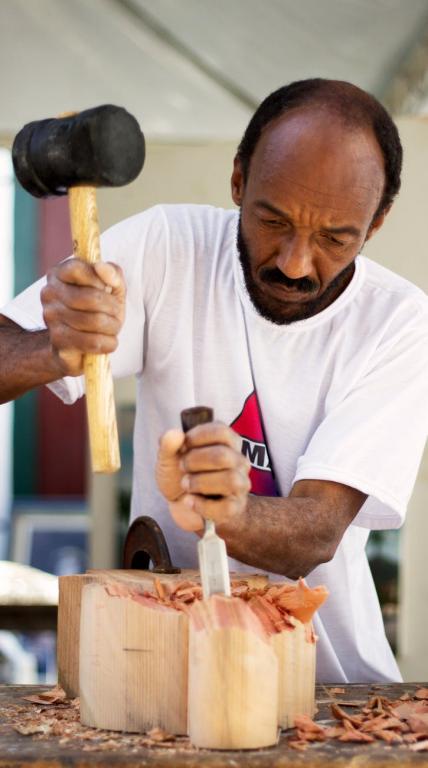
This excerpt is from my new book, Drinking from the River of Light, published this fall by Sounds True.
*Photo credit: Werlley Meira
Previous Post

December 9, 2019
Life Marks Us Up
Next Post
December 23, 2019 The Necessary Art
Browse Our Archives
Select a Category 3i projects current events emotional states Heart in the news Mark's weekly reflections Michele's vlogs poetry Three Intentions happenings Uncategorized writing/books
Select a Month November 2024 October 2024 September 2024 August 2024 July 2024 June 2024 May 2024 April 2024 March 2024 February 2024 January 2024 December 2023 November 2023 October 2023 September 2023 August 2023 July 2023 June 2023 May 2023 April 2023 March 2023 February 2023 January 2023 December 2022 November 2022 October 2022 September 2022 August 2022 July 2022 June 2022 May 2022 April 2022 March 2022 February 2022 January 2022 December 2021 November 2021 October 2021 September 2021 August 2021 July 2021 June 2021 May 2021 April 2021 March 2021 February 2021 January 2021 December 2020 November 2020 October 2020 September 2020 August 2020 July 2020 June 2020 May 2020 April 2020 March 2020 February 2020 January 2020 December 2019 November 2019 October 2019 September 2019 August 2019 July 2019 June 2019 May 2019 April 2019 March 2019 February 2019 January 2019 December 2018 November 2018 October 2018 September 2018 August 2018 July 2018 June 2018 May 2018 April 2018 March 2018 February 2018 January 2018 December 2017 November 2017 October 2017 September 2017 August 2017 July 2017 June 2017 May 2017 April 2017 March 2017 February 2017 January 2017 December 2016 November 2016 October 2016 September 2016 August 2016 July 2016 June 2016 May 2016 April 2016 March 2016 February 2016 January 2016 December 2015 November 2015 October 2015 September 2015 August 2015 July 2015 June 2015 May 2015 April 2015 March 2015 February 2015 January 2015 December 2014 November 2014 October 2014 September 2014 August 2014 July 2014 June 2014 May 2014 April 2014 March 2014 February 2014 January 2014 December 2013 November 2013 October 2013 September 2013 August 2013 July 2013 June 2013 May 2013 April 2013 March 2013 February 2013 January 2013 December 2012 November 2012 October 2012 September 2012 August 2012 July 2012 June 2012 May 2012 April 2012 March 2012 February 2012 January 2012 December 2011 November 2011 October 2011 September 2011 August 2011 July 2011 June 2011 May 2011 April 2011 March 2011 February 2011 January 2011 December 2010 November 2010 October 2010 September 2010 August 2010 July 2010 June 2010 May 2010 April 2010 March 2010 February 2010 January 2010 December 2009
Follow Us!
TAKE THE
Religious Wisdom Quiz
Who was the disciple who doubted Jesus' resurrection?
Select your answer to see how you score.
John Thomas Judas Peter
Related posts from Field Notes on Living


TRENDING AT PATHEOS New Visions

Did Prayer Cure His Cancer? Or Was It...
At 4 AM one morning, Joshua W. Brown’s wife awoke to a...

8 Ways a Near-Death Experience Rewires the Soul
Does Consciousness Survive Physical Death? After 50 Years of Research, Dr. Raymond...

Holy Longing: What Our Restlessness Is Telling Us
“One can find so many pains when the rain is falling.” -John...

What this is NOT about. This blog is definitely not about...

Who said the Israelites were God’s chosen? That’s right, they did. Who...

The Spirit World Is the Real World: God...
A Monk’s Wisdom on Body and Spirit I sit with Brother Martin...
view all New Visions blogs
Ad-Free & Subscriber Log-In Subscription Support
- About Us
- 2026 Calendar
- Videos
- Podcasts
- Library of World Religions
- Faith In Media Tracker
- Advertise With Us
- Write for Us
- Privacy Policy
- Terms of Service
- Do Not Sell My Data
- Contact Us
- Radiant Digital
- Manage Newsletter Subscriptions
- Unsubscribe From Notifications
- Sitemap
Copyright 2008-2026, Patheos. All rights reserved.
Subscription Support Ad-Free & Subscriber Log-In
Follow Patheos