
BuddhistCatholicContemplativeEvangelicalGeneral ChristianHinduJewishLatter-day SaintMuslimNew VisionsProgressive Christian
Beliefs
- Buddhist
- Catholic
- Contemplative
- Evangelical
- General Christian
- Hindu
- Jewish
- Latter-day Saint
- More Voices
- Muslim
- New Visions
- Pagan
- Progressive Christian
Topics
- Religion News
- Food and Religion
- Sports and Religion
- Religious Art
- Religious Music and Entertainment
- Religious Events
- History and Religion
- Style and Religion
- Politics and Religion
- Women in Religion
- Recreation Outdoors and Religion
- Business Finance and Religion
- Careers Workplace and Religion
- Education and Religion
- Family Parenting and Religion
- Health Fitness and Religion
- Home and Religion
- Relationships and Religion
- Technology and Religion
- Travel and Religion
Columnists
- Buddhist Columnists
- Business Finance and Religion Columnists
- Careers Workplace and Religion Columnists
- Catholic Columnists
- Contemplative Columnists
- Education and Religion Columnists
- Evangelists Columnists
- Family Parenting and Religion Columnists
- General Christian Columnists
- Health Fitness and Religion Columnists
- Hindu Columnists
- History and Religion Columnists
- Home and Religion Columnists
- Jewish Columnists
- More Voices Columnists
- Latter Day Columnists
- Muslim Columnists
- New Visions Columnists
- Nonreligious Columnists
- Pagan Columnists
- Politics and Religion Columnists
- Progressive Columnists
- Recreation Outdoors and Religion Columnists
- Relationships and Religion Columnists
- Religion News Columnists
- Religious Art Columnists
- Religious Events Columnists
- Religious Music and Entertainment Columnists
- Sports and Religion Columnists
- Style and Religion Columnists
- Technology and Religion Columnists
- Travel and Religion Columnists
- Women in Religion Columnists
Resource Library
- 2026 Calendar
- Library of World Religions
- The 100 Most Holy Places on Earth
- Patheos Answers
- Podcasts
- Videos
- Faith Leaders Database
- Anglican Episcopalian
- Bahai
- Baptist
- Buddhism
- Christianity
- Confucianism
- Eastern Orthodoxy
- Hinduism
- Holiness and Pentecostal
- ISKCON
- Islam
- Judaism
- Lutheran
- Methodist
- The Church of Jesus Christ of Latter-day Saints
- New Age
- Paganism
- Presbytarian and Reformed
- Protestantism
- Religion Behind the Scenes
- Roman Catholic
- Scientology
- Shia Islam
- Sikhism
- Sufism
- Sunni Islam
- Taoism
- Zen
- See all religions
Research Tools
 Ad-Free & Subscriber Log-In Subscription Support
Ad-Free & Subscriber Log-In Subscription Support
Follow Patheos 

- Trending:
- Forgiveness
- |
- Marriage
- |
- Consciousness
- |
- Death Penalty
- |
- Election
- |
- Halloween
 Femina Ferox
- Home
- Catholic
- How Much Repentance is Too Much?
How Much Repentance is Too Much?
Last updated on: August 10, 2020 at 11:11 am by Emily Claire Schmitt
How Much Repentance is Too Much? 2020-08-10T11:11:47-04:00 Emily Claire Schmitt
Patheos Explore the world's faith through different perspectives on religion and spirituality! Patheos has the views of the prevalent religions and spiritualities of the world.
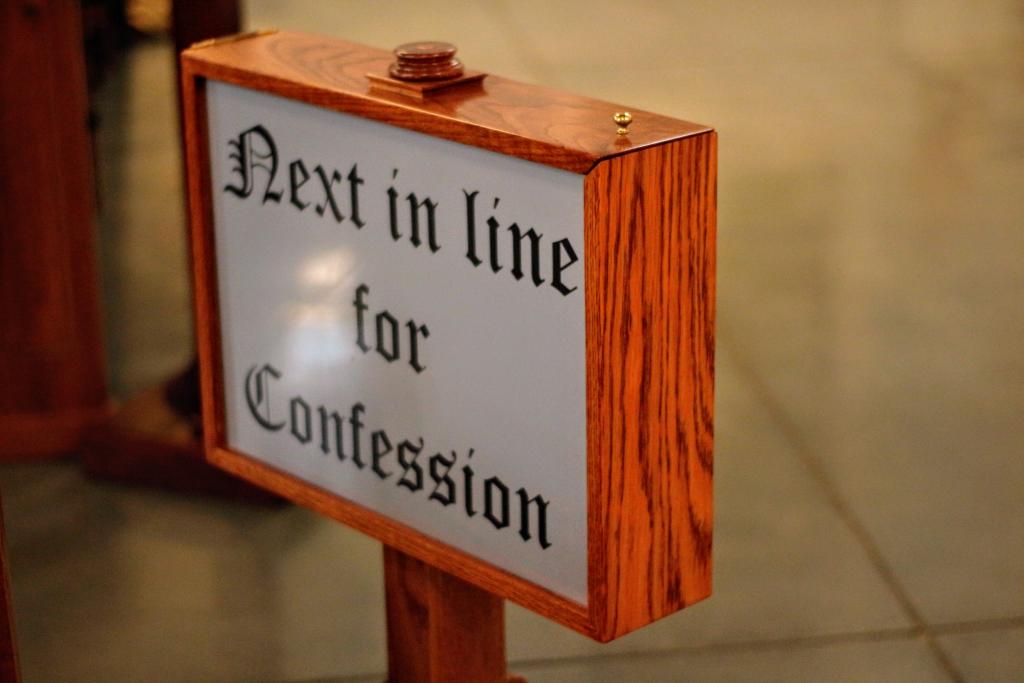
Photo by Shalone Cason on Unsplash
Repentance is a central doctrine of both the Catholic faith and the social justice movement. Since the inception of the Black Lives Matter Movement, and particularly since the death of George Floyd, many of us have felt called to a cultural repentance over the sins of racism, economic disparity, and oppression. As a Catholic, this process feels familiar. The cycle of repenting of a sin, being forgiven, and then going on to commit that same sin again, only to repent again, is as familiar as making breakfast, brushing my teeth, then eating again a few hours later. Repentance has always been understood as an ongoing process. So too, is the backlash against repentance.
People in my life who have left the Catholic faith often cite a toxic shame-cycle as part of the reason they were pushed away. They could never get sexually pure enough, never stop lying, never stop coveting their best friend’s cool backpack. They could never stop feeling bad. Similarly, several more conservative Christians, both on this blog and in my personal life, have expressed being hurt by the rhetoric of the BLM Movement, which seems to cast people, especially white people, as irredeemably bad. “I’m not interested in hating myself,” they might say, and they walk away from the movement entirely. So what must we do to stop this from happening?
The Difference Between Shame and Guilt
Catholics joke a lot about the phrase Catholic Guilt. It’s another way of describing that “never good enough” feeling that many people, but particularly religious people, carry with them. But it’s a misnomer, because what it’s really describing is shame, a pervasive feeling of self-loathing that no number of good and honest Confessions can heal. Guilt is something I’m quite content to have. It’s an acknowledgement and understanding of personal wrongdoing and the desire to rectify, to the extent possible, that wrongdoing. It’s also a willingness to accept negative consequences for one’s actions.
Similarly*, White Guilt* is a phrase I hear, mostly from Conservatives, to describe behaviors they observe from white liberals. It describes a sort of performative self-flagellation for the sin of having been born white, which they perceive as largely insincere. Interestingly, I don’t hear many Liberals or Progressives talk about White Guilt. They talk about dismantling privilege*,* re-examining biases, and – yes – reconciliation. They use many of the same words that practicing Catholics use to describe repentance. And, like Catholics, they view it as an ongoing process.
How to Repent from Racism
Racism is both a system of oppression and a set of individual actions and patterns of thinking. Racist is a loaded phrase because it brings with it a whole big load of shame. A racist person is a bad person – according to a certain mentality – and irredeemably so. So it’s not surprising that people become immediately defensive when something they say or do is called racist. They feel the need to defend themselves from being all bad. However, while racism is a serious sin, our sins are not what define us.
If you have a habit of lying, you’re likely to lie over and over again before giving it up. However, when it comes to racism, many Christians want a fast-pass. They want to repent from sin and be wiped clean permanently. Being called-out again and again for racist words and actions feels like running into the same wall. Like the Catholics who walk away from the faith, they decide that the whole process is useless. They’ll never be “good enough.” But it’s not about being good enough, it’s about being as good as you can be. “Be perfect,” Jesus says. (“Huh, what?” we say.)
Repentance Requires Confession
For Catholics, there is freedom in knowing that your repentance is sufficient. God accepts our Confession, and absolves us of our sins. There are similar processes within the social justice movement, where individuals are able to speak to harm they have done. Their sins aren’t wiped away in that moment, but the process of speaking them out loud is freeing. And to speak sins out loud and still be welcome is life-affirming. Because the goal is not to make white people hate themselves. The goal is to make white people understand how racism functions in society and in their lives. The goal is a transformation of both behavior and structure, with the understanding that this is likely to be a life-long process.
You never graduate from sin. That doesn’t mean that you, at your core, are rotten. There’s always repentance and there’s always healing.

About Emily Claire Schmitt
Emily Claire Schmitt is a playwright and screenwriter focused on uncovering the mystical in the modern world. She is a Core Member of The Skeleton Rep(resents) and is currently developing an original movie with The Hallmark Channel. Follow her on Twitter @Eclaire082. You can read more about the author here.
Previous Post

August 6, 2020
Ye Olde Job Search Blues
Next Post
August 13, 2020 Voting Your Conscience When Everyone Stinks
Browse Our Archives
Select a Category Uncategorized
Select a Month August 2021 July 2021 June 2021 May 2021 April 2021 March 2021 February 2021 January 2021 December 2020 November 2020 October 2020 September 2020 August 2020 July 2020 June 2020 May 2020 April 2020 March 2020 February 2020 August 2018 January 2018 December 2017 August 2017 February 2017 January 2017 October 2016 September 2016 July 2016 June 2016 January 2016
Follow Us!
TAKE THE
Religious Wisdom Quiz
Who built an ark to survive a great flood?
Select your answer to see how you score.
Joseph Noah Paul Moses
Related posts from Femina Ferox

Please Get the Vaccine, Even if You're Not...

A Very Small Boat: On Loving Someone With...

Can the Latin Mass Restrictions Heal The Divide...
TRENDING AT PATHEOS Catholic

Creation, Preservation, and Teleology in Catholic Theology
As I write this, it is very early Monday morning. Like millions...

The Parable Of The Sower And The Word...
One of Christ’s most famous parables is that of the sower who...

Rejecting Doom: Christian Hope And Human Action
Christianity is a religion of hope. We are to have hope and...

Why I Choose the Eucharist Over the Sermon
Choose the Eucharist, Not the Sermon What are we supposed to get...

5 Design Elements Found in Spiritually Rooted Homes
Putting Spirituality Into Home Decor Our homes are more than our living...

Credo: A Story of God Told with the...
About 10 years ago, I began to imagine a personal "Credo" that...
view all Catholic blogs
Ad-Free & Subscriber Log-In Subscription Support
- About Us
- 2026 Calendar
- Videos
- Podcasts
- Library of World Religions
- Faith In Media Tracker
- Advertise With Us
- Write for Us
- Privacy Policy
- Terms of Service
- Do Not Sell My Data
- Contact Us
- Radiant Digital
- Manage Newsletter Subscriptions
- Unsubscribe From Notifications
- Sitemap
Copyright 2008-2026, Patheos. All rights reserved.
Subscription Support Ad-Free & Subscriber Log-In
Follow Patheos