
BuddhistCatholicContemplativeEvangelicalGeneral ChristianHinduJewishLatter-day SaintMuslimNew VisionsProgressive Christian
Beliefs
- Buddhist
- Catholic
- Contemplative
- Evangelical
- General Christian
- Hindu
- Jewish
- Latter-day Saint
- More Voices
- Muslim
- New Visions
- Pagan
- Progressive Christian
Topics
- Religion News
- Food and Religion
- Sports and Religion
- Religious Art
- Religious Music and Entertainment
- Religious Events
- History and Religion
- Style and Religion
- Politics and Religion
- Women in Religion
- Recreation Outdoors and Religion
- Business Finance and Religion
- Careers Workplace and Religion
- Education and Religion
- Family Parenting and Religion
- Health Fitness and Religion
- Home and Religion
- Relationships and Religion
- Technology and Religion
- Travel and Religion
Columnists
- Buddhist Columnists
- Business Finance and Religion Columnists
- Careers Workplace and Religion Columnists
- Catholic Columnists
- Contemplative Columnists
- Education and Religion Columnists
- Evangelists Columnists
- Family Parenting and Religion Columnists
- General Christian Columnists
- Health Fitness and Religion Columnists
- Hindu Columnists
- History and Religion Columnists
- Home and Religion Columnists
- Jewish Columnists
- More Voices Columnists
- Latter Day Columnists
- Muslim Columnists
- New Visions Columnists
- Nonreligious Columnists
- Pagan Columnists
- Politics and Religion Columnists
- Progressive Columnists
- Recreation Outdoors and Religion Columnists
- Relationships and Religion Columnists
- Religion News Columnists
- Religious Art Columnists
- Religious Events Columnists
- Religious Music and Entertainment Columnists
- Sports and Religion Columnists
- Style and Religion Columnists
- Technology and Religion Columnists
- Travel and Religion Columnists
- Women in Religion Columnists
Resource Library
- 2026 Calendar
- Library of World Religions
- The 100 Most Holy Places on Earth
- Patheos Answers
- Podcasts
- Videos
- Faith Leaders Database
- Anglican Episcopalian
- Bahai
- Baptist
- Buddhism
- Christianity
- Confucianism
- Eastern Orthodoxy
- Hinduism
- Holiness and Pentecostal
- ISKCON
- Islam
- Judaism
- Lutheran
- Methodist
- The Church of Jesus Christ of Latter-day Saints
- New Age
- Paganism
- Presbytarian and Reformed
- Protestantism
- Religion Behind the Scenes
- Roman Catholic
- Scientology
- Shia Islam
- Sikhism
- Sufism
- Sunni Islam
- Taoism
- Zen
- See all religions
Research Tools
 Ad-Free & Subscriber Log-In Subscription Support
Ad-Free & Subscriber Log-In Subscription Support
Follow Patheos 

- Trending:
- Forgiveness
- |
- Marriage
- |
- Consciousness
- |
- Death Penalty
- |
- Election
- |
- Halloween
 Femina Ferox
- Home
- Catholic
- A Skeptic’s Guide to Fasting for Relief from Coronavirus
A Skeptic’s Guide to Fasting for Relief from Coronavirus
Last updated on: April 9, 2020 at 2:12 pm by Emily Claire Schmitt
A Skeptic’s Guide to Fasting for Relief from Coronavirus 2020-04-09T14:12:33-04:00 Emily Claire Schmitt
Patheos Explore the world's faith through different perspectives on religion and spirituality! Patheos has the views of the prevalent religions and spiritualities of the world.
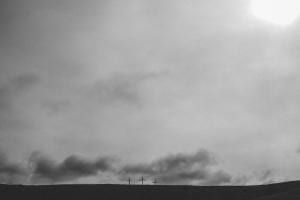
Photo by Dylan McLeod on Unsplash
I am a Christian who questions everything. Every day, in every moment, I turn my faith over in my mind, wrestling with myself. Am I delusional? Am I speaking to myself when I speak to God? Does it matter? So when I received a request to participate in Patheos’ site wide campaign to fast for relief from COVID-19, I was instantly skeptical. What value could fasting have in a time like this?
I also instantly signed on, as is my standard strategy for examining my faith. In my experience, it is precisely the areas against which my mind initially rebels that prove the most fruitful to my faith. God does not attempt to reason with me; he only loves me.
Resistance to Fasting
As Catholics, Good Friday is always a day of fasting and repentance. We fast to repent from our sins and remind ourselves of our human frailty. But, even as a I write this, another siren sounds outside my window and I realize I am surrounded by human frailty. Are we really asked to believe that prayer and repentance can put an end to a viral pandemic?
I want to say yes, and certainly there are Christians with a more robust faith than mine who will say so. But my doubting mind is drawn to content on this very site bemoaning the futility of religion in light of tragedy and holding the pandemic up as evidence of – at best – an absent and uncaring God. How are we as Christians to respond to such arguments? What use is a fast in times like this?
Human Knowledge is Limited
Fundamentally, the only difference between me, a devout Christian, and an atheist is that I am unconvinced by the supremacy of the human mind. Worship of reason is it’s own logical fallacy, because it takes itself as its own premise. (Logic works because logic says so.) Conversely, relationship with God is experiential, transformational, and surpasses logic. Human beings have been compelled to worship since the beginning of time, because it’s wired within us to do so. We were created for worship. Fasting as a spiritual practice reminds us of our human limitations by temporarily putting them at the forefront of our experience.
We want to believe that science and progress will fix every aspect of human suffering. Indeed, they have resolved, and will continue to resolve, a great many things. But here we are in the age of technology and we are still fighting the most ancient of enemies – the virus – with many of the same methods we used in the Middle Ages. Stay inside, friends.
Lest I be misunderstood, this is in no way meant to be a dismissal of science. We have made and will continue to make important advances to improve and lengthen human life. Listen to our scientists and trust their suggestions and forecasts. I believe firmly that they will beat this pandemic. But science will never overcome death, because death is the fate of all human beings. Only God can overcome death.
Strength is Comfort with Weakness
Those who have fasted know that it is not easy. Even the relatively mild Catholic fast leaves one feeling weak, tired, and hungry. At a certain point, about midway through the day, I usually consider giving up. After all, what concrete value does not eating have? What good is all this suffering?
What good is all this suffering? There it is, the universal puzzle of faith. And in it, also we find the answer. Because it is in that moment of weakness that I turn to God. I realize that I can’t make it through without Him. But with His strength, I certainly can. And then, incredibly, it becomes easier. I turn the corner and make it through the rest of the day, fully reliant on God.
While physical hunger is a powerful way to refocus my mind on God, being hungry doesn’t make me any more reliant than I always was. I always need God’s strength to get through. But with God at the helm, the problem of suffering seems very small. When viewed through the eyes of eternity, all suffering is small. Even death is a momentary inconvenience.
Prayer Works
The reality is, as difficult as it is to accept, prayer works. Even when our prayers aren’t answered in the exact way we would like, God maintains control of the universe. Jesus Himself taught us how to pray when things seem most futile:
“My Father, if it is possible, let this cup pass from me; yet, not as I will, but as you will.”
The Father did not take the cup from the Son, but He did raise the Son from the dead and crown Him with unending glory. So Christ’s prayer worked. As we carry this incomprehensible truth in our hearts, let us throw ourselves at the feet of the Lord with prayer and fasting and ask God for our deepest desires: an end to this global pandemic, protection for patients and caregivers, for economic stability, and a return to our treasured normalcy. When we look back on these days from the viewpoint of eternity, we will see that God has answered our prayers beyond our wildest imaginations.
A Note on Who Should Fast
As we embark on the most sacred days of the Christian year, I want to offer a brief reminder on who should fast and how. The Catholic fast is quite mild. It consists of one regular meal and two small meals, which together do not equal a full meal. The idea is to feel hunger consistently throughout the day, not to starve and endanger oneself. If you have any complicating medical conditions, including a history of eating disorders, you are asked not to fast from food. If you wish, you can choose something else to fast from. God loves you.
Have a blessed Good Friday.
Click here to learn more about the Patheos Fast and Pray for Relief initiative.

About Emily Claire Schmitt
Emily Claire Schmitt is a playwright and screenwriter focused on uncovering the mystical in the modern world. She is a Core Member of The Skeleton Rep(resents) and is currently developing an original movie with The Hallmark Channel. Follower her on Twitter at @eclaire082 You can read more about the author here.
Previous Post

April 6, 2020
Not As I Will, But As You Will: A Holy Week Reflection
Next Post
April 11, 2020 Poem for a Strange, Beautiful Easter
Browse Our Archives
Select a Category Uncategorized
Select a Month August 2021 July 2021 June 2021 May 2021 April 2021 March 2021 February 2021 January 2021 December 2020 November 2020 October 2020 September 2020 August 2020 July 2020 June 2020 May 2020 April 2020 March 2020 February 2020 August 2018 January 2018 December 2017 August 2017 February 2017 January 2017 October 2016 September 2016 July 2016 June 2016 January 2016
Follow Us!
TAKE THE
Religious Wisdom Quiz
What Christian group emphasizes "The Inner Light" as guidance from God?
Select your answer to see how you score.
Pentecostals Quakers Baptists Methodists
Related posts from Femina Ferox

Please Get the Vaccine, Even if You're Not...
A Very Small Boat: On Loving Someone With...
Can the Latin Mass Restrictions Heal The Divide...
TRENDING AT PATHEOS Catholic

The Parable Of The Sower And The Word...
One of Christ’s most famous parables is that of the sower who...

Rejecting Doom: Christian Hope And Human Action
Christianity is a religion of hope. We are to have hope and...

Why I Choose the Eucharist Over the Sermon
Choose the Eucharist, Not the Sermon What are we supposed to get...

5 Design Elements Found in Spiritually Rooted Homes
Putting Spirituality Into Home Decor Our homes are more than our living...

Credo: A Story of God Told with the...
About 10 years ago, I began to imagine a personal "Credo" that...

The Anatomy of Divine Revelation in Catholic Thought
The claim that God has made Himself known to human beings is...
view all Catholic blogs
Ad-Free & Subscriber Log-In Subscription Support
- About Us
- 2026 Calendar
- Videos
- Podcasts
- Library of World Religions
- Faith In Media Tracker
- Advertise With Us
- Write for Us
- Privacy Policy
- Terms of Service
- Do Not Sell My Data
- Contact Us
- Radiant Digital
- Manage Newsletter Subscriptions
- Unsubscribe From Notifications
- Sitemap
Copyright 2008-2026, Patheos. All rights reserved.
Subscription Support Ad-Free & Subscriber Log-In
Follow Patheos