
BuddhistCatholicContemplativeEvangelicalGeneral ChristianHinduJewishLatter-day SaintMuslimNew VisionsProgressive Christian
Beliefs
- Buddhist
- Catholic
- Contemplative
- Evangelical
- General Christian
- Hindu
- Jewish
- Latter-day Saint
- More Voices
- Muslim
- New Visions
- Pagan
- Progressive Christian
Topics
- Religion News
- Food and Religion
- Sports and Religion
- Religious Art
- Religious Music and Entertainment
- Religious Events
- History and Religion
- Style and Religion
- Politics and Religion
- Women in Religion
- Recreation Outdoors and Religion
- Business Finance and Religion
- Careers Workplace and Religion
- Education and Religion
- Family Parenting and Religion
- Health Fitness and Religion
- Home and Religion
- Relationships and Religion
- Technology and Religion
- Travel and Religion
Columnists
- Buddhist Columnists
- Business Finance and Religion Columnists
- Careers Workplace and Religion Columnists
- Catholic Columnists
- Contemplative Columnists
- Education and Religion Columnists
- Evangelists Columnists
- Family Parenting and Religion Columnists
- General Christian Columnists
- Health Fitness and Religion Columnists
- Hindu Columnists
- History and Religion Columnists
- Home and Religion Columnists
- Jewish Columnists
- More Voices Columnists
- Latter Day Columnists
- Muslim Columnists
- New Visions Columnists
- Nonreligious Columnists
- Pagan Columnists
- Politics and Religion Columnists
- Progressive Columnists
- Recreation Outdoors and Religion Columnists
- Relationships and Religion Columnists
- Religion News Columnists
- Religious Art Columnists
- Religious Events Columnists
- Religious Music and Entertainment Columnists
- Sports and Religion Columnists
- Style and Religion Columnists
- Technology and Religion Columnists
- Travel and Religion Columnists
- Women in Religion Columnists
Resource Library
- 2026 Calendar
- Library of World Religions
- The 100 Most Holy Places on Earth
- Patheos Answers
- Podcasts
- Videos
- Faith Leaders Database
- Anglican Episcopalian
- Bahai
- Baptist
- Buddhism
- Christianity
- Confucianism
- Eastern Orthodoxy
- Hinduism
- Holiness and Pentecostal
- ISKCON
- Islam
- Judaism
- Lutheran
- Methodist
- The Church of Jesus Christ of Latter-day Saints
- New Age
- Paganism
- Presbytarian and Reformed
- Protestantism
- Religion Behind the Scenes
- Roman Catholic
- Scientology
- Shia Islam
- Sikhism
- Sufism
- Sunni Islam
- Taoism
- Zen
- See all religions
Research Tools
 Ad-Free & Subscriber Log-In Subscription Support
Ad-Free & Subscriber Log-In Subscription Support
Follow Patheos 

- Trending:
- Forgiveness
- |
- Marriage
- |
- Consciousness
- |
- Death Penalty
- |
- Election
- |
- Halloween

- Home
- General Christian
- History and Religion
- Manna – God’s Wonder Bread
Manna – God’s Wonder Bread
Last updated on: June 6, 2026 at 8:53 am by Alice H. Murray
Manna – God’s Wonder Bread 2026-06-06T08:53:54-04:00 Alice H. Murray
Patheos Explore the world's faith through different perspectives on religion and spirituality! Patheos has the views of the prevalent religions and spiritualities of the world.
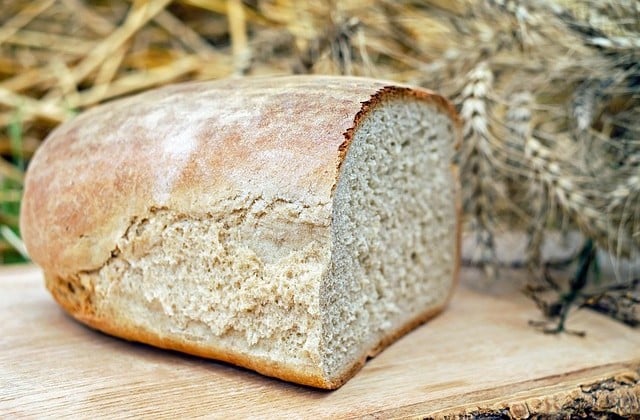
Manmade bread as opposed to Manna – God’s wonder bread [Image by Couleur from Pixabay]
The common presence of bread on our kitchen counters as well as on our plates makes it something people don’t give a second thought. But for those in need of sustenance, bread is likely front and center in their mind. And, in a familiar Bible story, God chose to provide bread from heaven to the Israelites who clamored for food as they wandered in the wilderness for forty years. Then, as now, people knew little about manna – God’s wonder bread. What do we know about this miraculous substance?
The Ancient History Of Bread
Bread, a staple across the world, has been a major food since prehistoric times. Thus, it is one of the oldest human-made foods. Over the course of history, man has made bread with a variety of ingredients and used various methods to produce it in an assortment of forms. Today we think of bread as a baked edible made from flour, water, and often yeast,
The first appearance of bread came in Neolithic times, about 12,200 years ago. The process likely involved mixing coarsely crushed grain with water to make a dough. Baking took place by laying this dough on heated stones and covering it with hot ashes. Later, the Egyptians learned to allow wheat dough to ferment, with the gases formed allowing bakers to achieve an expanded and lighter loaf. The enterprising Egyptians even developed baking ovens. In fact, the degree of refinement in baking was seen as a sign of civilization to the ancient Egyptians, Greeks, and Romans.
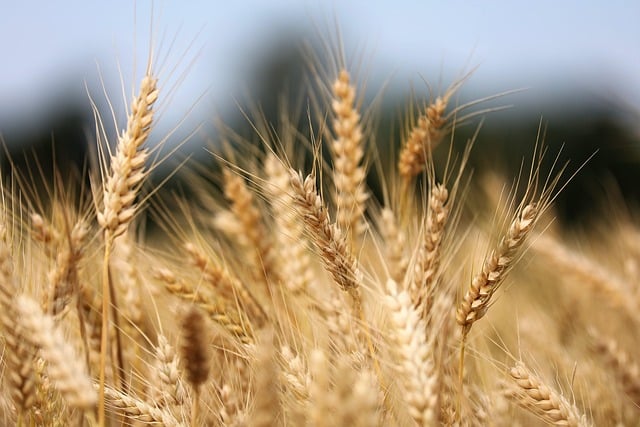
Egyptians allowed dough made from wheat to ferment to produce lighter bread [Image by Goran Horvat from Pixabay]
Modern Bread
Early loaves of bread hardly resemble the bread purchased in stores today. They came in various shapes rather than even loaves. To eat such loaves, people would tear off chunks or pieces, giving rise to the expression “break bread together.” This method of eating bread continued until the 20th century.
Things changed, however, with the development of sliced bread in 1928. Otto Frederick Rohwedder, a Missouri jeweler by profession but an inventor at heart, receives credit for the invention of sliced bread. The American baking company that produced Wonder Bread was one of the first companies to sell sliced bread nationwide by 1930. Although at first viewed as a novelty, sliced bread quickly became standard as its convenience for consumers became known. Even though sliced bread was convenient, it was still not as convenient as manna – God’s wonder bread.
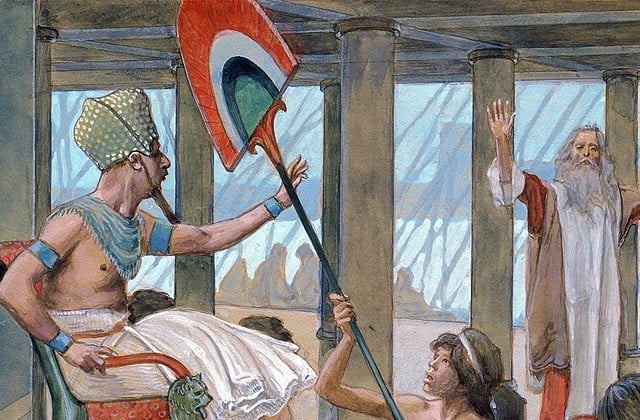
Moses speaks to Pharaoh to demand his people’s release from slavery in Egypt [Image by James Tissot from Wikimedia Commons, public domain]
Leaving Egypt Leads To Provision Of Manna – God’s Wonder Bread
Moses leading God’s people out of Egypt set the scene for a new and very special type of bread, manna – God’s wonder bread. Exodus 16:1 relates that the travelers came into the Wilderness of Sin, also called the Desert of Sin, on the fifteenth day of Iyar, the second month after leaving Egypt. All the Israelites groaned and complained to Moses and Aaron that they would die of hunger there. In response, God told Moses He would rain down bread from heaven each day for the people to gather. And so He did, providing this food for the Israelites for 40 years until they came to the border of Canaan, the Promised Land.
According to Numbers 11: 9, the manna came down each night as the dew settled on the Israelites’ camp. Per Moses’ instructions from God, an omer (about two liters) for each person in their tent was gathered each day with a double portion collected on the sixth day. No collection occurred on the seventh day because no manna appeared then. God’s provision was daily, and the people were not to keep what they collected one day until the next morning except for the sabbath. If they did, they found it full of maggots and smelly.
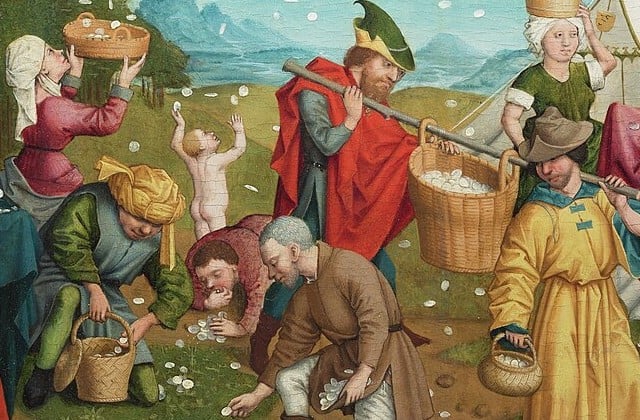
Israelites gathering manna, God’s wonder bread, from the ground [Image from Wikimedia Commons, public domain]
What Is Manna – God’s Wonder Bread?
The Israelites had no idea what they found on the ground for them to collect as food. In fact, manna, God’s wonder bread, is said to be so named because the people asked “what?” when they saw it. “Mon” was the Egyptian word for “what.” Exodus 16:35 describes the manna as tasting like honey. Numbers 11:7 adds that the manna looked like resin or bdellium as the King James Version says. Further, it appeared as thin flakes like frost on the desert floor. The size of the manna was equivalent to that of coriander seeds, and it bore a white color similar to a white crystal.
While some of this description may mean little to people today, the Israelites grasped its significance. Coriander, for example, came from a plant indigenous to their area of the world. The seed provided a spice well known to and valued by the people. Bdellium comes from a very ancient Hebrew word associated with a product from the land of Havilah. The Bible mentions Havilah several times, beginning with the book of Genesis, and the place is believed to be associated with the Garden of Eden and the descendants of Noah. Exactly what bdellium was remains a subject of speculation. Some believe it was an aromatic gum or resin from the false myrrh tree. Modern scholars widely believe bdellium is the crystallized honeydew of certain insects which rapidly dries in the desert to become a sticky solid which turns white.
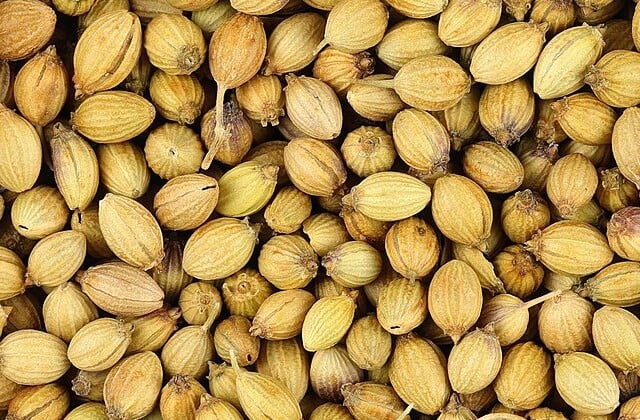
God’s wonder bread manna resembled coriander seeds in size [Image from Wikimedia Commons, https://creativecommons.org/licenses/by-sa/3.0/]
Use Of Manna – God’s Wonder Bread
Once gathered, what did the Israelites do with the manna? Bible verses indicate the people used it as a raw ingredient. They ground the manna with a hand mill or crushed it with a mortar. Next, they formed it into loaves, which were then baked. The finished product tasted like something made with olive oil. So, God daily provided His people with what they needed for food, but some elbow grease on their part was required in both gathering and preparation. It was a team effort.
Today Christians don’t receive manna from heaven, but they have received the Bread of Life from heaven in the form of Jesus. In John 6:32-33 Jesus states that His Father gives the true bread from heaven who comes down and gives life to the world. Now it is a man, not manna, which can sustain life for God’s people. But just like the manna in the wilderness, we have to make an effort to obtain it. They gathered manna, but today people merely need to accept the man, Jesus.
Manna – God’s Food From Heaven
Evangelical
History and Religion
Food and Religion
Previous Post

May 23, 2026
Understanding And Celebrating Pentecost
Next Post

June 30, 2026 Number Of World Religions?
Recent Comments
"From Psalm, "Mercy and truth are met together; righteousness and peace have kissed each other." ..."
Biblical Kisses Not Chocolate Or Romantic
"The great cathedrals took centuries to complete, so quality cannot be rushed.The base also holds ..."
USAF Academy Cadet Chapel Is Still ..."
"not a bad list !"
6 Things You Won’t Hear In ..."
Browse Our Archives
Select a Category accountability archaeology architecture Art Bible Christian Living Christmas communication Easter education environment evangelism faith family finances First Amendment food friends giving government gratitude health history Israel law Lent living out your faith medicine military miracles mission missions movies music nature news olympics parenting patriotism peace politics Pope prayer relationships religious freedom royals science sharing your faith space sports stewardship thankfulness the Bible travel Uncategorized war women worship
Select a Month September 2026 August 2026 July 2026 June 2026 May 2026 April 2026 March 2026 February 2026 January 2026 December 2025 November 2025 October 2025 September 2025 August 2025 July 2025 June 2025 May 2025 April 2025 March 2025 February 2025 January 2025 December 2024 November 2024 October 2024 September 2024 August 2024 July 2024 June 2024 May 2024 April 2024 March 2024 February 2024 January 2024 December 2023 November 2023 October 2023
Follow Us!
TAKE THE
Religious Wisdom Quiz
What was the primary agricultural tool in Biblical times?
Select your answer to see how you score.
Stone hoe Bronze sickle Wooden rake Iron plow
Related posts from Feet to Faith

General Christian
Understanding And Celebrating Pentecost

General Christian
Palm Sunday Props - Significance Of Familiar Story...

General Christian

General Christian
George Washington - President By Providence
TRENDING AT PATHEOS General Christian

Indigenous Peoples’ Day and the Church
Indigenous' Peoples Day or Columbus Day? Depending on where you live...

When Spiritual Growth Looks Like Losing Ground
Four Passive Spiritual Disciplines: An Introduction When I was a college freshman,...

Faith and Finding Your Current Season
“To everything there is a season,” Ecclesiastes tells us, “and a time...

Did Jesus Fear God's Wrath in Gethsemane?
That Time Jesus Was Terrified Before we begin, let me say at...

A Generation Searching for God in All the...
Revival Begins With God’s People! Holidays Are Upon Us! Welcome to October!...

Faith and End of Life Planning
The Psalmist's prayer to “teach us to number our days, that we...
view all General Christian blogs
What Are Your Thoughts?leave a comment
Ad-Free & Subscriber Log-In Subscription Support
- About Us
- 2026 Calendar
- Videos
- Podcasts
- Library of World Religions
- Faith In Media Tracker
- Advertise With Us
- Write for Us
- Privacy Policy
- Terms of Service
- Do Not Sell My Data
- Contact Us
- Radiant Digital
- Manage Newsletter Subscriptions
- Unsubscribe From Notifications
- Sitemap
Copyright 2008-2026, Patheos. All rights reserved.
Subscription Support Ad-Free & Subscriber Log-In
Follow Patheos