
BuddhistCatholicContemplativeEvangelicalGeneral ChristianHinduJewishLatter-day SaintMuslimNew VisionsProgressive Christian
Beliefs
- Buddhist
- Catholic
- Contemplative
- Evangelical
- General Christian
- Hindu
- Jewish
- Latter-day Saint
- More Voices
- Muslim
- New Visions
- Pagan
- Progressive Christian
Topics
- Religion News
- Food and Religion
- Sports and Religion
- Religious Art
- Religious Music and Entertainment
- Religious Events
- History and Religion
- Style and Religion
- Politics and Religion
- Women in Religion
- Recreation Outdoors and Religion
- Business Finance and Religion
- Careers Workplace and Religion
- Education and Religion
- Family Parenting and Religion
- Health Fitness and Religion
- Home and Religion
- Relationships and Religion
- Technology and Religion
- Travel and Religion
Columnists
- Buddhist Columnists
- Business Finance and Religion Columnists
- Careers Workplace and Religion Columnists
- Catholic Columnists
- Contemplative Columnists
- Education and Religion Columnists
- Evangelists Columnists
- Family Parenting and Religion Columnists
- General Christian Columnists
- Health Fitness and Religion Columnists
- Hindu Columnists
- History and Religion Columnists
- Home and Religion Columnists
- Jewish Columnists
- More Voices Columnists
- Latter Day Columnists
- Muslim Columnists
- New Visions Columnists
- Nonreligious Columnists
- Pagan Columnists
- Politics and Religion Columnists
- Progressive Columnists
- Recreation Outdoors and Religion Columnists
- Relationships and Religion Columnists
- Religion News Columnists
- Religious Art Columnists
- Religious Events Columnists
- Religious Music and Entertainment Columnists
- Sports and Religion Columnists
- Style and Religion Columnists
- Technology and Religion Columnists
- Travel and Religion Columnists
- Women in Religion Columnists
Resource Library
- 2026 Calendar
- Library of World Religions
- The 100 Most Holy Places on Earth
- Patheos Answers
- Podcasts
- Videos
- Faith Leaders Database
- Anglican Episcopalian
- Bahai
- Baptist
- Buddhism
- Christianity
- Confucianism
- Eastern Orthodoxy
- Hinduism
- Holiness and Pentecostal
- ISKCON
- Islam
- Judaism
- Lutheran
- Methodist
- The Church of Jesus Christ of Latter-day Saints
- New Age
- Paganism
- Presbytarian and Reformed
- Protestantism
- Religion Behind the Scenes
- Roman Catholic
- Scientology
- Shia Islam
- Sikhism
- Sufism
- Sunni Islam
- Taoism
- Zen
- See all religions
Research Tools
 Ad-Free & Subscriber Log-In Subscription Support
Ad-Free & Subscriber Log-In Subscription Support
Follow Patheos 

- Trending:
- Forgiveness
- |
- Marriage
- |
- Consciousness
- |
- Death Penalty
- |
- Election
- |
- Halloween

- Home
- General Christian
- Travel and Religion
- Pope’s Visit Shines Light On Istanbul’s Blue Mosque
Pope’s Visit Shines Light On Istanbul’s Blue Mosque
Last updated on: December 11, 2025 at 5:47 pm by Alice H. Murray
Pope’s Visit Shines Light On Istanbul’s Blue Mosque 2025-12-11T17:47:03-05:00 Alice H. Murray
Patheos Explore the world's faith through different perspectives on religion and spirituality! Patheos has the views of the prevalent religions and spiritualities of the world.

Istanbul’s Blue Mosque [Image from Wikimedia Commons]
The Taj Mahal, Mount Sinai, Vatican City, and the Blue Mosque are deemed some of the most sacred sites in the world. The Blue Mosque, however, may not be as familiar a location to Americans as the others. Nevertheless, its stunning architecture and religious significance draw huge number of tourists annually. Pope Leo’s recent visit to Turkey, the first foreign trip of his papacy put this beautiful site squarely in the public eye and may encourage people to learn about Istanbul’s Blue Mosque.
Location of Blue Mosque
The religous landmark, so named for its impressive azure hue, is located in Istanbul, Turkey in northwest Turkey. This city served as the imperial capital of the Ottoman Empire for nearly 500 years. Ankara became Turkey’s capital in 1923, but Istanbul stands as the country’s largest city and principal seaport. Its population exceeds 15 million with two-thirds in Europe and one-third in Asia. Istanbul straddles the Strait of Bosporous, one of the world’s busiest waterways.
The old walled portion of Istanbul rests on a triangular piece of land between Asia and Europe. This historic part of the city holds the Blue Mosque in its Sultanahmet District, near several other notable tourist sites. The religious site received a UNESCO World Heritage Site designation in 1985 and is one of the most iconic and prominent of Istanbul’s tourist attractions. Although commonly known as the Blue Mosque, the building is officially the Sultan Ahmed Mosque.
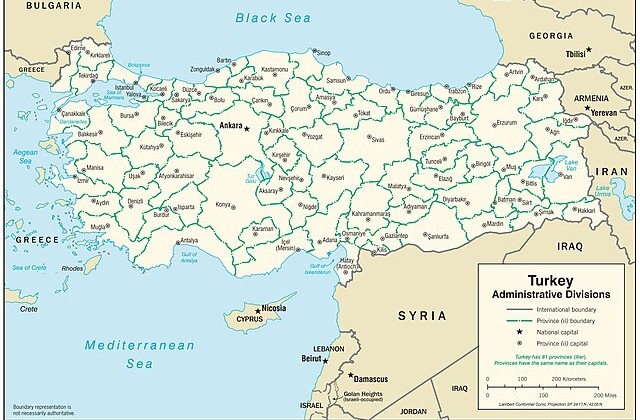
Map of Turkey showing its capital, Ankara, and istanbul on the Bosporus in the northwest [Image from Wikimedia Commons]
The Blue Mosque’s Use
The Blue Mosque functions both as a religious site and a tourist attraction. The structure can hold 10,000 worshippers. Hundreds of Muslims come for daily prayer five times a day. Larger crowds attend during Muslim festivals and on Fridays.
When not being used for worship, the mosque’s doors open to tourists. During prayer times, non-Muslim tourists cannot enter the building during if they do not intend to pray. Entrance to the Blue Mosque is free, but non-Muslims must use the south entrance. All visitors to the mosque must remove their shoes prior to going in the mosque. Even Pope Leo did so, touring the site in his white socks. A dress code requires women to cover their hair with a scarf, and everyone’s knees and shoulders must be covered.
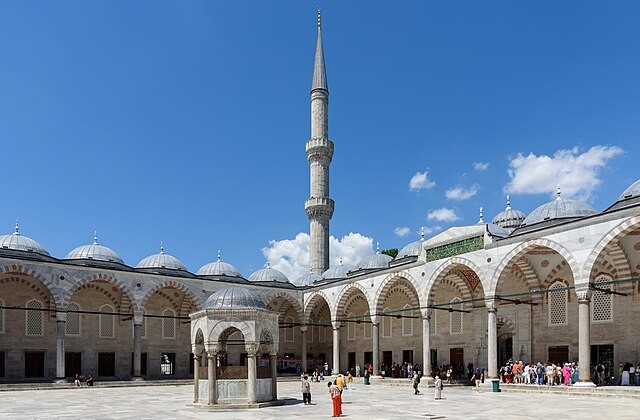
Courtyard of Istanbul’s Blue Mosque [Image from Wikimedia Commons]
History Of The Blue Mosque
Sultan Ahmed I, the Ottoman Empire’s ruler between 1603 and 1617, ordered the building of the Blue Mosque. This decision stirred controversy from the outset. Typically, war bounty covered the cost of large-scale contruction, but the sultan chose to use treasury funds instead due to lack of any recent war victories.
The mosque’s construction began in 1609 with completion in 1617. Finishing a project of this scale in this relatively short time was an impressive feat then. When constructed, the mosque sat in what was then the center of Istanbul. Over 400 years later, this 17th century building remains standing as one of the most magnificent structures of the Ottoman Empire. It sends the intended message of Ottoman cultural and architectural supremacy.
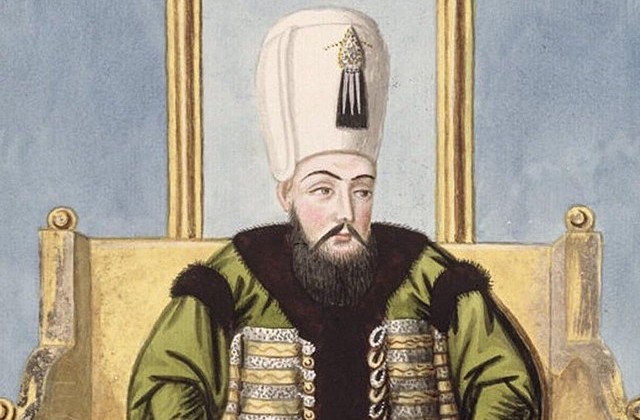
Painting of Sultan Ahmed I, who ordered construction of the Blue Mosque [Image from Wikimedia Commons]
Architecture Of The Blue Mosque
Besides its religious and cultural significance, the Blue Mosque draws tourists interested in architecture. While four minarets, or towers for making calls to prayer, sit beside most mosques, this one boasts six. The design raised controversy with critics seeing it as trying to rival Mecca’s Grand Mosque. Sedefkar Mehmed Aga, the mosque’s architect, is credited with the structure’s perfect proportions. For example, the marble pnulpit or minbar’s posiiton allows the iman to be heard from anywhere in the mosque.
In additon to its more than usual minarets, the Blue Mosque is acclaimed for its many domes and semidomes. From the outside, the structure’s symmetry gives the domes as a whole the appearance of one large dome. The central dome, supported by four pillars, rises 141 feet above the floor. Surrounded by eight cascading domes, it measures 77 feet in diameter. An imam pointed out the tiled domes as well as inscriptions on tbe columns to Pope Leo during his tour. A wall-to wall carpet, essential for Muslim prayer, lines the floor below. A blue and cream-colored flower design adorns this floor covering. Walls bear verses from the Quran written in Arabic calligraphy. Over 250 stained gl ass windows allow colored natural light into the building. Chandeliers, which deter bugs with frequently attached ostrich eggs, supplement that light
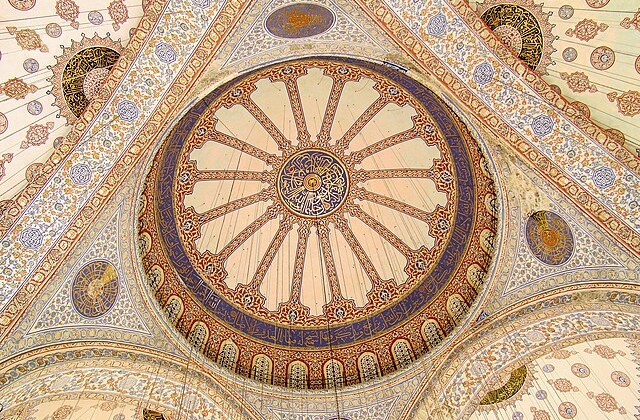
The Blue Mosque’s domed ceiling contains numerous hand-painted tiles [Image from Wikimedia Commons]
The Blue Mosque’s Tiles
Thousands of hand-painted tiles captivate those who enter the Blue Mosque. The site’s nickname, in fact, derives from the handmade blue Iznik tiles which decorate the interior walls. The sunlight streaming in through the structure’s stained glass windows produces a soft blue hue making the area glow. Above the tiles, the walls are painted with variou motifs, generally in blue, adding to the blue glow.
Over 20,000 ceramic tiles line the mosque’s interior. Although blue is the most famous color, the tiles come in a range of colors including white, red, green, and brown.Their patterns depict leaves, flowers, and geometric shapes.
Takeaways From The Blue Mosque
Although deemed Allah’s house by Muslims, Istanbul’s Blue Mosque provides visitors of any religion the opportunity to learn. It offers stunning design for those interested in architecture, physical evidence of life during the Ottoman Empire for history buffs, insight into religious practices for those of faith, and beauty for those who love art or simply the color blue. Pope Leo’s visit certainly added to his knowledge of this sacred site, and others can broaden their knowledge in various areas as well.
Pope Leo’s Visit to the Blue Mosque
Catholic
Travel and Religion
History and Religion

About Alice H. Murray
After 35 years as a Florida adoption attorney, Alice H. Murray now pursues a different path in the publishing industry. With a passion for writing, she is constantly creating with words. Her work includes contributions to several Short And Sweet books, The Upper Room, Chicken Soup For The Soul, Abba’s Lessons (from CrossRiver Media), and the Northwest Florida Literary Review. Alice is a regular contributor to GO!, a quarterly Christian magazine in the Florida Panhandle, and she has three devotions a month published online by Dynamic Women in Missions. Her devotions have also appeared in compilation devotionals such as Ordinary People Extraordinary God (July 2023) and Guideposts’ Pray A Word A Day, Vol. 2 (June 2023), pray a word for hope (September 2023), Too Amazing For Coincidence: Heavenly Interventions (August 2024), pray a word for strength (September 2024), and God’s Constant Presence: Held In His Hand, January 2025. Alice’s first book, The Secret of Chimneys, an annotated Agatha Christie mystery, was released in April 2023. Her adoption devotional, God Adopted Us First – Faith Lessons from an Adoption Attorney’s Adventures was published in October 2025. On a weekly basis, Alice posts on her blog about current events with a humorous point of view at aliceinwonderingland.wordpress.com. You can read more about the author here.
Previous Post

December 1, 2025
Life or Death? Confronting Today’s Infant Killings
Next Post

December 23, 2025 Christmas Story Characters - Significance of Shepherds
Recent Comments
"From Psalm, "Mercy and truth are met together; righteousness and peace have kissed each other." ..."
Biblical Kisses Not Chocolate Or Romantic
"The great cathedrals took centuries to complete, so quality cannot be rushed.The base also holds ..."
USAF Academy Cadet Chapel Is Still ..."
"not a bad list !"
6 Things You Won’t Hear In ..."
Browse Our Archives
Select a Category accountability archaeology architecture Art Bible Christian Living Christmas communication Easter education environment evangelism faith family finances First Amendment food friends giving government gratitude health history Israel law Lent living out your faith medicine military miracles mission missions movies music nature news olympics parenting patriotism peace politics Pope prayer relationships religious freedom royals science sharing your faith space sports stewardship thankfulness the Bible travel Uncategorized war women worship
Select a Month September 2026 August 2026 July 2026 June 2026 May 2026 April 2026 March 2026 February 2026 January 2026 December 2025 November 2025 October 2025 September 2025 August 2025 July 2025 June 2025 May 2025 April 2025 March 2025 February 2025 January 2025 December 2024 November 2024 October 2024 September 2024 August 2024 July 2024 June 2024 May 2024 April 2024 March 2024 February 2024 January 2024 December 2023 November 2023 October 2023
Follow Us!
TAKE THE
Religious Wisdom Quiz
Who was the mother of Jesus?
Select your answer to see how you score.
Ruth Sarah Mary Elizabeth
Related posts from Feet to Faith
General Christian
Trump Nominates Billy Graham's Granddaughter as Faith Envoy
General Christian
Historic Mysterious Rosslyn Chapel
General Christian
Sagrada Familia - World's Tallest Church Completed

General Christian
Felled By Friendly Fire - Ousted Army Head...
TRENDING AT PATHEOS General Christian

Seventy and Five Years Old: God Still Starts...
There is a small detail tucked into Genesis 12 that I skipped...

A Biblical Vision of Success in Christian Life...
The Concern and Quest Recent trends and tendencies I note around me...

Indigenous Peoples’ Day and the Church
Indigenous' Peoples Day or Columbus Day? Depending on where you live...

When Spiritual Growth Looks Like Losing Ground
Four Passive Spiritual Disciplines: An Introduction When I was a college freshman,...

Faith and Finding Your Current Season
“To everything there is a season,” Ecclesiastes tells us, “and a time...

Did Jesus Fear God's Wrath in Gethsemane?
That Time Jesus Was Terrified Before we begin, let me say at...
view all General Christian blogs
What Are Your Thoughts?leave a comment
Ad-Free & Subscriber Log-In Subscription Support
- About Us
- 2026 Calendar
- Videos
- Podcasts
- Library of World Religions
- Faith In Media Tracker
- Advertise With Us
- Write for Us
- Privacy Policy
- Terms of Service
- Do Not Sell My Data
- Contact Us
- Radiant Digital
- Manage Newsletter Subscriptions
- Unsubscribe From Notifications
- Sitemap
Copyright 2008-2026, Patheos. All rights reserved.
Subscription Support Ad-Free & Subscriber Log-In
Follow Patheos