
BuddhistCatholicContemplativeEvangelicalGeneral ChristianHinduJewishLatter-day SaintMuslimNew VisionsProgressive Christian
Beliefs
- Buddhist
- Catholic
- Contemplative
- Evangelical
- General Christian
- Hindu
- Jewish
- Latter-day Saint
- More Voices
- Muslim
- New Visions
- Pagan
- Progressive Christian
Topics
- Religion News
- Food and Religion
- Sports and Religion
- Religious Art
- Religious Music and Entertainment
- Religious Events
- History and Religion
- Style and Religion
- Politics and Religion
- Women in Religion
- Recreation Outdoors and Religion
- Business Finance and Religion
- Careers Workplace and Religion
- Education and Religion
- Family Parenting and Religion
- Health Fitness and Religion
- Home and Religion
- Relationships and Religion
- Technology and Religion
- Travel and Religion
Columnists
- Buddhist Columnists
- Business Finance and Religion Columnists
- Careers Workplace and Religion Columnists
- Catholic Columnists
- Contemplative Columnists
- Education and Religion Columnists
- Evangelists Columnists
- Family Parenting and Religion Columnists
- General Christian Columnists
- Health Fitness and Religion Columnists
- Hindu Columnists
- History and Religion Columnists
- Home and Religion Columnists
- Jewish Columnists
- More Voices Columnists
- Latter Day Columnists
- Muslim Columnists
- New Visions Columnists
- Nonreligious Columnists
- Pagan Columnists
- Politics and Religion Columnists
- Progressive Columnists
- Recreation Outdoors and Religion Columnists
- Relationships and Religion Columnists
- Religion News Columnists
- Religious Art Columnists
- Religious Events Columnists
- Religious Music and Entertainment Columnists
- Sports and Religion Columnists
- Style and Religion Columnists
- Technology and Religion Columnists
- Travel and Religion Columnists
- Women in Religion Columnists
Resource Library
- 2026 Calendar
- Library of World Religions
- The 100 Most Holy Places on Earth
- Patheos Answers
- Podcasts
- Videos
- Faith Leaders Database
- Anglican Episcopalian
- Bahai
- Baptist
- Buddhism
- Christianity
- Confucianism
- Eastern Orthodoxy
- Hinduism
- Holiness and Pentecostal
- ISKCON
- Islam
- Judaism
- Lutheran
- Methodist
- The Church of Jesus Christ of Latter-day Saints
- New Age
- Paganism
- Presbytarian and Reformed
- Protestantism
- Religion Behind the Scenes
- Roman Catholic
- Scientology
- Shia Islam
- Sikhism
- Sufism
- Sunni Islam
- Taoism
- Zen
- See all religions
Research Tools
 Ad-Free & Subscriber Log-In Subscription Support
Ad-Free & Subscriber Log-In Subscription Support
Follow Patheos 

- Trending:
- Forgiveness
- |
- Marriage
- |
- Consciousness
- |
- Death Penalty
- |
- Election
- |
- Halloween
 Fare Forward
- Home
- Evangelical
- The Unprepared-For Death Is Not Worth Dying
The Unprepared-For Death Is Not Worth Dying
Last updated on: August 6, 2014 at 10:42 am by Fr. Austin Dominic Litke
The Unprepared-For Death Is Not Worth Dying 2014-08-06T10:42:30-04:00 Fr. Austin Dominic Litke
Patheos Explore the world's faith through different perspectives on religion and spirituality! Patheos has the views of the prevalent religions and spiritualities of the world.
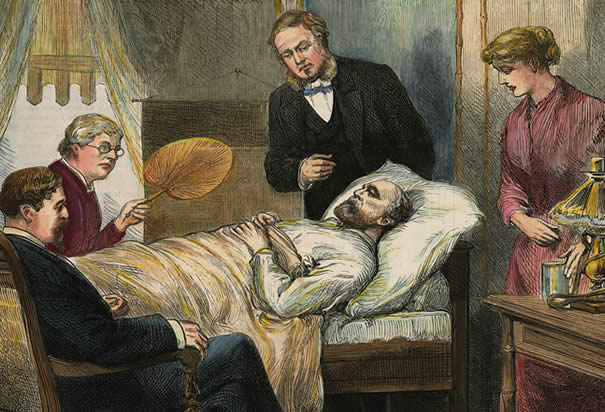
The traditional Litany of Saints ends with a series of petitions to God that he might “save his people” from various things: evil, sin, the snares of the devil. Among them is also the entreaty to be saved, freed (”libera nos”), from “a sudden and unprovided death.” Much of traditional piety understood death, that ultimate moment of human existence, as one in dire need of grace and attention. In the last petition of the Angelic Salutation—better known as the Hail Mary— for example, Catholics ask that the Mother of God pray for us now “and at the hour of our death.” St. Joseph also has been invoked throughout the ages to intercede at the throne of God to obtain a “happy death,” that is, one provided for spiritually.
When Joseph Ratzinger wrote his book Eschatology on the theology of the “Last Things,” some years before he was Cardinal Ratzinger and later Pope Benedict, he noticed that in the modern secular world, people no longer wish to provide for their death. In fact, they do not wish to think about death at all. Thus they sanitize it—one American newspaper forbade the word “death” as part of their style sheet. Or they euphemize it—no one dies anymore, he or she “passes on.” Or at least they hide it away—no one dies at home any more, only in hospitals or other “specialized” institutions. No longer does one pray for a foreseen and provided-for death, Ratzinger says. On the contrary, the modern “Litany of Unbelievers” would ask for the opposite, for “a sudden and unprovided-for death, O Lord.” In Ratzinger’s assessment, our contemporaries believe that “death really ought to happen at a stroke, and leave no time for reflection or suffering.”
At the root of this modern tabooing of death is the fear of suffering. Death is the ultimate suffering, which, as the Christian knows, ushers in the ultimate transition from death to life. There is a parallel transformation that happens in suffering and death. When suffering is seen as something to be avoided, as always and everywhere evil, so too death is something to be avoided, hated, denied, and hidden. Yet when suffering is seen as transformative and redemptive, then death is no longer to be avoided and hated, but it becomes “Sister Death,” in St. Francis’s celebrated phrase. Or as St. Paul puts it, “For me to live is Christ and death is gain.” For the Christian, death is no longer the transition from the life of eating, drinking, and being merry into the land of shadows. It becomes instead, to quote Cardinal Newman’s tombstone, the transition “from shadows and images into truth.”
The modern world rightly seeks cures to illnesses and advances in medical care. Not even the most cynical and localist Luddite would deny that improvements in medicine are good. However, the underpinning of much of this advancement does not have the flourishing of the human being as its goal. Today’s superficial medical practice often seeks to anesthetize modern man from the basic human reality of suffering. This desire led as intelligent a man as the late Christopher Hitchens to attack as elusive a target as Blessed Mother Teresa of Calcutta, labeling her “Hell’s Angel” in a 1994 television documentary. From the beginning to the end of his vitriol, Hitchens manifests his complete inability to understand the work of Mother Teresa. Hers was not a mission to alleviate the pain and suffering of the world, or to eliminate its poverty and squalor. It was a mission to bring the redemptive love of Christ into the lives of the poorest of the poor and so transform their suffering.
And here we come to the heart of the Gospel and its transforming grace. When God sent his Son to redeem the world, he could have done so through just about any means. He chose, however, to send his Son in human form, taking up the form of a slave, and in that form he took up suffering. Suffering, as a human experience, is utterly meaningless. Pain, alternatively, is eminently practical. Pain tells us something is wrong. I put my hand on the hot stove, and it hurts, which is good, lest I lose my hand. We might even take on some pain for the sake of healing—much of medicine works that way. But suffering—the psychological, emotional, existential experience—is in and of itself meaningless. It has no practical human value. But Christ changes all of that. As the French playwright Paul Claudel rightly asserts, “God did not come to get rid of suffering, nor to explain it way. He came to fill it with his presence.” In the Passion and Cross, Christ takes up the most meaningless of human experiences and makes it the most meaningful. He makes suffering the means of salvation for the world.
This transformation of human suffering, however, is not the exclusive property of the Word Incarnate. Rather, he extends that transformation to every believer. This leads St. Paul to attest, “I rejoice in my sufferings for your sake, and in my flesh I complete what is lacking in Christ’s afflictions for the sake of his body, that is, the church.” This is not to assert, in any way, that the sacrifice of Christ on the Cross is somehow deficient and in need of completion. Rather, as St. Paul says elsewhere:
Do you not know that all of us who have been baptized into Christ Jesus were baptized into his death? We were buried therefore with him by baptism into death, so that as Christ was raised from the dead by the glory of the Father, we too might walk in newness of life.
Human suffering is thus transformed and given a new light by the work and life of Christ. This, we might say, is the single-most significant “evolution” that human nature has achieved, one not noticed by Darwin and his acolytes.
As suffering is transformed, so is death. One of the more beautiful and lesser-known teachings of the Church about Christ refers to his dead body. Physical death is defined philosophically as the separation of body and soul. Therefore, at Christ’s death, his human soul departed his human body. The union of the divine nature to his dead body, however, was not dissolved. God is present to Christ’s Body even in death. And as St. Paul reminds us, we are the Body of Christ. Even in death, God is present, and his presence transforms death from something of a final defeat into the way to eternal life.
Again, St. Paul says that for him “death is gain.” Death is only gain after Christ has redeemed it and made it the way to eternal life. But this transition from death to life is not reserved only for the ultimate moment of earthly existence. From the earliest days of the Church, the Christian life, the life of conversion, has been described as a journey from spiritual death to spiritual life. The call to conversion—inaugurated by Christ himself: “Repent, believe in the Gospel”—is the call to wake up from the death of sin and live the glorious freedom of the children of God. Scripture repeatedly speaks of sin and death as parallel categories. So also life and redemption are linked in the very Resurrection of Christ. The conversion to which he calls us means the death of the old man and the birth of the new.
Birth and death, as everyone knows, entail pain and suffering. Modern man, in his escape from suffering, has also eschewed the felt-need of conversion. Here we find the rub for the modern Christian, and the truly countercultural import of the Christian in the world. The battleground is not on the steps of the Capitol or the halls of academia, but is, as Dostoyevsky proclaimed, in the human heart. The living out of Christianity first takes place in this transformation of suffering into something redemptive, in this experience of sin as spiritual death and the Gospel as spiritual life. The experience of suffering in the life of the believer so often is the opening up of the heart to the need for God such that one comes to know his need for God.
Suffering is the transition that awakens the desire in us for eternal life. As we come to know privation through the absence of desired goods that suffering entails, we learn to aspire to the fullness of good that is God, and so are able to choose a liberated dependence on God himself. Such sanctification takes place by keeping our death “before our eyes always,” as St. Benedict counseled his monks 1500 years ago. He said this not out of morbidity, but in a realistic vision that is opened by the experience of suffering so transformed. This transition then takes place in the humble acceptance of trials and adversity, not out of an exaggerated sense of one’s own worthlessness, but in a crucified vision that no longer thinks as human beings do, but as God does. Earthly life and its trials are the training ground of a new life that begins here and now in the life of grace, which changes radically in the death we all will face, and is enjoyed eternally with God outside of all time and space.
Echoing Socrates, we might profess that the unprepared-for death is not worth dying. The passage from physical life to physical death is the natural transition that all mortal creatures, by definition, undergo. For the followers of Christ, we do not wait to undergo the transformation from death to life at that final moment. We seek to live it out in response to the Gospel, in a life informed by Faith and enlivened by Charity. We do this through a transformed mind and heart in the face of suffering. We pray for the grace to prepare for death, to see all of life as a preparation for that day that the early Christians did not call one’s “death day,” but rather the dies natalis, one’s birth day: the day one springs from this so-called life into the life of the world to come.
From an unprepared and sudden death, O Lord, save us.
Previous Post

August 4, 2014
The Way, It’s True, Is a Life
Browse Our Archives
Select a Category ambition art beauty bible bios body Book Review cheap grace church community consumer church cultural liturgy culture deep practice desire dualisms economics education evangelicalism events faith family fare forward Film Review friendship games Gospel happiness hipster Christianity humility identity institutions irony issue previews Jesus just church justice Lent Letters to the Editor liberal arts liberal christianity literature liturgy love march madness mental health metaphysics misotheism moralism morality Movie Review music narrative naturalism new atheism passions philosophy place political theology Pope Francis power prayer privilege providence reading reason relationship remembering self resurrection science secular faiths secularism sexuality sin Social Media spirituality Sport suburbs suffering table of contents technology the future of faith the new apologetic the virtues theology thick doctrine transcendence Trinity truth tv Uncategorized violence Virtue vocation war work
Select a Month August 2014 July 2014 June 2014 May 2014 April 2014 March 2014 February 2014 January 2014 December 2013 November 2013 October 2013 September 2013 August 2013 July 2013 June 2013 May 2013 April 2013 March 2013 February 2013
Follow Us!
TAKE THE
Religious Wisdom Quiz
What is the Christian attitude toward one's enemies?
Select your answer to see how you score.
Love them Mock them Fight them Ignore them
Related posts from Fare Forward
Apocalypse Now and Then: America, Rome, and The...
TRENDING AT PATHEOS Evangelical

The REST of Your Life: A Creative Wrestles...
This week I had a conversation with a good friend from church....

How the author of the world's best hymn...
I've been working with John Newton for a while now. This makes...

Long before this Lectio Divina, Psalm 130 - the song - started...

What About the Trees? Another Living Parable
After I finished writing the last article about falling leaves as a...

Why Classical Education Is a Conversation, Not a...
Come and Read: Joy in Classical Education When I was a little...

Cornell University has received a great deal of negative publicity and intense...
view all Evangelical blogs
Ad-Free & Subscriber Log-In Subscription Support
- About Us
- 2026 Calendar
- Videos
- Podcasts
- Library of World Religions
- Faith In Media Tracker
- Advertise With Us
- Write for Us
- Privacy Policy
- Terms of Service
- Do Not Sell My Data
- Contact Us
- Radiant Digital
- Manage Newsletter Subscriptions
- Unsubscribe From Notifications
- Sitemap
Copyright 2008-2026, Patheos. All rights reserved.
Subscription Support Ad-Free & Subscriber Log-In
Follow Patheos