
BuddhistCatholicContemplativeEvangelicalGeneral ChristianHinduJewishLatter-day SaintMuslimNew VisionsProgressive Christian
Beliefs
- Buddhist
- Catholic
- Contemplative
- Evangelical
- General Christian
- Hindu
- Jewish
- Latter-day Saint
- More Voices
- Muslim
- New Visions
- Pagan
- Progressive Christian
Topics
- Religion News
- Food and Religion
- Sports and Religion
- Religious Art
- Religious Music and Entertainment
- Religious Events
- History and Religion
- Style and Religion
- Politics and Religion
- Women in Religion
- Recreation Outdoors and Religion
- Business Finance and Religion
- Careers Workplace and Religion
- Education and Religion
- Family Parenting and Religion
- Health Fitness and Religion
- Home and Religion
- Relationships and Religion
- Technology and Religion
- Travel and Religion
Columnists
- Buddhist Columnists
- Business Finance and Religion Columnists
- Careers Workplace and Religion Columnists
- Catholic Columnists
- Contemplative Columnists
- Education and Religion Columnists
- Evangelists Columnists
- Family Parenting and Religion Columnists
- General Christian Columnists
- Health Fitness and Religion Columnists
- Hindu Columnists
- History and Religion Columnists
- Home and Religion Columnists
- Jewish Columnists
- More Voices Columnists
- Latter Day Columnists
- Muslim Columnists
- New Visions Columnists
- Nonreligious Columnists
- Pagan Columnists
- Politics and Religion Columnists
- Progressive Columnists
- Recreation Outdoors and Religion Columnists
- Relationships and Religion Columnists
- Religion News Columnists
- Religious Art Columnists
- Religious Events Columnists
- Religious Music and Entertainment Columnists
- Sports and Religion Columnists
- Style and Religion Columnists
- Technology and Religion Columnists
- Travel and Religion Columnists
- Women in Religion Columnists
Resource Library
- 2026 Calendar
- Library of World Religions
- The 100 Most Holy Places on Earth
- Patheos Answers
- Podcasts
- Videos
- Faith Leaders Database
- Anglican Episcopalian
- Bahai
- Baptist
- Buddhism
- Christianity
- Confucianism
- Eastern Orthodoxy
- Hinduism
- Holiness and Pentecostal
- ISKCON
- Islam
- Judaism
- Lutheran
- Methodist
- The Church of Jesus Christ of Latter-day Saints
- New Age
- Paganism
- Presbytarian and Reformed
- Protestantism
- Religion Behind the Scenes
- Roman Catholic
- Scientology
- Shia Islam
- Sikhism
- Sufism
- Sunni Islam
- Taoism
- Zen
- See all religions
Research Tools
 Ad-Free & Subscriber Log-In Subscription Support
Ad-Free & Subscriber Log-In Subscription Support
Follow Patheos 

- Trending:
- Forgiveness
- |
- Marriage
- |
- Consciousness
- |
- Death Penalty
- |
- Election
- |
- Halloween
 Fare Forward
- Home
- Evangelical
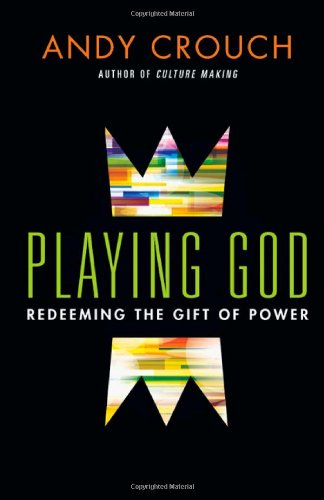
- Playing God: Redeeming the Gift of Power
Playing God: Redeeming the Gift of Power
Last updated on: May 28, 2014 at 3:31 pm by M. G. Hager
Playing God: Redeeming the Gift of Power 2014-05-28T15:31:26-04:00 M. G. Hager
Patheos Explore the world's faith through different perspectives on religion and spirituality! Patheos has the views of the prevalent religions and spiritualities of the world.
Tramp. Cad. Lily-livered. Townie. Every generation has their put-downs, but for a certain subset of the population today, the best way to insult someone is by calling her “privileged.” In a hyper self-conscious culture, many millennials are wracked with guilt over their white middle-class upbringing, $30k-a-year education, and relative economic security. This is, no doubt, from where the sudden popularity of social justice causes and philanthropic NGOs springs: we’re eager to assuage our guilt by digging wells and freeing slaves.
But we can’t simply ignore or disclaim our privilege. It is a form of power, and we need to be careful how we use it. Power gets a bad rap because we associate it with the axiom that “power corrupts, and absolute power corrupts absolutely.” But in his latest book Playing God, Christianity Today’s Andy Crouch argues that power is not a zero-sum quantity, but rather a gift that can increase as it is shared with others. Playing God is Crouch’s effort to move power to the center of our understanding of our interactions with the world.
The idea is that “love transfigures power.” The Nietzschean view of power as distilled violence is power at its worst, a perversion of its true nature. We must stop thinking about power as being exclusive to dictators and CEOs and understand how it flows around us all the time. By defining power instead as “the ability to make something of the world,” Crouch gives his book an extremely broad scope. Indeed, in Playing God he touches on everything from washing dishes and spanking children to short term mission trips and the gay rights movement. And, of course, there’s privilege. “At its worst,” Crouch writes, “privilege is blindness, allowing us to blithely go on in our god playing, not even aware of the insults to image bearers that happen under our noses every day.” But that’s only a corruption of a wider phenomenon. In itself, privilege is “the ongoing benefit of past successful exercises of power.” And like power more generally, privilege can—and must—be stewarded in responsible ways.
Perhaps Crouch’s simplest illustration is that of a parent and child. A baby is helpless at birth, completely under the power of his parents. If we follow the traditional logic about power, this is a bad situation for the baby. “In fact,” as Crouch reminds us, “so far from being absolutely corrupted by the absolute power parenthood confers over a new human being, many parents find themselves awakening to new capacities for resilience, sacrifice and servanthood that they did not know they had before.”
Out of all this, the timeliest aspect of Playing God is its attention to social justice and how American Christians both empower and dispossess people around the world in attempts to help them. Rather than blindly striking at world ills, Crouch encourages us to understand idolatry and injustices as the negative consequences of ill-used power. If we “play god” by swooping in and saving the day, we make ourselves into idols, rather than restoring the image-bearing capabilities of the people we seek to help.
But if we’re not meant to go on campaigns to “save the world,” how can we have an impact beyond our own lifetime and immediate community? The answer is institutions. As Crouch puts it, “The way that cultural change becomes widely available and influential is through a process of institutionalization, in which cultural innovation becomes available to society through the creation of artifacts, arenas, rules, and roles.”
For the average twenty-something, institutional affiliations are changing constantly. Employment, church denomination, grocery store, state citizenship, news source, Internet browser—none of it stays the same for long. We move quickly through the world trying to find our “calling,” and there are few institutions we invest in or feel any loyalty to. And why would we want to? Institutions are the stale, bureaucratic leavings of our parents; they perpetuate privilege and the unequal distributions of power. But like power, institutions have been distorted from their true purpose. In the best institutions, people at every level flourish, not just those at the top.
In order to bring this widespread flourishing about, institutions need trustees to safeguard them, people “who can be trusted to preserve and provide for what is best, most suited to image bearing, and to weed out what is worst, most implicated in idolatry and injustice.” Institutions can outlast us and carry the goodness of God from generation to generation, but they need to be created and supported by people with great vision.
There is something in Playing God both for those who are sensitive about their privilege and for those who feel hope- less to change anything. The reality is somewhere in the middle, and Playing God sets the stage for action, challenging us to acknowledge and use our power to increase mankind’s capacity for image bearing.
Previous Post

May 27, 2014
Moral Experimentation and the Tree of Life
Next Post

May 29, 2014 Bridging Time: Days of Future Past
Browse Our Archives
Select a Category ambition art beauty bible bios body Book Review cheap grace church community consumer church cultural liturgy culture deep practice desire dualisms economics education evangelicalism events faith family fare forward Film Review friendship games Gospel happiness hipster Christianity humility identity institutions irony issue previews Jesus just church justice Lent Letters to the Editor liberal arts liberal christianity literature liturgy love march madness mental health metaphysics misotheism moralism morality Movie Review music narrative naturalism new atheism passions philosophy place political theology Pope Francis power prayer privilege providence reading reason relationship remembering self resurrection science secular faiths secularism sexuality sin Social Media spirituality Sport suburbs suffering table of contents technology the future of faith the new apologetic the virtues theology thick doctrine transcendence Trinity truth tv Uncategorized violence Virtue vocation war work
Select a Month August 2014 July 2014 June 2014 May 2014 April 2014 March 2014 February 2014 January 2014 December 2013 November 2013 October 2013 September 2013 August 2013 July 2013 June 2013 May 2013 April 2013 March 2013 February 2013
Follow Us!
TAKE THE
Religious Wisdom Quiz
According to 1 Peter, believers are to abstain from what, which wages war against the soul?
Select your answer to see how you score.
Evil Gentiles The world Sinful desires
Related posts from Fare Forward



The End of Night: Searching for Natural Darkness...
TRENDING AT PATHEOS Evangelical

The REST of Your Life: A Creative Wrestles...
This week I had a conversation with a good friend from church....

How the author of the world's best hymn...
I've been working with John Newton for a while now. This makes...

Long before this Lectio Divina, Psalm 130 - the song - started...

What About the Trees? Another Living Parable
After I finished writing the last article about falling leaves as a...

Why Classical Education Is a Conversation, Not a...
Come and Read: Joy in Classical Education When I was a little...

Cornell University has received a great deal of negative publicity and intense...
view all Evangelical blogs
Ad-Free & Subscriber Log-In Subscription Support
- About Us
- 2026 Calendar
- Videos
- Podcasts
- Library of World Religions
- Faith In Media Tracker
- Advertise With Us
- Write for Us
- Privacy Policy
- Terms of Service
- Do Not Sell My Data
- Contact Us
- Radiant Digital
- Manage Newsletter Subscriptions
- Unsubscribe From Notifications
- Sitemap
Copyright 2008-2026, Patheos. All rights reserved.
Subscription Support Ad-Free & Subscriber Log-In
Follow Patheos