
BuddhistCatholicContemplativeEvangelicalGeneral ChristianHinduJewishLatter-day SaintMuslimNew VisionsProgressive Christian
Beliefs
- Buddhist
- Catholic
- Contemplative
- Evangelical
- General Christian
- Hindu
- Jewish
- Latter-day Saint
- More Voices
- Muslim
- New Visions
- Pagan
- Progressive Christian
Topics
- Religion News
- Food and Religion
- Sports and Religion
- Religious Art
- Religious Music and Entertainment
- Religious Events
- History and Religion
- Style and Religion
- Politics and Religion
- Women in Religion
- Recreation Outdoors and Religion
- Business Finance and Religion
- Careers Workplace and Religion
- Education and Religion
- Family Parenting and Religion
- Health Fitness and Religion
- Home and Religion
- Relationships and Religion
- Technology and Religion
- Travel and Religion
Columnists
- Buddhist Columnists
- Business Finance and Religion Columnists
- Careers Workplace and Religion Columnists
- Catholic Columnists
- Contemplative Columnists
- Education and Religion Columnists
- Evangelists Columnists
- Family Parenting and Religion Columnists
- General Christian Columnists
- Health Fitness and Religion Columnists
- Hindu Columnists
- History and Religion Columnists
- Home and Religion Columnists
- Jewish Columnists
- More Voices Columnists
- Latter Day Columnists
- Muslim Columnists
- New Visions Columnists
- Nonreligious Columnists
- Pagan Columnists
- Politics and Religion Columnists
- Progressive Columnists
- Recreation Outdoors and Religion Columnists
- Relationships and Religion Columnists
- Religion News Columnists
- Religious Art Columnists
- Religious Events Columnists
- Religious Music and Entertainment Columnists
- Sports and Religion Columnists
- Style and Religion Columnists
- Technology and Religion Columnists
- Travel and Religion Columnists
- Women in Religion Columnists
Resource Library
- 2026 Calendar
- Library of World Religions
- The 100 Most Holy Places on Earth
- Patheos Answers
- Podcasts
- Videos
- Faith Leaders Database
- Anglican Episcopalian
- Bahai
- Baptist
- Buddhism
- Christianity
- Confucianism
- Eastern Orthodoxy
- Hinduism
- Holiness and Pentecostal
- ISKCON
- Islam
- Judaism
- Lutheran
- Methodist
- The Church of Jesus Christ of Latter-day Saints
- New Age
- Paganism
- Presbytarian and Reformed
- Protestantism
- Religion Behind the Scenes
- Roman Catholic
- Scientology
- Shia Islam
- Sikhism
- Sufism
- Sunni Islam
- Taoism
- Zen
- See all religions
Research Tools
 Ad-Free & Subscriber Log-In Subscription Support
Ad-Free & Subscriber Log-In Subscription Support
Follow Patheos 

- Trending:
- Forgiveness
- |
- Marriage
- |
- Consciousness
- |
- Death Penalty
- |
- Election
- |
- Halloween
 Fare Forward
- Home
- Evangelical
- The Lego Movie
The Lego Movie
Last updated on: March 10, 2014 at 12:14 pm by Michael Strickland
The Lego Movie 2014-03-10T12:14:25-04:00 Michael Strickland
Patheos Explore the world's faith through different perspectives on religion and spirituality! Patheos has the views of the prevalent religions and spiritualities of the world.
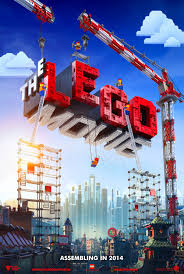
Editor’s Warning: BEWARE – MASSIVE SPOILERS
The Lego Movie has already been acclaimed as the greatest toy commercial ever crafted, but the reason for its success is that it is so much more than the mere money grab that we expected: it is actually a good movie. The film deals with challenging, topical issues and manages to take a more nuanced approach than the usual vapid platitudes one would expect in an animated children’s movie. Within its hundred-minute duration, we deal with big business, the herd mentality, world-building, and, for good measure, some metaphysics (in the form of an absurdly catchy song).
The aspect of the movie which has perhaps drawn the most negative attention from critics is the allegedly-disingenuous anti-big business message. Of course, this might be disingenuous if that were really the message. Instead, with the conversion of President Business at the end, the point is that business can be either good or bad. It thus avoids the pitfalls of propagandistic art in its deliberate presentation of big business as morally ambiguous.
The film also pokes fun at mindless consumerism: watching inane, popular sitcoms, buying trendy, over-priced coffee, and eating at chain restaurants all come under fire. Instead of placing the emphasis on being satisfied with what is given or pre-made, the film’s message seems to be that it is better for people to create for themselves, like the Master Builders. In fact, our hero, Emmet, is scorned by his compatriots when he fails to create his own designs.
Reviewers have also criticized this film for its apparent self-contradictions about rule-following. The film opens with a social critique: people tend to follow rules thoughtlessly and therefore lead meaningless lives. This point appeals to the social sensibilities of those who would espouse a more libertarian worldview, what rankles them is the fact that the movie later seems to support following rules for the sake of defeating President Business. It would seem that the point is not that rules are inherently bad so much as rules need to be examined. It is noteworthy that even following these rules does not ultimately lead the heroes to victory. Again, the movie avoids simplistic solutions to these questions and instead invites the viewer to think more deeply about the value of rules. In and of themselves, they are neutral, but we need to examine them to see whether they are worthy of our allegiance. As St. Paul says, “Try all things; hold fast what is good.”
Perhaps what has been most overlooked in many of the critical evaluations of The Lego Movie is the role of sub-creation or ‘mythopoeia.’ In his essay, “On Fairy Stories,” J.R.R. Tolkien describes the mythopoeic artist as the one who uses what he has been given to fashion his own world with its own stories; this is precisely what The Lego Movie does and what Legos encourage in children. The movie takes disparate worlds and characters and uses them to create a world of its own, with its own sets of rules. Moreover, both the toys and the movie encourage children to do this themselves. Part of the fun is to create your own characters, narratives, and settings. But, to be truly mythopoeic, the world has to be open to others to play in. Just as myths are the product of whole cultures; the mythopoeic world is most rich when it adapts to accommodate multiple authors. In the film, the father learns this lesson by allowing his son to play in his world, and the son learns by allowing his sister to join the fun.
No discussion of The Lego Movie would be complete without an examination of its theme song, “Everything is Awesome.” At the beginning, the song is an ironic statement about the unthinking masses’ appreciation of the general state of affairs. They had been pleased with following the rules of a tyrant because they did not bother to stop to think of anything better. Toward the end, however, the song has changed meaning: it becomes an anthem to the beauty and wonder of each individual being. Each and every thing insofar as it is, is good, and this is a fact that deserves to be appreciated and celebrated. This truth applies especially with people, both in real life and within the film. Lewis says that we each are like gods, immortal beings; Chesterton reflects this same attitude when he meets a peasant and says that he saw the image of God approaching him. In the film, each person is recognized as having fantastic potential; each person is special.
In The Incredibles, Dash shows wisdom when he notes that if everyone is special, no one is, and yet, The Lego Movie is equally right to celebrate the unique potential that lies within each person. Dash is arguing against egalitarianism that exaggerates everyone’s value; The Lego Movie is arguing against the opposite brand of egalitarianism that would devalue everyone. Though the film leaves big business, consumerism, and rules as open questions, it is noteworthy that it takes an uncompromising stance on the innate worth of each individual, especially those scorned by society. The Master Builders at first looked down on Emmet for his lack of creativity and intelligence. But in the end, it is Emmet and his trust in the inherent goodness of even his enemy that wins the day.
Previous Post

March 8, 2014
Call the Midwife
Next Post

March 11, 2014 Jesus of Nazareth: A Savior with a Hometown
Browse Our Archives
Select a Category ambition art beauty bible bios body Book Review cheap grace church community consumer church cultural liturgy culture deep practice desire dualisms economics education evangelicalism events faith family fare forward Film Review friendship games Gospel happiness hipster Christianity humility identity institutions irony issue previews Jesus just church justice Lent Letters to the Editor liberal arts liberal christianity literature liturgy love march madness mental health metaphysics misotheism moralism morality Movie Review music narrative naturalism new atheism passions philosophy place political theology Pope Francis power prayer privilege providence reading reason relationship remembering self resurrection science secular faiths secularism sexuality sin Social Media spirituality Sport suburbs suffering table of contents technology the future of faith the new apologetic the virtues theology thick doctrine transcendence Trinity truth tv Uncategorized violence Virtue vocation war work
Select a Month August 2014 July 2014 June 2014 May 2014 April 2014 March 2014 February 2014 January 2014 December 2013 November 2013 October 2013 September 2013 August 2013 July 2013 June 2013 May 2013 April 2013 March 2013 February 2013
Follow Us!
TAKE THE
Religious Wisdom Quiz
In 2 Timothy, what did Paul leave with Carpus at Troas?
Select your answer to see how you score.
His money His letters His tent-making tools His cloak and scrolls
Related posts from Fare Forward


Bridging Time: Days of Future Past


TRENDING AT PATHEOS Evangelical

The REST of Your Life: A Creative Wrestles...
This week I had a conversation with a good friend from church....

How the author of the world's best hymn...
I've been working with John Newton for a while now. This makes...

Long before this Lectio Divina, Psalm 130 - the song - started...

What About the Trees? Another Living Parable
After I finished writing the last article about falling leaves as a...

Why Classical Education Is a Conversation, Not a...
Come and Read: Joy in Classical Education When I was a little...

Cornell University has received a great deal of negative publicity and intense...
view all Evangelical blogs
Ad-Free & Subscriber Log-In Subscription Support
- About Us
- 2026 Calendar
- Videos
- Podcasts
- Library of World Religions
- Faith In Media Tracker
- Advertise With Us
- Write for Us
- Privacy Policy
- Terms of Service
- Do Not Sell My Data
- Contact Us
- Radiant Digital
- Manage Newsletter Subscriptions
- Unsubscribe From Notifications
- Sitemap
Copyright 2008-2026, Patheos. All rights reserved.
Subscription Support Ad-Free & Subscriber Log-In
Follow Patheos