
BuddhistCatholicContemplativeEvangelicalGeneral ChristianHinduJewishLatter-day SaintMuslimNew VisionsProgressive Christian
Beliefs
- Buddhist
- Catholic
- Contemplative
- Evangelical
- General Christian
- Hindu
- Jewish
- Latter-day Saint
- More Voices
- Muslim
- New Visions
- Pagan
- Progressive Christian
Topics
- Religion News
- Food and Religion
- Sports and Religion
- Religious Art
- Religious Music and Entertainment
- Religious Events
- History and Religion
- Style and Religion
- Politics and Religion
- Women in Religion
- Recreation Outdoors and Religion
- Business Finance and Religion
- Careers Workplace and Religion
- Education and Religion
- Family Parenting and Religion
- Health Fitness and Religion
- Home and Religion
- Relationships and Religion
- Technology and Religion
- Travel and Religion
Columnists
- Buddhist Columnists
- Business Finance and Religion Columnists
- Careers Workplace and Religion Columnists
- Catholic Columnists
- Contemplative Columnists
- Education and Religion Columnists
- Evangelists Columnists
- Family Parenting and Religion Columnists
- General Christian Columnists
- Health Fitness and Religion Columnists
- Hindu Columnists
- History and Religion Columnists
- Home and Religion Columnists
- Jewish Columnists
- More Voices Columnists
- Latter Day Columnists
- Muslim Columnists
- New Visions Columnists
- Nonreligious Columnists
- Pagan Columnists
- Politics and Religion Columnists
- Progressive Columnists
- Recreation Outdoors and Religion Columnists
- Relationships and Religion Columnists
- Religion News Columnists
- Religious Art Columnists
- Religious Events Columnists
- Religious Music and Entertainment Columnists
- Sports and Religion Columnists
- Style and Religion Columnists
- Technology and Religion Columnists
- Travel and Religion Columnists
- Women in Religion Columnists
Resource Library
- 2026 Calendar
- Library of World Religions
- The 100 Most Holy Places on Earth
- Patheos Answers
- Podcasts
- Videos
- Faith Leaders Database
- Anglican Episcopalian
- Bahai
- Baptist
- Buddhism
- Christianity
- Confucianism
- Eastern Orthodoxy
- Hinduism
- Holiness and Pentecostal
- ISKCON
- Islam
- Judaism
- Lutheran
- Methodist
- The Church of Jesus Christ of Latter-day Saints
- New Age
- Paganism
- Presbytarian and Reformed
- Protestantism
- Religion Behind the Scenes
- Roman Catholic
- Scientology
- Shia Islam
- Sikhism
- Sufism
- Sunni Islam
- Taoism
- Zen
- See all religions
Research Tools
 Ad-Free & Subscriber Log-In Subscription Support
Ad-Free & Subscriber Log-In Subscription Support
Follow Patheos 

- Trending:
- Forgiveness
- |
- Marriage
- |
- Consciousness
- |
- Death Penalty
- |
- Election
- |
- Halloween
 Fare Forward
- Home
- Evangelical
- Call the Midwife
Call the Midwife
Last updated on: March 8, 2014 at 7:30 am by Katie McGinley
Call the Midwife 2014-03-08T07:30:10-05:00 Katie McGinley
Patheos Explore the world's faith through different perspectives on religion and spirituality! Patheos has the views of the prevalent religions and spiritualities of the world.
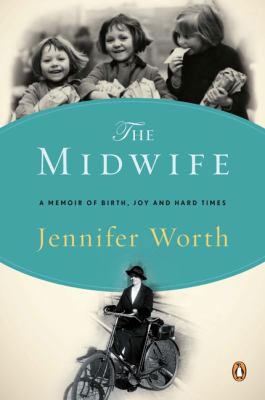
Jennifer Worth’s The Midwife: A Memoir of Birth, Joy, and Hard Times chronicles the author’s experiences as a nurse and midwife amid the appalling conditions and unrelenting poverty of London’s East End in the 1950s. The book, which is part of a trilogy of bestsellers in the UK, is known mainly in America as the inspiration for the PBS show that “Downton Abbey” fans have turned to when they need their next costume-drama fix. Unlike that gorgeous Edwardian melodrama, Call the Midwife is gritty and grimy in its depiction of unrelenting poverty in crowded, hard-scrabble neighborhoods and slums.
Young Jenny is a nurse and a newly-qualified midwife from a well-educated and genteel middle-class family. Spurred on by the spirit of adventure (the reason she chose the profession in the first place, along with the cute uniforms nurses wore in those days), she accepts a position at Nonnatus House in the Poplar neighborhood of London’s East End. An agnostic and something of a bon vivant, she is dismayed to discover that what she took for a small, private hospital is actually a convent of nuns. The Sisters of St. Raymond Nonnatus serve the some of the poorest and roughest neighborhoods of the city, nursing the sick and attending at the homebirths of the vast majority of the local women (the working classes had an almost pathological fear and distrust of hospitals at that time).
Jenny is appalled at the conditions she encounters on her first nursing rounds — flats that are overcrowded, dirty, and unsafe; rampant disease; crime of every sort. She is equally puzzled by the nuns’ attitudes — by and large, they are indefatigable, joyful, and cheerful, radiating peace, calm, and purpose. Although Jenny finds the nuns’ way of life a curiosity when she first arrived at Nonnatus House (they adhere to a strict schedule of communal prayer, for example), the more she works alongside them, the more she grows to respect and love them. Their ability to serve charitably and cheerfully even in the most dire and disgusting of circumstances astonishes her more than anything else.
The oldest nun is nonagenarian Sister Monica Joan, who was disowned by her wealthy family when she did the unthinkable and told them she wanted to be not only a nurse but a nun to boot. Jenny eagerly asks her if it was her love for people that led her to give up her privileged life.
“‘Of course not,’ she snapped sharply, ‘How can you love ignorant, brutish people whom you don’t even know? Can anyone love filth and squalor? Or lice and rats? Who can love aching weariness, and carry on working, in spite of it? One cannot love these things. One can only love God, and through His grace come to love His people.’”
Jenny comes to Nonnatus House seeking an adventure and a challenge. She finds both, of course, but novelty is never sustaining. The physical and emotional strains inherent in her new life would be downright soul-crushing if there weren’t something more substantial to give her the strength to continue her work. She arrives as an agnostic (“er… that is, Methodist – I think”), but after marveling at what could possibly not only sustain the sisters through hardship but make them downright cheerful about it, she begins to wonder whether there might not be on to something with all their talk of God and faith.
The menial day-to-day tasks of an East End nurse are often horrible and disgusting. As Sister Monica Joan says, who can love disease and filth and squalor? Who can love suffering for its own sake? Yet these nuns and midwives carry on their work day after day, because they seek to love and serve God. Sister Monica Joan had no natural love for the poor, but she wants to please God, and trusts that he will give her the grace to do her work.
This was a fitting book to finish shortly before Lent. When I woke up on Ash Wednesday, I did so with a sense of dread for the hardship of fasting and abstaining from meat. I daresay hardly anyone goes through that day, or the whole season of Lent, without feeling at least a little miserable at times. We do not naturally love suffering. For me, the novelty of giving something up for Lent lasted, oh, about 20 minutes. By themselves, our Lenten sacrifices would be no more than a pointless and miserable exercise in self-deprivation and self-pity if they were undertaken for their own sake. Forty days is a long time–certainly longer than I can commit to something simply for the sake of a challenge (I have yet to finish a novena in the intended nine consecutive days). The Christian life is by nature a difficult one, and we are called to embrace hardship in various forms. But we don’t undertake suffering for its own sake. Just as Sister Monica Joan only learned to endure her revolting work by doing it out of love for God, so we in our Lenten sacrifices can only derive joy from them if we undertake them out of a desire to deny ourselves so that we may make more room in our hearts for God.
Previous Post

March 7, 2014
Religious Experience as an Assault on Autonomy
Next Post
March 10, 2014 The Lego Movie
Browse Our Archives
Select a Category ambition art beauty bible bios body Book Review cheap grace church community consumer church cultural liturgy culture deep practice desire dualisms economics education evangelicalism events faith family fare forward Film Review friendship games Gospel happiness hipster Christianity humility identity institutions irony issue previews Jesus just church justice Lent Letters to the Editor liberal arts liberal christianity literature liturgy love march madness mental health metaphysics misotheism moralism morality Movie Review music narrative naturalism new atheism passions philosophy place political theology Pope Francis power prayer privilege providence reading reason relationship remembering self resurrection science secular faiths secularism sexuality sin Social Media spirituality Sport suburbs suffering table of contents technology the future of faith the new apologetic the virtues theology thick doctrine transcendence Trinity truth tv Uncategorized violence Virtue vocation war work
Select a Month August 2014 July 2014 June 2014 May 2014 April 2014 March 2014 February 2014 January 2014 December 2013 November 2013 October 2013 September 2013 August 2013 July 2013 June 2013 May 2013 April 2013 March 2013 February 2013
Follow Us!
TAKE THE
Religious Wisdom Quiz
I am a day when the high priest enters the Most Holy Place once a year to make atonement. What day am I?
Select your answer to see how you score.
The Sabbath Passover The Day of Atonement The Day of Trumpets
Related posts from Fare Forward




TRENDING AT PATHEOS Evangelical

The REST of Your Life: A Creative Wrestles...
This week I had a conversation with a good friend from church....

How the author of the world's best hymn...
I've been working with John Newton for a while now. This makes...

Long before this Lectio Divina, Psalm 130 - the song - started...

What About the Trees? Another Living Parable
After I finished writing the last article about falling leaves as a...

Why Classical Education Is a Conversation, Not a...
Come and Read: Joy in Classical Education When I was a little...

Cornell University has received a great deal of negative publicity and intense...
view all Evangelical blogs
Ad-Free & Subscriber Log-In Subscription Support
- About Us
- 2026 Calendar
- Videos
- Podcasts
- Library of World Religions
- Faith In Media Tracker
- Advertise With Us
- Write for Us
- Privacy Policy
- Terms of Service
- Do Not Sell My Data
- Contact Us
- Radiant Digital
- Manage Newsletter Subscriptions
- Unsubscribe From Notifications
- Sitemap
Copyright 2008-2026, Patheos. All rights reserved.
Subscription Support Ad-Free & Subscriber Log-In
Follow Patheos