
BuddhistCatholicContemplativeEvangelicalGeneral ChristianHinduJewishLatter-day SaintMuslimNew VisionsProgressive Christian
Beliefs
- Buddhist
- Catholic
- Contemplative
- Evangelical
- General Christian
- Hindu
- Jewish
- Latter-day Saint
- More Voices
- Muslim
- New Visions
- Pagan
- Progressive Christian
Topics
- Religion News
- Food and Religion
- Sports and Religion
- Religious Art
- Religious Music and Entertainment
- Religious Events
- History and Religion
- Style and Religion
- Politics and Religion
- Women in Religion
- Recreation Outdoors and Religion
- Business Finance and Religion
- Careers Workplace and Religion
- Education and Religion
- Family Parenting and Religion
- Health Fitness and Religion
- Home and Religion
- Relationships and Religion
- Technology and Religion
- Travel and Religion
Columnists
- Buddhist Columnists
- Business Finance and Religion Columnists
- Careers Workplace and Religion Columnists
- Catholic Columnists
- Contemplative Columnists
- Education and Religion Columnists
- Evangelists Columnists
- Family Parenting and Religion Columnists
- General Christian Columnists
- Health Fitness and Religion Columnists
- Hindu Columnists
- History and Religion Columnists
- Home and Religion Columnists
- Jewish Columnists
- More Voices Columnists
- Latter Day Columnists
- Muslim Columnists
- New Visions Columnists
- Nonreligious Columnists
- Pagan Columnists
- Politics and Religion Columnists
- Progressive Columnists
- Recreation Outdoors and Religion Columnists
- Relationships and Religion Columnists
- Religion News Columnists
- Religious Art Columnists
- Religious Events Columnists
- Religious Music and Entertainment Columnists
- Sports and Religion Columnists
- Style and Religion Columnists
- Technology and Religion Columnists
- Travel and Religion Columnists
- Women in Religion Columnists
Resource Library
- 2026 Calendar
- Library of World Religions
- The 100 Most Holy Places on Earth
- Patheos Answers
- Podcasts
- Videos
- Faith Leaders Database
- Anglican Episcopalian
- Bahai
- Baptist
- Buddhism
- Christianity
- Confucianism
- Eastern Orthodoxy
- Hinduism
- Holiness and Pentecostal
- ISKCON
- Islam
- Judaism
- Lutheran
- Methodist
- The Church of Jesus Christ of Latter-day Saints
- New Age
- Paganism
- Presbytarian and Reformed
- Protestantism
- Religion Behind the Scenes
- Roman Catholic
- Scientology
- Shia Islam
- Sikhism
- Sufism
- Sunni Islam
- Taoism
- Zen
- See all religions
Research Tools
 Ad-Free & Subscriber Log-In Subscription Support
Ad-Free & Subscriber Log-In Subscription Support
Follow Patheos 

- Trending:
- Forgiveness
- |
- Marriage
- |
- Consciousness
- |
- Death Penalty
- |
- Election
- |
- Halloween
 Fare Forward
- Home
- Evangelical
- The Miniature Wife
The Miniature Wife
Last updated on: February 24, 2014 at 11:26 am by Inez Tan
The Miniature Wife 2014-02-24T11:26:37-05:00 Inez Tan
Patheos Explore the world's faith through different perspectives on religion and spirituality! Patheos has the views of the prevalent religions and spiritualities of the world.
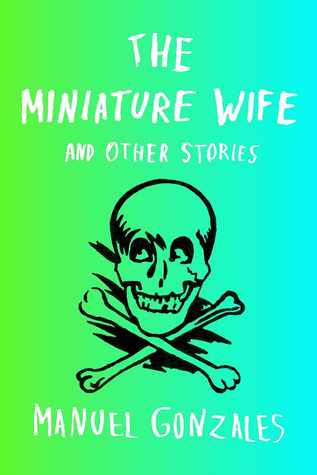
The Miniature Wife, Manuel Gonzales’ debut collection of short stories, begins with a line by W.B. Yeats: “Things fall apart.” Those three words are a fitting introduction to the eighteen stories that follow, in which a plane is hijacked, a soldier is beset by swamp monsters and robots, and zombies descend on a mall.
Whether you want to classify these stories as magical realist, speculative, or genre fiction, they certainly give us the pleasures of traversing well-worn ground to discover something new. They remind us that fiction doesn’t have to constrain itself to the realities of our world. And they take to heart the project of fiction: to show us what could be possible, and how that might make us feel.
Fantastic elements in fiction encourage us to read symbolically, and part of the appeal of these stories is encountering the many different voices of characters who consciously weigh the particular details of their experience against their larger – and often humorous – symbolic import. As an office worker, hopelessly in love with his married receptionist, narrates, “The zombie in me would like to make it clear that there is no zombie in me, per se. Would like to make it known that there is only me, in fact, and that all of me is zombie.” And if the likening of desk work drones to the shambling undead isn’t new, other conceits in the collection are delightfully refreshing – like the piece of art commissioned to commemorate the sinking of the African continent, or the dazzling, haughty, beer-drinking unicorn an envious man named Mano plots to steal from his neighbor Ralph in “One-Horned and Wild-Eyed” (with all its comic echoing of “Thou shall not covet thy neighbor’s donkey”).
So: things fall apart. But “One-Horned and Wild-Eyed,” among several other stories, is also deeply interested in the who or what that causes things to go to pieces. The unicorn works so well symbolically because it works so well literally: we see Mano neglect his wife and child to sneak off and gaze at the unicorn at all hours of the day and night. Meanwhile, Ralph’s wife laments, “Six years, I’ve been this man for six years, and I never told him he had to get a job, I never pushed him, though I sure as hell wouldn’t have minded… Ha. Ha, ha, joke’s on me. Less than a week wit [the unicorn] and he’s already found a job to take care of it.” Similarly, other stories focus on the catalysts, the instigators, or the culpability of those who choose not to react in the face of catastrophe, like the passengers onboard the hijacked plane who allow themselves to sink into such a state of apathy and resignation that no one ever attempts to wrest back control of the plane – which has been circling the Texas airspace for twenty years.
It’s impossible to summarize the variety of situations and surprising emotional range of these stories. Yet there is a running theme: throughout the collection, characters find themselves uneasy about the legacy they’ll leave. Even as they’re preoccupied with reacting to their immediate situation, they’re rather anxious over what it is they’ll be most remembered for – whether that’s the invention of a plant-based vascular system intended as a replacement for human organs, or a miniature wife who, after her husband accidentally shrinks her down to the size of a coffee mug, promptly wages war against him and the miniaturizing company that employs him. In the face of adversity, most characters come to rely on only themselves. As the lone man fleeing a zombie invasion declares, “I can pull myself to my feet and run and run harder and faster than I’ve ever run before. I can make it to those doors and burst through them and into the parking lot and find my car. I can outrun those bastards and start this all over. I will watch less television. I will spend more time outside. I will foster stray animals and donate to charity walk-a-thons and look both ways at intersections.” Here, Gonzales’s brilliance lies in showing the absurdity at the core of self-reliance: that it’s a position as funny as it is bleak.
Reading these stories, I was struck by their contrast to one of my deepest beliefs: that anyone who follows Christ is never alone. During Exodus, God was always present as a cloud by day and a pillar of fire by night to guide his people’s way. Christians celebrate how God entered into our world at Christmas, taking on flesh in order to dwell in our midst. Furthermore, he chooses to be present still; Paul writes that our very bodies are his temples. That I could be thinking through my convictions while worrying about a family that was getting turned into werewolves demonstrates how well the stories work to invite the reader to bring his or her own interpretive faculties to the table. Or as Flannery O’Connor writes, “The truer the symbol, the deeper it leads you, the more meaning it opens up.”
The inventiveness and wit of The Miniature Wife set it apart from the lurking hordes of less thoughtful genre fiction, and you might find yourself thinking about what you’ve read long after you’ve turned its pages. You can read three of the stories online: One-Horned and Wild-Eyed, The Animal House, and Cash to a Killing.
Previous Post

February 21, 2014
Learning to Watch Movies
Next Post
February 25, 2014 The Shortcomings of "Love What You Do"
Browse Our Archives
Select a Category ambition art beauty bible bios body Book Review cheap grace church community consumer church cultural liturgy culture deep practice desire dualisms economics education evangelicalism events faith family fare forward Film Review friendship games Gospel happiness hipster Christianity humility identity institutions irony issue previews Jesus just church justice Lent Letters to the Editor liberal arts liberal christianity literature liturgy love march madness mental health metaphysics misotheism moralism morality Movie Review music narrative naturalism new atheism passions philosophy place political theology Pope Francis power prayer privilege providence reading reason relationship remembering self resurrection science secular faiths secularism sexuality sin Social Media spirituality Sport suburbs suffering table of contents technology the future of faith the new apologetic the virtues theology thick doctrine transcendence Trinity truth tv Uncategorized violence Virtue vocation war work
Select a Month August 2014 July 2014 June 2014 May 2014 April 2014 March 2014 February 2014 January 2014 December 2013 November 2013 October 2013 September 2013 August 2013 July 2013 June 2013 May 2013 April 2013 March 2013 February 2013
Follow Us!
TAKE THE
Religious Wisdom Quiz
Who led the Israelites into the promised land after Moses?
Select your answer to see how you score.
Joshua Solomon Samuel David
Related posts from Fare Forward
Playing God: Redeeming the Gift of Power


TRENDING AT PATHEOS Evangelical

The REST of Your Life: A Creative Wrestles...
This week I had a conversation with a good friend from church....

How the author of the world's best hymn...
I've been working with John Newton for a while now. This makes...

Long before this Lectio Divina, Psalm 130 - the song - started...

What About the Trees? Another Living Parable
After I finished writing the last article about falling leaves as a...

Why Classical Education Is a Conversation, Not a...
Come and Read: Joy in Classical Education When I was a little...

Cornell University has received a great deal of negative publicity and intense...
view all Evangelical blogs
Ad-Free & Subscriber Log-In Subscription Support
- About Us
- 2026 Calendar
- Videos
- Podcasts
- Library of World Religions
- Faith In Media Tracker
- Advertise With Us
- Write for Us
- Privacy Policy
- Terms of Service
- Do Not Sell My Data
- Contact Us
- Radiant Digital
- Manage Newsletter Subscriptions
- Unsubscribe From Notifications
- Sitemap
Copyright 2008-2026, Patheos. All rights reserved.
Subscription Support Ad-Free & Subscriber Log-In
Follow Patheos