
BuddhistCatholicContemplativeEvangelicalGeneral ChristianHinduJewishLatter-day SaintMuslimNew VisionsProgressive Christian
Beliefs
- Buddhist
- Catholic
- Contemplative
- Evangelical
- General Christian
- Hindu
- Jewish
- Latter-day Saint
- More Voices
- Muslim
- New Visions
- Pagan
- Progressive Christian
Topics
- Religion News
- Food and Religion
- Sports and Religion
- Religious Art
- Religious Music and Entertainment
- Religious Events
- History and Religion
- Style and Religion
- Politics and Religion
- Women in Religion
- Recreation Outdoors and Religion
- Business Finance and Religion
- Careers Workplace and Religion
- Education and Religion
- Family Parenting and Religion
- Health Fitness and Religion
- Home and Religion
- Relationships and Religion
- Technology and Religion
- Travel and Religion
Columnists
- Buddhist Columnists
- Business Finance and Religion Columnists
- Careers Workplace and Religion Columnists
- Catholic Columnists
- Contemplative Columnists
- Education and Religion Columnists
- Evangelists Columnists
- Family Parenting and Religion Columnists
- General Christian Columnists
- Health Fitness and Religion Columnists
- Hindu Columnists
- History and Religion Columnists
- Home and Religion Columnists
- Jewish Columnists
- More Voices Columnists
- Latter Day Columnists
- Muslim Columnists
- New Visions Columnists
- Nonreligious Columnists
- Pagan Columnists
- Politics and Religion Columnists
- Progressive Columnists
- Recreation Outdoors and Religion Columnists
- Relationships and Religion Columnists
- Religion News Columnists
- Religious Art Columnists
- Religious Events Columnists
- Religious Music and Entertainment Columnists
- Sports and Religion Columnists
- Style and Religion Columnists
- Technology and Religion Columnists
- Travel and Religion Columnists
- Women in Religion Columnists
Resource Library
- 2026 Calendar
- Library of World Religions
- The 100 Most Holy Places on Earth
- Patheos Answers
- Podcasts
- Videos
- Faith Leaders Database
- Anglican Episcopalian
- Bahai
- Baptist
- Buddhism
- Christianity
- Confucianism
- Eastern Orthodoxy
- Hinduism
- Holiness and Pentecostal
- ISKCON
- Islam
- Judaism
- Lutheran
- Methodist
- The Church of Jesus Christ of Latter-day Saints
- New Age
- Paganism
- Presbytarian and Reformed
- Protestantism
- Religion Behind the Scenes
- Roman Catholic
- Scientology
- Shia Islam
- Sikhism
- Sufism
- Sunni Islam
- Taoism
- Zen
- See all religions
Research Tools
 Ad-Free & Subscriber Log-In Subscription Support
Ad-Free & Subscriber Log-In Subscription Support
Follow Patheos 

- Trending:
- Forgiveness
- |
- Marriage
- |
- Consciousness
- |
- Death Penalty
- |
- Election
- |
- Halloween
 Fare Forward
- Home
- Evangelical
- On Honesty and Confession
On Honesty and Confession
Last updated on: July 24, 2013 at 12:45 pm by Sarah Ngu
On Honesty and Confession 2013-07-24T12:45:31-04:00 Sarah Ngu
Patheos Explore the world's faith through different perspectives on religion and spirituality! Patheos has the views of the prevalent religions and spiritualities of the world.
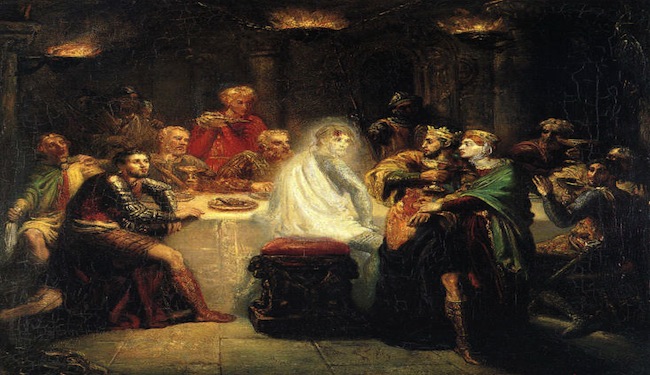
Does a moral, psychological “point of no return” exist? Shakespeare illustrates what this turning point might look like in Act III of Macbeth. After killing his king and one of his closest friends, Macbeth, the newly crowned king, announces to his wife,
I am in blood
Stepped in so far that, should I wade no more,
Returning were as tedious as go o’er.
Strange things I have in head, that will to hand,
which must be acted ere they may be scanned.
After this pronouncement, he goes onto slaughter a man’s innocent family in threatened paranoia. The honesty experiments of Dan Ariely, a behavioral economist, confirm that there is such a turning point, which he dubs the “what the hell” effect. In his experiments, he gives his participants many chances to cheat, and for most of the time, they only cheat a little bit. At some point, however, many give up the balancing act and start cheating all the time. It’s similar to dieting, he explains: after you slip up once and eat a cupcake, you are more likely to say, “What the hell, I’ll just eat whatever I want today.”
Interested in figuring out solutions to the phenomenon of dishonesty, Ariely came across the Catholic tradition of confession and was puzzled by it. “From an economic perspective, we don’t understand confession. If you can confess and be absolved, shouldn’t you cheat more?” he asked. What confession offered, he realized, especially for those who had passed the point of no return was the chance to “open a new page.”
He tested this finding through a series of secular confession experiments. Whether people cheated a little or a lot, they were given a chance to say what they did and ask for forgiveness, and if they did, cheating tended to decrease. “How do we get people to feel clean again and act on their goodness?” Ariely asks, wondering how one could transfer the insight of religion into civil society (e.g. bankers asking for forgiveness?)
His experiments tell us that the “point of no return” is not as permanent as it seems. The desire to “feel clean again” is difficult to squash, and what keeps it dormant is less a sunken, evil-loving depravity, but despair that it is too late for one has “stepped in so far.” Hope for forgiveness and a clean slate is far more compelling than further condemnation of sin.
One may dismiss Ariely’s findings as applicable only to low-stake situations and not the high-stake situations involved in criminal justice. Yet it is intriguing that in Rwanda, more than 32,000 perpetrators in the genocide have confessed their deeds through the Umuvumu Tree Project, which brings prisoners and victims together to discuss biblical ideas about confession, forgiveness and repentance, and even, for those who are willing, to pray together. Prior to the project, the government had offered to lighten the sentences for any who confessed, but only 5,000 had done so.
On the see-saw debate on whether we are creatures who are fundamentally good or evil, what Ariely and Rwanda demonstrate is that perhaps we lean towards the latter, but more than anything, we are creatures who are in need of hope.
[Image of Banquo’s ghost from Wikipedia]

Previous Post

July 23, 2013
Latin in the Summer, or Learning to be Attentive
Next Post
July 29, 2013 A Utopian and an Acadian
Browse Our Archives
Select a Category ambition art beauty bible bios body Book Review cheap grace church community consumer church cultural liturgy culture deep practice desire dualisms economics education evangelicalism events faith family fare forward Film Review friendship games Gospel happiness hipster Christianity humility identity institutions irony issue previews Jesus just church justice Lent Letters to the Editor liberal arts liberal christianity literature liturgy love march madness mental health metaphysics misotheism moralism morality Movie Review music narrative naturalism new atheism passions philosophy place political theology Pope Francis power prayer privilege providence reading reason relationship remembering self resurrection science secular faiths secularism sexuality sin Social Media spirituality Sport suburbs suffering table of contents technology the future of faith the new apologetic the virtues theology thick doctrine transcendence Trinity truth tv Uncategorized violence Virtue vocation war work
Select a Month August 2014 July 2014 June 2014 May 2014 April 2014 March 2014 February 2014 January 2014 December 2013 November 2013 October 2013 September 2013 August 2013 July 2013 June 2013 May 2013 April 2013 March 2013 February 2013
Follow Us!
TAKE THE
Religious Wisdom Quiz
What Christian group is known for large-scale evangelistic crusades?
Select your answer to see how you score.
Evangelicals Methodists Orthodox Quakers
Related posts from Fare Forward



Reflecting on Trinity Sunday with St. Augustine

TRENDING AT PATHEOS Evangelical

The REST of Your Life: A Creative Wrestles...
This week I had a conversation with a good friend from church....

How the author of the world's best hymn...
I've been working with John Newton for a while now. This makes...

Long before this Lectio Divina, Psalm 130 - the song - started...

What About the Trees? Another Living Parable
After I finished writing the last article about falling leaves as a...

Why Classical Education Is a Conversation, Not a...
Come and Read: Joy in Classical Education When I was a little...

Cornell University has received a great deal of negative publicity and intense...
view all Evangelical blogs
Ad-Free & Subscriber Log-In Subscription Support
- About Us
- 2026 Calendar
- Videos
- Podcasts
- Library of World Religions
- Faith In Media Tracker
- Advertise With Us
- Write for Us
- Privacy Policy
- Terms of Service
- Do Not Sell My Data
- Contact Us
- Radiant Digital
- Manage Newsletter Subscriptions
- Unsubscribe From Notifications
- Sitemap
Copyright 2008-2026, Patheos. All rights reserved.
Subscription Support Ad-Free & Subscriber Log-In
Follow Patheos