
BuddhistCatholicContemplativeEvangelicalGeneral ChristianHinduJewishLatter-day SaintMuslimNew VisionsProgressive Christian
Beliefs
- Buddhist
- Catholic
- Contemplative
- Evangelical
- General Christian
- Hindu
- Jewish
- Latter-day Saint
- More Voices
- Muslim
- New Visions
- Pagan
- Progressive Christian
Topics
- Religion News
- Food and Religion
- Sports and Religion
- Religious Art
- Religious Music and Entertainment
- Religious Events
- History and Religion
- Style and Religion
- Politics and Religion
- Women in Religion
- Recreation Outdoors and Religion
- Business Finance and Religion
- Careers Workplace and Religion
- Education and Religion
- Family Parenting and Religion
- Health Fitness and Religion
- Home and Religion
- Relationships and Religion
- Technology and Religion
- Travel and Religion
Columnists
- Buddhist Columnists
- Business Finance and Religion Columnists
- Careers Workplace and Religion Columnists
- Catholic Columnists
- Contemplative Columnists
- Education and Religion Columnists
- Evangelists Columnists
- Family Parenting and Religion Columnists
- General Christian Columnists
- Health Fitness and Religion Columnists
- Hindu Columnists
- History and Religion Columnists
- Home and Religion Columnists
- Jewish Columnists
- More Voices Columnists
- Latter Day Columnists
- Muslim Columnists
- New Visions Columnists
- Nonreligious Columnists
- Pagan Columnists
- Politics and Religion Columnists
- Progressive Columnists
- Recreation Outdoors and Religion Columnists
- Relationships and Religion Columnists
- Religion News Columnists
- Religious Art Columnists
- Religious Events Columnists
- Religious Music and Entertainment Columnists
- Sports and Religion Columnists
- Style and Religion Columnists
- Technology and Religion Columnists
- Travel and Religion Columnists
- Women in Religion Columnists
Resource Library
- 2026 Calendar
- Library of World Religions
- The 100 Most Holy Places on Earth
- Patheos Answers
- Podcasts
- Videos
- Faith Leaders Database
- Anglican Episcopalian
- Bahai
- Baptist
- Buddhism
- Christianity
- Confucianism
- Eastern Orthodoxy
- Hinduism
- Holiness and Pentecostal
- ISKCON
- Islam
- Judaism
- Lutheran
- Methodist
- The Church of Jesus Christ of Latter-day Saints
- New Age
- Paganism
- Presbytarian and Reformed
- Protestantism
- Religion Behind the Scenes
- Roman Catholic
- Scientology
- Shia Islam
- Sikhism
- Sufism
- Sunni Islam
- Taoism
- Zen
- See all religions
Research Tools
 Ad-Free & Subscriber Log-In Subscription Support
Follow Patheos 

- Trending:
- Advent
- |
- Forgiveness
- |
- Thanksgiving
- |
- Election
- |
- Seasonal Holidays
- |
- Marriage
 Fare Forward
- Home
- Evangelical
- On the Use of Arguments in Theology
On the Use of Arguments in Theology
Last updated on: September 8, 2025 at 12:33 pm by Guest Contributor
On the Use of Arguments in Theology 2025-09-08T12:33:07-04:00 Guest Contributor
Patheos Explore the world's faith through different perspectives on religion and spirituality! Patheos has the views of the prevalent religions and spiritualities of the world.
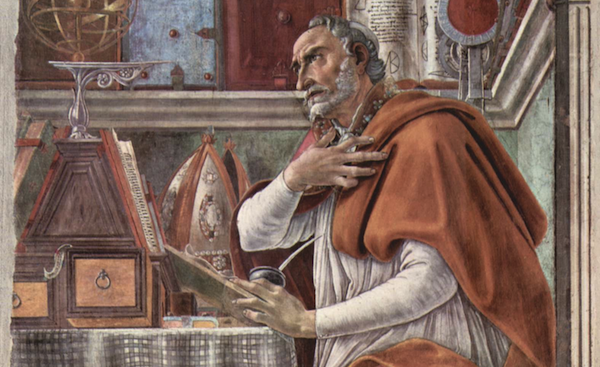
I am currently working through Thomas Aquinas’s Summa Theologiae, commenting on one article each day. Given the large interest among the Fare Forward community in the role of reason and argument in the exposition and defense of the faith, I thought a careful discussion of Aquinas’s thoughts on this matter would be well received here. So below is my discussion of Question 1, Article 8 of the first part of the Summa: Whether Sacred Doctrine is a Matter of Argument. (The English text of the article can be found here, and the Latin here.)
1. St. Thomas asks to what extent theology should be a matter of argument (utrum sacra doctrina sit argumentativa). This question is obviously related to his earlier discussion of the scientific character of theology, since it is characteristic of a science, in the Aristotelian sense of the word, to proceed by way of arguments from evident principles to less evident conclusions. In this article, St. Thomas maps a safe route between rationalism and fideism, both of which are perpetual temptations for Christians attempting to think through their faith and explain it to others. For this reason, I think the article is worth extended attention.
2. Against the use of arguments in theology, St. Thomas proposes two initial objections. First, he cites St. Ambrose and St. John, to the effect that arguments are inappropriate in matters of faith. Second, he presents a clever dilemma: every argument is based either on authority or on reason. Argument from authority is the weakest mode of argument, and therefore is unfitting for theological investigation, which ought to be nobler than any other. But argument from reason is likewise unfitting, because whatever can be reasoned to is naturally intelligible to man, whereas the object of theological investigation (i.e., the life and inner nature of the Godhead) exceeds all natural capacity for understanding.
3. In the remainder of the article, St. Thomas treats these objections as occasions for the illumination of some feature of the truth that might otherwise be overlooked. In the “On the Contrary…” (Sed contra), which usually invokes scripture, he quotes the letter to Titus, concerning the use of reason by the bishop (episcopus) in the elaboration of sound doctrine and the persuasion of those opposed to it. (Note that this is an especially fitting choice of citation, since the office of teaching belongs primarily to the bishop.)
4. St. Thomas then begins the body of the article (“I answer that…”) by observing that no science seeks to demonstrate its own principles, since even the highest sciences (e.g., metaphysics) presuppose their principles (e.g., the principle of non-contradiction) as the immediately intelligible ground of all their subsequent reasoning. Hence the fact that theology does not prove its own principles is not problematic.
5. He goes on to point out that lesser sciences are not disposed to engage with those who dispute their principles, since the derivation of the principles of a lesser science belongs to a higher one (as, for example, in contemporary biology the act of defining a species or genus—e.g., fish—is not left to the ichthyologists, but to the geneticists—though perhaps these sciences are not as well-bounded as we might like). The highest sciences, however, though they cannot prove their principles to those who reject them, are still inclined to engage detractors in conversation, and attempt to answer problems posed, and to work from any available common ground toward a fuller recognition of the truth. The metaphysician cannot convince Heraclitus of the stability and intelligibility of being, but he can answer the objections which lead Heraclitus to reject these principles, and if Heraclitus is willing to say something, even very little, the metaphysician can use this to show the path to a fuller agreement between the two.
6. Just so with the theologian. The articles of faith are just as little provable as the first principles of metaphysics, but given any objection to their credibility or reasonableness, the theologian can furnish the objector with reasons of credibility and explanations which reveal the logical coherence of the articles of faith with each other and with naturally available truths. Note, however, that these reasons of credibility are always insufficient to strictly demonstrate the articles of faith, which depend on revelation, and that therefore all strict arguments in theology proceed from faith to faith. But if an objector accepts some article of faith, it may be possible from his vision of the part to lead him to properly grasp the whole. (As is seen in inter-denominational dialogue.)
7. Furthermore, St. Thomas points out that because the content of divine revelation is infallible truth, we can know with certainty that anyone purporting to disprove the faith by rational argument must be incorrect, so it is up to the theologian to reveal the faults in these arguments.
8. But, to return to the initial objections, how can arguments be useful in understanding the data of revelation at all? If the principles of sacred doctrine are received in excess of the natural capacities of human understanding, and tend ultimately toward the apprehension of something beyond the aptitude of any created intellect (i.e., God), how could reasoning help us to progress in this knowledge? The subjection of supernatural truth to the limited mechanics of natural reason seems guaranteed to pervert that truth, to truncate it, and to convert it into something proportionate to the human mind—reducing the sacred icon of revelation to an idol made in the image of man.
9. To answer this objection, Thomas makes the first use of his wonderful principle: gratia non tollit naturam, sed perficit. Grace does not detract from nature, but perfects it. In this case the principle applies thus: though the acquisition and acceptance of the data of faith is beyond our natural capacity and requires an influx of grace, those truths, once possessed by the mind, are apprehended in the same way as other, natural truths. Grace works through nature to lead creatures beyond their natural limits. Catechesis and kerygma are linguistically mediated activities which make use of the reasoning capacities of the mind to grasp diverse facts and unite them under simpler and more comprehensive concepts. The whole of scripture reveals God’s nature to us in little glints and fragmentary aspects, but by reading through the whole and uniting these various aspects, we may gain a more comprehensive understanding of the object toward which scripture directs us. In contemporary philosophy, they speak of the “paradox of analysis”—the fact that the result of any purely logical analysis, though it may seem to deduce new truths, must always merely reveal what was implicitly present in the premises. Likewise in sacred doctrine we proceed from principles imperfectly understood, by way of reasoning, to return to those same principles, more perfectly understood. The reading of scripture is the origin and conclusion of sacred doctrine, and it was for this reason that St. Thomas’s title as a professor of theology was “Master of the Sacred Page.” (Note that the “sacred page” of scripture, as transmitted in his day, included a wealth of interpretive glosses and patristic quotations.)

10. Finally, St. Thomas discusses the use of arguments from authority. Though in natural reasoning an appeal to authority is the weakest kind of argument, when the authority appealed to is the self-revelation of the Godhead, the strength of this argument outstrips that of any natural reasoning. Furthermore, in establishing the contents of the faith, there are various orders of authority. First of all there is the authority of sacred scripture, which is the inspired word of God and utterly infallible, and with it whatever was revealed to the Apostles and Prophets; beyond this there is the testimony of the Fathers and Doctors, which though authoritative does not in itself establish any matter absolutely (e.g. that Augustine held a particular view is not conclusive in itself) but only by a high degree of probability; and beyond these there is the authority of philosophers, which is likewise probable and not necessarily conclusive. Here Thomas is gesturing toward a treatment of the kinds of revelation and degrees of teaching authority, but a fuller discussion of these matters will be left for the Secunda Pars.
Outline of Article
Objections:
–Ambrose and John both say to set aside arguments in matters of faith.
–The dignity of sacred doctrine exceeds that implied by both the use of rational arguments and appeals to authority.
Sed contra:
–Titus 1:9, Embracing that faithful word which is according to doctrine, that he may be able to exhort in sound doctrine, and to convince the gainsayers.
Corpus:
–None of the sciences seek to demonstrate their own principles, likewise theology cannot prove the articles of faith.
–The highest sciences (including metaphysics and theology) defend their principles against detractors.
–Since revelation is infallible, the theologian can disprove any any seemingly rational argument against it.
Replies:
–Argument in matters of faith does not seek to demonstrate revealed truths from natural truths, but to move from faith to faith.
–An appeal to the authority of divine revelation exceeds all other arguments in dignity.
–Grace does not destroy nature, but perfects it. So the natural intellectual faculties work in the service of revealed truth, uniting the data of revelation and working to comprehend it more perfectly.
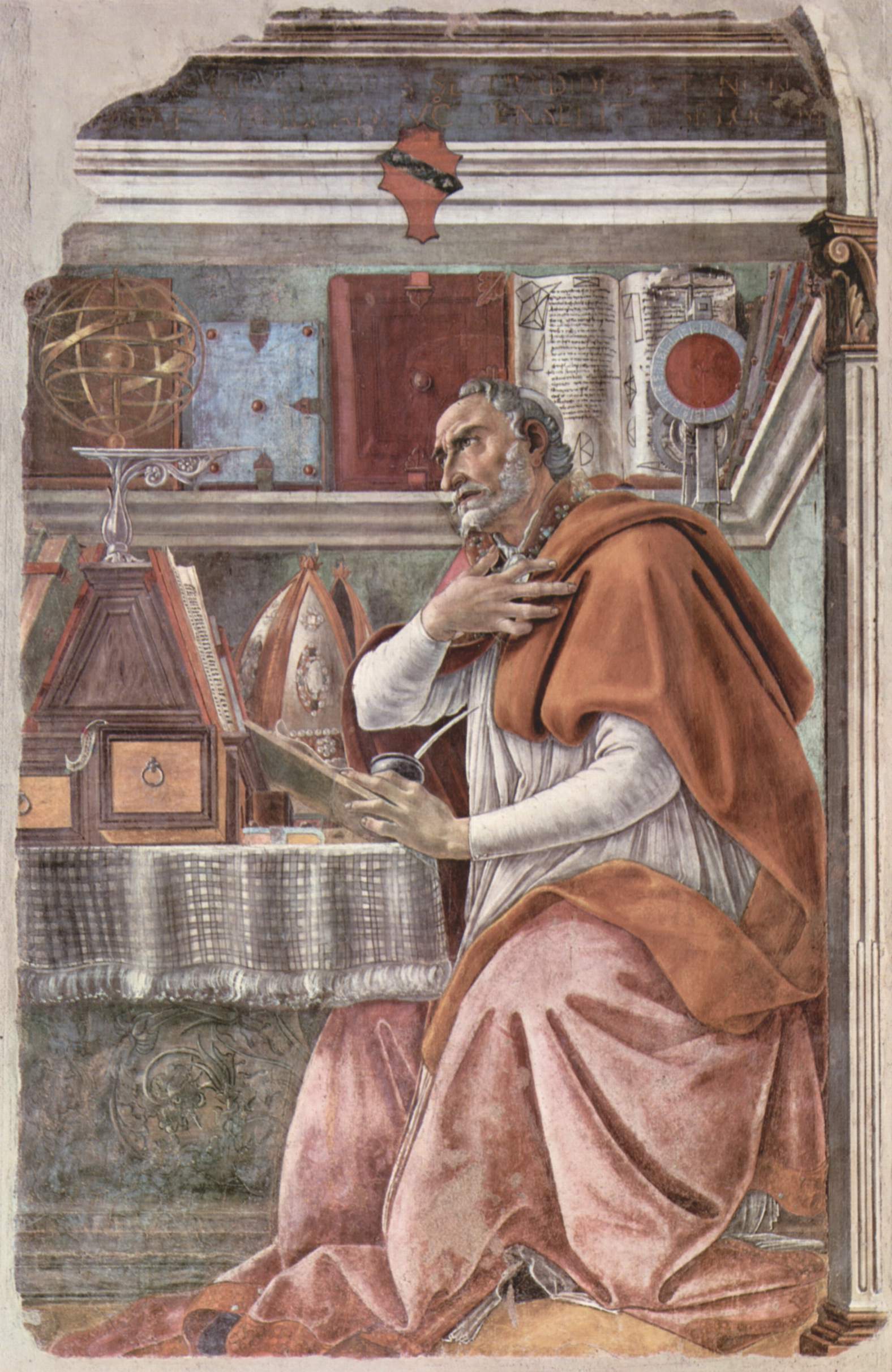
[Image of theologian from Wikipedia]
Previous Post

May 28, 2013
Art and The Mysterious Beyond
Next Post

May 31, 2013 Longing, Communion, and the Great Gatsby
Browse Our Archives
Select a Category ambition art beauty bible bios body Book Review cheap grace church community consumer church cultural liturgy culture deep practice desire dualisms economics education evangelicalism events faith family fare forward Film Review friendship games Gospel happiness hipster Christianity humility identity institutions irony issue previews Jesus just church justice Lent Letters to the Editor liberal arts liberal christianity literature liturgy love march madness mental health metaphysics misotheism moralism morality Movie Review music narrative naturalism new atheism passions philosophy place political theology Pope Francis power prayer privilege providence reading reason relationship remembering self resurrection science secular faiths secularism sexuality sin Social Media spirituality Sport suburbs suffering table of contents technology the future of faith the new apologetic the virtues theology thick doctrine transcendence Trinity truth tv Uncategorized violence Virtue vocation war work
Select a Month August 2014 July 2014 June 2014 May 2014 April 2014 March 2014 February 2014 January 2014 December 2013 November 2013 October 2013 September 2013 August 2013 July 2013 June 2013 May 2013 April 2013 March 2013 February 2013
Follow Us!
TAKE THE
Religious Wisdom Quiz
Who said, "Father, I have sinned against heaven and against you"?
Select your answer to see how you score.
The Lost Sheep The Rich Young Ruler The Pharisee The Prodigal Son
Related posts from Fare Forward

The Liberal Arts and the Call to Die
What We Are: Mind, Body, and the Dangers...

Why I’m Not Going to Talk About “Culture”...
TRENDING AT PATHEOS Evangelical

Making Stones Into Bread: Choosing the “Right” Work
I was on my online arts ministry Zoom meeting with the International...

Ukraine’s exhausted Christians face fifth winter of war
By Julian Lukins The full-scale war in Ukraine is taking “a serious...

Russell Brand's Conviction is not anti-Christian Persecution
How do we shed the reputation that the Church is OK with...

Have you ever caught yourself saying, “I’ll do it tomorrow,” or “Now...

Write Your Story: A Great Way to Find...
A few month’s back, my son was scrolling around Facebook and saw...

Throughout history, people have pursued pleasure, possessions, relationships, and success in an...
view all Evangelical blogs
Ad-Free & Subscriber Log-In Subscription Support
- About Us
- 2026 Calendar
- Videos
- Podcasts
- Library of World Religions
- Faith In Media Tracker
- Advertise With Us
- Write for Us
- Privacy Policy
- Terms of Service
- Do Not Sell My Data
- Contact Us
- Radiant Digital
- Manage Newsletter Subscriptions
- Unsubscribe From Notifications
- Sitemap
Copyright 2008-2026, Patheos, part of the Radiant Digital network of media brands. All rights reserved.
Subscription Support Ad-Free & Subscriber Log-In
Follow Patheos