
BuddhistCatholicContemplativeEvangelicalGeneral ChristianHinduJewishLatter-day SaintMuslimNew VisionsProgressive Christian
Beliefs
- Buddhist
- Catholic
- Contemplative
- Evangelical
- General Christian
- Hindu
- Jewish
- Latter-day Saint
- More Voices
- Muslim
- New Visions
- Pagan
- Progressive Christian
Topics
- Religion News
- Food and Religion
- Sports and Religion
- Religious Art
- Religious Music and Entertainment
- Religious Events
- History and Religion
- Style and Religion
- Politics and Religion
- Women in Religion
- Recreation Outdoors and Religion
- Business Finance and Religion
- Careers Workplace and Religion
- Education and Religion
- Family Parenting and Religion
- Health Fitness and Religion
- Home and Religion
- Relationships and Religion
- Technology and Religion
- Travel and Religion
Columnists
- Buddhist Columnists
- Business Finance and Religion Columnists
- Careers Workplace and Religion Columnists
- Catholic Columnists
- Contemplative Columnists
- Education and Religion Columnists
- Evangelists Columnists
- Family Parenting and Religion Columnists
- General Christian Columnists
- Health Fitness and Religion Columnists
- Hindu Columnists
- History and Religion Columnists
- Home and Religion Columnists
- Jewish Columnists
- More Voices Columnists
- Latter Day Columnists
- Muslim Columnists
- New Visions Columnists
- Nonreligious Columnists
- Pagan Columnists
- Politics and Religion Columnists
- Progressive Columnists
- Recreation Outdoors and Religion Columnists
- Relationships and Religion Columnists
- Religion News Columnists
- Religious Art Columnists
- Religious Events Columnists
- Religious Music and Entertainment Columnists
- Sports and Religion Columnists
- Style and Religion Columnists
- Technology and Religion Columnists
- Travel and Religion Columnists
- Women in Religion Columnists
Resource Library
- 2026 Calendar
- Library of World Religions
- The 100 Most Holy Places on Earth
- Patheos Answers
- Podcasts
- Videos
- Faith Leaders Database
- Anglican Episcopalian
- Bahai
- Baptist
- Buddhism
- Christianity
- Confucianism
- Eastern Orthodoxy
- Hinduism
- Holiness and Pentecostal
- ISKCON
- Islam
- Judaism
- Lutheran
- Methodist
- The Church of Jesus Christ of Latter-day Saints
- New Age
- Paganism
- Presbytarian and Reformed
- Protestantism
- Religion Behind the Scenes
- Roman Catholic
- Scientology
- Shia Islam
- Sikhism
- Sufism
- Sunni Islam
- Taoism
- Zen
- See all religions
Research Tools
 Ad-Free & Subscriber Log-In Subscription Support
Ad-Free & Subscriber Log-In Subscription Support
Follow Patheos 

- Trending:
- Forgiveness
- |
- Marriage
- |
- Consciousness
- |
- Death Penalty
- |
- Election
- |
- Halloween
 Fare Forward
- Home
- Evangelical
- Art and The Mysterious Beyond
Art and The Mysterious Beyond
Last updated on: May 28, 2013 at 9:30 am by Emily DeBaun
Art and The Mysterious Beyond 2013-05-28T09:30:39-04:00 Emily DeBaun
Patheos Explore the world's faith through different perspectives on religion and spirituality! Patheos has the views of the prevalent religions and spiritualities of the world.
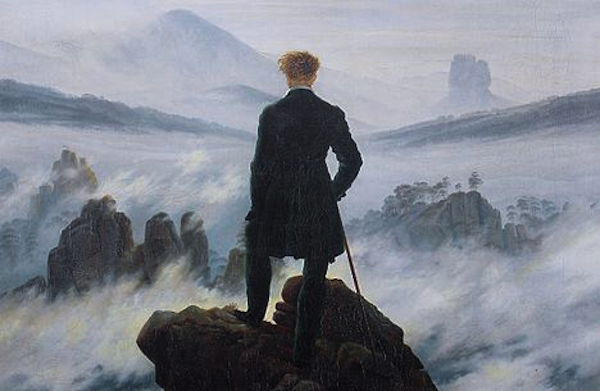
A couple of posts over at “Good Letters” have thoughtfully addressed art’s purpose and how it interacts with and reflects a greater reality. In the first of these pieces, Vic Sizemore responds to a recent article by Michael Chabon in the New York Review of Books. Chabon argues that the artist’s function is addressing brokenness in the world by putting back together the “‘scattered pieces of that great overturned jigsaw puzzle’ according to [the artist’s] own vision.” A creative work “is authentic only to the degree that it attempts to conceal neither the bleak facts nor the tricks employed in pulling off the presto change-o…artifice, openly expressed, is the only true ‘authenticity’ an artist can lay claim to.” Sizemore disagrees. If an artist exposes artifice and undercuts art’s ability to capture the observer, she rejects art’s capacity to reflect something greater than a single manufactured perspective. Sizemore claims art should be “an experience that you are swept up in, or at least glimpse, something larger, something utterly mysterious,” rather than a self-admittedly artificial attempt to represent a version of reality.
In a similar vein, Richard Chess’s post points out art’s limited ability to capture the largeness of life itself. Chess quotes Jon Kabat-Zinn, “Who you actually are is far bigger than the narrative you construct about who you are.” Most art is merely a single interpretation of something much larger and more complex, albeit one that can capture more of who we are, than, say, factual knowledge or logical thought. Chess concludes by noting, “I am small, though not as small as I was 713 words ago. Thank God, or art, whichever is bigger, whichever is big enough to hold what I am and what I am not.” The artist is, in some ways, imagining a divine view of the world— aspiring to an omniscient understanding of the individual.
What links these two pieces is a partial rejection of a post-modern/post-structuralist approach to creative works. While both Sizemore and Chess affirm that art involves storytelling from multiple subjective perspectives, they also imply that these perspectives actually refer to some greater reality. The artist’s hope is not that her work will comprehensively or simply creatively express a viewpoint, but rather that her (limited) piece will give the observer/reader/listener “a glimpse” into something “utterly mysterious” beyond.
Because these two bloggers are people of faith, it would be easy to dismiss their perspectives as unrepresentative of current artistic thought. But some of these question are cropping up in non-religious circles as well. Earlier this month, Steve Neumann of “Rationally Speaking” wrote a piece on the subject of the sublime that was linked in the New York Times. Neumann references an almost Burkean sense of the sublime— something so overwhelmingly majestic that it inspires fear as well as awe—noting how romantics found the sublime in nature. He suggests that nature is less and less able to evoke a sense of the sublime, and that today, “our feeling for the sublime, if it is to happen at all, will have to come more and more from culture.” To Neumann, the sublime can be found in the cultural products of the entertainment industry – he cites the music of Led Zeppelin as an example.
It’s easy to see this logic in action. Consider recent films Les Miserables and The Great Gatsby. They are both larger-than-life motion pictures that capture an audience’s senses and emotions. Are they, as Sizemore puts it, “tipping their hand” to reveal their artifice? Not so much. And yet they are enjoyed by a catharsis-seeking general public, and are felt, in some sense, to be “true” by their audience.
But even if Neumann is onto something, the question remains of whether a concept of the sublime even should even exist in a post-modern framework. Why do we even need to encounter the sublime at all? Neumann clearly acknowledges the religious justification for this (fear of an all-powerful, all-loving God is about as sublime as it gets), though personally rejects this approach and derives his own justification from Nietzsche’s notion of Apollonian and Dionysian wills. But neither a religious nor Nietzschean approach is particularly “current.” His argument, paralleling Sizemore’s and Chess’s, begs the question of whether current philosophy of art, something like what Chabon describes, is neglecting something critical in both the authenticity and experience of art. Is a concept of art that neglects some idea of “the sublime” inadequate? Is our collective intuition poking holes in artistic post-structuralism? But I hope that a discussion is beginning.
[Image of a Caspar David Friedrich Painting From Wikipedia]

Previous Post

May 22, 2013
The Final Judgment and the Burial of the Boston Bomber
Next Post

May 29, 2013 On the Use of Arguments in Theology
Browse Our Archives
Select a Category ambition art beauty bible bios body Book Review cheap grace church community consumer church cultural liturgy culture deep practice desire dualisms economics education evangelicalism events faith family fare forward Film Review friendship games Gospel happiness hipster Christianity humility identity institutions irony issue previews Jesus just church justice Lent Letters to the Editor liberal arts liberal christianity literature liturgy love march madness mental health metaphysics misotheism moralism morality Movie Review music narrative naturalism new atheism passions philosophy place political theology Pope Francis power prayer privilege providence reading reason relationship remembering self resurrection science secular faiths secularism sexuality sin Social Media spirituality Sport suburbs suffering table of contents technology the future of faith the new apologetic the virtues theology thick doctrine transcendence Trinity truth tv Uncategorized violence Virtue vocation war work
Select a Month August 2014 July 2014 June 2014 May 2014 April 2014 March 2014 February 2014 January 2014 December 2013 November 2013 October 2013 September 2013 August 2013 July 2013 June 2013 May 2013 April 2013 March 2013 February 2013
Follow Us!
TAKE THE
Religious Wisdom Quiz
What does the name "Samuel" mean?
Select your answer to see how you score.
God is King Heard by God Gift from God Chosen One
Related posts from Fare Forward



The End of Night: Searching for Natural Darkness...
TRENDING AT PATHEOS Evangelical

The REST of Your Life: A Creative Wrestles...
This week I had a conversation with a good friend from church....

How the author of the world's best hymn...
I've been working with John Newton for a while now. This makes...

Long before this Lectio Divina, Psalm 130 - the song - started...

What About the Trees? Another Living Parable
After I finished writing the last article about falling leaves as a...

Why Classical Education Is a Conversation, Not a...
Come and Read: Joy in Classical Education When I was a little...

Cornell University has received a great deal of negative publicity and intense...
view all Evangelical blogs
Ad-Free & Subscriber Log-In Subscription Support
- About Us
- 2026 Calendar
- Videos
- Podcasts
- Library of World Religions
- Faith In Media Tracker
- Advertise With Us
- Write for Us
- Privacy Policy
- Terms of Service
- Do Not Sell My Data
- Contact Us
- Radiant Digital
- Manage Newsletter Subscriptions
- Unsubscribe From Notifications
- Sitemap
Copyright 2008-2026, Patheos. All rights reserved.
Subscription Support Ad-Free & Subscriber Log-In
Follow Patheos