
BuddhistCatholicContemplativeEvangelicalGeneral ChristianHinduJewishLatter-day SaintMuslimNew VisionsProgressive Christian
Beliefs
- Buddhist
- Catholic
- Contemplative
- Evangelical
- General Christian
- Hindu
- Jewish
- Latter-day Saint
- More Voices
- Muslim
- New Visions
- Pagan
- Progressive Christian
Topics
- Religion News
- Food and Religion
- Sports and Religion
- Religious Art
- Religious Music and Entertainment
- Religious Events
- History and Religion
- Style and Religion
- Politics and Religion
- Women in Religion
- Recreation Outdoors and Religion
- Business Finance and Religion
- Careers Workplace and Religion
- Education and Religion
- Family Parenting and Religion
- Health Fitness and Religion
- Home and Religion
- Relationships and Religion
- Technology and Religion
- Travel and Religion
Columnists
- Buddhist Columnists
- Business Finance and Religion Columnists
- Careers Workplace and Religion Columnists
- Catholic Columnists
- Contemplative Columnists
- Education and Religion Columnists
- Evangelists Columnists
- Family Parenting and Religion Columnists
- General Christian Columnists
- Health Fitness and Religion Columnists
- Hindu Columnists
- History and Religion Columnists
- Home and Religion Columnists
- Jewish Columnists
- More Voices Columnists
- Latter Day Columnists
- Muslim Columnists
- New Visions Columnists
- Nonreligious Columnists
- Pagan Columnists
- Politics and Religion Columnists
- Progressive Columnists
- Recreation Outdoors and Religion Columnists
- Relationships and Religion Columnists
- Religion News Columnists
- Religious Art Columnists
- Religious Events Columnists
- Religious Music and Entertainment Columnists
- Sports and Religion Columnists
- Style and Religion Columnists
- Technology and Religion Columnists
- Travel and Religion Columnists
- Women in Religion Columnists
Resource Library
- 2026 Calendar
- Library of World Religions
- The 100 Most Holy Places on Earth
- Patheos Answers
- Podcasts
- Videos
- Faith Leaders Database
- Anglican Episcopalian
- Bahai
- Baptist
- Buddhism
- Christianity
- Confucianism
- Eastern Orthodoxy
- Hinduism
- Holiness and Pentecostal
- ISKCON
- Islam
- Judaism
- Lutheran
- Methodist
- The Church of Jesus Christ of Latter-day Saints
- New Age
- Paganism
- Presbytarian and Reformed
- Protestantism
- Religion Behind the Scenes
- Roman Catholic
- Scientology
- Shia Islam
- Sikhism
- Sufism
- Sunni Islam
- Taoism
- Zen
- See all religions
Research Tools
 Ad-Free & Subscriber Log-In Subscription Support
Follow Patheos 

- Trending:
- Advent
- |
- Forgiveness
- |
- Thanksgiving
- |
- Election
- |
- Seasonal Holidays
- |
- Marriage
 Fare Forward
- Home
- Evangelical
- Jesus and Privilege
Jesus and Privilege
Last updated on: April 24, 2013 at 10:26 am by Sarah Ngu
Jesus and Privilege 2013-04-24T10:26:42-04:00 Sarah Ngu
Patheos Explore the world's faith through different perspectives on religion and spirituality! Patheos has the views of the prevalent religions and spiritualities of the world.
The word “privilege” is tossed around a lot, often as a cudgel to casually dismiss someone’s opinion (e.g. “You’re only saying that because of your privilege”) or to ratchet up pity-points for one’s victimhood. This is why it tends to be viewed with a measure of wariness by many people. Despite its misuse, however, there can hardly be any denying the inequalities in power that the discourse of privilege illuminates. How might a Christian think creatively about “privilege” in a way that takes it seriously without giving it ultimate authority?
A neat anecdote by Andy Crouch, Executive Editor of Christianity Today and author of Culture Making, in last year’s Q conference nicely illuminates what privilege looks like. He told a story about how he was in line with 75 other Indian men, waiting to board a Saudi Airlines airplane. An airline agent noticed him and motioned for him to come to the front of the line. The agent boarded Crouch before everyone else.
Mortified, Crouch realized that he was experiencing his privilege, which he defined as the reaping of benefits for past exercises of creative power. As a Caucasian-American man, Crouch was reaping the benefits of being associated with America although he had hardly anything to do with America’s rise in global prominence through its exercise of creative power. The clincher for him was this: “How many times have I been put in front of the line and I didn’t even know there was a line? How much privilege have I enjoyed every day as I get ushered in?”
Privilege comes in all shapes and colors beyond the privilege of an American citizenship, and there is much to unpack about what a Christian approach to privilege might look like. Here are three points to chew on and start the conversation.
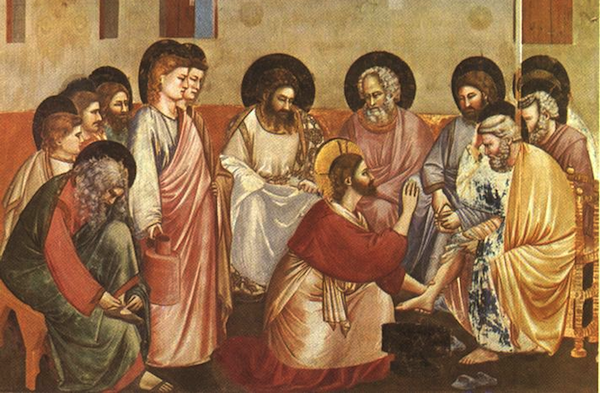
First, Crouch pointed out that when Jesus washed the feet of his disciples, he was displaying immense power, but interestingly, not privilege, for he used his power for service instead of self-service. In fact, whenever Jesus felt that his powerful miracles were heaping upon him privileges that he did not want, such as the position of the King of the Jews, he fled.
Second, privilege, Crouch says, is something that all Christians have as the sons and daughters of God. We have “every spiritual blessing” not due to our efforts but to Christ’s, and this is cause not to feel guilty but to celebrate and share with others.
Crouch was addressing an audience of cultural and political elites; a ticket to the Q conference costs at least four hundred dollars. Does Jesus have anything to say to those who experience the butt-end of the privilege-stick? Whose main concern is not how to manage their privilege but their victimhood?
Richard Rohr, a Francisan friar, offers these words in his book, Falling Upward: A Spirituality for Two Halves of Life.
I say this after working with people on many levels, including in the jail, as a counselor, and as a confessor. It has been acceptable for some time in America to remain ‘wound identified’ (that is, using one’s victimhood as one’s identity, one’s ticket to sympathy, and one’s excuse or not serving), instead of using the wound to “redeem the world,” as we see in Jesus and many people who turn their wounds into sacred wounds that liberate both themselves and others.
Jesus dignifies those with and without privilege, refusing to let both groups remain either passive recipients of unmerited benefits or passive victims. He is the privileged Son of God who gave it up and took on victimhood, through which he saved the world. Christ, unsurprisingly, takes the black-and-white view of privilege-and-victimhood and renders it a far richer and more nuanced picture than anything we could have imagined.
[Picture of Jesus Washing Feet from Wikipedia]

Previous Post
April 22, 2013
Learning to Want What We Want
Next Post
April 26, 2013 On The Moral Qualities of Privilege
Browse Our Archives
Select a Category ambition art beauty bible bios body Book Review cheap grace church community consumer church cultural liturgy culture deep practice desire dualisms economics education evangelicalism events faith family fare forward Film Review friendship games Gospel happiness hipster Christianity humility identity institutions irony issue previews Jesus just church justice Lent Letters to the Editor liberal arts liberal christianity literature liturgy love march madness mental health metaphysics misotheism moralism morality Movie Review music narrative naturalism new atheism passions philosophy place political theology Pope Francis power prayer privilege providence reading reason relationship remembering self resurrection science secular faiths secularism sexuality sin Social Media spirituality Sport suburbs suffering table of contents technology the future of faith the new apologetic the virtues theology thick doctrine transcendence Trinity truth tv Uncategorized violence Virtue vocation war work
Select a Month August 2014 July 2014 June 2014 May 2014 April 2014 March 2014 February 2014 January 2014 December 2013 November 2013 October 2013 September 2013 August 2013 July 2013 June 2013 May 2013 April 2013 March 2013 February 2013
Follow Us!
TAKE THE
Religious Wisdom Quiz
According to Titus, what appeared to all people, bringing salvation?
Select your answer to see how you score.
God's mercy Jesus Christ The gospel The grace of God
Related posts from Fare Forward

Bulletins from a Second-Order Society

The New Privacy: How the NSA Protects Our...
On The Moral Qualities of Privilege

TRENDING AT PATHEOS Evangelical

Making Stones Into Bread: Choosing the “Right” Work
I was on my online arts ministry Zoom meeting with the International...

Ukraine’s exhausted Christians face fifth winter of war
By Julian Lukins The full-scale war in Ukraine is taking “a serious...

Russell Brand's Conviction is not anti-Christian Persecution
How do we shed the reputation that the Church is OK with...

Have you ever caught yourself saying, “I’ll do it tomorrow,” or “Now...

Write Your Story: A Great Way to Find...
A few month’s back, my son was scrolling around Facebook and saw...

Throughout history, people have pursued pleasure, possessions, relationships, and success in an...
view all Evangelical blogs
Ad-Free & Subscriber Log-In Subscription Support
- About Us
- 2026 Calendar
- Videos
- Podcasts
- Library of World Religions
- Faith In Media Tracker
- Advertise With Us
- Write for Us
- Privacy Policy
- Terms of Service
- Do Not Sell My Data
- Contact Us
- Radiant Digital
- Manage Newsletter Subscriptions
- Unsubscribe From Notifications
- Sitemap
Copyright 2008-2026, Patheos, part of the Radiant Digital network of media brands. All rights reserved.
Subscription Support Ad-Free & Subscriber Log-In
Follow Patheos