
BuddhistCatholicContemplativeEvangelicalGeneral ChristianHinduJewishLatter-day SaintMuslimNew VisionsProgressive Christian
Beliefs
- Buddhist
- Catholic
- Contemplative
- Evangelical
- General Christian
- Hindu
- Jewish
- Latter-day Saint
- More Voices
- Muslim
- New Visions
- Pagan
- Progressive Christian
Topics
- Religion News
- Food and Religion
- Sports and Religion
- Religious Art
- Religious Music and Entertainment
- Religious Events
- History and Religion
- Style and Religion
- Politics and Religion
- Women in Religion
- Recreation Outdoors and Religion
- Business Finance and Religion
- Careers Workplace and Religion
- Education and Religion
- Family Parenting and Religion
- Health Fitness and Religion
- Home and Religion
- Relationships and Religion
- Technology and Religion
- Travel and Religion
Columnists
- Buddhist Columnists
- Business Finance and Religion Columnists
- Careers Workplace and Religion Columnists
- Catholic Columnists
- Contemplative Columnists
- Education and Religion Columnists
- Evangelists Columnists
- Family Parenting and Religion Columnists
- General Christian Columnists
- Health Fitness and Religion Columnists
- Hindu Columnists
- History and Religion Columnists
- Home and Religion Columnists
- Jewish Columnists
- More Voices Columnists
- Latter Day Columnists
- Muslim Columnists
- New Visions Columnists
- Nonreligious Columnists
- Pagan Columnists
- Politics and Religion Columnists
- Progressive Columnists
- Recreation Outdoors and Religion Columnists
- Relationships and Religion Columnists
- Religion News Columnists
- Religious Art Columnists
- Religious Events Columnists
- Religious Music and Entertainment Columnists
- Sports and Religion Columnists
- Style and Religion Columnists
- Technology and Religion Columnists
- Travel and Religion Columnists
- Women in Religion Columnists
Resource Library
- 2026 Calendar
- Library of World Religions
- The 100 Most Holy Places on Earth
- Patheos Answers
- Podcasts
- Videos
- Faith Leaders Database
- Anglican Episcopalian
- Bahai
- Baptist
- Buddhism
- Christianity
- Confucianism
- Eastern Orthodoxy
- Hinduism
- Holiness and Pentecostal
- ISKCON
- Islam
- Judaism
- Lutheran
- Methodist
- The Church of Jesus Christ of Latter-day Saints
- New Age
- Paganism
- Presbytarian and Reformed
- Protestantism
- Religion Behind the Scenes
- Roman Catholic
- Scientology
- Shia Islam
- Sikhism
- Sufism
- Sunni Islam
- Taoism
- Zen
- See all religions
Research Tools
 Ad-Free & Subscriber Log-In Subscription Support
Follow Patheos 

- Trending:
- Advent
- |
- Forgiveness
- |
- Thanksgiving
- |
- Election
- |
- Seasonal Holidays
- |
- Marriage
 Fare Forward
- Home
- Evangelical
- Father Brown and the Reality of Sin
Father Brown and the Reality of Sin
Last updated on: April 11, 2013 at 10:27 am by Sarah Clark
Father Brown and the Reality of Sin 2013-04-11T10:27:13-04:00 Sarah Clark
Patheos Explore the world's faith through different perspectives on religion and spirituality! Patheos has the views of the prevalent religions and spiritualities of the world.
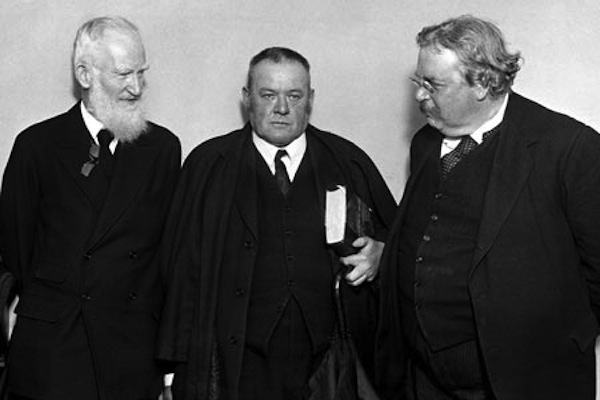
I have now read about half of the total collection of stories featuring Father Brown, GK Chesterton’s erstwhile detective. Chesterton describes him “as commonplace a person as could be seen anywhere, with a round, brown-haired head and a round snub nose… clad in clerical black.” He is very short and is elsewhere described as “ugly.” Most people who don’t know him pay very little attention to Father Brown. He neither collects fingerprints nor tails suspects, and unlike Sherlock Holmes, he dons no costume but his robes as a Roman Catholic Priest.
Father Brown does very little conventional detective work in any case he takes on. Instead, he solves mysteries wherever he goes because he is wise, intuitive, and keenly observant. He sees beneath the surface of things, and his vast knowledge of human nature allows him to detect the smallest signs of distress and deceit. He watches, and listens, and more often than not, even the hardened criminal ultimately confesses his or her guilt to Father Brown.
In contrast, his constant companion, his “Watson” if you will, is Flambeau, a master-criminal-turned-private-detective. Flambeau is tall, French, and impulsive—he couldn’t be more different from the little English priest. Yet it is Flambeau who must always turn to Father Brown to explain what has occurred.
In his oft-quoted essay “The Ethics of Elfland,” Chesterton argued that fairy stories “say that apples were golden only to refresh the forgotten moment when we found that they were green. They make rivers run with wine only to make us remember, for one wild moment, that they run with water.” In other words, confronting the supernatural in fairy stories helps us to remember and cherish the sense of awe that we felt as children upon discovering the miraculous way things actually are.
Father Brown helps Chesterton to make a similar, yet opposite, point. As I have said, Father Brown’s sense of the way things really are is much more acute than most people’s. He overlooks little and sees more than his fair share of horrors throughout the course of his mystery-solving career. But at no point does he ever become jaded or accustomed to the ways that people err, wronging themselves, or others, or both.
Perhaps the best description of Father Brown’s philosophy is found in the story “The Purple Wig.” When asked to leave a stone unturned (or in this case, a wig un-removed), he refuses. “I know the Unknown God. I know his name; it is Satan. The true God was made flesh and dwelt among us. And I say to you, wherever you find men ruled merely by mystery, it is the mystery of iniquity. If the devil tells you something is too fearful to look at, look at it. If he says something is too terrible to hear, hear it. If you think some truth unbearable, bear it,” says Father Brown.
It’s not that he doesn’t know when to leave well enough alone. In “The Sign of the Broken Sword,” Brown reveals to Flambeau that a great English general, admired by all and honored by a good number of statues, was in fact a cad who was executed by his own men. “There is so much good and so much evil in breaking secrets,” says Brown. He allows the general to go on being honored—and inspiring many—saying only that he will speak out if keeping the secret will harm any of the innocent men who were involved in the incident. In this case, revealing the truth will do more harm than good.
This is not an easy decision for Father Brown, and he has obviously wrestled with the issue for a long time before he relates the story to his friend. And that is, I think, the most Chestertonian quality of the little priest. No matter how much depravity he observes, it is clearly never easy for him to bear it. His wisdom comes from experience, not from clever tricks. In “The Eye of Apollo,” after giving a murderer the chance to confess a crime, “Father Brown’s face seemed to express nothing but extreme distress; he looked at the ground with one wrinkle of pain across his forehead.” This expression of distress is common for Father Brown when confronted with evil.
Just as the golden apples in the fairy story remind us that green apples in the real world are amazing and beautiful, the somewhat fantastical murders in the Father Brown stories remind us that human beings are really capable of great evil. But as Father Brown says, “The foulest crime the fiends ever prompted feels lighter after confession.” He is anxious and distressed not only for the victims of crimes, but also for their perpetrators. He is wise in the ways of sin and deception, but he does not allow himself to become accustomed to them.
The elaborate crimes and trickery make Father Brown stories fun to read; his proper attitude toward people’s sin and confession make them a valuable reminder that both awe and horror in our world are real and ought to be felt.
[Image of GK Chesterton, GB Shaw, and Hilare Belloc from Wikipedia]

Previous Post
April 10, 2013
Overemphasizing Spiritual Abuse?
Next Post

April 12, 2013 The Universe, Briefly Summarized
Browse Our Archives
Select a Category ambition art beauty bible bios body Book Review cheap grace church community consumer church cultural liturgy culture deep practice desire dualisms economics education evangelicalism events faith family fare forward Film Review friendship games Gospel happiness hipster Christianity humility identity institutions irony issue previews Jesus just church justice Lent Letters to the Editor liberal arts liberal christianity literature liturgy love march madness mental health metaphysics misotheism moralism morality Movie Review music narrative naturalism new atheism passions philosophy place political theology Pope Francis power prayer privilege providence reading reason relationship remembering self resurrection science secular faiths secularism sexuality sin Social Media spirituality Sport suburbs suffering table of contents technology the future of faith the new apologetic the virtues theology thick doctrine transcendence Trinity truth tv Uncategorized violence Virtue vocation war work
Select a Month August 2014 July 2014 June 2014 May 2014 April 2014 March 2014 February 2014 January 2014 December 2013 November 2013 October 2013 September 2013 August 2013 July 2013 June 2013 May 2013 April 2013 March 2013 February 2013
Follow Us!
TAKE THE
Religious Wisdom Quiz
What did the biblical measurement of a cubit represent?
Select your answer to see how you score.
Length of forearm Length of foot Length of leg Length of hand
Related posts from Fare Forward


Why You Must Read Shakespeare to Understand OITNB’s...


TRENDING AT PATHEOS Evangelical

Making Stones Into Bread: Choosing the “Right” Work
I was on my online arts ministry Zoom meeting with the International...

Ukraine’s exhausted Christians face fifth winter of war
By Julian Lukins The full-scale war in Ukraine is taking “a serious...

Russell Brand's Conviction is not anti-Christian Persecution
How do we shed the reputation that the Church is OK with...

Have you ever caught yourself saying, “I’ll do it tomorrow,” or “Now...

Write Your Story: A Great Way to Find...
A few month’s back, my son was scrolling around Facebook and saw...

Throughout history, people have pursued pleasure, possessions, relationships, and success in an...
view all Evangelical blogs
Ad-Free & Subscriber Log-In Subscription Support
- About Us
- 2026 Calendar
- Videos
- Podcasts
- Library of World Religions
- Faith In Media Tracker
- Advertise With Us
- Write for Us
- Privacy Policy
- Terms of Service
- Do Not Sell My Data
- Contact Us
- Radiant Digital
- Manage Newsletter Subscriptions
- Unsubscribe From Notifications
- Sitemap
Copyright 2008-2026, Patheos, part of the Radiant Digital network of media brands. All rights reserved.
Subscription Support Ad-Free & Subscriber Log-In
Follow Patheos