
BuddhistCatholicContemplativeEvangelicalGeneral ChristianHinduJewishLatter-day SaintMuslimNew VisionsProgressive Christian
Beliefs
- Buddhist
- Catholic
- Contemplative
- Evangelical
- General Christian
- Hindu
- Jewish
- Latter-day Saint
- More Voices
- Muslim
- New Visions
- Pagan
- Progressive Christian
Topics
- Religion News
- Food and Religion
- Sports and Religion
- Religious Art
- Religious Music and Entertainment
- Religious Events
- History and Religion
- Style and Religion
- Politics and Religion
- Women in Religion
- Recreation Outdoors and Religion
- Business Finance and Religion
- Careers Workplace and Religion
- Education and Religion
- Family Parenting and Religion
- Health Fitness and Religion
- Home and Religion
- Relationships and Religion
- Technology and Religion
- Travel and Religion
Columnists
- Buddhist Columnists
- Business Finance and Religion Columnists
- Careers Workplace and Religion Columnists
- Catholic Columnists
- Contemplative Columnists
- Education and Religion Columnists
- Evangelists Columnists
- Family Parenting and Religion Columnists
- General Christian Columnists
- Health Fitness and Religion Columnists
- Hindu Columnists
- History and Religion Columnists
- Home and Religion Columnists
- Jewish Columnists
- More Voices Columnists
- Latter Day Columnists
- Muslim Columnists
- New Visions Columnists
- Nonreligious Columnists
- Pagan Columnists
- Politics and Religion Columnists
- Progressive Columnists
- Recreation Outdoors and Religion Columnists
- Relationships and Religion Columnists
- Religion News Columnists
- Religious Art Columnists
- Religious Events Columnists
- Religious Music and Entertainment Columnists
- Sports and Religion Columnists
- Style and Religion Columnists
- Technology and Religion Columnists
- Travel and Religion Columnists
- Women in Religion Columnists
Resource Library
- 2026 Calendar
- Library of World Religions
- The 100 Most Holy Places on Earth
- Patheos Answers
- Podcasts
- Videos
- Faith Leaders Database
- Anglican Episcopalian
- Bahai
- Baptist
- Buddhism
- Christianity
- Confucianism
- Eastern Orthodoxy
- Hinduism
- Holiness and Pentecostal
- ISKCON
- Islam
- Judaism
- Lutheran
- Methodist
- The Church of Jesus Christ of Latter-day Saints
- New Age
- Paganism
- Presbytarian and Reformed
- Protestantism
- Religion Behind the Scenes
- Roman Catholic
- Scientology
- Shia Islam
- Sikhism
- Sufism
- Sunni Islam
- Taoism
- Zen
- See all religions
Research Tools
 Ad-Free & Subscriber Log-In Subscription Support
Ad-Free & Subscriber Log-In Subscription Support
Follow Patheos 

- Trending:
- Forgiveness
- |
- Marriage
- |
- Consciousness
- |
- Death Penalty
- |
- Election
- |
- Halloween
 Fare Forward
- Home
- Evangelical
- Confronting Our Finitude in Boston
Confronting Our Finitude in Boston
Last updated on: April 30, 2013 at 11:03 am by Emily DeBaun
Confronting Our Finitude in Boston 2013-04-30T11:03:53-04:00 Emily DeBaun
Patheos Explore the world's faith through different perspectives on religion and spirituality! Patheos has the views of the prevalent religions and spiritualities of the world.
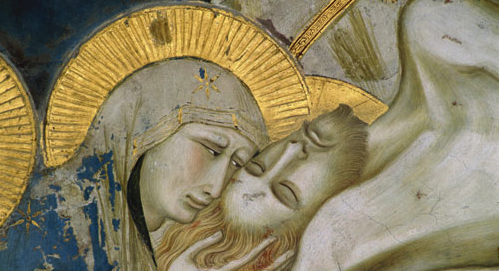
It’s hard to believe that barely three weeks have passed since the Boston Marathon was bombed. The (still)-evolving media frenzy around the attacks and subsequent manhunt stretched into what felt like months for us Bostonians. Glued to the news and stuck in our homes, the events shook all of us out of the fog of our routines and mundane preoccupations. Boston is a small city. Nearly everyone living here is just a few degrees of separation from the victims of the bombing, or has another personal connection to the events— from a friend or family member who was too close for comfort to the explosions to a geographic familiarity (or proximity) with the locations in which the events took place. Tragedy has a way of snapping life into perspective, raising many larger questions. Where does evil come from? How should justice be executed? Are we safe? While it is tempting to gloss over the more cosmic issues in an effort to regain normalcy and rebuild our community, at the very least, a brief meditation on our mortality can inform and invigorate the way in which we move forward.
Death is not an issue many 20-somethings in America have often to face. Living in a generally safe society with high life expectancy, it is easy to forget our own finitude. Safety and youth bread idealism. As William Hazlitt wrote, “To be young is to be as one of the Immortals. One half of time indeed is spent–the other half remains in store for us with all its countless treasures, for there is no line drawn and we see no limit to our hopes and wishes.” Us young urbanites frequently live with this mentality; the world is our oyster. Wonder, optimism, and ambition drive our pursuits. Yet tragedies like last week’s pull the rug out from underneath this sort of attitude. Among the hundreds of people impacted and injured, the four individuals who were killed were all under the age of 30. A random act of violence cut those individuals’ “hopes and wishes” painfully short. This harsh reality provokes many reactions: cynicism, anger, and fear.
In an interview with the New York Times back in January, writer George Saunders, who had his own brush with death years ago, wonders “if we could conduct our lives with the kind of openness that sometimes comes with proximity to death.” This sentiment is captured in his collection of short stories, The Tenth of December (reviewed by Stephen Kim for the imminent Spring issue of Fare Forward). The final story of the collection describes the plight of an elderly man, dying of cancer, who has retreated to the forest in wintertime to end his life in the frosty wilderness. A young boy chases after him, and winds up in danger himself. As the elderly man snaps back to his senses in an effort to save the boy, he wonders at the value of his own life, which he was so close to letting slide through his fingers. In a poignant moment of free, indirect speech, the man ponders,
Why should those he loved not lift and bend and feed and wipe him, when he would gladly do the same for them? He’d been afraid to be lessened by the lifting and bending and feeding and wiping, and was still afraid of that, and yet, at the same time, now saw that there could still be many – many drops of goodness, is how it came to him—many drops of happy— of good fellowship—ahead, and those drops of fellowship were not —had never been—his to withheld.
The old man, so burdened by the tragedy of his disease, has begun to lose hope in the value of his life. He fears his physical decay will cost him his dignity and independence. However, helping a young person, so full of life, and yet on the brink of death, reminds him of the preciousness of his own existence. It is this renewed understanding of his own mortality— that he is consequential, and has much to live for— that propels him to live on. He now feels that it is not acceptable to become jaded, to “withhold” the “drops of goodness” ahead.
In the face of the horrifyingly tragic, it can be easy to block out the sickening weight of it all, and press on with routine. However, pondering the limitedness of human existence can truly re-instill a sense of the value each day holds. From a Christian perspective, this can also impress upon us to the need to live with eternity in mind. While we have the promise of life after death, each day on Earth becomes a critical opportunity to serve God and others. The Gospel itself is a tremendous example of this. In his perfection, Jesus, though young, able-bodied, and garnering an increasing large following, never lost sight of his purpose in his time on earth. This sense of urgency is carried throughout Christ’s ministry. The Gospel of John is punctuated with phrases to the effect of “my time has not yet come,” until finally, in John 17, Christ yields himself up, exclaiming, “Father, the hour has come; glorify your Son that the Son may glorify you.” Jesus lived intentionally, knowing his life was driving towards an ultimately purposeful death (and subsequent resurrection!). It was this violent sacrifice of the perfectly blameless that had the most cosmic meaning of all.
All in all, the numerous tragedies of recent months—Boston, Newtown, and West, Texas— can do much to dash idealistic visions of our communities, fellow humans, and possibilities for the future. However, contending with the reality of death can take us beyond cynicism towards purpose. Each day becomes a blessing to be used wisely, and the hope of life after death infuses our apparent limitedness with eternal significance.
[Image of Mary and Jesus from Wikipedia]

Previous Post

April 26, 2013
On The Moral Qualities of Privilege
Next Post

May 1, 2013 The Possibility of Intellectual Localism
Browse Our Archives
Select a Category ambition art beauty bible bios body Book Review cheap grace church community consumer church cultural liturgy culture deep practice desire dualisms economics education evangelicalism events faith family fare forward Film Review friendship games Gospel happiness hipster Christianity humility identity institutions irony issue previews Jesus just church justice Lent Letters to the Editor liberal arts liberal christianity literature liturgy love march madness mental health metaphysics misotheism moralism morality Movie Review music narrative naturalism new atheism passions philosophy place political theology Pope Francis power prayer privilege providence reading reason relationship remembering self resurrection science secular faiths secularism sexuality sin Social Media spirituality Sport suburbs suffering table of contents technology the future of faith the new apologetic the virtues theology thick doctrine transcendence Trinity truth tv Uncategorized violence Virtue vocation war work
Select a Month August 2014 July 2014 June 2014 May 2014 April 2014 March 2014 February 2014 January 2014 December 2013 November 2013 October 2013 September 2013 August 2013 July 2013 June 2013 May 2013 April 2013 March 2013 February 2013
Follow Us!
TAKE THE
Religious Wisdom Quiz
True or False: Mark's Gospel is the shortest of the four Gospels.
Select your answer to see how you score.
FALSE TRUE
Related posts from Fare Forward

What We Are: Mind, Body, and the Dangers...

Ask Aquinas Anything: Divine Perfection in the Face...
Does Everything Happen for a Reason?
TRENDING AT PATHEOS Evangelical

The REST of Your Life: A Creative Wrestles...
This week I had a conversation with a good friend from church....

How the author of the world's best hymn...
I've been working with John Newton for a while now. This makes...

Long before this Lectio Divina, Psalm 130 - the song - started...

What About the Trees? Another Living Parable
After I finished writing the last article about falling leaves as a...

Why Classical Education Is a Conversation, Not a...
Come and Read: Joy in Classical Education When I was a little...

Cornell University has received a great deal of negative publicity and intense...
view all Evangelical blogs
Ad-Free & Subscriber Log-In Subscription Support
- About Us
- 2026 Calendar
- Videos
- Podcasts
- Library of World Religions
- Faith In Media Tracker
- Advertise With Us
- Write for Us
- Privacy Policy
- Terms of Service
- Do Not Sell My Data
- Contact Us
- Radiant Digital
- Manage Newsletter Subscriptions
- Unsubscribe From Notifications
- Sitemap
Copyright 2008-2026, Patheos. All rights reserved.
Subscription Support Ad-Free & Subscriber Log-In
Follow Patheos