
BuddhistCatholicContemplativeEvangelicalGeneral ChristianHinduJewishLatter-day SaintMuslimNew VisionsProgressive Christian
Beliefs
- Buddhist
- Catholic
- Contemplative
- Evangelical
- General Christian
- Hindu
- Jewish
- Latter-day Saint
- More Voices
- Muslim
- New Visions
- Pagan
- Progressive Christian
Topics
- Religion News
- Food and Religion
- Sports and Religion
- Religious Art
- Religious Music and Entertainment
- Religious Events
- History and Religion
- Style and Religion
- Politics and Religion
- Women in Religion
- Recreation Outdoors and Religion
- Business Finance and Religion
- Careers Workplace and Religion
- Education and Religion
- Family Parenting and Religion
- Health Fitness and Religion
- Home and Religion
- Relationships and Religion
- Technology and Religion
- Travel and Religion
Columnists
- Buddhist Columnists
- Business Finance and Religion Columnists
- Careers Workplace and Religion Columnists
- Catholic Columnists
- Contemplative Columnists
- Education and Religion Columnists
- Evangelists Columnists
- Family Parenting and Religion Columnists
- General Christian Columnists
- Health Fitness and Religion Columnists
- Hindu Columnists
- History and Religion Columnists
- Home and Religion Columnists
- Jewish Columnists
- More Voices Columnists
- Latter Day Columnists
- Muslim Columnists
- New Visions Columnists
- Nonreligious Columnists
- Pagan Columnists
- Politics and Religion Columnists
- Progressive Columnists
- Recreation Outdoors and Religion Columnists
- Relationships and Religion Columnists
- Religion News Columnists
- Religious Art Columnists
- Religious Events Columnists
- Religious Music and Entertainment Columnists
- Sports and Religion Columnists
- Style and Religion Columnists
- Technology and Religion Columnists
- Travel and Religion Columnists
- Women in Religion Columnists
Resource Library
- 2026 Calendar
- Library of World Religions
- The 100 Most Holy Places on Earth
- Patheos Answers
- Podcasts
- Videos
- Faith Leaders Database
- Anglican Episcopalian
- Bahai
- Baptist
- Buddhism
- Christianity
- Confucianism
- Eastern Orthodoxy
- Hinduism
- Holiness and Pentecostal
- ISKCON
- Islam
- Judaism
- Lutheran
- Methodist
- The Church of Jesus Christ of Latter-day Saints
- New Age
- Paganism
- Presbytarian and Reformed
- Protestantism
- Religion Behind the Scenes
- Roman Catholic
- Scientology
- Shia Islam
- Sikhism
- Sufism
- Sunni Islam
- Taoism
- Zen
- See all religions
Research Tools
 Ad-Free & Subscriber Log-In Subscription Support
Follow Patheos 

- Trending:
- Advent
- |
- Forgiveness
- |
- Thanksgiving
- |
- Election
- |
- Seasonal Holidays
- |
- Marriage
 Fare Forward
- Home
- Evangelical
- Keep Calm and Contemplate On
Keep Calm and Contemplate On
Last updated on: March 20, 2013 at 10:34 am by Gabrielle Speach
Keep Calm and Contemplate On 2013-03-20T10:34:07-04:00 Gabrielle Speach
Patheos Explore the world's faith through different perspectives on religion and spirituality! Patheos has the views of the prevalent religions and spiritualities of the world.
“Keep Calm and Carry On”: It’s our culture’s latest mantra. The phrase applies in all kinds of contexts—political, social, economic. Oppressed by government? Keep calm and carry on. Hurting from a break-up? Keep calm and carry on. Out of a job? Keep calm and carry on.
Though it’s been popularized in myriad forms (personally I prefer “Keep Calm and Pet Cats”), it’s worth considering what this slogan really means, and whether we should embrace its message.

Maxims like this one are a response to anxiety. In fact, “Keep Calm and Carry On” was initially a propaganda poster during World War II, to be displayed publicly only if the Germans invaded Britain. Since that never happened, the posters with their now-iconic image disappeared until someone rediscovered one in 2000, and put it in the public domain.
It’s easy, and sometimes necessary, to take consolation in phrases like “Keep Calm and Carry On.” Who hasn’t drawn inspiration and courage from a line of music, poetry, or prose that encourages us to do, not think? But we know too that this attitude has its limits: Bottling up frustrations and sorrows for too long—shoving them to the back of our minds while we follow our hectic schedules day in and day out—erodes our potential, and need, for interior peace.
Christians especially know that we are made for inner calm and happiness, because they believe that we are each designed to have a deeply personal, intimate, and loving relationship with God. Crucial to building this relationship is an effort to engage our contemplative abilities.
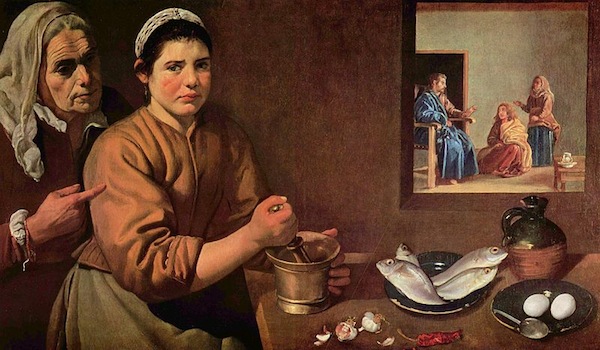
The story of Mary and Martha in the Gospels perfectly illustrates what I mean: Jesus visits the home of his friends Lazarus, Mary, and Martha in Bethany, where Martha runs around anxiously trying to make Jesus feel at home. Mary sits happily at Jesus’ feet listening to him. Martha, frustrated and stressed, calls out, “Lord, do you not care that my sister has left me to do all the work by myself? Tell her then to help me.” To which Jesus replies, “Martha, Martha, you are worried and distracted by many things; there is need of only one thing. Mary has chosen the better part, which will not be taken away from her.”
These sisters represent the two halves of human inclination: activity and contemplation. Because we, like God, can create, we have an urge to do, to move, to build. Yet at the same time, our rational nature—the reason we can say we are made in God’s image and likeness—pulls our intellect toward the things that transcend our material being, like God himself.
Thus Jesus does not say that Mary’s listening is the only thing we should do—he says it is the better thing to do. This is because he knows that while the practical demands of daily life require our care and attention, contemplation will bring us closer to him, to his infinite love for us: our final goal.
So, it’s worth remembering, especially as the end of Lent approaches, that “carrying on” can’t alleviate our fears and worries in the long run. Maintaining our calm requires time for quiet reflection in daily life: a time to articulate our concerns mentally. This could include spending five to ten minutes each day speaking to God about our struggles and hopes. Even better, the conversation with God could flow from reading and thinking about Scripture, where we can really get to know Jesus’ humanity.
A final point: Setting aside time for reflection is never easy, but our culture makes it harder. We are pushed toward forms of recreation that go hand in hand with the “Keep Calm and Carry On” mentality. Facebook, Twitter, TV shows, even reading for fun—though they seem like relaxing activities to do by ourselves, these can prevent us from really being alone with ourselves and God. If anything, these outlets, usually reserved for our resting time, can wear us down more if we never pull the plug. Resisting some of these many opportunities to avoid interior silence is a great foundation for becoming a contemplative in active life.
[Image of Martha and Mary Courtesy of Wikipedia]

Previous Post

March 18, 2013
Does Everything Happen for a Reason?
Next Post

March 21, 2013 Family Stories and the Narrative of Christ
Browse Our Archives
Select a Category ambition art beauty bible bios body Book Review cheap grace church community consumer church cultural liturgy culture deep practice desire dualisms economics education evangelicalism events faith family fare forward Film Review friendship games Gospel happiness hipster Christianity humility identity institutions irony issue previews Jesus just church justice Lent Letters to the Editor liberal arts liberal christianity literature liturgy love march madness mental health metaphysics misotheism moralism morality Movie Review music narrative naturalism new atheism passions philosophy place political theology Pope Francis power prayer privilege providence reading reason relationship remembering self resurrection science secular faiths secularism sexuality sin Social Media spirituality Sport suburbs suffering table of contents technology the future of faith the new apologetic the virtues theology thick doctrine transcendence Trinity truth tv Uncategorized violence Virtue vocation war work
Select a Month August 2014 July 2014 June 2014 May 2014 April 2014 March 2014 February 2014 January 2014 December 2013 November 2013 October 2013 September 2013 August 2013 July 2013 June 2013 May 2013 April 2013 March 2013 February 2013
Follow Us!
TAKE THE
Religious Wisdom Quiz
What did the Israelites do when Moses was gone too long on the mountain?
Select your answer to see how you score.
Made a golden calf Left Egypt again Hid in fear Built a city
Related posts from Fare Forward



Social Sin: Who's Responsible?
TRENDING AT PATHEOS Evangelical

Making Stones Into Bread: Choosing the “Right” Work
I was on my online arts ministry Zoom meeting with the International...

Ukraine’s exhausted Christians face fifth winter of war
By Julian Lukins The full-scale war in Ukraine is taking “a serious...

Russell Brand's Conviction is not anti-Christian Persecution
How do we shed the reputation that the Church is OK with...

Have you ever caught yourself saying, “I’ll do it tomorrow,” or “Now...

Write Your Story: A Great Way to Find...
A few month’s back, my son was scrolling around Facebook and saw...

Throughout history, people have pursued pleasure, possessions, relationships, and success in an...
view all Evangelical blogs
Ad-Free & Subscriber Log-In Subscription Support
- About Us
- 2026 Calendar
- Videos
- Podcasts
- Library of World Religions
- Faith In Media Tracker
- Advertise With Us
- Write for Us
- Privacy Policy
- Terms of Service
- Do Not Sell My Data
- Contact Us
- Radiant Digital
- Manage Newsletter Subscriptions
- Unsubscribe From Notifications
- Sitemap
Copyright 2008-2026, Patheos. All rights reserved.
Subscription Support Ad-Free & Subscriber Log-In
Follow Patheos