
BuddhistCatholicContemplativeEvangelicalGeneral ChristianHinduJewishLatter-day SaintMuslimNew VisionsProgressive Christian
Beliefs
- Buddhist
- Catholic
- Contemplative
- Evangelical
- General Christian
- Hindu
- Jewish
- Latter-day Saint
- More Voices
- Muslim
- New Visions
- Pagan
- Progressive Christian
Topics
- Religion News
- Food and Religion
- Sports and Religion
- Religious Art
- Religious Music and Entertainment
- Religious Events
- History and Religion
- Style and Religion
- Politics and Religion
- Women in Religion
- Recreation Outdoors and Religion
- Business Finance and Religion
- Careers Workplace and Religion
- Education and Religion
- Family Parenting and Religion
- Health Fitness and Religion
- Home and Religion
- Relationships and Religion
- Technology and Religion
- Travel and Religion
Columnists
- Buddhist Columnists
- Business Finance and Religion Columnists
- Careers Workplace and Religion Columnists
- Catholic Columnists
- Contemplative Columnists
- Education and Religion Columnists
- Evangelists Columnists
- Family Parenting and Religion Columnists
- General Christian Columnists
- Health Fitness and Religion Columnists
- Hindu Columnists
- History and Religion Columnists
- Home and Religion Columnists
- Jewish Columnists
- More Voices Columnists
- Latter Day Columnists
- Muslim Columnists
- New Visions Columnists
- Nonreligious Columnists
- Pagan Columnists
- Politics and Religion Columnists
- Progressive Columnists
- Recreation Outdoors and Religion Columnists
- Relationships and Religion Columnists
- Religion News Columnists
- Religious Art Columnists
- Religious Events Columnists
- Religious Music and Entertainment Columnists
- Sports and Religion Columnists
- Style and Religion Columnists
- Technology and Religion Columnists
- Travel and Religion Columnists
- Women in Religion Columnists
Resource Library
- 2026 Calendar
- Library of World Religions
- The 100 Most Holy Places on Earth
- Patheos Answers
- Podcasts
- Videos
- Faith Leaders Database
- Anglican Episcopalian
- Bahai
- Baptist
- Buddhism
- Christianity
- Confucianism
- Eastern Orthodoxy
- Hinduism
- Holiness and Pentecostal
- ISKCON
- Islam
- Judaism
- Lutheran
- Methodist
- The Church of Jesus Christ of Latter-day Saints
- New Age
- Paganism
- Presbytarian and Reformed
- Protestantism
- Religion Behind the Scenes
- Roman Catholic
- Scientology
- Shia Islam
- Sikhism
- Sufism
- Sunni Islam
- Taoism
- Zen
- See all religions
Research Tools
 Ad-Free & Subscriber Log-In Subscription Support
Ad-Free & Subscriber Log-In Subscription Support
Follow Patheos 

- Trending:
- Forgiveness
- |
- Marriage
- |
- Consciousness
- |
- Death Penalty
- |
- Election
- |
- Halloween
 Fare Forward
- Home
- Evangelical
- The Panopticon is Busted
The Panopticon is Busted
Last updated on: February 20, 2013 at 12:03 pm by Charles Clark
The Panopticon is Busted 2013-02-20T12:03:11-05:00 Charles Clark
Patheos Explore the world's faith through different perspectives on religion and spirituality! Patheos has the views of the prevalent religions and spiritualities of the world.
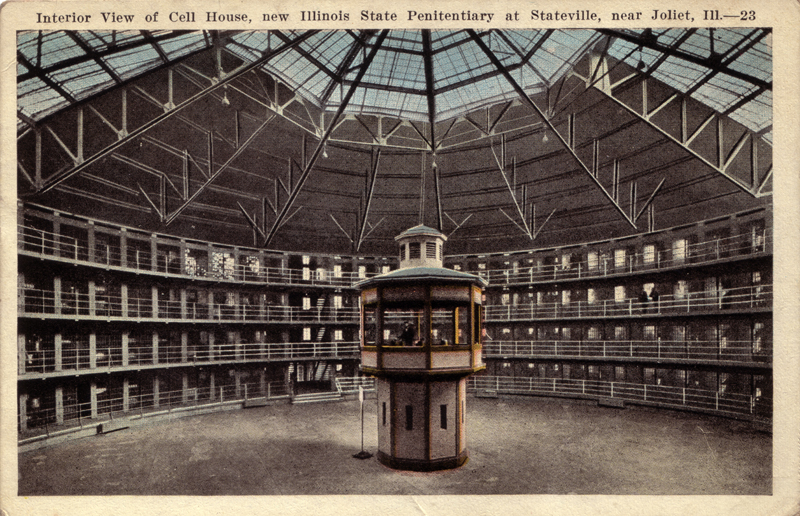
I’m reviewing James K.A. Smith’s new book, Imagining the Kingdom: How Worship Works, for the next issue of Fare Forward. Unfortunately, in a relatively brief review there is not space to consider every interesting turn in a text which, though a short book, is very thick conceptually. This reflection centers around some thoughts I wasn’t able to fit into my print review.
In his Cultural Liturgies series, Smith is interested in the ways that our social, embodied practices form us into people who desire, imagine, and act according to a certain telos or orientation to a particular good. One example of a liturgical practice that Smith raises is social media. He talks about how our engagement with social media makes us constantly aware of our social environment in a way that cannot be escaped even in the (former) privacy of our own homes. Because we are always being observed through social media, even perhaps by our absence from others’ Facebook feeds, we are shaped to be “always on,” always performing in ways that will represent us how we would like to appear to others.
Smith connects this formational effect of social media to the Panopticon, a kind of prison imagined by Jeremy Bentham, which inspired a memorable discussion by Michel Foucault in Discipline and Punish. The Panopticon was designed so that prisoners would be constantly aware of the possibility of surveillance by the authorities and thereby deterred from undesirable behavior. Of course, this kind of surveillance would not operate merely at the intellectual level, forcing the inmates to calculate the odds of being observed and the likely punishment for misbehavior. Rather, Foucault would argue (and Smith would agree), this condition would actually change the kind of people that the inmates were. They would become, in accordance with the State’s will, “docile bodies.”
What I found remarkable in reflecting upon Smith’s interpretation of social media as a “ubiquitous panopticon” is the contrast between Bentham’s intentions for his design, to create pliable, peaceful inmates, and the effects of the Internet in turning everyone into Dickinson’s frogs, loudly croaking their names “to an admiring bog.” The limitless, deafening self-promotion that daily floods Facebook, Twitter, et alii, is virtually the opposite of the effect intended or predicted by Bentham or Foucault.
Of course, the reason for the Panopticon’s inversion in the world of social media is fairly certain. The spectators have changed. Rather than the vigilant prison guard on alert for disruptive behavior, we have a cheering Coliseum crowd egging on the Internet’s denizens to ever greater feats of buffoonery; the situation is one of “perverse surveillance.”
Identifying the problem is easy enough. Suggestions as to a solution are welcome. At least, as Smith would argue, an awareness of a liturgy’s influence may equip us to resist it in ever greater degrees.
Previous Post

February 19, 2013
There's So Much We Don't Know
Next Post

February 21, 2013 Lincoln's Sentimental Slip-Ups
Browse Our Archives
Select a Category ambition art beauty bible bios body Book Review cheap grace church community consumer church cultural liturgy culture deep practice desire dualisms economics education evangelicalism events faith family fare forward Film Review friendship games Gospel happiness hipster Christianity humility identity institutions irony issue previews Jesus just church justice Lent Letters to the Editor liberal arts liberal christianity literature liturgy love march madness mental health metaphysics misotheism moralism morality Movie Review music narrative naturalism new atheism passions philosophy place political theology Pope Francis power prayer privilege providence reading reason relationship remembering self resurrection science secular faiths secularism sexuality sin Social Media spirituality Sport suburbs suffering table of contents technology the future of faith the new apologetic the virtues theology thick doctrine transcendence Trinity truth tv Uncategorized violence Virtue vocation war work
Select a Month August 2014 July 2014 June 2014 May 2014 April 2014 March 2014 February 2014 January 2014 December 2013 November 2013 October 2013 September 2013 August 2013 July 2013 June 2013 May 2013 April 2013 March 2013 February 2013
Follow Us!
TAKE THE
Religious Wisdom Quiz
I am a day when the high priest enters the Most Holy Place once a year to make atonement. What day am I?
Select your answer to see how you score.
The Sabbath Passover The Day of Atonement The Day of Trumpets
Related posts from Fare Forward



Social Sin: Who's Responsible?

TRENDING AT PATHEOS Evangelical

The REST of Your Life: A Creative Wrestles...
This week I had a conversation with a good friend from church....

How the author of the world's best hymn...
I've been working with John Newton for a while now. This makes...

Long before this Lectio Divina, Psalm 130 - the song - started...

What About the Trees? Another Living Parable
After I finished writing the last article about falling leaves as a...

Why Classical Education Is a Conversation, Not a...
Come and Read: Joy in Classical Education When I was a little...

Cornell University has received a great deal of negative publicity and intense...
view all Evangelical blogs
Ad-Free & Subscriber Log-In Subscription Support
- About Us
- 2026 Calendar
- Videos
- Podcasts
- Library of World Religions
- Faith In Media Tracker
- Advertise With Us
- Write for Us
- Privacy Policy
- Terms of Service
- Do Not Sell My Data
- Contact Us
- Radiant Digital
- Manage Newsletter Subscriptions
- Unsubscribe From Notifications
- Sitemap
Copyright 2008-2026, Patheos. All rights reserved.
Subscription Support Ad-Free & Subscriber Log-In
Follow Patheos