
BuddhistCatholicContemplativeEvangelicalGeneral ChristianHinduJewishLatter-day SaintMuslimNew VisionsProgressive Christian
Beliefs
- Buddhist
- Catholic
- Contemplative
- Evangelical
- General Christian
- Hindu
- Jewish
- Latter-day Saint
- More Voices
- Muslim
- New Visions
- Pagan
- Progressive Christian
Topics
- Religion News
- Food and Religion
- Sports and Religion
- Religious Art
- Religious Music and Entertainment
- Religious Events
- History and Religion
- Style and Religion
- Politics and Religion
- Women in Religion
- Recreation Outdoors and Religion
- Business Finance and Religion
- Careers Workplace and Religion
- Education and Religion
- Family Parenting and Religion
- Health Fitness and Religion
- Home and Religion
- Relationships and Religion
- Technology and Religion
- Travel and Religion
Columnists
- Buddhist Columnists
- Business Finance and Religion Columnists
- Careers Workplace and Religion Columnists
- Catholic Columnists
- Contemplative Columnists
- Education and Religion Columnists
- Evangelists Columnists
- Family Parenting and Religion Columnists
- General Christian Columnists
- Health Fitness and Religion Columnists
- Hindu Columnists
- History and Religion Columnists
- Home and Religion Columnists
- Jewish Columnists
- More Voices Columnists
- Latter Day Columnists
- Muslim Columnists
- New Visions Columnists
- Nonreligious Columnists
- Pagan Columnists
- Politics and Religion Columnists
- Progressive Columnists
- Recreation Outdoors and Religion Columnists
- Relationships and Religion Columnists
- Religion News Columnists
- Religious Art Columnists
- Religious Events Columnists
- Religious Music and Entertainment Columnists
- Sports and Religion Columnists
- Style and Religion Columnists
- Technology and Religion Columnists
- Travel and Religion Columnists
- Women in Religion Columnists
Resource Library
- 2026 Calendar
- Library of World Religions
- The 100 Most Holy Places on Earth
- Patheos Answers
- Podcasts
- Videos
- Faith Leaders Database
- Anglican Episcopalian
- Bahai
- Baptist
- Buddhism
- Christianity
- Confucianism
- Eastern Orthodoxy
- Hinduism
- Holiness and Pentecostal
- ISKCON
- Islam
- Judaism
- Lutheran
- Methodist
- The Church of Jesus Christ of Latter-day Saints
- New Age
- Paganism
- Presbytarian and Reformed
- Protestantism
- Religion Behind the Scenes
- Roman Catholic
- Scientology
- Shia Islam
- Sikhism
- Sufism
- Sunni Islam
- Taoism
- Zen
- See all religions
Research Tools
 Ad-Free & Subscriber Log-In Subscription Support
Ad-Free & Subscriber Log-In Subscription Support
Follow Patheos 

- Trending:
- Forgiveness
- |
- Marriage
- |
- Consciousness
- |
- Death Penalty
- |
- Election
- |
- Halloween
 Fare Forward
- Home
- Evangelical
- House of Cards
House of Cards
Last updated on: February 13, 2013 at 12:52 pm by Jake Meador
House of Cards 2013-02-13T12:52:10-05:00 Jake Meador
Patheos Explore the world's faith through different perspectives on religion and spirituality! Patheos has the views of the prevalent religions and spiritualities of the world.
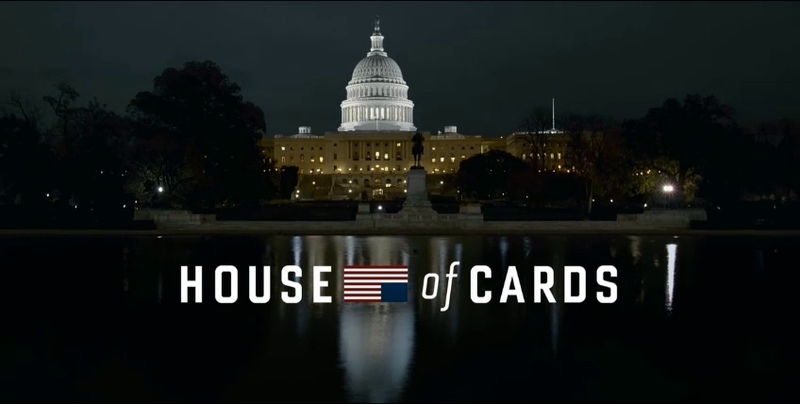
House of Cards is a new American political drama released on Netflix instead of a traditional tv channel. Here are three thoughts on the series after having seen the first nine episodes.
First, one can’t help thinking of Tolkien’s description of men “who above all else desire power” while watching the series. The show is part Shakespearean tragedy in the mold of Macbeth and part Nietzschean homage to the over-man, played with consummate skill by Kevin Spacey. The difference, of course, between Tolkien’s idea of men and House of Cards is that Tolkien sees a way past the lust for power. But in the world of House of Cards, the characters who aren’t power-hungry are the weak ones who inevitably become chess pieces in the hands of the powerful. I’m not sure I know a better way to be made grateful for grace and the church than to see a story in which the dominant characters know only about the power of autonomous individuals. To set the world of Christianity, in which charity is both possible and best, alongside the world created by the greedy schemings of Frank Underwood is to see a bit more clearly the magic of the Gospel.
Second, the show highlights something that Rod Dreher wrote about earlier this week:
Some people see Old South plantation houses, and can only think of the slave labor and exploitation concealed by the beauty of those buildings and the grounds. Others see them and recognize a culture and a vision that had about it a quality of beauty and nobility despite the evil it did. Similarly with, say, Westminster Abbey. It was built by kings who were in many ways wicked and ruthless warmongers, by our lights today. And yet, to stand within the Abbey is to be overwhelmed by beauty, a beauty brought forth in large part by those rough men who called themselves royalty.
So too with the church. Pope Julius II, for example, was a fierce and fearsome Renaissance prince, and literally led his army into war. He was an immense improvement over the rotten Alexander VI, the Borgia pope, whose memory he execrated. Still, Julius was nobody’s idea of an ideal Vicar of Christ. And yet, if not for Julius, the artistic legacy of the Roman church would be much poorer. It was he who is responsible for St. Peter’s Basilica, and for commissioning Michelangelo’s Sistine Chapel. Through these rough men came great beauty that to this day bears witness to truths hard to grasp otherwise.
It’s hard to deny the beauty of some of the buildings and scenes in Washington, DC depicted in the series. And yet that beauty exists alongside the gritty machinations of both Frank and Claire Underwood as well as many of their colleagues and rivals. So an opulent fundraiser for a charity outside of what looks a five star hotel happens alongside a group of picketers protesting about an education bill. Or, to move from the realm of fiction to history, a slave-owning president oversees enormous architectural achievements of great beauty at both his home in Virginia and in Washington itself. Or, to return to fiction and our first launching point, an elf named Feanor sets in motion the tragic arc of Tolkien’s Silmarillion through the creation of three jewels of indisputable, indescribable beauty. Point being—and this is important for traditionalists like myself to remember—that beauty seldom exists in a pure state in this world. On the one hand, this should help us brace ourselves against a romanticized understanding of our own communities or of history. Of course, on the other, it should equally brace us against a cynical dismissal of so many of the past’s great beauties because of some moral failing in one of the prominent figures of the era.
Third, it is difficult to watch the show without imagining the decadence of Rome (yes, I used the “d” word). The disparity in wealth between the powerful and the weak and the subsequent pride in that wealth amongst the powerful causes one to simply hope that the real DC is not as cynical as the DC of House of Cards. That said, as someone who comes from a state with a seven-term congressman who we know is corrupt, it’s hard to be too hopeful about the state of DC. Seen that way, House of Cards is essentially a chronicle of political decadence at an empire’s twilight.
Previous Post

February 12, 2013
Why Choose Theology?
Next Post

February 13, 2013 Take a Break—For Renewal
Browse Our Archives
Select a Category ambition art beauty bible bios body Book Review cheap grace church community consumer church cultural liturgy culture deep practice desire dualisms economics education evangelicalism events faith family fare forward Film Review friendship games Gospel happiness hipster Christianity humility identity institutions irony issue previews Jesus just church justice Lent Letters to the Editor liberal arts liberal christianity literature liturgy love march madness mental health metaphysics misotheism moralism morality Movie Review music narrative naturalism new atheism passions philosophy place political theology Pope Francis power prayer privilege providence reading reason relationship remembering self resurrection science secular faiths secularism sexuality sin Social Media spirituality Sport suburbs suffering table of contents technology the future of faith the new apologetic the virtues theology thick doctrine transcendence Trinity truth tv Uncategorized violence Virtue vocation war work
Select a Month August 2014 July 2014 June 2014 May 2014 April 2014 March 2014 February 2014 January 2014 December 2013 November 2013 October 2013 September 2013 August 2013 July 2013 June 2013 May 2013 April 2013 March 2013 February 2013
Follow Us!
TAKE THE
Religious Wisdom Quiz
I came from stone when struck, satisfying a grumbling multitude in the wilderness. What am I
Select your answer to see how you score.
Water Manna The Spirit Quail
Related posts from Fare Forward




The End of Night: Searching for Natural Darkness...
TRENDING AT PATHEOS Evangelical

The REST of Your Life: A Creative Wrestles...
This week I had a conversation with a good friend from church....

How the author of the world's best hymn...
I've been working with John Newton for a while now. This makes...

Long before this Lectio Divina, Psalm 130 - the song - started...

What About the Trees? Another Living Parable
After I finished writing the last article about falling leaves as a...

Why Classical Education Is a Conversation, Not a...
Come and Read: Joy in Classical Education When I was a little...

Cornell University has received a great deal of negative publicity and intense...
view all Evangelical blogs
Ad-Free & Subscriber Log-In Subscription Support
- About Us
- 2026 Calendar
- Videos
- Podcasts
- Library of World Religions
- Faith In Media Tracker
- Advertise With Us
- Write for Us
- Privacy Policy
- Terms of Service
- Do Not Sell My Data
- Contact Us
- Radiant Digital
- Manage Newsletter Subscriptions
- Unsubscribe From Notifications
- Sitemap
Copyright 2008-2026, Patheos. All rights reserved.
Subscription Support Ad-Free & Subscriber Log-In
Follow Patheos