
BuddhistCatholicContemplativeEvangelicalGeneral ChristianHinduJewishLatter-day SaintMuslimNew VisionsProgressive Christian
Beliefs
- Buddhist
- Catholic
- Contemplative
- Evangelical
- General Christian
- Hindu
- Jewish
- Latter-day Saint
- More Voices
- Muslim
- New Visions
- Pagan
- Progressive Christian
Topics
- Religion News
- Food and Religion
- Sports and Religion
- Religious Art
- Religious Music and Entertainment
- Religious Events
- History and Religion
- Style and Religion
- Politics and Religion
- Women in Religion
- Recreation Outdoors and Religion
- Business Finance and Religion
- Careers Workplace and Religion
- Education and Religion
- Family Parenting and Religion
- Health Fitness and Religion
- Home and Religion
- Relationships and Religion
- Technology and Religion
- Travel and Religion
Columnists
- Buddhist Columnists
- Business Finance and Religion Columnists
- Careers Workplace and Religion Columnists
- Catholic Columnists
- Contemplative Columnists
- Education and Religion Columnists
- Evangelists Columnists
- Family Parenting and Religion Columnists
- General Christian Columnists
- Health Fitness and Religion Columnists
- Hindu Columnists
- History and Religion Columnists
- Home and Religion Columnists
- Jewish Columnists
- More Voices Columnists
- Latter Day Columnists
- Muslim Columnists
- New Visions Columnists
- Nonreligious Columnists
- Pagan Columnists
- Politics and Religion Columnists
- Progressive Columnists
- Recreation Outdoors and Religion Columnists
- Relationships and Religion Columnists
- Religion News Columnists
- Religious Art Columnists
- Religious Events Columnists
- Religious Music and Entertainment Columnists
- Sports and Religion Columnists
- Style and Religion Columnists
- Technology and Religion Columnists
- Travel and Religion Columnists
- Women in Religion Columnists
Resource Library
- 2026 Calendar
- Library of World Religions
- The 100 Most Holy Places on Earth
- Patheos Answers
- Podcasts
- Videos
- Faith Leaders Database
- Anglican Episcopalian
- Bahai
- Baptist
- Buddhism
- Christianity
- Confucianism
- Eastern Orthodoxy
- Hinduism
- Holiness and Pentecostal
- ISKCON
- Islam
- Judaism
- Lutheran
- Methodist
- The Church of Jesus Christ of Latter-day Saints
- New Age
- Paganism
- Presbytarian and Reformed
- Protestantism
- Religion Behind the Scenes
- Roman Catholic
- Scientology
- Shia Islam
- Sikhism
- Sufism
- Sunni Islam
- Taoism
- Zen
- See all religions
Research Tools
 Ad-Free & Subscriber Log-In Subscription Support
Ad-Free & Subscriber Log-In Subscription Support
Follow Patheos 

- Trending:
- Forgiveness
- |
- Marriage
- |
- Consciousness
- |
- Death Penalty
- |
- Election
- |
- Halloween
 Fare Forward
- Home
- Evangelical
- Do We Like Bonhoeffer For the Right Reasons?
Do We Like Bonhoeffer For the Right Reasons?
Last updated on: February 16, 2013 at 11:15 am by Laura Marshall
Do We Like Bonhoeffer For the Right Reasons? 2013-02-16T11:15:18-05:00 Laura Marshall
Patheos Explore the world's faith through different perspectives on religion and spirituality! Patheos has the views of the prevalent religions and spiritualities of the world.
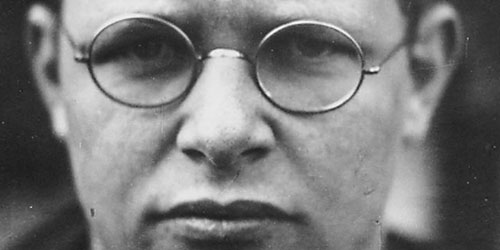
Why is Bonhoeffer experiencing such popularity among evangelical Christians at the moment? What is the appeal of his life and message that we find so attractive – and is that attraction legitimate?
I was first introduced to Bonhoeffer’s life in a Focus on the Family Radio Theatre production titled “Bonhoeffer: The Cost of Freedom.” More recently, Eric Metaxas wrote a biography of titled Bonhoeffer: Pastor, Martyr, Prophet, Spy. This biography has been critiqued by Bonhoeffer historians because of the way Metaxas equates Nazism and liberal theology. In the reviews I’ve read of the book, these critics consistently cite a sentence regarding Bonhoeffer’s return from a year in America in 1931: “Here they were fighting against the corrupting influences of the theologians at Union and Riverside (Church), and at home the fight was against the Reich church.” These critics (including Victoria Barnett) argue that this is a simplistic reading of Bonhoeffer’s thought and it does not account for some of the more liberal theology he espoused in prison.
But this is not Metaxas’ first biography; he also wrote a life of William Wilbeforce to accompany the 2007 movie Amazing Grace. I think the thing that links the two is a connection between faith and political activism. This is attractive for modern evangelicals, who want a historical defense for their political involvement. This makes heroes who attack accepted social villains (slavery, Nazism) especially attractive: their struggle is (for the most part) against an uncontroversial evil. If modern evangelicals read their own narrative onto this, they see themselves fighting forces that will eventually be evaluated as just as evil in the court of historical opinion. The other attraction of this type of biography and hero is that it shows that faith need not be a pernicious influence in the sphere of public affairs; it can be a motivating force for social justice. (See, in this vein, the interest over D. Michael Lindsay’s Faith in the Halls of Power: How Evangelicals Joined the American Elite.)
All of this brings me back to Life Together, which is emphatically not a book about Christian political activism. In chapter 1, Bonhoeffer cautions against holding our current communities up against some ideal form of community that is usually not attainable and only serves to make us discontent with the community we have now. This is in the context of Christian communities (churches, etc.), but I think the principle of gratitude he encourages can be applied to the political sphere as well. Chapter 4 on ministry details the ministry of holding one’s tongue, of silence, and of bearing — specifically of bearing the burden of other Christians’ freedom. This quote struck me most forcefully:
It is, first of all, the freedom of the other person … that is a burden to the Christian. The other’s freedom collides with his own autonomy, yet he must recognize it. He could get rid of this burden by refusing the other person his freedom, by constraining him and thus doing violence to his personality, by stamping his own image upon him. But if he lets God create His image in him, he by this token gives him his freedom and himself bears the burden of this freedom of another creature of God. The freedom of the other person includes all that we mean by a person’s nature, individuality, endowment. It also includes his weaknesses and oddities, which are such a trial to our patience, everything that produces frictions, conflicts, and collisions among us. To bear the burden of the other person means involvement with the created reality of the other, to accept and affirm it, and, in bearing with it, to break through to the point where we take joy in it. (101)
I took several things away from this comparison between Bonhoeffer-in-his-own-words and Bonhoeffer-in-the-Evangelical-imagination:
- Christian community cannot be reduced to gossip sessions at coffee shops and shared music tastes (although those things may play a part). It is an intellectual pursuit that involves reading scripture together, a physical pursuit that involves cooking and caring for each other, and it can be messy. Christ calls the broken; is it therefore shocking that churches sometimes look more like psychiatric wards than model communities? The paradox of Christian community is that we are called to Christ’s perfection, but that perfection involves loving imperfect people.
- Christian community involves freedom and therefore disagreement. One of the fundamental projects of Christian community must, then, be some agreement about how to manage disagreement. “Settling” disagreements may be too strong a term, since healthy Christian community should allow for a great degree of diversity.
Previous Post

February 15, 2013
The Shock of Benedict's Resignation
Next Post

February 18, 2013 Charles Taylor on the Future of Religion
Browse Our Archives
Select a Category ambition art beauty bible bios body Book Review cheap grace church community consumer church cultural liturgy culture deep practice desire dualisms economics education evangelicalism events faith family fare forward Film Review friendship games Gospel happiness hipster Christianity humility identity institutions irony issue previews Jesus just church justice Lent Letters to the Editor liberal arts liberal christianity literature liturgy love march madness mental health metaphysics misotheism moralism morality Movie Review music narrative naturalism new atheism passions philosophy place political theology Pope Francis power prayer privilege providence reading reason relationship remembering self resurrection science secular faiths secularism sexuality sin Social Media spirituality Sport suburbs suffering table of contents technology the future of faith the new apologetic the virtues theology thick doctrine transcendence Trinity truth tv Uncategorized violence Virtue vocation war work
Select a Month August 2014 July 2014 June 2014 May 2014 April 2014 March 2014 February 2014 January 2014 December 2013 November 2013 October 2013 September 2013 August 2013 July 2013 June 2013 May 2013 April 2013 March 2013 February 2013
Follow Us!
TAKE THE
Religious Wisdom Quiz
What did Jesus say about judging people?
Select your answer to see how you score.
Judge justly Judge fairly Judge yourself only Judge not
Related posts from Fare Forward

Sherwood Anderson and the Platonic Touch



TRENDING AT PATHEOS Evangelical

How the author of the world's best hymn...
I've been working with John Newton for a while now. This makes...

Long before this Lectio Divina, Psalm 130 - the song - started...

What About the Trees? Another Living Parable
After I finished writing the last article about falling leaves as a...

Why Classical Education Is a Conversation, Not a...
Come and Read: Joy in Classical Education When I was a little...

Falling Leaves: A Living Parable on Letting Go
I’ve spent the vast majority of my life in the southeast corner...

Cornell University has received a great deal of negative publicity and intense...
view all Evangelical blogs
Ad-Free & Subscriber Log-In Subscription Support
- About Us
- 2026 Calendar
- Videos
- Podcasts
- Library of World Religions
- Faith In Media Tracker
- Advertise With Us
- Write for Us
- Privacy Policy
- Terms of Service
- Do Not Sell My Data
- Contact Us
- Radiant Digital
- Manage Newsletter Subscriptions
- Unsubscribe From Notifications
- Sitemap
Copyright 2008-2026, Patheos. All rights reserved.
Subscription Support Ad-Free & Subscriber Log-In
Follow Patheos