
BuddhistCatholicContemplativeEvangelicalGeneral ChristianHinduJewishLatter-day SaintMuslimNew VisionsProgressive Christian
Beliefs
- Buddhist
- Catholic
- Contemplative
- Evangelical
- General Christian
- Hindu
- Jewish
- Latter-day Saint
- More Voices
- Muslim
- New Visions
- Pagan
- Progressive Christian
Topics
- Religion News
- Food and Religion
- Sports and Religion
- Religious Art
- Religious Music and Entertainment
- Religious Events
- History and Religion
- Style and Religion
- Politics and Religion
- Women in Religion
- Recreation Outdoors and Religion
- Business Finance and Religion
- Careers Workplace and Religion
- Education and Religion
- Family Parenting and Religion
- Health Fitness and Religion
- Home and Religion
- Relationships and Religion
- Technology and Religion
- Travel and Religion
Columnists
- Buddhist Columnists
- Business Finance and Religion Columnists
- Careers Workplace and Religion Columnists
- Catholic Columnists
- Contemplative Columnists
- Education and Religion Columnists
- Evangelists Columnists
- Family Parenting and Religion Columnists
- General Christian Columnists
- Health Fitness and Religion Columnists
- Hindu Columnists
- History and Religion Columnists
- Home and Religion Columnists
- Jewish Columnists
- More Voices Columnists
- Latter Day Columnists
- Muslim Columnists
- New Visions Columnists
- Nonreligious Columnists
- Pagan Columnists
- Politics and Religion Columnists
- Progressive Columnists
- Recreation Outdoors and Religion Columnists
- Relationships and Religion Columnists
- Religion News Columnists
- Religious Art Columnists
- Religious Events Columnists
- Religious Music and Entertainment Columnists
- Sports and Religion Columnists
- Style and Religion Columnists
- Technology and Religion Columnists
- Travel and Religion Columnists
- Women in Religion Columnists
Resource Library
- 2026 Calendar
- Library of World Religions
- The 100 Most Holy Places on Earth
- Patheos Answers
- Podcasts
- Videos
- Faith Leaders Database
- Anglican Episcopalian
- Bahai
- Baptist
- Buddhism
- Christianity
- Confucianism
- Eastern Orthodoxy
- Hinduism
- Holiness and Pentecostal
- ISKCON
- Islam
- Judaism
- Lutheran
- Methodist
- The Church of Jesus Christ of Latter-day Saints
- New Age
- Paganism
- Presbytarian and Reformed
- Protestantism
- Religion Behind the Scenes
- Roman Catholic
- Scientology
- Shia Islam
- Sikhism
- Sufism
- Sunni Islam
- Taoism
- Zen
- See all religions
Research Tools
 Ad-Free & Subscriber Log-In Subscription Support
Ad-Free & Subscriber Log-In Subscription Support
Follow Patheos 

- Trending:
- Forgiveness
- |
- Marriage
- |
- Consciousness
- |
- Death Penalty
- |
- Election
- |
- Halloween
 Fare Forward
- Home
- Evangelical
- Christianity’s Declining Moral Capital
Christianity’s Declining Moral Capital
Last updated on: February 14, 2013 at 11:00 am by Emily DeBaun
Christianity’s Declining Moral Capital 2013-02-14T11:00:20-05:00 Emily DeBaun
Patheos Explore the world's faith through different perspectives on religion and spirituality! Patheos has the views of the prevalent religions and spiritualities of the world.
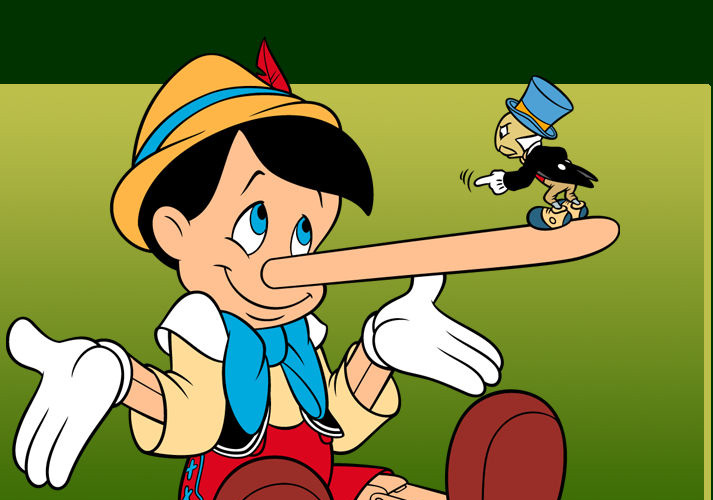
Richard Gunderman touts the benefits of honesty in his recent piece for The Atlantic, “Is Lying Bad for Us?” Considering factors from physiology to personal awareness, Gunderman makes a case for value of truthfulness in a piece that reflects the difficulty of justifying virtues on their intrinsic merit in a society with a declining sense of moral objectivity.
Gunderman’s piece begins by surveying the current state of honesty in America. He reports that people lie not only to avoid embarrassment, but also to benefit themselves in situations where lying has few negative ramifications. To Gunderman, society has shifted from a paradigm where honesty is valued as an intrinsically good virtue, to where “honesty is for the unsophisticated,” for those who cannot bend the truth in order to achieve their own aims.
Possibly perturbed by this rejection of intuitive character values, Gunderman attempts to justify honesty’s importance by emphasizing its benefits. As a physician, he primarily notes honesty’s health effects. According to a recent study, individuals who reduce their frequency of lying have fewer mental and physical health complaints. As an appeal to personal self-interest, Gunderman believes this argument might indeed inspire a number of individuals to be more honest. However, he acknowledges that this doesn’t address honesty’s value beyond self-improvement. If honesty has no intrinsic value, in a counterfactual world where honestly had no bad health effects, what would make it preferable to self-serving dishonesty?
While Gunderman briefly notes that honesty can benefit society at large, the final thrust of his argument is, once again, an appeal to self-betterment. Referencing Sartre, Gunderman argues that lying to others contorts one’s own perceptions of the world, eventually leading to an “inauthentic and irresponsible” lifestyle. He insists that, “To tell the truth is to live authentically and responsibly, to really live.” This final push does little to forward an intrinsic value of truth, and really just circles back to Gunderman’s own belief that honesty is central to an abundant life. But again, he fails to clearly demonstrate how being authentic to “really live” is more justifiable than manipulating others to “really live.”
All his arguments, then, largely reduce to appeals to human self-interest. Admittedly frustrated with this outcome, he questions, “Do we want to live in families, communities, or societies where truth telling needs to be incentivized?” While Gunderman perhaps could have made stronger arguments around the benefits of honesty in developing relationships and preserving society’s well-being, his article is symptomatic of the bewilderment that accompanies today’s growing moral relativism. Gunderman clearly believes in the virtue of honesty, yet acknowledges that society’s collective conscience doesn’t think much of massaging facts for personal gain, especially when consequences are minimal. He realizes that he cannot justify honesty on any of its intrinsic merits in a morally relative context, but must rather argue that it is useful for personal gain, a stance that can just as easily be applied in supporting dishonesty.
The de-valuing of honesty hints at a general decline of Judeo-Christian moral values in a secular America. It also suggests the difficulty of justifying moral absolutes in a secular context. As Glenn Tinder put it in his piece “Can we be good without God?” for a much older edition of The Atlantic:
Enlightenment rationalism…has translated certain Christian values into secular terms and, in an age becoming increasingly secular, has given them political force. It is doubtful, however, that it could have created those values or that it can provide them with adequate metaphysical foundations. Hence if Christianity declines and dies in coming decades, our moral universe and also the relatively humane political universe that it supports will be in peril…
As American society becomes less religious, the Christian virtues that have underscored both large-scale politics and individual morality for centuries will become increasingly unjustifiable on non-religious terms. As humanism rapidly breaks down, failing to provide “adequate metaphysical foundations” for intuitively-held Christian values, Tinder argues that our “moral and political universe will be in peril.” However, this does not necessarily mean “death to Christianity,” but rather an apologetic opportunity to be ready and waiting with Christianity as the justification for the virtues many, like Gunderman, hold dear.
Previous Post

February 13, 2013
Take a Break—For Renewal
Next Post

February 15, 2013 Lent: Why the Language of Self-Control Falls Short
Browse Our Archives
Select a Category ambition art beauty bible bios body Book Review cheap grace church community consumer church cultural liturgy culture deep practice desire dualisms economics education evangelicalism events faith family fare forward Film Review friendship games Gospel happiness hipster Christianity humility identity institutions irony issue previews Jesus just church justice Lent Letters to the Editor liberal arts liberal christianity literature liturgy love march madness mental health metaphysics misotheism moralism morality Movie Review music narrative naturalism new atheism passions philosophy place political theology Pope Francis power prayer privilege providence reading reason relationship remembering self resurrection science secular faiths secularism sexuality sin Social Media spirituality Sport suburbs suffering table of contents technology the future of faith the new apologetic the virtues theology thick doctrine transcendence Trinity truth tv Uncategorized violence Virtue vocation war work
Select a Month August 2014 July 2014 June 2014 May 2014 April 2014 March 2014 February 2014 January 2014 December 2013 November 2013 October 2013 September 2013 August 2013 July 2013 June 2013 May 2013 April 2013 March 2013 February 2013
Follow Us!
TAKE THE
Religious Wisdom Quiz
In the Parable of the Pearl of Great Price, what does the merchant do?
Select your answer to see how you score.
Finds a lost coin Sells all to buy the pearl Builds a bigger barn Buys many pearls
Related posts from Fare Forward

Why You Must Read Shakespeare to Understand OITNB’s...



TRENDING AT PATHEOS Evangelical

The REST of Your Life: A Creative Wrestles...
This week I had a conversation with a good friend from church....

How the author of the world's best hymn...
I've been working with John Newton for a while now. This makes...

Long before this Lectio Divina, Psalm 130 - the song - started...

What About the Trees? Another Living Parable
After I finished writing the last article about falling leaves as a...

Why Classical Education Is a Conversation, Not a...
Come and Read: Joy in Classical Education When I was a little...

Cornell University has received a great deal of negative publicity and intense...
view all Evangelical blogs
Ad-Free & Subscriber Log-In Subscription Support
- About Us
- 2026 Calendar
- Videos
- Podcasts
- Library of World Religions
- Faith In Media Tracker
- Advertise With Us
- Write for Us
- Privacy Policy
- Terms of Service
- Do Not Sell My Data
- Contact Us
- Radiant Digital
- Manage Newsletter Subscriptions
- Unsubscribe From Notifications
- Sitemap
Copyright 2008-2026, Patheos. All rights reserved.
Subscription Support Ad-Free & Subscriber Log-In
Follow Patheos