
BuddhistCatholicContemplativeEvangelicalGeneral ChristianHinduJewishLatter-day SaintMuslimNew VisionsProgressive Christian
Beliefs
- Buddhist
- Catholic
- Contemplative
- Evangelical
- General Christian
- Hindu
- Jewish
- Latter-day Saint
- More Voices
- Muslim
- New Visions
- Pagan
- Progressive Christian
Topics
- Religion News
- Food and Religion
- Sports and Religion
- Religious Art
- Religious Music and Entertainment
- Religious Events
- History and Religion
- Style and Religion
- Politics and Religion
- Women in Religion
- Recreation Outdoors and Religion
- Business Finance and Religion
- Careers Workplace and Religion
- Education and Religion
- Family Parenting and Religion
- Health Fitness and Religion
- Home and Religion
- Relationships and Religion
- Technology and Religion
- Travel and Religion
Columnists
- Buddhist Columnists
- Business Finance and Religion Columnists
- Careers Workplace and Religion Columnists
- Catholic Columnists
- Contemplative Columnists
- Education and Religion Columnists
- Evangelists Columnists
- Family Parenting and Religion Columnists
- General Christian Columnists
- Health Fitness and Religion Columnists
- Hindu Columnists
- History and Religion Columnists
- Home and Religion Columnists
- Jewish Columnists
- More Voices Columnists
- Latter Day Columnists
- Muslim Columnists
- New Visions Columnists
- Nonreligious Columnists
- Pagan Columnists
- Politics and Religion Columnists
- Progressive Columnists
- Recreation Outdoors and Religion Columnists
- Relationships and Religion Columnists
- Religion News Columnists
- Religious Art Columnists
- Religious Events Columnists
- Religious Music and Entertainment Columnists
- Sports and Religion Columnists
- Style and Religion Columnists
- Technology and Religion Columnists
- Travel and Religion Columnists
- Women in Religion Columnists
Resource Library
- 2026 Calendar
- Library of World Religions
- The 100 Most Holy Places on Earth
- Patheos Answers
- Podcasts
- Videos
- Faith Leaders Database
- Anglican Episcopalian
- Bahai
- Baptist
- Buddhism
- Christianity
- Confucianism
- Eastern Orthodoxy
- Hinduism
- Holiness and Pentecostal
- ISKCON
- Islam
- Judaism
- Lutheran
- Methodist
- The Church of Jesus Christ of Latter-day Saints
- New Age
- Paganism
- Presbytarian and Reformed
- Protestantism
- Religion Behind the Scenes
- Roman Catholic
- Scientology
- Shia Islam
- Sikhism
- Sufism
- Sunni Islam
- Taoism
- Zen
- See all religions
Research Tools
 Ad-Free & Subscriber Log-In Subscription Support
Ad-Free & Subscriber Log-In Subscription Support
Follow Patheos 

- Trending:
- Forgiveness
- |
- Marriage
- |
- Consciousness
- |
- Death Penalty
- |
- Election
- |
- Halloween
 FaithWalkers
- Home
- Evangelical
- Catalyst 2013: Doing Bad by Doing Good with Peter Greer, Tyler Wigg-Stevenson, and Bethany Hoang
Catalyst 2013: Doing Bad by Doing Good with Peter Greer, Tyler Wigg-Stevenson, and Bethany Hoang
Last updated on: October 2, 2013 at 2:29 pm by Bill Blankschaen
Catalyst 2013: Doing Bad by Doing Good with Peter Greer, Tyler Wigg-Stevenson, and Bethany Hoang 2013-10-02T14:29:37-06:00 Bill Blankschaen
Patheos Explore the world's faith through different perspectives on religion and spirituality! Patheos has the views of the prevalent religions and spiritualities of the world.
Just enjoyed another Catalyst 2013 Lab session in Atlanta, this one with Bethany Hoang, Tyler Wigg-Stevenson, and Peter Greer. [See my recent interview with Peter here.] Their session was cleverly titled “Fad, Fatigue, or Fidelity? Doing Good and Living our Calling for the Long Haul.”
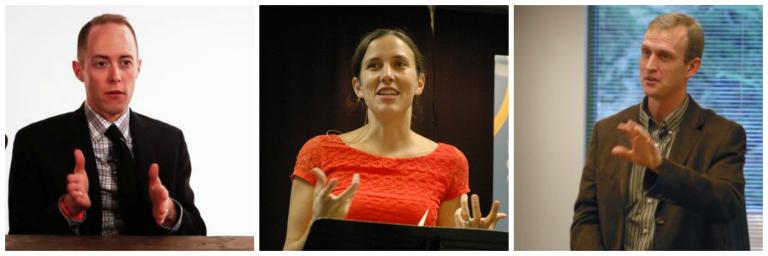
It’s topic I’ve written a bit about as I’ve uncovered my own identity as someone called to equip Christians to think, live, and lead with abundant faith. [See my Interview with Brad Lomenick on The Catalyst Leader and Life Calling.]
Tyler Wigg-Stevenson, author of The World Is Not Ours to Save, opened by arguing that we have reached a pivot point in our efforts to change the world through evangelical entrepreneurship. In essence, we jumped in some years ago with a lot of passion but met stiff resistance. It’s turned out to be harder than we thought it would be. So we’re now taking stock of where we are. In many ways, this Catalyst conference with its theme of KNOWN is Catalyst turning inward as we ask, “What is at our core?”
Tyler wisely noted that our greatest impact is in our families — yet within three generations, our names will likely be forgotten by even our own family. So balancing mission and family is not a position of stasis, but an ongoing process we must continually monitor.
Peter Greer, author of The Spiritual Danger of Doing Good, added that some of the fruit we see in the evangelical social-cause movement is actually rotten on the inside. We need to either get grounded again or we set ourselves up for failure. The danger, he wisely noted, is that we suddenly start to believe that we are the center of the story. When we think we’re at the center of what it means to do good we
- Undermine our impact – When we put our efforts to do good on center-stage, we impose our solutions on to others. In the process, we offend those we supposedly want to help and shut down potentially productive partnerships.
- Undermine our family – We don’t have to look far to find many stories of fractured families left in the wake of our good work. One study Peter shared noted that 80% of pastor’s wives think that their spouse is overworked. That can’t be good in the long run.
- Undermine our faith – The theme of Catalyst is that we are already known by God as we are not as we think we should be. It’s possible to do sacrificial, world-changing work without it ever connecting with our relationship with Christ.
Bethany Hoang, author of Deepening the Soul for Justice, shared how she was first captivated by the horror of rape for profit that drives the dark industry of sex trafficking. As the Director for the Institute of Biblical Justice for International Justice Mission, she has faced the realization that the problem is far bigger than anyone of us previously realized. In short, she shared her perspective that we’re just at the beginning of knowing the horrors of this world. Her question about eh challenge before us is how do we step into the areas of great need without becoming crushed by the weight of it? Her book Deepening the Soul for Justice is about the connection between justice and spiritual formation. She has been realizing more and more how strung out we can become if we’re not deeply rooted in the work of Christ.
In response to a question about correcting course so that we don’t become the hero, Peter Greer suggested the book How the Mighty Fall by Jim Collins to show that success can destroy leaders.
I found the most interesting question from the attendees to be about the trends that the three see in this area of concern. Their answers follow:
- Peter expects the problem to grow in the short-term as the reality becomes more evident that leaders have invested too heavily in doing good to the neglect of families. Then we can begin fixing our priorities and what defines us instead of becoming consumed with a narcissistic infatuation. Tyler believes that big ships turn slowly and that we are just at the beginning of this awakening. He urged patient perseverance as we raise the issue and address it.
- Bethany Hoang noted exhaustion and the fresh need to understand a Sabbath rest grounded in God’s sovereignty. We can rest because He is at work or we run the risk of helping more than hurting.
- Tyler noted on a theological note that we often fail to see how tragic sin is. There are things that we simply cannot undo apart from the return of Christ. The reality that he candidly acknowledged is that “I am exactly what’s wrong with the world. There’s no grand plan God needs of us except to become like Christ.”
Well said. Explore more about how doing good can be deadly in my post: Dear God, Why I’m Breaking Up with Doing Good. And subscribe in the upper right for more updates from Catalyst 2013!
Previous Post

October 2, 2013
Dr Henry Cloud Opens Catlayst 2013 on Identity
Next Post

October 8, 2013 Catalyst 2013: Tim Elmore on Growing the Next Generation of Leaders
Browse Our Archives
Select a Category Book Reviews Christian Living Church Culture FaithWalkers Family Guest Posts In Your Church Interviews Leadership Movie Reviews Politics Spotlight Uncategorized
Select a Month November 2017 August 2017 July 2017 May 2017 March 2017 January 2017 July 2016 June 2016 May 2016 April 2016 March 2016 February 2016 January 2016 December 2015 November 2015 October 2015 September 2015 May 2015 April 2015 February 2015 January 2015 November 2014 August 2014 April 2014 March 2014 February 2014 January 2014 December 2013 November 2013 October 2013 September 2013 August 2013 July 2013 June 2013 May 2013 April 2013 March 2013 February 2013 January 2013 December 2012 November 2012 October 2012 September 2012 August 2012 July 2012 June 2012
Follow Us!
TAKE THE
Religious Wisdom Quiz
What is the correct order of 'these three' that remain, as mentioned in 1 Corinthians 13?
Select your answer to see how you score.
Faith, hope, love Faith, love, hope Hope, faith, love Love, faith, hope
Related posts from FaithWalkers
Is Everyone Clear About Why Your Business Exists?

Evangelicals Respond to Rob Bell Attack on Bible...

One Proven Way to Control Technology Overload

Is Shame the New Silent Killer in America?
TRENDING AT PATHEOS Evangelical

The REST of Your Life: A Creative Wrestles...
This week I had a conversation with a good friend from church....

How the author of the world's best hymn...
I've been working with John Newton for a while now. This makes...

Long before this Lectio Divina, Psalm 130 - the song - started...

What About the Trees? Another Living Parable
After I finished writing the last article about falling leaves as a...

Why Classical Education Is a Conversation, Not a...
Come and Read: Joy in Classical Education When I was a little...

Cornell University has received a great deal of negative publicity and intense...
view all Evangelical blogs
Ad-Free & Subscriber Log-In Subscription Support
- About Us
- 2026 Calendar
- Videos
- Podcasts
- Library of World Religions
- Faith In Media Tracker
- Advertise With Us
- Write for Us
- Privacy Policy
- Terms of Service
- Do Not Sell My Data
- Contact Us
- Radiant Digital
- Manage Newsletter Subscriptions
- Unsubscribe From Notifications
- Sitemap
Copyright 2008-2026, Patheos. All rights reserved.
Subscription Support Ad-Free & Subscriber Log-In
Follow Patheos