
BuddhistCatholicContemplativeEvangelicalGeneral ChristianHinduJewishLatter-day SaintMuslimNew VisionsProgressive Christian
Beliefs
- Buddhist
- Catholic
- Contemplative
- Evangelical
- General Christian
- Hindu
- Jewish
- Latter-day Saint
- More Voices
- Muslim
- New Visions
- Pagan
- Progressive Christian
Topics
- Religion News
- Food and Religion
- Sports and Religion
- Religious Art
- Religious Music and Entertainment
- Religious Events
- History and Religion
- Style and Religion
- Politics and Religion
- Women in Religion
- Recreation Outdoors and Religion
- Business Finance and Religion
- Careers Workplace and Religion
- Education and Religion
- Family Parenting and Religion
- Health Fitness and Religion
- Home and Religion
- Relationships and Religion
- Technology and Religion
- Travel and Religion
Columnists
- Buddhist Columnists
- Business Finance and Religion Columnists
- Careers Workplace and Religion Columnists
- Catholic Columnists
- Contemplative Columnists
- Education and Religion Columnists
- Evangelists Columnists
- Family Parenting and Religion Columnists
- General Christian Columnists
- Health Fitness and Religion Columnists
- Hindu Columnists
- History and Religion Columnists
- Home and Religion Columnists
- Jewish Columnists
- More Voices Columnists
- Latter Day Columnists
- Muslim Columnists
- New Visions Columnists
- Nonreligious Columnists
- Pagan Columnists
- Politics and Religion Columnists
- Progressive Columnists
- Recreation Outdoors and Religion Columnists
- Relationships and Religion Columnists
- Religion News Columnists
- Religious Art Columnists
- Religious Events Columnists
- Religious Music and Entertainment Columnists
- Sports and Religion Columnists
- Style and Religion Columnists
- Technology and Religion Columnists
- Travel and Religion Columnists
- Women in Religion Columnists
Resource Library
- 2026 Calendar
- Library of World Religions
- The 100 Most Holy Places on Earth
- Patheos Answers
- Podcasts
- Videos
- Faith Leaders Database
- Anglican Episcopalian
- Bahai
- Baptist
- Buddhism
- Christianity
- Confucianism
- Eastern Orthodoxy
- Hinduism
- Holiness and Pentecostal
- ISKCON
- Islam
- Judaism
- Lutheran
- Methodist
- The Church of Jesus Christ of Latter-day Saints
- New Age
- Paganism
- Presbytarian and Reformed
- Protestantism
- Religion Behind the Scenes
- Roman Catholic
- Scientology
- Shia Islam
- Sikhism
- Sufism
- Sunni Islam
- Taoism
- Zen
- See all religions
Research Tools
 Ad-Free & Subscriber Log-In Subscription Support
Ad-Free & Subscriber Log-In Subscription Support
Follow Patheos 

- Trending:
- Forgiveness
- |
- Marriage
- |
- Consciousness
- |
- Death Penalty
- |
- Election
- |
- Halloween
 FaithWalkers
- Home
- Evangelical
- The Spiritual Danger of Doing Good: Interview with Peter Greer (Part 2)
The Spiritual Danger of Doing Good: Interview with Peter Greer (Part 2)
Last updated on: September 23, 2013 at 5:52 am by Bill Blankschaen
The Spiritual Danger of Doing Good: Interview with Peter Greer (Part 2) 2013-09-23T05:52:59-06:00 Bill Blankschaen
Patheos Explore the world's faith through different perspectives on religion and spirituality! Patheos has the views of the prevalent religions and spiritualities of the world.
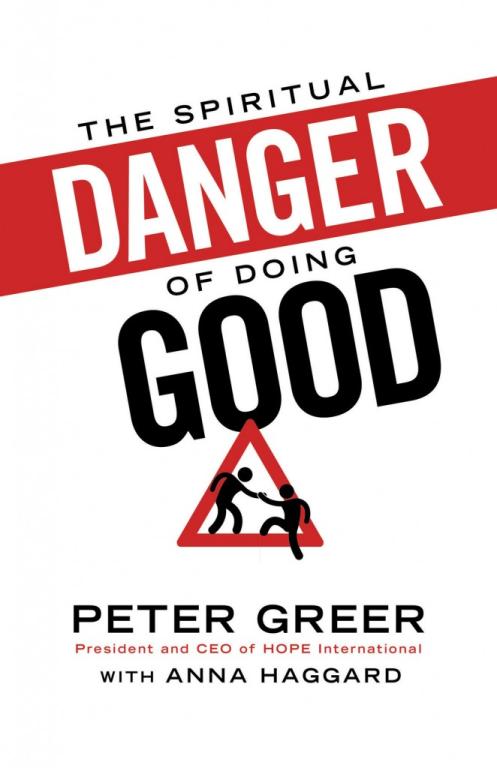
My recent interview continues with Peter Greer. Peter is president and CEO of HOPE International, a global nonprofit focused on Christ-centered job creation, savings mobilization, and financial training. He is also the author of the new book The Spiritual Danger of Doing Good
. You can hear Peter speaking in a lab session at the Catalyst conference in Atlanta October 2-4, 2013.
 Bill: Your chapter on Jesus as that 3 AM friend and your own candid sharing of shortcomings in that area of accountability was a very good one. But we all know that we need this accountability. What I’ve seen is that it seems to be hard to find others who are willing to go there to ask those tough questions. How do we go about fostering that culture? How do we go about letting people know that we’re open to that authentic accountability? And then any ideas for how we intentionally create that culture or call people to it?
Peter: I used to think that extending the invitation was enough, that if I extended the invitation and said, “Bill, please let me know if you see things in my life that are not going to lead to long-term health. Please tell me when you see those.” I thought that was enough. But I no longer believe that because you can extend that invitation and chances are that no one will ever act on that. Everyone has enough of their own issues that they’re dealing with. Why in the world would we deal with someone else’s?
I think that there is a different way. It requires that invitation first but then it requires me to go beyond the original invitation and to pick up the phone and say, “You know what? I’m struggling in this area.” It requires less responsibility on others and more responsibility on myself to foster deep friendships.
Every Friday morning in my own life, I get together with two guys through the phone. I truly love these two men, and we practice this accountability. I can say that it does not happen quickly; it requires someone to go first. But it’s amazing what happens when you have someone who’s willing to go first. It provides an invitation to the others to be real when chances are they have similar struggles.
Bill: As you say that, I’m thinking that going first is, in itself, an act of faith isn’t it? If we’re doing it because we believe that this is what God has called us to do, we’re stepping out by faith and leaving the outcome in His hands. Essentially you’re saying that inviting accountability isn’t enough. We can’t ask people to say, “Trust me, I’ll be okay with your asking questions.” We have to prove that we can be trusted by first of all sharing where we’re struggling, thereby letting them know it’s okay to go there.
Here’s a question that I was pondering today as I thought about your chapter on identity and getting your identity wrapped up in what you do. How do you know if who you are is being defined by what you do? Because usually, when we’re in the middle of that, it is very difficult for us to see it. Especially when you’re doing something that everybody agrees is very good and obviously doing good for the Kingdom. How do you know internally? What are some of the indicators that we should look for tp know that our identity is getting too wrapped up in what we do rather than who we are?
Peter: I don’t think the question is if our identity is wrapped up in what we do. I think the question is how much of our identity is wrapped up in what we do. I don’t know that there is a simple checklist or self-evaluation to go through on that. The easiest way to know is to do what you just did, [ See Stepping Away from a Life of Comfort ] to make the leap and to think about in that process, “Can you define yourself without answering the question of what you do?” Maybe that’s one.
I think another helpful piece short of that is to listen to yourself when you’re meeting new people. When you meet someone, do you always lead with “Hello, my name is Peter Greer, and I work for HOPE International.” Is there more to it than that? Not that you go to the extreme and never talk about what you do, but do you really believe that you have an identity apart from the work that you do? And would it be impossible for you to think about having another position in a different space?
Like, for you, Bill, if you felt that for whatever reason this was the time for you to go work for Coca-Cola and to write there, would you feel embarrassed to tell your family and friends that know you about no longer being a full-time ministry leader, or would you still have that sense that what I do is just a new environment for me to live out my calling as a follower of Jesus? Or can you even entertain the idea of doing something outside of whatever it is that defines you?
Bill: Do I have to answer that?
Peter: You don’t, as long as I don’t, either.
Bill: That’s a question that I wrestled with, believe me, long and hard, and even as you say that, I realize that it’s an ongoing question. It’s not that you answer it once and you’re done. It’s a process that you must continually re-engage, and I love how you put that point about how we introduce ourselves. I did experience that many times when I would meet people and the first question was always, “What do you do?” During the season of transition I often said, “Well, you know, this is where my heart is, this is the direction I’m headed early on in this process of walking by faith.” They often didn’t know quite what to do with that. The conversation just kind of died.
Peter: Wouldn’t it be great though if the default first question after the name was not, “What do you do?” What if we asked:“Who are the most important people in your life?” or “What really brings you joy right now?” Just some crazy question that tries to pry our fingers off our tightly-clenched assumption that what we do defines who we are?
Bill: You make a good point in your book [ The Spiritual Danger of Doing Good
Peter: We have an incredible ability to take any good thing and, as Tim Keller says, make it an ultimate thing. In so doing, we turn that good thing into our own god — something that we can’t imagine life without. If our sense of identity and purpose and meaning is all about our kids or all about our spouse or all about thinking about our grandkids, that is taking a very good thing and taking it too far. So, everyone has this natural inclination, right, to either turn their family into a god or to practice the age-old art of child sacrifice and neglect those closest to you in pursuit of your own ambition.
In my mind, that chapter was written because I see that more often those in ministry who believe in what they’re doing, who are passionate about what they’re doing, forget that part of their ministry is loving family. It’s great that they’re going all around the world, but part of what I believe we’re called to is to say “How would those closest to us describe our life and our love?”
Yes, you can take it too far on either side. Our families are not meant to be our gods, nor are they meant to be just another piece of what we do. That is the tension that we face and perhaps the healthy question to ask our spouse, if we’re married, is, “Apart from Christ, do you believe that you are my highest priority above my vocation?” I mean, that to me is coming from the idea of that passage, “Husbands, love your wives just as Christ loved the church and gave Himself up for her.” Are we really exhibiting that sort of love to those that are closest to us?
Bill: Good thoughts, Peter. I really appreciate it. Thanks for your time and your efforts in sharing a vital message in your book The Spiritual Danger of Doing Good.
See you at Catalyst! You may also enjoy this interview with Brad Lomenick: “The Catalyst Leader and Calling.”
Share your thoughts on our conversation with a comment below.

Next Post

September 26, 2013 5 Truths Children Won't Know About Marriage Unless We Teach Them
Browse Our Archives
Select a Category Book Reviews Christian Living Church Culture FaithWalkers Family Guest Posts In Your Church Interviews Leadership Movie Reviews Politics Spotlight Uncategorized
Select a Month November 2017 August 2017 July 2017 May 2017 March 2017 January 2017 July 2016 June 2016 May 2016 April 2016 March 2016 February 2016 January 2016 December 2015 November 2015 October 2015 September 2015 May 2015 April 2015 February 2015 January 2015 November 2014 August 2014 April 2014 March 2014 February 2014 January 2014 December 2013 November 2013 October 2013 September 2013 August 2013 July 2013 June 2013 May 2013 April 2013 March 2013 February 2013 January 2013 December 2012 November 2012 October 2012 September 2012 August 2012 July 2012 June 2012
Follow Us!
TAKE THE
Religious Wisdom Quiz
What does the word "apostle" mean?
Select your answer to see how you score.
Teacher One who is sent Leader Counselor
Related posts from FaithWalkers
Is Everyone Clear About Why Your Business Exists?

Evangelicals Respond to Rob Bell Attack on Bible...

Teach from Love: Sam Sorbo Delivers Superb School...

One Proven Way to Control Technology Overload
TRENDING AT PATHEOS Evangelical

The REST of Your Life: A Creative Wrestles...
This week I had a conversation with a good friend from church....

How the author of the world's best hymn...
I've been working with John Newton for a while now. This makes...

Long before this Lectio Divina, Psalm 130 - the song - started...

What About the Trees? Another Living Parable
After I finished writing the last article about falling leaves as a...

Why Classical Education Is a Conversation, Not a...
Come and Read: Joy in Classical Education When I was a little...

Cornell University has received a great deal of negative publicity and intense...
view all Evangelical blogs
Ad-Free & Subscriber Log-In Subscription Support
- About Us
- 2026 Calendar
- Videos
- Podcasts
- Library of World Religions
- Faith In Media Tracker
- Advertise With Us
- Write for Us
- Privacy Policy
- Terms of Service
- Do Not Sell My Data
- Contact Us
- Radiant Digital
- Manage Newsletter Subscriptions
- Unsubscribe From Notifications
- Sitemap
Copyright 2008-2026, Patheos. All rights reserved.
Subscription Support Ad-Free & Subscriber Log-In
Follow Patheos