
BuddhistCatholicContemplativeEvangelicalGeneral ChristianHinduJewishLatter-day SaintMuslimNew VisionsProgressive Christian
Beliefs
- Buddhist
- Catholic
- Contemplative
- Evangelical
- General Christian
- Hindu
- Jewish
- Latter-day Saint
- More Voices
- Muslim
- New Visions
- Pagan
- Progressive Christian
Topics
- Religion News
- Food and Religion
- Sports and Religion
- Religious Art
- Religious Music and Entertainment
- Religious Events
- History and Religion
- Style and Religion
- Politics and Religion
- Women in Religion
- Recreation Outdoors and Religion
- Business Finance and Religion
- Careers Workplace and Religion
- Education and Religion
- Family Parenting and Religion
- Health Fitness and Religion
- Home and Religion
- Relationships and Religion
- Technology and Religion
- Travel and Religion
Columnists
- Buddhist Columnists
- Business Finance and Religion Columnists
- Careers Workplace and Religion Columnists
- Catholic Columnists
- Contemplative Columnists
- Education and Religion Columnists
- Evangelists Columnists
- Family Parenting and Religion Columnists
- General Christian Columnists
- Health Fitness and Religion Columnists
- Hindu Columnists
- History and Religion Columnists
- Home and Religion Columnists
- Jewish Columnists
- More Voices Columnists
- Latter Day Columnists
- Muslim Columnists
- New Visions Columnists
- Nonreligious Columnists
- Pagan Columnists
- Politics and Religion Columnists
- Progressive Columnists
- Recreation Outdoors and Religion Columnists
- Relationships and Religion Columnists
- Religion News Columnists
- Religious Art Columnists
- Religious Events Columnists
- Religious Music and Entertainment Columnists
- Sports and Religion Columnists
- Style and Religion Columnists
- Technology and Religion Columnists
- Travel and Religion Columnists
- Women in Religion Columnists
Resource Library
- 2026 Calendar
- Library of World Religions
- The 100 Most Holy Places on Earth
- Patheos Answers
- Podcasts
- Videos
- Faith Leaders Database
- Anglican Episcopalian
- Bahai
- Baptist
- Buddhism
- Christianity
- Confucianism
- Eastern Orthodoxy
- Hinduism
- Holiness and Pentecostal
- ISKCON
- Islam
- Judaism
- Lutheran
- Methodist
- The Church of Jesus Christ of Latter-day Saints
- New Age
- Paganism
- Presbytarian and Reformed
- Protestantism
- Religion Behind the Scenes
- Roman Catholic
- Scientology
- Shia Islam
- Sikhism
- Sufism
- Sunni Islam
- Taoism
- Zen
- See all religions
Research Tools
 Ad-Free & Subscriber Log-In Subscription Support
Ad-Free & Subscriber Log-In Subscription Support
Follow Patheos 

- Trending:
- Forgiveness
- |
- Marriage
- |
- Consciousness
- |
- Death Penalty
- |
- Election
- |
- Halloween
 FaithWalkers
- Home
- Evangelical
- Interview with Brad Lomenick, Catalyst CEO: The Catalyst Leader & Calling
Interview with Brad Lomenick, Catalyst CEO: The Catalyst Leader & Calling
Last updated on: April 11, 2013 at 6:47 am by Bill Blankschaen
Interview with Brad Lomenick, Catalyst CEO: The Catalyst Leader & Calling 2013-04-11T06:47:05-06:00 Bill Blankschaen
Patheos Explore the world's faith through different perspectives on religion and spirituality! Patheos has the views of the prevalent religions and spiritualities of the world.
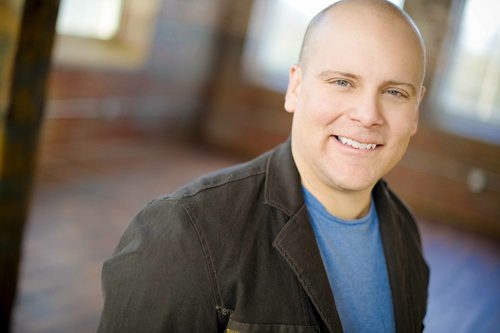 I recently had the privilege to talk with Brad Lomenick, CEO of Catalyst. His new book The Catalyst Leader: 8 Essentials for Becoming a Change Maker
If you haven’t yet attended one of the Catalyst conferences, you simply must do whatever it takes to get there.
Given my own faith journey and interest in helping people find their calling, the subject of his first chapter, we drilled down into that topic during our time together.
Enjoy.
——————————–
Me: Brad, I did read the whole book — and greatly enjoyed it, but in our time today, I wanted to focus in on your chapter on calling. The first question I have is that in the book (pg. 7) you say “Leaders who make the biggest impact also have the strongest sense of calling.” [ Tweet this! ] And yet we seem to really be struggling as a culture and as the Church with figuring out our calling these days. Your thoughts on why that is?
Brad: I think we’ve always struggled with calling. Even in the last 50 to 60 years there was never, in general, a true release of folks who were in the workplace or that were in the corporate world or general marketplace. You viewed your calling and purpose in life as a means to an end, like, I’m going to be in an industry for 40-50 years whether I like it or not because I have to make a paycheck in order to have this other life.
We left the calling conversation more in the ministry world and in the church world. You hear your pastor say, “I’m called, or I feel called to go to this other church or this other city.” I think there’s always been just not a proper understanding of calling and the fact that we’re all called, regardless of vocation. So that’s the first thing.
But now I think we’re in a different time. We’re in the free-agent generation and everything feels like a project. Everything feels like, “I’m going to work on this for six months and then do something else” because we have way more options than we’ve ever had.
I think some of the latest stats out there say that people who are now in their twenties will have potentially 15-20 different career assignments over the next 40 years. That’s making it more difficult for people to understand the way God’s truly wired them and what they’re truly called to do.
Everything we touch should bear the sooty fingerprints of our fiery zeal for God. ~ Brad Lomenick, The Catalyst Leader [ Tweet this! ]
Calling is not vocational assignments. I think vocational assignments come from calling. Calling is the 30,000 foot level. A job is not necessarily a calling although it can identify your calling. We have to get a greater sense of what the word calling means in order for all of us to understand it.
The other thing I would say is that the Church, unfortunately, has dropped the responsibility on this one. I mean in terms of releasing leaders in their congregation into the marketplace and into the general world of work or vocation and saying, “Hey, we want to be as passionate about helping you understand this as we are in understanding it ourselves as the pastor or the minister or the head of the church.”
My challenge to a lot of church leaders is not only do you need to figure it out but you need to help your congregation figure it out. They’re sometimes confused because we don’t talk about it enough within those contexts.
I noticed you mention in your book that when young leaders ask you about their calling, what you really do is act like a life coach and ask them to ask questions about themselves, to help them discover themselves. Have you ever enlisted a life coach, officially or unofficially, in this process of figuring out your calling? Why in the Church does there seem to be a lack of — call it mentoring, call it discipleship — but there seems to be a vacuum where we’re not intentionally equipping people to figure themselves out?
I’ve had several different folks who I would consider to be life coaches, some in a more formal capacity, some just as friends, but I definitely recommend it. I think many times we’re going to best discover our calling when people other than ourselves speak into that process. Many times, we’re so close to the problem, or in this case, to the source, that we have a hard time sometimes seeing it with simplicity and clarity, so I would definitely recommend it. I think it’s incredibly important.
It doesn’t always have to be truly a coach necessarily. It could be a close friend; it could be a co-worker; it could be a family member; or it could be somebody around you who knows you really well and knows enough about you to be able to give you some really good assessments and a sense of “Hey, I see this a lot, or I sense this, or I notice you really gravitate toward this.” Those kind of conversations are really important.
I would love for the church to really get back into the seat of being the ones who are leading this leadership world in general and Christian leadership in particular and see that flowing out of the church versus, “Well, we’ve got to go find that somewhere else.”
Given that gap between where we’d like the church to be on this are of figuring out calling and where it is, there are a lot of people out there our age and older – let’s call it thirty and forty-something – who are just waking up to the fact that maybe they’re not doing what they’re called to do. Is it ever too late or does the fact that we’ve become such a free-agent society work in their favor so that they can still awaken to that and set out on a new track?
I think it does mean that. Being in a free-agent society, being in a project-driven society rather than a career society – I don’t think it’s a bad thing. I don’t think it’s necessarily a good thing either. It’s just a thing. So I don’t think it’s ever too late.
I think the reality is right now a lot of Boomers – I saw a study just recently where all of these folks who are now retiring or stepping out of the work force are starting new careers. It’s a whole new industry. It’s all these late fifty/early sixty-year olds who are basically starting the career they always wanted, or the organization, or the project, or the new business they always wanted.
And I think that’s a good thing. I don’t think we’re ever too old, or past our prime to discover what God truly has wired us to do. I think it’s really important for anybody at any age to understand that it’s not too late. And to start with the clarity and the understanding that I have actually been wired to do something specific.
On the mystery of calling – we make it way too mysterious in the Christian community. We need to take a lot of that off and say, “OK, there are some really simple ways for us to be clear on this.”
I think giving permission to people is so important, because of the way generations transfer that kind of stuff. My dad was in a vocation for forty years – and he loved it! He felt like he was in his sweet spot, but a lot of people who are in their thirties and forties had parents who never ever discovered that. We’ve got to start a new cycle that says, “It’s OK. We’re giving permission to people to truly find their calling in life.”
“If you try to be all things to everyone, then you’ll end up being nothing to everyone.” ~ Brad Lomenick, The Catalyst Leader [ Tweet this! ]
——————————
Continue to Part 2 of my interview with Brad Lomenick with a click here.
Previous Post

April 9, 2013
See How to Teach Your Kids to Put Their Strengths to Work
Browse Our Archives
Select a Category Book Reviews Christian Living Church Culture FaithWalkers Family Guest Posts In Your Church Interviews Leadership Movie Reviews Politics Spotlight Uncategorized
Select a Month November 2017 August 2017 July 2017 May 2017 March 2017 January 2017 July 2016 June 2016 May 2016 April 2016 March 2016 February 2016 January 2016 December 2015 November 2015 October 2015 September 2015 May 2015 April 2015 February 2015 January 2015 November 2014 August 2014 April 2014 March 2014 February 2014 January 2014 December 2013 November 2013 October 2013 September 2013 August 2013 July 2013 June 2013 May 2013 April 2013 March 2013 February 2013 January 2013 December 2012 November 2012 October 2012 September 2012 August 2012 July 2012 June 2012
Follow Us!
TAKE THE
Religious Wisdom Quiz
Complete the line from John 11, verse 35: "Jesus....."
Select your answer to see how you score.
Jesus spoke Jesus waved Jesus wept Jesus answered
Related posts from FaithWalkers
Is Everyone Clear About Why Your Business Exists?

Evangelicals Respond to Rob Bell Attack on Bible...

Not a Day Care: Why the College Snowflake...

One Proven Way to Control Technology Overload
TRENDING AT PATHEOS Evangelical

The REST of Your Life: A Creative Wrestles...
This week I had a conversation with a good friend from church....

How the author of the world's best hymn...
I've been working with John Newton for a while now. This makes...

Long before this Lectio Divina, Psalm 130 - the song - started...

What About the Trees? Another Living Parable
After I finished writing the last article about falling leaves as a...

Why Classical Education Is a Conversation, Not a...
Come and Read: Joy in Classical Education When I was a little...

Cornell University has received a great deal of negative publicity and intense...
view all Evangelical blogs
Ad-Free & Subscriber Log-In Subscription Support
- About Us
- 2026 Calendar
- Videos
- Podcasts
- Library of World Religions
- Faith In Media Tracker
- Advertise With Us
- Write for Us
- Privacy Policy
- Terms of Service
- Do Not Sell My Data
- Contact Us
- Radiant Digital
- Manage Newsletter Subscriptions
- Unsubscribe From Notifications
- Sitemap
Copyright 2008-2026, Patheos. All rights reserved.
Subscription Support Ad-Free & Subscriber Log-In
Follow Patheos