
BuddhistCatholicContemplativeEvangelicalGeneral ChristianHinduJewishLatter-day SaintMuslimNew VisionsProgressive Christian
Beliefs
- Buddhist
- Catholic
- Contemplative
- Evangelical
- General Christian
- Hindu
- Jewish
- Latter-day Saint
- More Voices
- Muslim
- New Visions
- Pagan
- Progressive Christian
Topics
- Religion News
- Food and Religion
- Sports and Religion
- Religious Art
- Religious Music and Entertainment
- Religious Events
- History and Religion
- Style and Religion
- Politics and Religion
- Women in Religion
- Recreation Outdoors and Religion
- Business Finance and Religion
- Careers Workplace and Religion
- Education and Religion
- Family Parenting and Religion
- Health Fitness and Religion
- Home and Religion
- Relationships and Religion
- Technology and Religion
- Travel and Religion
Columnists
- Buddhist Columnists
- Business Finance and Religion Columnists
- Careers Workplace and Religion Columnists
- Catholic Columnists
- Contemplative Columnists
- Education and Religion Columnists
- Evangelists Columnists
- Family Parenting and Religion Columnists
- General Christian Columnists
- Health Fitness and Religion Columnists
- Hindu Columnists
- History and Religion Columnists
- Home and Religion Columnists
- Jewish Columnists
- More Voices Columnists
- Latter Day Columnists
- Muslim Columnists
- New Visions Columnists
- Nonreligious Columnists
- Pagan Columnists
- Politics and Religion Columnists
- Progressive Columnists
- Recreation Outdoors and Religion Columnists
- Relationships and Religion Columnists
- Religion News Columnists
- Religious Art Columnists
- Religious Events Columnists
- Religious Music and Entertainment Columnists
- Sports and Religion Columnists
- Style and Religion Columnists
- Technology and Religion Columnists
- Travel and Religion Columnists
- Women in Religion Columnists
Resource Library
- 2026 Calendar
- Library of World Religions
- The 100 Most Holy Places on Earth
- Patheos Answers
- Podcasts
- Videos
- Faith Leaders Database
- Anglican Episcopalian
- Bahai
- Baptist
- Buddhism
- Christianity
- Confucianism
- Eastern Orthodoxy
- Hinduism
- Holiness and Pentecostal
- ISKCON
- Islam
- Judaism
- Lutheran
- Methodist
- The Church of Jesus Christ of Latter-day Saints
- New Age
- Paganism
- Presbytarian and Reformed
- Protestantism
- Religion Behind the Scenes
- Roman Catholic
- Scientology
- Shia Islam
- Sikhism
- Sufism
- Sunni Islam
- Taoism
- Zen
- See all religions
Research Tools
 Ad-Free & Subscriber Log-In Subscription Support
Ad-Free & Subscriber Log-In Subscription Support
Follow Patheos 

- Trending:
- Forgiveness
- |
- Marriage
- |
- Consciousness
- |
- Death Penalty
- |
- Election
- |
- Halloween
 Faith Shift
- Home
- Progressive Christian
- Returning: Playing it Safe
Returning: Playing it Safe
Last updated on: August 9, 2017 at 2:08 pm by Kathy Escobar
Returning: Playing it Safe 2017-08-09T14:08:49-06:00 Kathy Escobar
Patheos Explore the world's faith through different perspectives on religion and spirituality! Patheos has the views of the prevalent religions and spiritualities of the world.
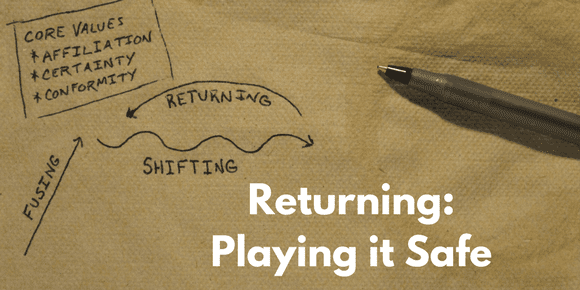
I’m juggling the last few weeks of my kids being home for summer and am a little behind on this short 6-part series of the major movements from Faith Shift: Finding Your Way Forward When Everything You Believe is Coming Apart. These posts are only a tiny peek into what’s in the actual material, so if you haven’t read it yet and are drawn into the content, the book contains a lot of content to help engage and process.
The first two posts were centered on Fusing and Shifting.
Most every person shifts in their faith over time. It might not be overt; the questions might not be asked out loud and the rumbles might be small ones. But most honest people have doubts in the dark of night and are often afraid to bring them into the light. The stage of Shifting is within our control. We can navigate it, manage it, keep things rolling along still.
What happens to a lot of people when the shifty stuff starts bubbling up (read that twice, it’s an “f” not two “t’s…) is a returning back to the safety of Fusing. This can be intentional, something inside of us that says “I just can’t lean into these feelings. I need to let them go and do whatever I can to become comfortable again” or unintentional, where there’s an underlying and unexplainable pull to dismiss the rumbly feelings and maintain the status quo.
Most of us don’t like change, discomfort, or the unknown.
We like to play it safe.
I call this stage Returning.
I shifted and returned many a time over the years; a lot of us do. Returning is not bad, a sign of weakness, a signal that we’re doing something wrong. It’s just reality for a lot of people in this process.
In the book, I talk about several reasons for Returning (there are many others, too):
1. The kids and spouses. It’s tough when our spouses aren’t asking the same questions and/or we aren’t quite sure what to do about the kids.
2. Our addiction to inspiration. Giving up the comfort of music, inspiration, and teaching we have loved for a long time is no easy thing.
3. Looking for a spiritual bypass. A lot of people are good at church shopping and finding a new way to stay above water without addressing what’s underneath the iceberg.
4. The “but what abouts…” Because many of us have been trained in the need for certainty, we find ways to second guess our doubts (p. 54-60).
All four are all fleshed out Faith Shift, but I want to touch on #2 and #3 briefly as part of this overview because I think they are deeply entangled in the resistance to shifting faith.
My friend Karl Wheeler coined the term “inspiration addiction” year ago. I loved it the minute he said it, and I love it still. Inspiration addiction is prevalent in many of our systems, especially contemporary Christian ones.
It’s a reliance on some form of weekly church service to get an infusion of inspiration that will carry us through the week.
I was addicted to getting a regular inspirational high when I attended church the last chunk of years before my big unravel. Excellence mattered. After all these years, I still sometimes miss what it was like to get that feeling and read Facebook posts from people sharing how “awesome the service was this weekend.” Giving it up has been one of the best things that’s ever happened to me because I have to engage with God in new, much more subtle ways; however, initially it was a big loss. That’s why so many people are afraid to give it up.
Here are some questions to know if we might be addicted to inspiration:
- Do you primarily attend church because of the powerful worship and/or teaching?
- Do you often listen to the pastor’s sermons online to get another dose of the Sunday message?
- Do you negatively critique church services or experiences that are less than excellent, not funny, or uninteresting?
- Are you constantly telling others about the great message you heard on Sunday that they should listen to? (p. 57-58).
Again, these things aren’t bad.
But I personally don’t think it lines up with Jesus’ message, how he taught and what he calls us to.
Inspiration addiction can also create a false sense of security and help us avoid pain in our real lives and the lives of others.
The other thing many often do to address our shifting experiences is what my friend and partner in facilitating an online course called “Walking Wounded: Hope for Those Hurt by Church and Ministry, Phyllis Mathis, calls a “spiritual bypass, in which instead of wrestling with the intense realities of our faith shifts, we unplug from the current pain and quickly plug into another type of church, a different strain of faith, or a popular spiritual program that provides immediate relief. But in the long run, this replacement church prevents us from experiencing the meaningful soul change that a faith shift will bring” (p. 58).
How many of you have tried a spiritual bypass, hoping a different church, a different denomination, a different _____ would make the rumbly feelings fade away quickly?
I can relate to both, the kids and spouses and “but what about’s” too. It is what is kept me in for a long time, despite the rumbles.
The bottom line is that shifts feel scary, and returning can alleviate some fear and get us back to safety.
Some people do fine Shifting and then Returning. It’s important not to judge others’ experience.
However, others of us end up facing a much messier and confusing experience–Unraveling–when things about faith and church slip beyond our control and everything we believe starts to come apart (that’s next and probably where a lot of you are living).
What are your thoughts on Returning and our desire to stay safe?
Previous Post

July 27, 2017
Politics and Faith Unraveling
Next Post

August 11, 2017 Unraveling: It's a lot to Lose
Browse Our Archives
Select a Category Church Church Pain Faith and Politics Faith Shifts Grief Rebuilding Unraveling
Select a Month May 2019 September 2018 June 2018 April 2018 February 2018 January 2018 December 2017 November 2017 October 2017 September 2017 August 2017 July 2017 May 2017
Follow Us!
TAKE THE
Religious Wisdom Quiz
What is the correct order of the seven churches addressed in Revelation?
Select your answer to see how you score.
Ephesus, Pergamum, Smyrna, Sardis, Thyatira, Laodicea, Philadelphia Laodicea, Philadelphia, Sardis, Thyatira, Pergamum, Smyrna, Ephesus Ephesus, Smyrna, Pergamum, Thyatira, Sardis, Philadelphia, Laodicea Smyrna, Ephesus, Thyatira, Pergamum, Philadelphia, Sardis, Laodicea
Related posts from Faith Shift

Why I Love Celtic Christianity
We "Just Can't Anymore" for a Reason.

TRENDING AT PATHEOS Progressive Christian

What Being a Modern-Day Apostle Means to Me
In my last column, I discussed the ins and outs of modern-day...

Did Ancient China Once Worship the God of...
Across human history, a common thread weaves through the origins of the...

Love Your Neighbor – Including Earth-Kin: Lev. 19,...
God’s command to love your neighbor means acting in an ethical and...

Lead a Church Study of “Jesus and Lao...
Guest writer Jack Thomas (The Irreverent Reverend) reflects on leading his church...

Pastoral Wisdom for Responding to Sermon Pushback
Getting sermon pushback on your social justice sermon? Learn practical, Proverbs-based strategies...

Principles for Understanding the Apostolic Ministry Today
Whenever people discover that my formal ministry title is "apostle," as in...
view all Progressive Christian blogs
Ad-Free & Subscriber Log-In Subscription Support
- About Us
- 2026 Calendar
- Videos
- Podcasts
- Library of World Religions
- Faith In Media Tracker
- Advertise With Us
- Write for Us
- Privacy Policy
- Terms of Service
- Do Not Sell My Data
- Contact Us
- Radiant Digital
- Manage Newsletter Subscriptions
- Unsubscribe From Notifications
- Sitemap
Copyright 2008-2026, Patheos. All rights reserved.
Subscription Support Ad-Free & Subscriber Log-In
Follow Patheos