
BuddhistCatholicContemplativeEvangelicalGeneral ChristianHinduJewishLatter-day SaintMuslimNew VisionsProgressive Christian
Beliefs
- Buddhist
- Catholic
- Contemplative
- Evangelical
- General Christian
- Hindu
- Jewish
- Latter-day Saint
- More Voices
- Muslim
- New Visions
- Pagan
- Progressive Christian
Topics
- Religion News
- Food and Religion
- Sports and Religion
- Religious Art
- Religious Music and Entertainment
- Religious Events
- History and Religion
- Style and Religion
- Politics and Religion
- Women in Religion
- Recreation Outdoors and Religion
- Business Finance and Religion
- Careers Workplace and Religion
- Education and Religion
- Family Parenting and Religion
- Health Fitness and Religion
- Home and Religion
- Relationships and Religion
- Technology and Religion
- Travel and Religion
Columnists
- Buddhist Columnists
- Business Finance and Religion Columnists
- Careers Workplace and Religion Columnists
- Catholic Columnists
- Contemplative Columnists
- Education and Religion Columnists
- Evangelists Columnists
- Family Parenting and Religion Columnists
- General Christian Columnists
- Health Fitness and Religion Columnists
- Hindu Columnists
- History and Religion Columnists
- Home and Religion Columnists
- Jewish Columnists
- More Voices Columnists
- Latter Day Columnists
- Muslim Columnists
- New Visions Columnists
- Nonreligious Columnists
- Pagan Columnists
- Politics and Religion Columnists
- Progressive Columnists
- Recreation Outdoors and Religion Columnists
- Relationships and Religion Columnists
- Religion News Columnists
- Religious Art Columnists
- Religious Events Columnists
- Religious Music and Entertainment Columnists
- Sports and Religion Columnists
- Style and Religion Columnists
- Technology and Religion Columnists
- Travel and Religion Columnists
- Women in Religion Columnists
Resource Library
- 2026 Calendar
- Library of World Religions
- The 100 Most Holy Places on Earth
- Patheos Answers
- Podcasts
- Videos
- Faith Leaders Database
- Anglican Episcopalian
- Bahai
- Baptist
- Buddhism
- Christianity
- Confucianism
- Eastern Orthodoxy
- Hinduism
- Holiness and Pentecostal
- ISKCON
- Islam
- Judaism
- Lutheran
- Methodist
- The Church of Jesus Christ of Latter-day Saints
- New Age
- Paganism
- Presbytarian and Reformed
- Protestantism
- Religion Behind the Scenes
- Roman Catholic
- Scientology
- Shia Islam
- Sikhism
- Sufism
- Sunni Islam
- Taoism
- Zen
- See all religions
Research Tools
 Ad-Free & Subscriber Log-In Subscription Support
Ad-Free & Subscriber Log-In Subscription Support
Follow Patheos 

- Trending:
- Forgiveness
- |
- Marriage
- |
- Consciousness
- |
- Death Penalty
- |
- Election
- |
- Halloween
 Faith-Promoting Rumor
- Home
- Latter-day Saint
- Maimonides and a new Torah Scroll Controversy
Maimonides and a new Torah Scroll Controversy
Last updated on: June 3, 2013 at 4:57 pm by Bored in Vernal
Maimonides and a new Torah Scroll Controversy 2013-06-03T16:57:16-05:00 Bored in Vernal
Patheos Explore the world's faith through different perspectives on religion and spirituality! Patheos has the views of the prevalent religions and spiritualities of the world.
My ears perked up when I heard the news that Mauro Perani, professor of Hebrew at the University of Bologna, has found what he believes is the world’s oldest complete Torah scroll. Perani was updating the University library’s Hebrew manuscript catalogue in February, when he realized the scroll had been wrongly dated by the last cataloguer in 1889.
The 1889 cataloguer, a Jew named Leonello Modona, had described the letters in the scroll as “an Italian script, rather clumsy-looking, in which certain letters, as well as the usual crowns and strokes show uncommon and strange appendices.” Perani, however, recognized an elegant script whose square letters were of the oriental Babylonian tradition.
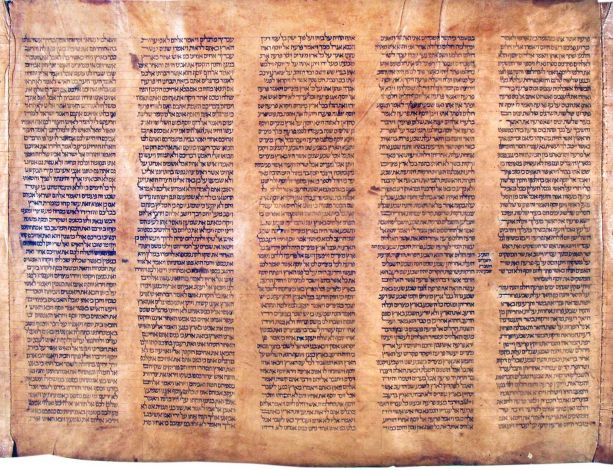
Photo: Alma Mater Studiorum Universita’ Di Bologna
The scroll doesn’t follow the rabbinical rules established by Maimonides in the late 12th century that standardized how the Pentateuch should be copied. It contains many features and markings that would be forbidden under those rules. Its script and other graphic notations are far older than the 17th century date that it had been assigned.
Two separate carbon-dating tests — performed by the University of Salento in Italy and the Radiocarbon Dating Laboratory at the University of Illinois, Urbana-Champaign — confirmed that the scroll dates from 1155-1225 CE.
Giovanni Garbini, a leading expert on ancient Semitic languages, said the discovery doesn’t change much about what the world knows about Hebrew manuscripts.
“It’s an example of an ancient scroll, but from the point of view of knowledge, it doesn’t change anything,” he said in a telephone interview.
But Stephen Pfann, acting president of the University of the Holy Land in Jerusalem and an expert in ancient Jewish manuscripts, said if accurately dated, the scroll is a rare and important find. “We don’t have anything much from that period,” Pfann said.
I’ll admit that I’m not qualified or knowledgeable in this field, but I’d love to hear some of our Biblical scholars expound on Pfann and Garbini’s disagreement. I was surprised to read Garbini’s opinion that this discovery doesn’t change much. When an older scroll or manuscript is found, there are often changes to our understanding of scriptural passages. For example, just yesterday, June 2, 2013, Ha’aretz reported that a new interpretation of Genesis 9:22-24 has come to light due to a high resolution photograph of a fragment from the Dead Sea Scrolls. Though the Dead Sea Scrolls date from an earlier period of time than the Bologna Scroll, there is not a complete Torah among them. For many passages, the newly discovered scroll is going to contain the oldest version of them which is now known.
Here are some of the questions that come to my mind:
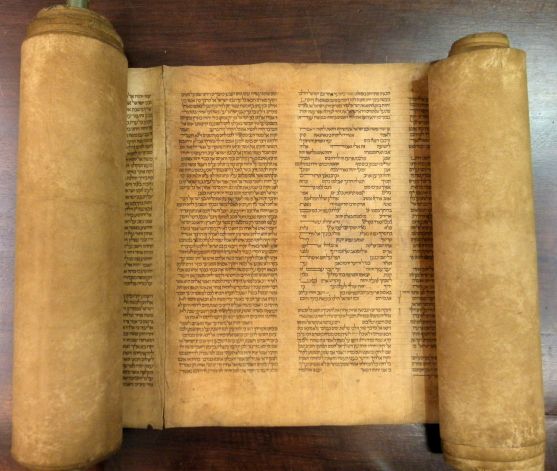
Photo: Alma Mater Studiorum Universita’ Di Bologna
What is the extent of the existing collection of Torah scrolls from before the time of Maimonides?
What specific things were forbidden by Maimonides that were included in the Bologna scroll?
What were the reasons for the Maimonides strictures?
Have the graphic features, markings and script required by Maimonides made any difference in context or meaning?
Thoughts? Enlighten us!
Previous Post

May 29, 2013
Event at Benchmark Books Tonight: Mormons and the Bible
Next Post
June 7, 2013 Modern Mormonism and Christianity’s Legacy of Holy Misogyny
Browse Our Archives
Select a Category 2013 Scriptures Administrative Apologetics Atonement Bible Book of Mormon Book Review BYU Doctrine Extra-Biblical Literature Family Feminism Guests History LDS Church History Leadership Marginalia Metaphysics Mormon Culture Mormon Studies Personal Issues Political Philosophy Politics Scripture Sexuality Speculation Spotlights Studying Religion Ten Tidbits The Tenure Track Theology Tips on Applying Series Tips on Being an Independent Scholar Uncategorized
Select a Month June 2017 April 2017 March 2017 February 2017 December 2016 November 2016 October 2016 September 2016 August 2016 July 2016 May 2016 April 2016 March 2016 February 2016 January 2016 December 2015 November 2015 October 2015 September 2015 July 2015 April 2015 March 2015 February 2015 January 2015 December 2014 November 2014 October 2014 September 2014 August 2014 July 2014 June 2014 May 2014 April 2014 March 2014 February 2014 January 2014 December 2013 October 2013 September 2013 August 2013 July 2013 June 2013 May 2013 April 2013 March 2013 February 2013 January 2013 December 2012 November 2012 October 2012 September 2012 August 2012 July 2012 June 2012 May 2012 April 2012 March 2012 February 2012 January 2012 December 2011 November 2011 October 2011 September 2011 August 2011 July 2011 June 2011 May 2011 April 2011 March 2011 February 2011 January 2011 December 2010 November 2010 October 2010 September 2010 August 2010 July 2010 June 2010 May 2010 April 2010 March 2010 February 2010 January 2010 December 2009 November 2009 October 2009 September 2009 August 2009 July 2009 June 2009 May 2009 April 2009 March 2009 February 2009 January 2009 December 2008 November 2008 October 2008 September 2008 August 2008 July 2008 June 2008 May 2008 April 2008 March 2008 February 2008 January 2008 December 2007 November 2007 October 2007 September 2007 August 2007 July 2007 June 2007 May 2007 April 2007 March 2007 February 2007 January 2007 December 2006 November 2006 October 2006 September 2006 August 2006 July 2006 June 2006 May 2006 April 2006 March 2006 February 2006 January 2006 December 2005 November 2005 October 2005 September 2005 August 2005 July 2005 June 2005 May 2005
Follow Us!
TAKE THE
Religious Wisdom Quiz
How many loaves in the feeding miracle?
Select your answer to see how you score.
5 7 12 3
Related posts from Faith-Promoting Rumor

Some Sources for More Serious Study

Canonical Criticism of the Book of Mormon?

Review of Mark Smith, Where the Gods Are:...

Slavery in the Eschatological Kingdom
TRENDING AT PATHEOS Latter-day Saint

Did Prayer Cure His Cancer? Or Was It...
At 4 AM one morning, Joshua W. Brown’s wife awoke to a...

8 Ways a Near-Death Experience Rewires the Soul
Does Consciousness Survive Physical Death? After 50 Years of Research, Dr. Raymond...

Holy Longing: What Our Restlessness Is Telling Us
“One can find so many pains when the rain is falling.” -John...

What this is NOT about. This blog is definitely not about...

Who said the Israelites were God’s chosen? That’s right, they did. Who...

The Spirit World Is the Real World: God...
A Monk’s Wisdom on Body and Spirit I sit with Brother Martin...
view all Latter-day Saint blogs
Ad-Free & Subscriber Log-In Subscription Support
- About Us
- 2026 Calendar
- Videos
- Podcasts
- Library of World Religions
- Faith In Media Tracker
- Advertise With Us
- Write for Us
- Privacy Policy
- Terms of Service
- Do Not Sell My Data
- Contact Us
- Radiant Digital
- Manage Newsletter Subscriptions
- Unsubscribe From Notifications
- Sitemap
Copyright 2008-2026, Patheos. All rights reserved.
Subscription Support Ad-Free & Subscriber Log-In
Follow Patheos