
BuddhistCatholicContemplativeEvangelicalGeneral ChristianHinduJewishLatter-day SaintMuslimNew VisionsProgressive Christian
Beliefs
- Buddhist
- Catholic
- Contemplative
- Evangelical
- General Christian
- Hindu
- Jewish
- Latter-day Saint
- More Voices
- Muslim
- New Visions
- Pagan
- Progressive Christian
Topics
- Religion News
- Food and Religion
- Sports and Religion
- Religious Art
- Religious Music and Entertainment
- Religious Events
- History and Religion
- Style and Religion
- Politics and Religion
- Women in Religion
- Recreation Outdoors and Religion
- Business Finance and Religion
- Careers Workplace and Religion
- Education and Religion
- Family Parenting and Religion
- Health Fitness and Religion
- Home and Religion
- Relationships and Religion
- Technology and Religion
- Travel and Religion
Columnists
- Buddhist Columnists
- Business Finance and Religion Columnists
- Careers Workplace and Religion Columnists
- Catholic Columnists
- Contemplative Columnists
- Education and Religion Columnists
- Evangelists Columnists
- Family Parenting and Religion Columnists
- General Christian Columnists
- Health Fitness and Religion Columnists
- Hindu Columnists
- History and Religion Columnists
- Home and Religion Columnists
- Jewish Columnists
- More Voices Columnists
- Latter Day Columnists
- Muslim Columnists
- New Visions Columnists
- Nonreligious Columnists
- Pagan Columnists
- Politics and Religion Columnists
- Progressive Columnists
- Recreation Outdoors and Religion Columnists
- Relationships and Religion Columnists
- Religion News Columnists
- Religious Art Columnists
- Religious Events Columnists
- Religious Music and Entertainment Columnists
- Sports and Religion Columnists
- Style and Religion Columnists
- Technology and Religion Columnists
- Travel and Religion Columnists
- Women in Religion Columnists
Resource Library
- 2026 Calendar
- Library of World Religions
- The 100 Most Holy Places on Earth
- Patheos Answers
- Podcasts
- Videos
- Faith Leaders Database
- Anglican Episcopalian
- Bahai
- Baptist
- Buddhism
- Christianity
- Confucianism
- Eastern Orthodoxy
- Hinduism
- Holiness and Pentecostal
- ISKCON
- Islam
- Judaism
- Lutheran
- Methodist
- The Church of Jesus Christ of Latter-day Saints
- New Age
- Paganism
- Presbytarian and Reformed
- Protestantism
- Religion Behind the Scenes
- Roman Catholic
- Scientology
- Shia Islam
- Sikhism
- Sufism
- Sunni Islam
- Taoism
- Zen
- See all religions
Research Tools
 Ad-Free & Subscriber Log-In Subscription Support
Ad-Free & Subscriber Log-In Subscription Support
Follow Patheos 

- Trending:
- Forgiveness
- |
- Marriage
- |
- Consciousness
- |
- Death Penalty
- |
- Election
- |
- Halloween
 Faith-Promoting Rumor
- Home
- Latter-day Saint
- The Evolution of Faith: or is God Creating a Better Mormonism?
The Evolution of Faith: or is God Creating a Better Mormonism?
Last updated on: February 13, 2013 at 11:43 am by RT
The Evolution of Faith: or is God Creating a Better Mormonism? 2013-02-13T11:43:43-05:00 RT
Patheos Explore the world's faith through different perspectives on religion and spirituality! Patheos has the views of the prevalent religions and spiritualities of the world.
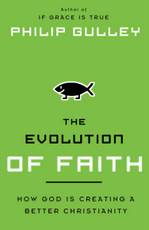 Not long after the Evolution of Faith: How God is Creating a Better Christianity was published, I happened to encounter it on the shelf for new releases in my local library. I had been struggling for some time with feeling alienated from my religion of birth, having come to the realization that there was much in it that I could no longer accept as having a divine basis and aspects of its theology, culture, and spiritual practices that I believed were ultimately unproductive and harmful.
This was a difficult time for me, and in some sense the hurt still lingers. But I feel that my encounter with this book was somewhat providential, for it gave me a resource with which to work through my feelings. In Philip Gulley I found a kindred spirit, someone who saw in traditional Christianity many of the same problems that I had begun to recognize in Mormonism. He spoke with refreshing honesty and compassion, and in ways that resonated with the parts of my Mormon identity and belief system that I still held on to and valued.
For those unfamiliar with Gulley, he is a Quaker pastor living in Danville Ohio who has recently become well known as an advocate for a more progressive Christianity. As a former Catholic and then evangelical Quaker, his own religious beliefs have evolved over time, to the chagrin of some (he even admits to keeping a Book of Mormon on his shelf next to his Bibles and other religious texts). The life experiences that have propelled him on this spiritual journey are described at various points in the Evolution of Faith as exemplifications of the theological points he is trying to make. As a deeply personal and yet theologically vigorous narrative, he weaves his autobiographical storytelling with discussions of the major topics dealt with in traditional Christian theologies (Revelation, God, Jesus, Spirit etc).
Gulley begins in the first chapter by noting that Christianity has changed immensely since its origin two thousand years ago, that it has constantly evolved and is likely to continue to do so. And recently certain social, scientific, and technological developments have expedited the necessity for change. He mentions religious diversity (more people than ever are living with others of different religious or non-religious persuasions), scientific advancement, the expansion of communication possibilities, and the diminished role of the institutional church as the sole religious authority for interpreting spiritual matters. More people than ever are questioning prior orthodoxies, “making the next stage of Christianity not only possible, but inevitable” (5)
The rest of the book is his proposal for how Christianity could evolve to meet the challenges of our time. To summarize, his vision is not that of “a radical and unilateral overhaul of the faith,” but “a possible way forward that not only honors the ethos of Jesus but is conversant with our time and culture” (3).
I think that we as LDS members could learn much from Philp Gulley’s creative and brave exploration of the future of Christianity. It is not difficult to see that the LDS church faces many of the same challenges as other organized Christian religions. The information cocoon that so many of us were raised in has now started to crack, in some cases wide open, and an intellectual and religious ferment is now in full swing. Many are leaving the church because of this, while others are making direct requests for the church to change attitudes or policies. Still others have created alternative online communities to find support and to work out cognitive dissonance, communities which, as far as I can tell, often have a religious and cultural ethos distinctly different from what is regularly encountered in the institutional church and its local wards.
What struck me as I read through Evolution of Faith is how often I felt that I could replace his discussion of Christianity with Mormonism as the subject and that the sense of the passage would retain its relevance and applicability. In my own little world, it felt as though he were speaking prophetic words to the LDS tradition (ironic, I know), words that could help it better embody many of the humanistic principles it already claims to believe in.
Instead of reviewing the rest of the book, I thought that I would simply pull out a few highlight quotes and give readers a taste of his writing. They are some of my favorite from the first quarter of the book. But please, if you feel a temptation to dismiss the ideas contained in them as so much liberal nonsense, go read the Evolution of Faith itself and get the personal context to the quotes.
“Ironically, the more the church resists this evolution, the more it will hasten the change, for its efforts to preserve the status quo will only emphasize its more negative strategies of rigidity, control, and fear, thereby alienating the very people it wishes to influence” (5-6)
“The theology in which many of us were raised fit hand in glove with the prevailing understanding of the church. It was exclusive, rarely acknowledging the merits of other religions. It emphasized a God above and beyond us, mirroring the ecclesial structure of the day that elevated leadership and concentrated power in the hands of an exalted few. It was decidedly privileged in nature and view, reflecting the cultural mores of the richest nations. Its God took their side, blessed their priorities, and helped secure their wealth and status” (7)
“My hope is that an evolving Christianity will reflect the egalitarian spirit of Jesus, not the elitism of an entrenched church. It will no longer presume that having male genitalia uniquely equips someone for leadership. Nor will it assume heterosexuals are capable of ministry in a way homosexuals are not. It will listen carefully to its young people, letting their enthusiasm and yearning for authenticity inspire a passionate and relevant faith. It will console the brokenhearted, speak for the voiceless, befriend the weak, challenge the powerful, and call to leadership those who handle power well” (8)
“An evolving Christianity will not insist we believe the absurd, affirm the incredible, or support a theology that degrades humanity. It will be a friend of science, working joyfully alongside the best minds in the world on a common mission to embrace and enhance life. This Christianity will talk less and act more” (8)
“I’ve often thought revelations and insights about God ought to be handled [like a fragile and defenseless bird], loosely and softly so as not to smother or harm them. Unfortunately, this is usually the opposite of how divine truths are held. Our tendency is to grab them tightly, seizing them, squeezing out their vibrancy and vitality until life is gone from them. Indeed, one of the first things we do is codify and sanctify our encounters with the Divine… We freeze the moment, believe it represents the totality of the divine character, insist that our encounter is superior to our neighbor’s, and move quickly to define, and consequently limit, the manner in which God is encountered” (21-22)
“For too long, the pastor’s function has been that of propagandist, perpetuating a party-line view of God that is not always helpful or sound. When the pastor is a mouthpiece for a settled view of God and rewarded for his or her adherence to that view, the incentive to expand our understanding of God is lost, the church becomes spiritually stagnant, and the cause of truth is not well served” (34)
“But what if exploration were the theme of one’s spiritual journey? What if “rightness” were of secondary importance and what was paramount was the freedom to investigate uncharted spiritual ground? What if God were not honored by our commitment to orthodoxy, but by our willingness to traverse the difficult terrain of wisdom and discernment? If that were the case, God would not be owed our fear and submission, but our most probing questions. True blasphemy would be ignoring our responsibility to engage the world and reality at the deepest level of which we are capable. It would be to meet creation with apathy, with no appetite for inquiry, knowledge, or enlightenment” (36)
“But when the chief aim of religion is indoctrination, then humility, enlightenment, and open-mindedness fall by the way. Instead, efforts are made to “cement” our thinking early in life, encouraging us to accept the settled doctrines of the church. Traditionally, this has been done by urging children to either confirm their faith in more mainstream churches or to “accept Jesus” in more evangelical churches. Though the method is different, the goal is the same — to establish early in one’s life a pattern of assent and obedience to religious beliefs the child can’t yet possibly know to be true” (39)
“Though I have rejected the salvific exclusivity of the Roman and evangelical churches, I do not dispute that there is but one way to follow God — the way of compassion, mercy, and love. Wherever those virtues are practiced, God is present, with no respect or regard for the religious boundaries we humans have devised. This is the sole test of godly religion: does this religion increase our capacity and ability to love? Whether God is called Elohim or Allah, whether the worship of God is centered in mosque, temple, shrine, or church, whether Jesus is honored as savior, prophet, or teacher, whether none or all of the religious dogma we value are met, if love is present, God is there” (46)
“If Christianity is to evolve, as it surely must if it is to thrive, we must first unchain ourselves from the weight of dead habit that has dulled our minds and stilled our spirits” (53)

Next Post

February 18, 2013 Peter, James, and ... Lazarus?
Browse Our Archives
Select a Category 2013 Scriptures Administrative Apologetics Atonement Bible Book of Mormon Book Review BYU Doctrine Extra-Biblical Literature Family Feminism Guests History LDS Church History Leadership Marginalia Metaphysics Mormon Culture Mormon Studies Personal Issues Political Philosophy Politics Scripture Sexuality Speculation Spotlights Studying Religion Ten Tidbits The Tenure Track Theology Tips on Applying Series Tips on Being an Independent Scholar Uncategorized
Select a Month June 2017 April 2017 March 2017 February 2017 December 2016 November 2016 October 2016 September 2016 August 2016 July 2016 May 2016 April 2016 March 2016 February 2016 January 2016 December 2015 November 2015 October 2015 September 2015 July 2015 April 2015 March 2015 February 2015 January 2015 December 2014 November 2014 October 2014 September 2014 August 2014 July 2014 June 2014 May 2014 April 2014 March 2014 February 2014 January 2014 December 2013 October 2013 September 2013 August 2013 July 2013 June 2013 May 2013 April 2013 March 2013 February 2013 January 2013 December 2012 November 2012 October 2012 September 2012 August 2012 July 2012 June 2012 May 2012 April 2012 March 2012 February 2012 January 2012 December 2011 November 2011 October 2011 September 2011 August 2011 July 2011 June 2011 May 2011 April 2011 March 2011 February 2011 January 2011 December 2010 November 2010 October 2010 September 2010 August 2010 July 2010 June 2010 May 2010 April 2010 March 2010 February 2010 January 2010 December 2009 November 2009 October 2009 September 2009 August 2009 July 2009 June 2009 May 2009 April 2009 March 2009 February 2009 January 2009 December 2008 November 2008 October 2008 September 2008 August 2008 July 2008 June 2008 May 2008 April 2008 March 2008 February 2008 January 2008 December 2007 November 2007 October 2007 September 2007 August 2007 July 2007 June 2007 May 2007 April 2007 March 2007 February 2007 January 2007 December 2006 November 2006 October 2006 September 2006 August 2006 July 2006 June 2006 May 2006 April 2006 March 2006 February 2006 January 2006 December 2005 November 2005 October 2005 September 2005 August 2005 July 2005 June 2005 May 2005
Follow Us!
TAKE THE
Religious Wisdom Quiz
Who became queen in Persia and saved the Jewish people from destruction?
Select your answer to see how you score.
Ruth Deborah Bathsheba Esther
Related posts from Faith-Promoting Rumor

To the Editors of the Deseret News

To the General Presidents of the Women's Auxiliaries

Polygamy and Same-Sex Marriage: The Contagion Theory

TRENDING AT PATHEOS Latter-day Saint

Did Prayer Cure His Cancer? Or Was It...
At 4 AM one morning, Joshua W. Brown’s wife awoke to a...

8 Ways a Near-Death Experience Rewires the Soul
Does Consciousness Survive Physical Death? After 50 Years of Research, Dr. Raymond...

Holy Longing: What Our Restlessness Is Telling Us
“One can find so many pains when the rain is falling.” -John...

What this is NOT about. This blog is definitely not about...

Who said the Israelites were God’s chosen? That’s right, they did. Who...

The Spirit World Is the Real World: God...
A Monk’s Wisdom on Body and Spirit I sit with Brother Martin...
view all Latter-day Saint blogs
Ad-Free & Subscriber Log-In Subscription Support
- About Us
- 2026 Calendar
- Videos
- Podcasts
- Library of World Religions
- Faith In Media Tracker
- Advertise With Us
- Write for Us
- Privacy Policy
- Terms of Service
- Do Not Sell My Data
- Contact Us
- Radiant Digital
- Manage Newsletter Subscriptions
- Unsubscribe From Notifications
- Sitemap
Copyright 2008-2026, Patheos. All rights reserved.
Subscription Support Ad-Free & Subscriber Log-In
Follow Patheos