
BuddhistCatholicContemplativeEvangelicalGeneral ChristianHinduJewishLatter-day SaintMuslimNew VisionsProgressive Christian
Beliefs
- Buddhist
- Catholic
- Contemplative
- Evangelical
- General Christian
- Hindu
- Jewish
- Latter-day Saint
- More Voices
- Muslim
- New Visions
- Pagan
- Progressive Christian
Topics
- Religion News
- Food and Religion
- Sports and Religion
- Religious Art
- Religious Music and Entertainment
- Religious Events
- History and Religion
- Style and Religion
- Politics and Religion
- Women in Religion
- Recreation Outdoors and Religion
- Business Finance and Religion
- Careers Workplace and Religion
- Education and Religion
- Family Parenting and Religion
- Health Fitness and Religion
- Home and Religion
- Relationships and Religion
- Technology and Religion
- Travel and Religion
Columnists
- Buddhist Columnists
- Business Finance and Religion Columnists
- Careers Workplace and Religion Columnists
- Catholic Columnists
- Contemplative Columnists
- Education and Religion Columnists
- Evangelists Columnists
- Family Parenting and Religion Columnists
- General Christian Columnists
- Health Fitness and Religion Columnists
- Hindu Columnists
- History and Religion Columnists
- Home and Religion Columnists
- Jewish Columnists
- More Voices Columnists
- Latter Day Columnists
- Muslim Columnists
- New Visions Columnists
- Nonreligious Columnists
- Pagan Columnists
- Politics and Religion Columnists
- Progressive Columnists
- Recreation Outdoors and Religion Columnists
- Relationships and Religion Columnists
- Religion News Columnists
- Religious Art Columnists
- Religious Events Columnists
- Religious Music and Entertainment Columnists
- Sports and Religion Columnists
- Style and Religion Columnists
- Technology and Religion Columnists
- Travel and Religion Columnists
- Women in Religion Columnists
Resource Library
- 2026 Calendar
- Library of World Religions
- The 100 Most Holy Places on Earth
- Patheos Answers
- Podcasts
- Videos
- Faith Leaders Database
- Anglican Episcopalian
- Bahai
- Baptist
- Buddhism
- Christianity
- Confucianism
- Eastern Orthodoxy
- Hinduism
- Holiness and Pentecostal
- ISKCON
- Islam
- Judaism
- Lutheran
- Methodist
- The Church of Jesus Christ of Latter-day Saints
- New Age
- Paganism
- Presbytarian and Reformed
- Protestantism
- Religion Behind the Scenes
- Roman Catholic
- Scientology
- Shia Islam
- Sikhism
- Sufism
- Sunni Islam
- Taoism
- Zen
- See all religions
Research Tools
 Ad-Free & Subscriber Log-In Subscription Support
Ad-Free & Subscriber Log-In Subscription Support
Follow Patheos 

- Trending:
- Forgiveness
- |
- Marriage
- |
- Consciousness
- |
- Death Penalty
- |
- Election
- |
- Halloween
 Faith-Promoting Rumor
- Home
- Latter-day Saint
- Peter, James, and … Lazarus?
Peter, James, and … Lazarus?
Last updated on: February 18, 2013 at 7:00 am by jupiterschild
Peter, James, and … Lazarus? 2013-02-18T02:35:25-05:00 jupiterschild
Patheos Explore the world's faith through different perspectives on religion and spirituality! Patheos has the views of the prevalent religions and spiritualities of the world.
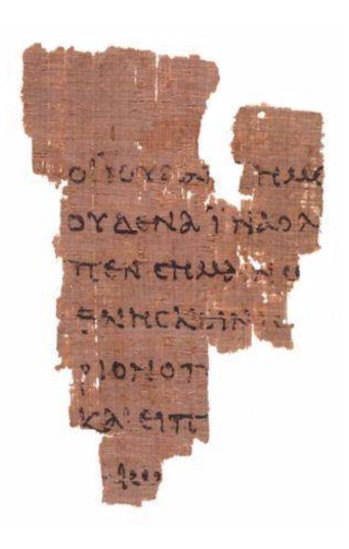 I recently ran across a hypothesis promulgated anew by Ben Witherington III that attempts to deal with the main issues about the authorship and uniqueness of the fourth gospel.[1] There is much of interest in the problem and proposed solution. First, an overview of the problem and proposed solution, then, its implications for Latter-day Saints.
The problem:
Of crucial interest is the mention of a “beloved disciple” in this highly unique gospel. Since antiquity the author of this gospel, who according to ch. 21 is the Beloved Disciple, has been a matter of some debate. By the late second century Irenaeus made the winning case for John son of Zebedee, apparently against questions raised as to this gospel’s apostolic authorship because of its affinities to and popularity in Gnosticism. John is never mentioned in the fourth gospel, though in the epilogue (Jn 21) the “sons of Zebedee” are mentioned once. Apparently the only thing this identification has going for it is the fact that it never mentions John son of Zebedee by name and that Peter and John are often described together in the other gospels and in Acts, similar to the connection to Peter and the Beloved Disciple in the fourth gospel.
The huge problem with this identification is that John (son of Zebedee), a Galilean fisherman present in the other gospels at key events such as the transfiguration and the agony in the garden, doesn’t mention these events, nor does he mention the bulk of Jesus’ Galilean ministry! The author focuses instead on Jerusalem and its environs. And the author is clearly (at least clear to those who read Greek) not the same as the author of the book of Revelation. And the presence of Peter and John together seems in this gospel to be more of a rivalry than in the other gospels: the Beloved Disciple beats Peter to the tomb, and Peter seems to be hung up on the rumor that the BD would not die in Jn 21. It also seems that there is evidence from Papias, a church father who wrote around AD 100, that John was martyred earlier than the gospel of John was written in the 90s (see discussion in BW3’s post).
The solution [2]:
There is a person whom Jesus loved mentioned in Jn 11, however: Lazarus, brother of Mary and Martha, resident of Bethany, near Jerusalem. Lazarus is resurrected after having been dead four days as a sign that Jesus is “the resurrection and the life”, and he is explicitly called beloved three times (!) in Jn 11:3, 11, 36.
Identification with Lazarus solves many problems. It explains the focus on Jerusalem and relative ignorance of Galilee as well as the omission of the transfiguration and garden prayer scenes. It also explains why the rumor started that the BD would not die (John 21)—because he had already once been brought back from the dead by Jesus! And the list goes on (see BW3’s post).
What caught my attention about this, besides the fact that I had never encountered it before, was that this is another in the growing list of ideas that were taken for granted by Joseph Smith et al. but that can no longer be in the wake of closer historical analysis. If John is not the BD, and, perhaps more problematic, if the discussion in John 21 was to dispel rumors that the disciple would live until Jesus returned (presumably because the BD had died, which occasioned the writing of John 21), then we must ask whether there is a New Testament basis for the translation of John “the Beloved”. The LDS revelations about such “tarrying” servants seem to be layered on the foundation of John the Beloved, much like the Book of Moses (Joseph Smith’s reworking of the first chapters of Genesis) seems based on long-held traditional assumptions that Moses was author of the Pentateuch, which ample evidence demonstrates he certainly was not. Thus we are once again confronted with how to understand revelation and history; forced to reflect, once again, on the extent to which modern revelation is a category that can be separated from such historical contingencies. I think we have enough examples, such as the relationship between the Joseph Smith papyri and the Book of Abraham, to deal with this in a constructive way, but it might be worth bringing to the surface again and with a fresh set of data.
——————-
[1] See earlier entries in the Interpreter’s Dictionary of the Bible on “Beloved Disciple” and “John, Gospel of”, by F.V. Filson and J.N. Sanders, respectively.
[2] What follows is, of course, is not the only proposed solution. Mary Magdalene and John Mark are others.
Previous Post

February 13, 2013
The Evolution of Faith: or is God Creating a Better Mormonism?
Next Post
February 21, 2013 Apologists at War: Religious Studies is Not the Enemy
Browse Our Archives
Select a Category 2013 Scriptures Administrative Apologetics Atonement Bible Book of Mormon Book Review BYU Doctrine Extra-Biblical Literature Family Feminism Guests History LDS Church History Leadership Marginalia Metaphysics Mormon Culture Mormon Studies Personal Issues Political Philosophy Politics Scripture Sexuality Speculation Spotlights Studying Religion Ten Tidbits The Tenure Track Theology Tips on Applying Series Tips on Being an Independent Scholar Uncategorized
Select a Month June 2017 April 2017 March 2017 February 2017 December 2016 November 2016 October 2016 September 2016 August 2016 July 2016 May 2016 April 2016 March 2016 February 2016 January 2016 December 2015 November 2015 October 2015 September 2015 July 2015 April 2015 March 2015 February 2015 January 2015 December 2014 November 2014 October 2014 September 2014 August 2014 July 2014 June 2014 May 2014 April 2014 March 2014 February 2014 January 2014 December 2013 October 2013 September 2013 August 2013 July 2013 June 2013 May 2013 April 2013 March 2013 February 2013 January 2013 December 2012 November 2012 October 2012 September 2012 August 2012 July 2012 June 2012 May 2012 April 2012 March 2012 February 2012 January 2012 December 2011 November 2011 October 2011 September 2011 August 2011 July 2011 June 2011 May 2011 April 2011 March 2011 February 2011 January 2011 December 2010 November 2010 October 2010 September 2010 August 2010 July 2010 June 2010 May 2010 April 2010 March 2010 February 2010 January 2010 December 2009 November 2009 October 2009 September 2009 August 2009 July 2009 June 2009 May 2009 April 2009 March 2009 February 2009 January 2009 December 2008 November 2008 October 2008 September 2008 August 2008 July 2008 June 2008 May 2008 April 2008 March 2008 February 2008 January 2008 December 2007 November 2007 October 2007 September 2007 August 2007 July 2007 June 2007 May 2007 April 2007 March 2007 February 2007 January 2007 December 2006 November 2006 October 2006 September 2006 August 2006 July 2006 June 2006 May 2006 April 2006 March 2006 February 2006 January 2006 December 2005 November 2005 October 2005 September 2005 August 2005 July 2005 June 2005 May 2005
Follow Us!
TAKE THE
Religious Wisdom Quiz
Which book of the Bible contains the story of Balaam’s talking donkey?
Select your answer to see how you score.
Numbers Judges 1 Samuel Exodus
Related posts from Faith-Promoting Rumor

Some Sources for More Serious Study

Review of Mark Smith, Where the Gods Are:...

To the Editors of the Deseret News

Diachronic or Synchronic? A Response to Nicholas J....
TRENDING AT PATHEOS Latter-day Saint

Did Prayer Cure His Cancer? Or Was It...
At 4 AM one morning, Joshua W. Brown’s wife awoke to a...

8 Ways a Near-Death Experience Rewires the Soul
Does Consciousness Survive Physical Death? After 50 Years of Research, Dr. Raymond...

Holy Longing: What Our Restlessness Is Telling Us
“One can find so many pains when the rain is falling.” -John...

What this is NOT about. This blog is definitely not about...

Who said the Israelites were God’s chosen? That’s right, they did. Who...

The Spirit World Is the Real World: God...
A Monk’s Wisdom on Body and Spirit I sit with Brother Martin...
view all Latter-day Saint blogs
Ad-Free & Subscriber Log-In Subscription Support
- About Us
- 2026 Calendar
- Videos
- Podcasts
- Library of World Religions
- Faith In Media Tracker
- Advertise With Us
- Write for Us
- Privacy Policy
- Terms of Service
- Do Not Sell My Data
- Contact Us
- Radiant Digital
- Manage Newsletter Subscriptions
- Unsubscribe From Notifications
- Sitemap
Copyright 2008-2026, Patheos. All rights reserved.
Subscription Support Ad-Free & Subscriber Log-In
Follow Patheos