
BuddhistCatholicContemplativeEvangelicalGeneral ChristianHinduJewishLatter-day SaintMuslimNew VisionsProgressive Christian
Beliefs
- Buddhist
- Catholic
- Contemplative
- Evangelical
- General Christian
- Hindu
- Jewish
- Latter-day Saint
- More Voices
- Muslim
- New Visions
- Pagan
- Progressive Christian
Topics
- Religion News
- Food and Religion
- Sports and Religion
- Religious Art
- Religious Music and Entertainment
- Religious Events
- History and Religion
- Style and Religion
- Politics and Religion
- Women in Religion
- Recreation Outdoors and Religion
- Business Finance and Religion
- Careers Workplace and Religion
- Education and Religion
- Family Parenting and Religion
- Health Fitness and Religion
- Home and Religion
- Relationships and Religion
- Technology and Religion
- Travel and Religion
Columnists
- Buddhist Columnists
- Business Finance and Religion Columnists
- Careers Workplace and Religion Columnists
- Catholic Columnists
- Contemplative Columnists
- Education and Religion Columnists
- Evangelists Columnists
- Family Parenting and Religion Columnists
- General Christian Columnists
- Health Fitness and Religion Columnists
- Hindu Columnists
- History and Religion Columnists
- Home and Religion Columnists
- Jewish Columnists
- More Voices Columnists
- Latter Day Columnists
- Muslim Columnists
- New Visions Columnists
- Nonreligious Columnists
- Pagan Columnists
- Politics and Religion Columnists
- Progressive Columnists
- Recreation Outdoors and Religion Columnists
- Relationships and Religion Columnists
- Religion News Columnists
- Religious Art Columnists
- Religious Events Columnists
- Religious Music and Entertainment Columnists
- Sports and Religion Columnists
- Style and Religion Columnists
- Technology and Religion Columnists
- Travel and Religion Columnists
- Women in Religion Columnists
Resource Library
- 2026 Calendar
- Library of World Religions
- The 100 Most Holy Places on Earth
- Patheos Answers
- Podcasts
- Videos
- Faith Leaders Database
- Anglican Episcopalian
- Bahai
- Baptist
- Buddhism
- Christianity
- Confucianism
- Eastern Orthodoxy
- Hinduism
- Holiness and Pentecostal
- ISKCON
- Islam
- Judaism
- Lutheran
- Methodist
- The Church of Jesus Christ of Latter-day Saints
- New Age
- Paganism
- Presbytarian and Reformed
- Protestantism
- Religion Behind the Scenes
- Roman Catholic
- Scientology
- Shia Islam
- Sikhism
- Sufism
- Sunni Islam
- Taoism
- Zen
- See all religions
Research Tools
 Ad-Free & Subscriber Log-In Subscription Support
Ad-Free & Subscriber Log-In Subscription Support
Follow Patheos 

- Trending:
- Forgiveness
- |
- Marriage
- |
- Consciousness
- |
- Death Penalty
- |
- Election
- |
- Halloween
 Faith-Promoting Rumor
- Home
- Latter-day Saint
- On the Malleability of Gold Plates: Mormonism and Modern Biblical Scholarship
On the Malleability of Gold Plates: Mormonism and Modern Biblical Scholarship
Last updated on: February 11, 2013 at 5:00 am by Bored in Vernal
On the Malleability of Gold Plates: Mormonism and Modern Biblical Scholarship 2013-02-11T03:56:00-05:00 Bored in Vernal
Patheos Explore the world's faith through different perspectives on religion and spirituality! Patheos has the views of the prevalent religions and spiritualities of the world.
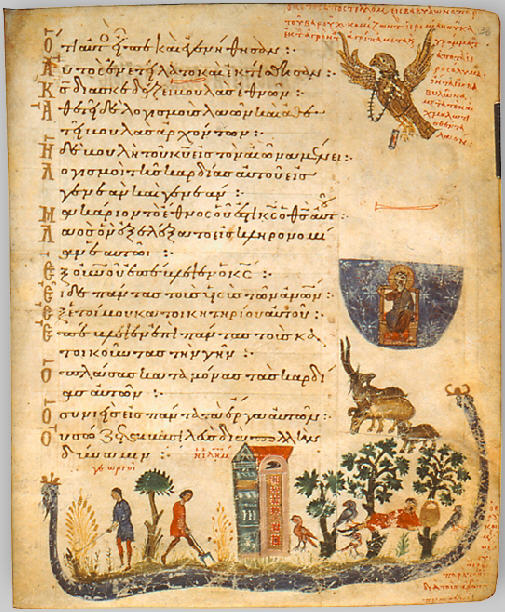 From the time I first came to understand the nature of pseudepigrapha, I felt comfortable with the idea that many of these extra-scriptural writings were written under assumed names. Somewhere I had picked up the idea that it was a common and accepted convention for works of antiquity to be attributed to someone famous. There are ancient books of Adam, of Enoch, of Abraham, all written by later authors under a prophetic moniker to give their writings authority and status. Even our book of Psalms in the present canon includes poems with headings “A Psalm of David”—(lᵊ dawid). This has traditionally been understood to denote Davidic authorship, even though Biblical scholars agree that some of these were post-exilic. As Jana Riess puts it:
The Hebrew preposition “l” can, like many Hebrew words, mean a variety of different things. Often translated “of,” it can also mean “to” or “for” (a Psalm for David) or “in the manner of” (a psalm that’s like something David might have written if he were still with us; R.I.P.).
In his work, “The Book of Psalms,” UC Berkeley Hebrew professor Robert Alter taught that “it was a regular practice in the later biblical period to ascribe new texts to famous figures of the past.” This is what I had always heard.
Not so! says Bart Ehrman in his groundbreaking treatment of the subject. In the 2011 book Forged, Ehrman asserts that writing in the name of a famous prophet or biblical figure was just as scandalous in ancient times as any forgery would be today.
“…ancient authors did see this kind of activity as fraudulent, they recognized it as deceitful, they called it lying (and other even nastier things), and they often punished those who were caught doing it…. My use of the term “forgery”… refer[s] to one kind of pseudepigraphical writing, one in which an author knowingly claims to be someone else. One of the overarching theses of my book is that those who engaged in this activity in the ancient world were roundly condemned for lying and trying to deceive their readers.” (p. 25)
This idea pushes against my comfortable understanding of the propriety of the pseudonymous authorship of ancient texts. But Ehrman then goes even further — exposing which New Testament books he considers to be outright fakes! For example, chapter 2 deals with 1 and 2 Peter. The author goes into great detail to back up his claims that these writings were “forgeries.” Frankly, I find his argument very convincing. Here are just a few examples Ehrman uses:
- In 1 Peter, Babylon is used as a code word for Rome. Christians and Jews only began this usage after the martyrdom of Peter in 64 CE and the destruction of Jerusalem in 70 CE.
- The author of 2 Peter must explain why Jesus delays his coming, a concern which was not raised until the people who lived “within this generation” began to all die off.
- There are some very compelling reasons to believe that Peter (a lower-class Palestinian Hebrew) did not know how to read and write, not the least of which is the description in Acts 4:13 of Peter and John as“agrammatoi” — that is, unlettered, or illiterate. Peter likely spoke only Aramaic, yet the letters attributed to him seem to be originally composed in excellent Greek, and utilize the Greek Septuagint version of the Old Testament.
By contrast, Latter-day Saints customarily attribute the various books in the Biblical canon to their traditional authors. This is evident in the case of 1 and 2 Peter in the following LDS resources:
- The LDS New Testament Teacher Resource Manual (here and here) specifically states that Peter was the literal author of the epistles which bear his name. The manual gives as historical background the information that “Peter wrote [his first] letter from “Babylon,” which probably means Rome,” and that “Peter probably wrote his second Epistle from Rome sometime between A.D. 64 and 67.”
- A 1991 Ensign article by Richard Anderson discusses the historical placement of the epistles and their authorship by the Apostle Peter.
- The Encyclopedia of Mormonism provides an apology for why Peter’s epistles were composed in fluent Greek: “Living in a region where, in addition to the native Aramaic, Greek was widely used as a language of business and trade, Peter may have been conversant with the tongue in which his scriptural writings were later penned. Although Peter was a fisherman by occupation, and despite the description of Peter and John by the elders of the Sanhedrin as being “without learning” (Acts 4:13), the Galilean apostles were literate men, probably without normal rabbinical training but with broad general understanding and capability.”
- The Prophet Joseph Smith said that “Peter penned the most sublime language of any of the apostles” (HC 5:392).
Currently, Mormons are obliged by their tradition to read the scriptures as literally and historically true. For many Christians in general and for Mormons in particular, the central message of the Bible hinges on the factuality of every recorded detail of a specific historical event: the suffering, death, and resurrection of Jesus Christ. Was Jesus literally resurrected from the dead? We run into a problem if we question the reliability of the witnesses. For, if the authors are not who they say they are, might we not also logically question the historical veracity of the text so falsely attributed? Modern LDS scripture provides an added challenge to this already-difficult situation for Latter-day Saints. The Restoration is closer to us in time than biblical history; the Doctrine and Covenants is seen as an historical narrative of the Restoration. And the Doctrine and Covenants treats Biblical characters and events as literally true.
I wonder what effect modern biblical scholarship will eventually have on Mormon approaches to scripture. How malleable is our own tradition? Will the numerous competent scholars such as Ehrman writing popular biblical studies for the general reader lead to shifts in LDS views? The very word “forged” causes a strong reaction in the Mormon heart. It will be difficult to give up the strict literalism which has so long characterized LDS hermeneutics.
What if we were to discover that the scriptures were quite a different thing that what we’d been told? Eventually, we will be constrained by biblical scholarship and our own move towards modernism to confront this problem. We may fail to recognize the inevitability of change, or realize the shape of what is to come; yet as we sit in our Sunday School classes and study the New Testament, the process of transformation has already begun. When we face this question, what will become of us? Are we ready for this much change and open-mindedness? Will Latter-day Saints ultimately reject the critical approach to scripture (much as their Christian fundamentalist counterparts do), or is it possible to value a text without demanding that it maintain complete historical integrity? Many of us are skilled at seeing interior truth in scripture. We find that it can strike us with great power — forcing us to consider what it means to live a human life, illuminating for us the very meaning of what it is to be human. Perhaps, if a scriptural text teaches true principles, there is benefit which can be derived from it without regard to its literal historical accuracy. But will our tradition ever be able to accommodate such a view?
Next Post

February 13, 2013 The Evolution of Faith: or is God Creating a Better Mormonism?
Browse Our Archives
Select a Category 2013 Scriptures Administrative Apologetics Atonement Bible Book of Mormon Book Review BYU Doctrine Extra-Biblical Literature Family Feminism Guests History LDS Church History Leadership Marginalia Metaphysics Mormon Culture Mormon Studies Personal Issues Political Philosophy Politics Scripture Sexuality Speculation Spotlights Studying Religion Ten Tidbits The Tenure Track Theology Tips on Applying Series Tips on Being an Independent Scholar Uncategorized
Select a Month June 2017 April 2017 March 2017 February 2017 December 2016 November 2016 October 2016 September 2016 August 2016 July 2016 May 2016 April 2016 March 2016 February 2016 January 2016 December 2015 November 2015 October 2015 September 2015 July 2015 April 2015 March 2015 February 2015 January 2015 December 2014 November 2014 October 2014 September 2014 August 2014 July 2014 June 2014 May 2014 April 2014 March 2014 February 2014 January 2014 December 2013 October 2013 September 2013 August 2013 July 2013 June 2013 May 2013 April 2013 March 2013 February 2013 January 2013 December 2012 November 2012 October 2012 September 2012 August 2012 July 2012 June 2012 May 2012 April 2012 March 2012 February 2012 January 2012 December 2011 November 2011 October 2011 September 2011 August 2011 July 2011 June 2011 May 2011 April 2011 March 2011 February 2011 January 2011 December 2010 November 2010 October 2010 September 2010 August 2010 July 2010 June 2010 May 2010 April 2010 March 2010 February 2010 January 2010 December 2009 November 2009 October 2009 September 2009 August 2009 July 2009 June 2009 May 2009 April 2009 March 2009 February 2009 January 2009 December 2008 November 2008 October 2008 September 2008 August 2008 July 2008 June 2008 May 2008 April 2008 March 2008 February 2008 January 2008 December 2007 November 2007 October 2007 September 2007 August 2007 July 2007 June 2007 May 2007 April 2007 March 2007 February 2007 January 2007 December 2006 November 2006 October 2006 September 2006 August 2006 July 2006 June 2006 May 2006 April 2006 March 2006 February 2006 January 2006 December 2005 November 2005 October 2005 September 2005 August 2005 July 2005 June 2005 May 2005
Follow Us!
TAKE THE
Religious Wisdom Quiz
What does Romans say all have done and fall short of the glory of God?
Select your answer to see how you score.
Failed Sinned Disobeyed Fallen
Related posts from Faith-Promoting Rumor

Some Sources for More Serious Study

Canonical Criticism of the Book of Mormon?

The Cyclical Nature of BYU’s Religious Education

Review of Mark Smith, Where the Gods Are:...
TRENDING AT PATHEOS Latter-day Saint

Did Prayer Cure His Cancer? Or Was It...
At 4 AM one morning, Joshua W. Brown’s wife awoke to a...

8 Ways a Near-Death Experience Rewires the Soul
Does Consciousness Survive Physical Death? After 50 Years of Research, Dr. Raymond...

Holy Longing: What Our Restlessness Is Telling Us
“One can find so many pains when the rain is falling.” -John...

What this is NOT about. This blog is definitely not about...

Who said the Israelites were God’s chosen? That’s right, they did. Who...

The Spirit World Is the Real World: God...
A Monk’s Wisdom on Body and Spirit I sit with Brother Martin...
view all Latter-day Saint blogs
Ad-Free & Subscriber Log-In Subscription Support
- About Us
- 2026 Calendar
- Videos
- Podcasts
- Library of World Religions
- Faith In Media Tracker
- Advertise With Us
- Write for Us
- Privacy Policy
- Terms of Service
- Do Not Sell My Data
- Contact Us
- Radiant Digital
- Manage Newsletter Subscriptions
- Unsubscribe From Notifications
- Sitemap
Copyright 2008-2026, Patheos. All rights reserved.
Subscription Support Ad-Free & Subscriber Log-In
Follow Patheos