
BuddhistCatholicContemplativeEvangelicalGeneral ChristianHinduJewishLatter-day SaintMuslimNew VisionsProgressive Christian
Beliefs
- Buddhist
- Catholic
- Contemplative
- Evangelical
- General Christian
- Hindu
- Jewish
- Latter-day Saint
- More Voices
- Muslim
- New Visions
- Pagan
- Progressive Christian
Topics
- Religion News
- Food and Religion
- Sports and Religion
- Religious Art
- Religious Music and Entertainment
- Religious Events
- History and Religion
- Style and Religion
- Politics and Religion
- Women in Religion
- Recreation Outdoors and Religion
- Business Finance and Religion
- Careers Workplace and Religion
- Education and Religion
- Family Parenting and Religion
- Health Fitness and Religion
- Home and Religion
- Relationships and Religion
- Technology and Religion
- Travel and Religion
Columnists
- Buddhist Columnists
- Business Finance and Religion Columnists
- Careers Workplace and Religion Columnists
- Catholic Columnists
- Contemplative Columnists
- Education and Religion Columnists
- Evangelists Columnists
- Family Parenting and Religion Columnists
- General Christian Columnists
- Health Fitness and Religion Columnists
- Hindu Columnists
- History and Religion Columnists
- Home and Religion Columnists
- Jewish Columnists
- More Voices Columnists
- Latter Day Columnists
- Muslim Columnists
- New Visions Columnists
- Nonreligious Columnists
- Pagan Columnists
- Politics and Religion Columnists
- Progressive Columnists
- Recreation Outdoors and Religion Columnists
- Relationships and Religion Columnists
- Religion News Columnists
- Religious Art Columnists
- Religious Events Columnists
- Religious Music and Entertainment Columnists
- Sports and Religion Columnists
- Style and Religion Columnists
- Technology and Religion Columnists
- Travel and Religion Columnists
- Women in Religion Columnists
Resource Library
- 2026 Calendar
- Library of World Religions
- The 100 Most Holy Places on Earth
- Patheos Answers
- Podcasts
- Videos
- Faith Leaders Database
- Anglican Episcopalian
- Bahai
- Baptist
- Buddhism
- Christianity
- Confucianism
- Eastern Orthodoxy
- Hinduism
- Holiness and Pentecostal
- ISKCON
- Islam
- Judaism
- Lutheran
- Methodist
- The Church of Jesus Christ of Latter-day Saints
- New Age
- Paganism
- Presbytarian and Reformed
- Protestantism
- Religion Behind the Scenes
- Roman Catholic
- Scientology
- Shia Islam
- Sikhism
- Sufism
- Sunni Islam
- Taoism
- Zen
- See all religions
Research Tools
 Ad-Free & Subscriber Log-In Subscription Support
Ad-Free & Subscriber Log-In Subscription Support
Follow Patheos 

- Trending:
- Forgiveness
- |
- Marriage
- |
- Consciousness
- |
- Death Penalty
- |
- Election
- |
- Halloween
 Faith on the Couch
- Home
- Catholic
- Think Fast!–What Marriage Can Teach Us About Lent (and it’s not what you think!)
Think Fast!–What Marriage Can Teach Us About Lent (and it’s not what you think!)
Last updated on: February 10, 2016 at 7:40 am by Rachael Popcak and Dr. Gregory Popcak
Think Fast!–What Marriage Can Teach Us About Lent (and it’s not what you think!) 2016-02-10T07:40:59-06:00 Rachael Popcak and Dr. Gregory Popcak
Patheos Explore the world's faith through different perspectives on religion and spirituality! Patheos has the views of the prevalent religions and spiritualities of the world.
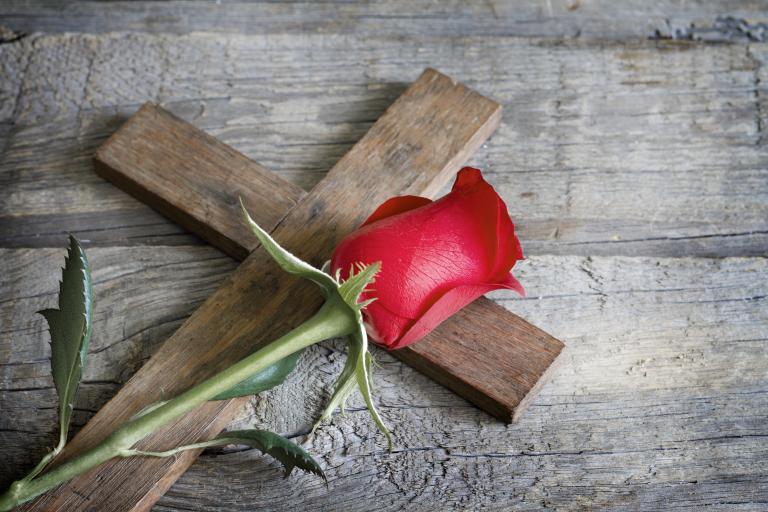
Check out this great post by Jacob Popcak of JHP Ministry
What pictures come to mind when you hear the word, “fasting”? What about, “penance”? Perhaps you envision the grumpy monk, self-flagellating in some medieval chamber. Or perhaps you see the pious holier-than-thou, starving herself out of some sense of personal loathing. As citizens of the 21st Century, it’s very likely that you envision something at least similar to what I’m describing.
Because of these associations, I always had a really difficult time rationalizing penance, even the menial kinds. Of course, I never gave up anything great than a favorite snack or a less-than-savory habit (in freshman year of college, I gave up swearing). And yet, I had a deep and uncomfortable question that I had to wrestle with: why should I have to be made uncomfortable in my relationship with God? If God really loved me, I thought, and I really loved him, why should the kind of discomfort that came with penance be something I had to take on? Don’t get me wrong: I understood the importance of being able tosuffer for God, if necessary. After all, almost anyone raised Catholic has at least a basic familiarity with the various saints and martyrs who’ve stood up for their faith even in the face of suffering. But there’s something heroic, even dramatic, about suffering. Discomfort, on the other hand, just seemed so meaningless.
I ended up finding the answer to my question, though, in a little document known as The Theology of the Body. A collection of public talks by Pope Saint John Paul II, the document explains – among other things – the sacred beauty of the body, what it means to love others, and God’s plan for human relationship.
Beyond all that, though, one of the central messages of TOB is that our relationship with God is (and should be) like a marriage. If this is a new concept for you, it shouldn’t be an overly difficult one to take in. Where else but the best marriages do we see two people giving themselves completely to their other? Where else but in the best marriages do we a love so great it has the power to change people? Where else but the best marriages do we see a love that is free, total, faithful, and fruitful? The answer to all of these questions is, mysteriously and simply, “the cross”; we see this love – this radical kind of self gift – in the way that God loves us and in the way He asks us to love Him.
But as the best of married couples will tell you, nuptial love isn’t always flowers and chocolates and sweet nothings. Oftentimes, the most sincere communications of love lie in the daily messiness of life. “I knew you were tired” says the bridegroom to his bride, “so I gave the baby his bath tonight”; “I know you’re suffering”, says the bride to her bridegroom, “so I took care of the dishwasher”. The lovers don’t do these things for each other because one is angry at the other, nor because one is at fault and seeks to appease the other, nor because their relationship is suffering. After all, no amount of chores or duties would be enough to even the scale against, for instance, an unkind word, a particularly nasty argument, or – God forbid it – a painful infidelity. Instead, the lovers do these things for one another when their relationship is solid to make it even more solid. They do it because amidst the Saturday chores and the leaky faucets and the could you just make sure the door is locked one more time’s – amidst, as Mother Teresa put it, the “small things” – great love flourishes. This doesn’t mean that the roses and the chocolates are any less real, less sincere, or less necessary ; it simply means that the thorns and the poopy diapers are real, sincere, and necessary as well.
In a similar way, our relationships with God can’t (and shouldn’t) always be sweet. A love as profound as that which is shared between Creator and creation, between bridegroom and bride, cannot be made up simply of inspirational sermons, grateful praise, and merry Christmases; there must also be somber hymns, times of silence, and Good Fridays. Put another way, the marital proclamations of, “It feels so good loving you!” mean nothing if they are not balanced with a “…but I love you when it doesn’t feel so good, too.”
This is the true spirit of fasting, of penance, and of mortification. READ THE REST…
Previous Post

February 8, 2016
Do YOU Have What It Takes? 4 Promises That Lead to a Happier Marriage

Browse Our Archives
Select a Category Anxiety atheism Attachment Church Conflict Resolution Counseling Depression faith Family forgiveness Gender Happiness Health Humor Marriage Mental Health Mental Illness Mindfulness morality More2Life Radio Parenting Personal Wellness Personality Disorder Popcak Psychology News reconciliation Relationship religion self-help Sexuality Spirituality stress theology of the body Uncategorized
Select a Month June 2020 May 2020 April 2020 March 2020 February 2020 January 2020 December 2019 November 2019 October 2019 September 2019 August 2019 July 2019 June 2019 May 2019 April 2019 March 2019 February 2019 January 2019 November 2018 October 2018 September 2018 August 2018 July 2018 June 2018 May 2018 April 2018 March 2018 February 2018 January 2018 November 2017 October 2017 September 2017 August 2017 June 2017 May 2017 April 2017 March 2017 February 2017 January 2017 December 2016 November 2016 October 2016 September 2016 August 2016 July 2016 June 2016 May 2016 April 2016 March 2016 February 2016 January 2016 December 2015 November 2015 October 2015 September 2015 August 2015 July 2015 June 2015 May 2015 April 2015 March 2015 February 2015 January 2015 December 2014 November 2014 October 2014 September 2014 August 2014 July 2014 June 2014 May 2014 April 2014 March 2014 February 2014 January 2014 December 2013 November 2013 October 2013 September 2013 August 2013 July 2013 June 2013 May 2013 April 2013 March 2013 February 2013
Follow Us!
TAKE THE
Religious Wisdom Quiz
Who wrote the most letters in the New Testament?
Select your answer to see how you score.
Peter James Paul John
Related posts from Faith on the Couch

Four Ways to Keep Your Relationship Afloat In...
Whose Will You Be? A Gospel Reflection for...

Resolving Repetitive Arguments

The Symposium on Catholic Family Life and Spirituality
TRENDING AT PATHEOS Catholic

Creation, Preservation, and Teleology in Catholic Theology
As I write this, it is very early Monday morning. Like millions...

The Parable Of The Sower And The Word...
One of Christ’s most famous parables is that of the sower who...

Rejecting Doom: Christian Hope And Human Action
Christianity is a religion of hope. We are to have hope and...

Why I Choose the Eucharist Over the Sermon
Choose the Eucharist, Not the Sermon What are we supposed to get...

5 Design Elements Found in Spiritually Rooted Homes
Putting Spirituality Into Home Decor Our homes are more than our living...

Credo: A Story of God Told with the...
About 10 years ago, I began to imagine a personal "Credo" that...
view all Catholic blogs
Ad-Free & Subscriber Log-In Subscription Support
- About Us
- 2026 Calendar
- Videos
- Podcasts
- Library of World Religions
- Faith In Media Tracker
- Advertise With Us
- Write for Us
- Privacy Policy
- Terms of Service
- Do Not Sell My Data
- Contact Us
- Radiant Digital
- Manage Newsletter Subscriptions
- Unsubscribe From Notifications
- Sitemap
Copyright 2008-2026, Patheos. All rights reserved.
Subscription Support Ad-Free & Subscriber Log-In
Follow Patheos