
BuddhistCatholicContemplativeEvangelicalGeneral ChristianHinduJewishLatter-day SaintMuslimNew VisionsProgressive Christian
Beliefs
- Buddhist
- Catholic
- Contemplative
- Evangelical
- General Christian
- Hindu
- Jewish
- Latter-day Saint
- More Voices
- Muslim
- New Visions
- Pagan
- Progressive Christian
Topics
- Religion News
- Food and Religion
- Sports and Religion
- Religious Art
- Religious Music and Entertainment
- Religious Events
- History and Religion
- Style and Religion
- Politics and Religion
- Women in Religion
- Recreation Outdoors and Religion
- Business Finance and Religion
- Careers Workplace and Religion
- Education and Religion
- Family Parenting and Religion
- Health Fitness and Religion
- Home and Religion
- Relationships and Religion
- Technology and Religion
- Travel and Religion
Columnists
- Buddhist Columnists
- Business Finance and Religion Columnists
- Careers Workplace and Religion Columnists
- Catholic Columnists
- Contemplative Columnists
- Education and Religion Columnists
- Evangelists Columnists
- Family Parenting and Religion Columnists
- General Christian Columnists
- Health Fitness and Religion Columnists
- Hindu Columnists
- History and Religion Columnists
- Home and Religion Columnists
- Jewish Columnists
- More Voices Columnists
- Latter Day Columnists
- Muslim Columnists
- New Visions Columnists
- Nonreligious Columnists
- Pagan Columnists
- Politics and Religion Columnists
- Progressive Columnists
- Recreation Outdoors and Religion Columnists
- Relationships and Religion Columnists
- Religion News Columnists
- Religious Art Columnists
- Religious Events Columnists
- Religious Music and Entertainment Columnists
- Sports and Religion Columnists
- Style and Religion Columnists
- Technology and Religion Columnists
- Travel and Religion Columnists
- Women in Religion Columnists
Resource Library
- 2026 Calendar
- Library of World Religions
- The 100 Most Holy Places on Earth
- Patheos Answers
- Podcasts
- Videos
- Faith Leaders Database
- Anglican Episcopalian
- Bahai
- Baptist
- Buddhism
- Christianity
- Confucianism
- Eastern Orthodoxy
- Hinduism
- Holiness and Pentecostal
- ISKCON
- Islam
- Judaism
- Lutheran
- Methodist
- The Church of Jesus Christ of Latter-day Saints
- New Age
- Paganism
- Presbytarian and Reformed
- Protestantism
- Religion Behind the Scenes
- Roman Catholic
- Scientology
- Shia Islam
- Sikhism
- Sufism
- Sunni Islam
- Taoism
- Zen
- See all religions
Research Tools
 Ad-Free & Subscriber Log-In Subscription Support
Ad-Free & Subscriber Log-In Subscription Support
Follow Patheos 

- Trending:
- Forgiveness
- |
- Marriage
- |
- Consciousness
- |
- Death Penalty
- |
- Election
- |
- Halloween
 Faith on the Couch
- Home
- Catholic
- FAITHLESS: Why Don’t Millennials Believe?
FAITHLESS: Why Don’t Millennials Believe?
Last updated on: December 4, 2015 at 10:19 am by Rachael Popcak and Dr. Gregory Popcak
FAITHLESS: Why Don’t Millennials Believe? 2015-12-04T10:19:06-06:00 Rachael Popcak and Dr. Gregory Popcak
Patheos Explore the world's faith through different perspectives on religion and spirituality! Patheos has the views of the prevalent religions and spiritualities of the world.
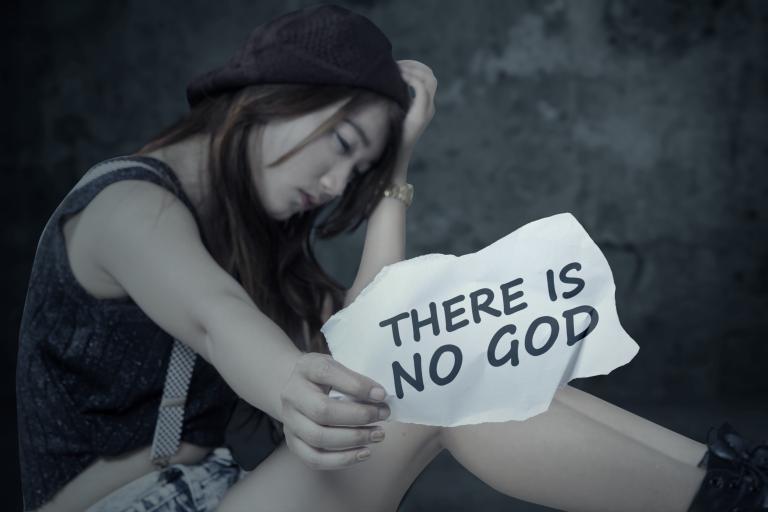
Why are “nones” on the rise? The answer might surprise you.
I recently gave a radio interview about the latest Pew Center finding that “nones” (unchurched/”spiritual not religious”) are the fastest growing demographic on the religious scene. The interviewer asked me if I thought the increasingly secular culture was responsible for both the loss of faith and the breakdown of the family. I surprised him by saying that the research suggests it just might be the other way around–that the rise in both nones and a more secular culture can be more directly tied to the high divorce rate. Here’s why.
Seekers VS. Samplers
Today’s Millennial “nones” are different than nones of the past. Previously, the unchurched were seekers. While they often spent some part of young adulthood unaffiliated with any denomination, they almost always landed somewhere–usually the church of their childhood. By contrast, today’s nones are resistant to landing. Rather than seekers, they are perpetual samplers, cobbling together their own hybrid spiritualities from the religious buffet. This difference in the character of contemporary “nones” speaks to a deep sense of spiritual ambivalence.
The Root of Spiritual Ambivalence
Ken Pargament, professor of religion and psychology at Bowling Green University has conducted ground-breaking research into what might be considered spiritual disorders; that is, unhealthy approaches to the natural human drive for meaning-making and significance. He found that spiritual ambivalence tends to be rooted in too-early disillusionment in one’s parents. While healthy development requires that every child eventually realize his or her parents aren’t perfect, when this disillusionment happens too early, children become spiritually self-protective. Part of a parent’s jobs is to help children make sense of the world. Premature disillusionment tends to cause children to distrust any authority figure’s role in helping them find meaning and significance in life. These children tend to believe that they and they alone have the right to decide what is and isn’t true. Letting anyone else help them in this role can make them feel too vulnerable and even violated. They become, not sincere spiritual seekers, but rather perpetual spiritual samplers–happy to taste from the religious buffet but eternally afraid to commit. A perfect example of this is Reba Riley’s book, Post-Traumatic Church Syndrome: A Memoir of Humor and Healingwhere she describes sampling 30 religions before her 30th birthday; a spiritual quest set off by her religious parents’ divorce which caused her to discount and even resent the spiritual security she trusted in her early years.
Between Two Worlds
But why would divorce–especially if it is a so-called “good divorce” (characterized by low conflict and relatively good parent-child rapport) cause such disillusionment? Elizabeth Marquardt’s study of over 1700 adult children of divorce points to an answer. She found that even in the best of circumstances, divorce causes children to live between two worlds–Mom’s World and Dad’s World. When living in Mom’s World, kids don’t talk about life in Dad’s World for fear of upsetting mom. Vice-versa when living in Dad’s World. The only place these two all-important worlds come together is inside the child’s own head. No matter how much they love their children, the divorced mom and dad can do very little to give their children a narrative that helps their life make sense. The child must learn to do this for him or herself. Having taken on this incredibly difficult role traditionally reserved for adults, is it any wonder that these children are loathe to let anyone besides themselves makes sense out of life, the universe, and everything? After all, they’ve already been doing it for themselves their entire lives.
Likewise, in an intact family, religious rituals help bind the family together. But in a divorced family they often become one more point of conflict between Mom’s World and Dad’s World. In this scenario, religion actually becomes a burden–just one more difference between mom and dad that a child has to sort out for him or herself.
Doomed?
Does this mean that all children of divorce are doomed to be spiritual wanderers? Of course not. But there is no question that divorce places an unappreciated spiritual burden on children. Seen in this light, it is not at all surprising to see an article written by a group of adult children of divorce appear in America Magazine opposing easy solutions for readmitting the divorced and remarried back into communion on the grounds that “children need…the church to stand with them and to speak the truth about what their parent or parents have done.”
The bottom line is that a Church that wants to transform the culture and open hearts to Christ can never be soft on divorce. And the people who subscribe to such a faith could do much to save the world by turning their attention homeward and saving their marriages.
Dr. Greg Popcak is the author of many books including the new, revised and expanded 2nd edition of For Better…FOREVER! A Catholic Guide to Lifelong Marriage. To learn more about his books, radio program and telecounseling services, visit www.CatholicCounselors.com
Previous Post

December 3, 2015
A Response to Prayer Shaming: What Good is Prayer Anyway?

Browse Our Archives
Select a Category Anxiety atheism Attachment Church Conflict Resolution Counseling Depression faith Family forgiveness Gender Happiness Health Humor Marriage Mental Health Mental Illness Mindfulness morality More2Life Radio Parenting Personal Wellness Personality Disorder Popcak Psychology News reconciliation Relationship religion self-help Sexuality Spirituality stress theology of the body Uncategorized
Select a Month June 2020 May 2020 April 2020 March 2020 February 2020 January 2020 December 2019 November 2019 October 2019 September 2019 August 2019 July 2019 June 2019 May 2019 April 2019 March 2019 February 2019 January 2019 November 2018 October 2018 September 2018 August 2018 July 2018 June 2018 May 2018 April 2018 March 2018 February 2018 January 2018 November 2017 October 2017 September 2017 August 2017 June 2017 May 2017 April 2017 March 2017 February 2017 January 2017 December 2016 November 2016 October 2016 September 2016 August 2016 July 2016 June 2016 May 2016 April 2016 March 2016 February 2016 January 2016 December 2015 November 2015 October 2015 September 2015 August 2015 July 2015 June 2015 May 2015 April 2015 March 2015 February 2015 January 2015 December 2014 November 2014 October 2014 September 2014 August 2014 July 2014 June 2014 May 2014 April 2014 March 2014 February 2014 January 2014 December 2013 November 2013 October 2013 September 2013 August 2013 July 2013 June 2013 May 2013 April 2013 March 2013 February 2013
Follow Us!
TAKE THE
Religious Wisdom Quiz
What does "El Shaddai" mean?
Select your answer to see how you score.
God Almighty Prince of Peace Provider God is Judge
Related posts from Faith on the Couch
Attachment and Eternity: The Liturgy of Domestic Church...
You are a Parent Forever In the Line...

Kids Aren't Projects: The Myth of Parenting "Techniques"...

"Imperfect People Need Not Apply" Does the Domestic...
TRENDING AT PATHEOS Catholic

Rejecting Doom: Christian Hope And Human Action
Christianity is a religion of hope. We are to have hope and...

It’s What Comes From Within Which Matters
One of the most difficult things for us to understand is why...

Why I Choose the Eucharist Over the Sermon
Choose the Eucharist, Not the Sermon What are we supposed to get...

5 Design Elements Found in Spiritually Rooted Homes
Putting Spirituality Into Home Decor Our homes are more than our living...

Credo: A Story of God Told with the...
About 10 years ago, I began to imagine a personal "Credo" that...

The Anatomy of Divine Revelation in Catholic Thought
The claim that God has made Himself known to human beings is...
view all Catholic blogs
Ad-Free & Subscriber Log-In Subscription Support
- About Us
- 2026 Calendar
- Videos
- Podcasts
- Library of World Religions
- Faith In Media Tracker
- Advertise With Us
- Write for Us
- Privacy Policy
- Terms of Service
- Do Not Sell My Data
- Contact Us
- Radiant Digital
- Manage Newsletter Subscriptions
- Unsubscribe From Notifications
- Sitemap
Copyright 2008-2026, Patheos. All rights reserved.
Subscription Support Ad-Free & Subscriber Log-In
Follow Patheos