
BuddhistCatholicContemplativeEvangelicalGeneral ChristianHinduJewishLatter-day SaintMuslimNew VisionsProgressive Christian
Beliefs
- Buddhist
- Catholic
- Contemplative
- Evangelical
- General Christian
- Hindu
- Jewish
- Latter-day Saint
- More Voices
- Muslim
- New Visions
- Pagan
- Progressive Christian
Topics
- Religion News
- Food and Religion
- Sports and Religion
- Religious Art
- Religious Music and Entertainment
- Religious Events
- History and Religion
- Style and Religion
- Politics and Religion
- Women in Religion
- Recreation Outdoors and Religion
- Business Finance and Religion
- Careers Workplace and Religion
- Education and Religion
- Family Parenting and Religion
- Health Fitness and Religion
- Home and Religion
- Relationships and Religion
- Technology and Religion
- Travel and Religion
Columnists
- Buddhist Columnists
- Business Finance and Religion Columnists
- Careers Workplace and Religion Columnists
- Catholic Columnists
- Contemplative Columnists
- Education and Religion Columnists
- Evangelists Columnists
- Family Parenting and Religion Columnists
- General Christian Columnists
- Health Fitness and Religion Columnists
- Hindu Columnists
- History and Religion Columnists
- Home and Religion Columnists
- Jewish Columnists
- More Voices Columnists
- Latter Day Columnists
- Muslim Columnists
- New Visions Columnists
- Nonreligious Columnists
- Pagan Columnists
- Politics and Religion Columnists
- Progressive Columnists
- Recreation Outdoors and Religion Columnists
- Relationships and Religion Columnists
- Religion News Columnists
- Religious Art Columnists
- Religious Events Columnists
- Religious Music and Entertainment Columnists
- Sports and Religion Columnists
- Style and Religion Columnists
- Technology and Religion Columnists
- Travel and Religion Columnists
- Women in Religion Columnists
Resource Library
- 2026 Calendar
- Library of World Religions
- The 100 Most Holy Places on Earth
- Patheos Answers
- Podcasts
- Videos
- Faith Leaders Database
- Anglican Episcopalian
- Bahai
- Baptist
- Buddhism
- Christianity
- Confucianism
- Eastern Orthodoxy
- Hinduism
- Holiness and Pentecostal
- ISKCON
- Islam
- Judaism
- Lutheran
- Methodist
- The Church of Jesus Christ of Latter-day Saints
- New Age
- Paganism
- Presbytarian and Reformed
- Protestantism
- Religion Behind the Scenes
- Roman Catholic
- Scientology
- Shia Islam
- Sikhism
- Sufism
- Sunni Islam
- Taoism
- Zen
- See all religions
Research Tools
 Ad-Free & Subscriber Log-In Subscription Support
Ad-Free & Subscriber Log-In Subscription Support
Follow Patheos 

- Trending:
- Forgiveness
- |
- Marriage
- |
- Consciousness
- |
- Death Penalty
- |
- Election
- |
- Halloween
 Faith on the Couch
- Home
- Catholic
- Eating Your Salvation: Are YOU Orthorexic? Take the Quiz.
Eating Your Salvation: Are YOU Orthorexic? Take the Quiz.
Last updated on: December 15, 2015 at 8:04 am by Rachael Popcak and Dr. Gregory Popcak
Eating Your Salvation: Are YOU Orthorexic? Take the Quiz. 2015-12-15T08:04:26-06:00 Rachael Popcak and Dr. Gregory Popcak
Patheos Explore the world's faith through different perspectives on religion and spirituality! Patheos has the views of the prevalent religions and spiritualities of the world.
Shutterstock
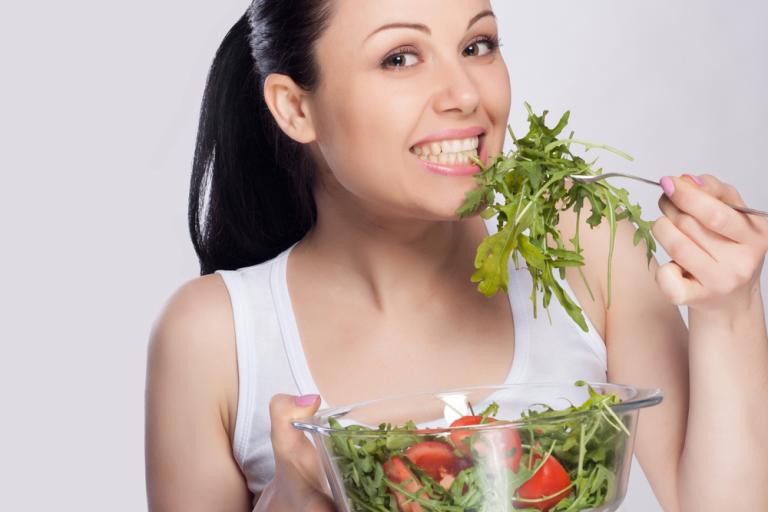
In a recent interview, “Domestic goddess” Nigella Lawson takes on what she refers to as the current cultural obsession with “clean eating.”
To put it bluntly, $10 cold-pressed green juices and quinoa bowls are a lifestyle choice — it doesn’t make you virtuous. “There is a way in which food is used either to self-congratulate — you’re a better person because you’re eating like that — or to self-persecute, because you will not allow yourself to eat the foods you want,” the 55-year-old British chef and author told the audience in London this week.
The Yahoo News article also interviews Nutritionist and National Eating Disorder Association spokeswoman Sondra Kronberg who say that she has noticed that eating disorders nowadays are about purity and morality. “Instead of going to church or synagogue, people are saying, ‘Treat your body like a temple,’” she explains. “Eating ‘purely’ has taken the place of spirituality.”
Eating disorder specialists refer to this trend as “orthorexia” –the disordered obsession with “eating right.”
I address orthorexia in my book Broken Gods: Hope, Healing and the Seven Longings of the Human Heart. Aquinas considered what we call “orthorexia” a form of gluttony he called, “studiose” or, basically, a preciousness about food. In Broken Gods, I argue that all forms of gluttony (both mindless overeating and orthorexia) are distortions of the Divine Longing for Well-Being. Well-being requires us to develop temperance and seek authentic balance in our lives between our physical, emotional, relational and spiritual selves, but all forms of gluttony toss this aside, and instead, tell us that we can achieve salvation/well-being/deliverance from all of our problems through eating (either by overindulging or by being precious about what we eat).
As with the other deadly sins and the divine longings they mask, we can only achieve healing by recognizing the godly intention behind the desire and finding grace-filled ways to meet the need that is driving it. Change is always challenging, but this approach is the more loving alternative the self-shaming and merciless recriminations we usually put ourselves through.
Dr. Stephen Bratman developed a 10-item questionnaire to help people determine whether they are falling into orthorexia. The following are his questions along with his explanation for why these issues point to a possible unhealthy relationship with “eating right.” A scores of 4+ points indicates the need to seek an evaluation for possible orthorexia.
1) Do you spend more than 3 hours a day thinking about food? (For four hours give yourself two points.)
The time measurement includes cooking, shopping, reading about your diet, discussing (or evangelizing) it with friends, and joining Internet chat groups on the subject. Three hours a day is too much time to think about healthy food. Life is meant for love, joy, passion, and accomplishment. Absorption with righteous food seldom produces any of these things.
2) Do you plan tomorrow’s food today?
Orthorexics tend to dwell on upcoming menus. “Today I will eat steamed broccoli, while tomorrow I will boil Swiss chard. The day after that I think I’ll make brown rice with adzuki beans.” If you get a thrill of pleasure from contemplating a healthy menu the day after tomorrow, something is wrong with your focus.
3) Do you care more about the virtue of what you eat than the pleasure you receive from eating it?
It’s one thing to love to eat, but for an orthrexic it isn’t the food itself; it’s the idea of the food. You can pump yourself up so giddily with pride that you don’t even taste it going down.
4) Have you found that as the quality of your diet has increased, the quality of your life has correspondingly diminished?
The problem with orthorexia is that healthy food doesn’t feed your soul. If you spend too much energy on what you put into your mouth, pretty soon the meaning will drain out of the rest of your life.
5) Do you keep getting stricter with yourself?
Like other addictions, orthorexia tends to escalate, demanding increasing vigilance as time passes. The diet of yesterday isn’t pure enough for tomorrow. Over time the rules governing healthy eating get more rigid. And if you are an orthrexic, you get a grim pleasure from this.
6) Do you sacrifice experiences you once enjoyed to eat the food you believe is right?
Because of it’s confused scale of values, orthorexia leads to a crazy allocation of interest. Have you fallen into this trap? Will you turn down an invitation to eat at a friend’s house because the food there isn’t healthy enough for you? Do you find that obsessive thoughts of healthy food occupy your mind while you watch your child perform in a play at school?
7) Do you feel an increased sense of self-esteem when you are eating healthy food? Do you look down on others who don’t?
One of the seductive aspects of orthorexia is that it allows one to feel superior to other people. After all, healthy eating is everywhere extolled. Orthorexia seems to be right up there with good work habits and a clean life. In this, orthorexia has an aspect that can make it harder to shake than other eating disorders: While anorexics and bulimics feel ashamed of their habits, orthorexics strut with pride. “Look at those degenerates,” the mind says of everyone else, “hopelessly addicted to junk.”
8) Do you feel guilt or self-loathing when you stray from your diet?
If you are an orthorexic, you feel guilt and shame when you eat foods that don’t fit the anointed diet. Your sense of self-esteem is so linked to what you eat that tasting a morsel of forbidden food feels like a sin. The only way to regain self-respect is to recommit yourself to ever-stricter eating, to despise yourself when you stray from the path of food righteousness.
There are times in life when it’s worthwhile being ashamed. When I’ve lost my temper at a child, betrayed a secret, insulted a friend behind his back, I’ve committed an actual error worthy of actual guilt. But eating pizza is fairly low on the scale of moral lapses. No one on her deathbed looks back and says, “I’m filled with regret that I ate too much ice cream and not enough kale.”
9) Does your diet socially isolate you?
Once you’ve reached a certain point, the rigidity demanded by orthorexia makes it truly difficult for you to eat anywhere but home. Most restaurants don’t serve the right foods, and even when they do, you won’t trust that it’s been prepared correctly. Even your friends inexplicably fail to cater to your personal preferences.
A common strategy is to bring your own food in separate containers and chew it slowly, looking virtuous and soulful while everyone else gulps down garbage. Or, like a solitary alcoholic, you can decline the invitation and dine in the loneliness and comfort of your own home.
10) When eating the way you are supposed to, do you feel a peaceful sense of total control?
Life is complicated, unpredictable, and often scary. It is not always possible to control your life, but you can control what you eat. A heavy-handed domination over what goes onto your fork or spoon can create the comfortable illusion that your life is no longer in danger of veering from the plan.
How’d you do? Remember a score of 4+ means that you may have an unhealthy relationship with “eating right.” To learn more about how to overcome our tendency to achieve salvation through food (either by mindlessly overeating or being overly correct about what and how we eat) check out Broken Gods: Hope, Healing, and the Seven Longings of the Human Heart or contact the Pastoral Solutions Institute to learn more about how you can work with a professional, Catholic counselor by telephone to achieve authentic balance in your life.
Previous Post

December 10, 2015
"Quit Being A Nag!" --Are You Harping? Or Just Seeking Respect.
Next Post

December 15, 2015 Pope Francis: Bring Your Babies to Church!
Browse Our Archives
Select a Category Anxiety atheism Attachment Church Conflict Resolution Counseling Depression faith Family forgiveness Gender Happiness Health Humor Marriage Mental Health Mental Illness Mindfulness morality More2Life Radio Parenting Personal Wellness Personality Disorder Popcak Psychology News reconciliation Relationship religion self-help Sexuality Spirituality stress theology of the body Uncategorized
Select a Month June 2020 May 2020 April 2020 March 2020 February 2020 January 2020 December 2019 November 2019 October 2019 September 2019 August 2019 July 2019 June 2019 May 2019 April 2019 March 2019 February 2019 January 2019 November 2018 October 2018 September 2018 August 2018 July 2018 June 2018 May 2018 April 2018 March 2018 February 2018 January 2018 November 2017 October 2017 September 2017 August 2017 June 2017 May 2017 April 2017 March 2017 February 2017 January 2017 December 2016 November 2016 October 2016 September 2016 August 2016 July 2016 June 2016 May 2016 April 2016 March 2016 February 2016 January 2016 December 2015 November 2015 October 2015 September 2015 August 2015 July 2015 June 2015 May 2015 April 2015 March 2015 February 2015 January 2015 December 2014 November 2014 October 2014 September 2014 August 2014 July 2014 June 2014 May 2014 April 2014 March 2014 February 2014 January 2014 December 2013 November 2013 October 2013 September 2013 August 2013 July 2013 June 2013 May 2013 April 2013 March 2013 February 2013
Follow Us!
TAKE THE
Religious Wisdom Quiz
What does the Black Horse in Revelations represent?
Select your answer to see how you score.
Famine Death War The End Times
Related posts from Faith on the Couch

Quarentine Blues: How Can Your Family Cope While...

Hurting/Angry Over Mass Suspensions? Finding Spiritual Consolation in...

Get a Grip—Mastering Your Emotional Life

Set Your Child Up For Success: The Relationship...
TRENDING AT PATHEOS Catholic

Creation, Preservation, and Teleology in Catholic Theology
As I write this, it is very early Monday morning. Like millions...

The Parable Of The Sower And The Word...
One of Christ’s most famous parables is that of the sower who...

Rejecting Doom: Christian Hope And Human Action
Christianity is a religion of hope. We are to have hope and...

Why I Choose the Eucharist Over the Sermon
Choose the Eucharist, Not the Sermon What are we supposed to get...

5 Design Elements Found in Spiritually Rooted Homes
Putting Spirituality Into Home Decor Our homes are more than our living...

Credo: A Story of God Told with the...
About 10 years ago, I began to imagine a personal "Credo" that...
view all Catholic blogs
Ad-Free & Subscriber Log-In Subscription Support
- About Us
- 2026 Calendar
- Videos
- Podcasts
- Library of World Religions
- Faith In Media Tracker
- Advertise With Us
- Write for Us
- Privacy Policy
- Terms of Service
- Do Not Sell My Data
- Contact Us
- Radiant Digital
- Manage Newsletter Subscriptions
- Unsubscribe From Notifications
- Sitemap
Copyright 2008-2026, Patheos. All rights reserved.
Subscription Support Ad-Free & Subscriber Log-In
Follow Patheos