
BuddhistCatholicContemplativeEvangelicalGeneral ChristianHinduJewishLatter-day SaintMuslimNew VisionsProgressive Christian
Beliefs
- Buddhist
- Catholic
- Contemplative
- Evangelical
- General Christian
- Hindu
- Jewish
- Latter-day Saint
- More Voices
- Muslim
- New Visions
- Pagan
- Progressive Christian
Topics
- Religion News
- Food and Religion
- Sports and Religion
- Religious Art
- Religious Music and Entertainment
- Religious Events
- History and Religion
- Style and Religion
- Politics and Religion
- Women in Religion
- Recreation Outdoors and Religion
- Business Finance and Religion
- Careers Workplace and Religion
- Education and Religion
- Family Parenting and Religion
- Health Fitness and Religion
- Home and Religion
- Relationships and Religion
- Technology and Religion
- Travel and Religion
Columnists
- Buddhist Columnists
- Business Finance and Religion Columnists
- Careers Workplace and Religion Columnists
- Catholic Columnists
- Contemplative Columnists
- Education and Religion Columnists
- Evangelists Columnists
- Family Parenting and Religion Columnists
- General Christian Columnists
- Health Fitness and Religion Columnists
- Hindu Columnists
- History and Religion Columnists
- Home and Religion Columnists
- Jewish Columnists
- More Voices Columnists
- Latter Day Columnists
- Muslim Columnists
- New Visions Columnists
- Nonreligious Columnists
- Pagan Columnists
- Politics and Religion Columnists
- Progressive Columnists
- Recreation Outdoors and Religion Columnists
- Relationships and Religion Columnists
- Religion News Columnists
- Religious Art Columnists
- Religious Events Columnists
- Religious Music and Entertainment Columnists
- Sports and Religion Columnists
- Style and Religion Columnists
- Technology and Religion Columnists
- Travel and Religion Columnists
- Women in Religion Columnists
Resource Library
- 2026 Calendar
- Library of World Religions
- The 100 Most Holy Places on Earth
- Patheos Answers
- Podcasts
- Videos
- Faith Leaders Database
- Anglican Episcopalian
- Bahai
- Baptist
- Buddhism
- Christianity
- Confucianism
- Eastern Orthodoxy
- Hinduism
- Holiness and Pentecostal
- ISKCON
- Islam
- Judaism
- Lutheran
- Methodist
- The Church of Jesus Christ of Latter-day Saints
- New Age
- Paganism
- Presbytarian and Reformed
- Protestantism
- Religion Behind the Scenes
- Roman Catholic
- Scientology
- Shia Islam
- Sikhism
- Sufism
- Sunni Islam
- Taoism
- Zen
- See all religions
Research Tools
 Ad-Free & Subscriber Log-In Subscription Support
Ad-Free & Subscriber Log-In Subscription Support
Follow Patheos 

- Trending:
- Forgiveness
- |
- Marriage
- |
- Consciousness
- |
- Death Penalty
- |
- Election
- |
- Halloween
 Faith on the Couch
- Home
- Catholic
- Healthy Marriage Habit #3: Emotional Regulation
Healthy Marriage Habit #3: Emotional Regulation
Last updated on: October 28, 2014 at 8:16 pm by Rachael Popcak and Dr. Gregory Popcak
Healthy Marriage Habit #3: Emotional Regulation 2014-10-28T20:16:53-05:00 Rachael Popcak and Dr. Gregory Popcak
Patheos Explore the world's faith through different perspectives on religion and spirituality! Patheos has the views of the prevalent religions and spiritualities of the world.
Each day, in celebration of the release of my latest book, When Divorce Is Not An Option: How to Heal Your Marriage and Nurture Lasting Love, I’ll look at one of the 8 habits that separates “marriage masters” from “marriage disasters.” Last week, I summarized all 8 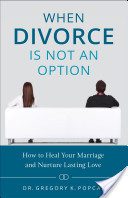 habits and we’ve looked at the first two habits in greater detail already. Today, I’ll describe the third habit, Emotional Regulation*.* After a brief explanation, you’ll have a chance to take a quiz that can help you evaluate how healthy this habit is in your marriage.
HealthyMarriage Habit #3 Good Self-Regulation: Why is this important?
Self-Regulation refers to a person’s capacity to stay calm, recognize that they are losing their cool before it’s too late, and regain their composure even under pressure. Your ability to negotiate conflict and tension in a marriage is directly dependent up on your ability to stay in the Solution-Friendly Brain State and avoid the Misery Making Mindset. As you saw earlier, when stress causes our emotional temperature to rise, we’re unable to problem-solve and we tend to react rather than respond. Psychologists refer to this process as “flooding” and it causes a person to be rigid and reactive under pressure (Seigel, 2013; Manes, 2013). But, if you can learn keep your Solution-Friendly Brain turned on, even in conflict, you can stay in control of the discussion even if your partner loses control of him or herself.
When I was still engaged to my wife, an elderly couple gave us a bit of advice that was as true then as it remains today, “Don’t ever go crazy at the same time!” If you have the ability to self-regulate, then you can keep discussions on track even if your spouse loses his or her cool. Developing this skill takes work, but its well worth it because it is what enables you to not have to feel afraid or overwhelmed no matter what problem you are facing or how emotional your spouse becomes.
Of course, beyond the psychological benefits we receive from practicing those habits that lead to self-regulation, Galatians 5:22-24 identifies self-control as one of the Fruits that gives evidence that the Holy Spirit is dwelling in your heart. Proverbs 25:28 reminds us that the person who lack the ability to regulate his or her emotions is like the city that is left defenseless and powerless in the presence of an invader.
Take the Quiz
T F 1. We are respectful in our disagreements.
T F 2. Our arguments result in solutions and concrete plans for improving things.
T F 3. Even when we’re disagreeing with each other, we are careful to avoid saying certain, particularly hurtful things.
T F 4. If we offend each other in an argument we are quick to apologize and forgive.
T F 5. If we offend each other in an argument we bounce back and get the conversation back on track quickly.
T F 6. We look for ways to encourage and support each other when we’re having tense discussions.
T F 7. Generally speaking, I wouldn’t agree with my spouse just to get him/her to shut up.
T F 8. Generally, when I get angry, I do not lash out or say things that I think may hurt my partner even when I feel they might deserve it.
T F 9. Generally, when I get angry, I do not shut down, refuse to speak, or walk away from the argument.
T F 10. When conversations heat up, I am able to facilitate respectful breaks that give us time to cool down and start the conversation in a better place at a later time.
Give yourself 1 point for each “T”
You scored ______ out of a possible 10 points.
A score of 8 or higher means that maintaining Good Self Regulation is a real strength in your relationship.
A score of 4-7 means that your marriage would significantly improve by giving greater attention to increasing your ability to exhibit Good Self-Regulation in the presence of disagreements and offenses.
A score of 3 or lower indicates that this is a critical area for improvement in your relationship.
How’d you do? Even if you feel like your marriage is, in general, in good shape, if you’d like to strengthen your ability to cultivate greater Self-Regulation in your marriage, check out When Divorce is Not An Option: How to Heal Your Marriage and Nurture Lasting Love. Or, for more personalized assistance, contact the Pastoral Solutions Institute (740-266-6461) to learn more about our Catholic-integrated tele-counseling practice for couples, families, and individuals. Let us help you experience all the love God has in store for you!
Previous Post

October 22, 2014
Want Faithful Kids? These 4 Secrets Will Make It Happen
Next Post

October 29, 2014 Time Magazine, "The Hell You Say?"
Browse Our Archives
Select a Category Anxiety atheism Attachment Church Conflict Resolution Counseling Depression faith Family forgiveness Gender Happiness Health Humor Marriage Mental Health Mental Illness Mindfulness morality More2Life Radio Parenting Personal Wellness Personality Disorder Popcak Psychology News reconciliation Relationship religion self-help Sexuality Spirituality stress theology of the body Uncategorized
Select a Month June 2020 May 2020 April 2020 March 2020 February 2020 January 2020 December 2019 November 2019 October 2019 September 2019 August 2019 July 2019 June 2019 May 2019 April 2019 March 2019 February 2019 January 2019 November 2018 October 2018 September 2018 August 2018 July 2018 June 2018 May 2018 April 2018 March 2018 February 2018 January 2018 November 2017 October 2017 September 2017 August 2017 June 2017 May 2017 April 2017 March 2017 February 2017 January 2017 December 2016 November 2016 October 2016 September 2016 August 2016 July 2016 June 2016 May 2016 April 2016 March 2016 February 2016 January 2016 December 2015 November 2015 October 2015 September 2015 August 2015 July 2015 June 2015 May 2015 April 2015 March 2015 February 2015 January 2015 December 2014 November 2014 October 2014 September 2014 August 2014 July 2014 June 2014 May 2014 April 2014 March 2014 February 2014 January 2014 December 2013 November 2013 October 2013 September 2013 August 2013 July 2013 June 2013 May 2013 April 2013 March 2013 February 2013
Follow Us!
TAKE THE
Religious Wisdom Quiz
Who saw a vision of a flying scroll with curses written on it?
Select your answer to see how you score.
Zechariah Micah Ezekiel Daniel
Related posts from Faith on the Couch

Set Your Child Up For Success: The Relationship...
Not a Gumball God - A Gospel Meditation...

Four Ways to Keep Your Relationship Afloat In...

Did Pope Francis Need To Apologize? (And What...
TRENDING AT PATHEOS Catholic

Creation, Preservation, and Teleology in Catholic Theology
As I write this, it is very early Monday morning. Like millions...

The Parable Of The Sower And The Word...
One of Christ’s most famous parables is that of the sower who...

Rejecting Doom: Christian Hope And Human Action
Christianity is a religion of hope. We are to have hope and...

Why I Choose the Eucharist Over the Sermon
Choose the Eucharist, Not the Sermon What are we supposed to get...

5 Design Elements Found in Spiritually Rooted Homes
Putting Spirituality Into Home Decor Our homes are more than our living...

Credo: A Story of God Told with the...
About 10 years ago, I began to imagine a personal "Credo" that...
view all Catholic blogs
Ad-Free & Subscriber Log-In Subscription Support
- About Us
- 2026 Calendar
- Videos
- Podcasts
- Library of World Religions
- Faith In Media Tracker
- Advertise With Us
- Write for Us
- Privacy Policy
- Terms of Service
- Do Not Sell My Data
- Contact Us
- Radiant Digital
- Manage Newsletter Subscriptions
- Unsubscribe From Notifications
- Sitemap
Copyright 2008-2026, Patheos. All rights reserved.
Subscription Support Ad-Free & Subscriber Log-In
Follow Patheos