
BuddhistCatholicContemplativeEvangelicalGeneral ChristianHinduJewishLatter-day SaintMuslimNew VisionsProgressive Christian
Beliefs
- Buddhist
- Catholic
- Contemplative
- Evangelical
- General Christian
- Hindu
- Jewish
- Latter-day Saint
- More Voices
- Muslim
- New Visions
- Pagan
- Progressive Christian
Topics
- Religion News
- Food and Religion
- Sports and Religion
- Religious Art
- Religious Music and Entertainment
- Religious Events
- History and Religion
- Style and Religion
- Politics and Religion
- Women in Religion
- Recreation Outdoors and Religion
- Business Finance and Religion
- Careers Workplace and Religion
- Education and Religion
- Family Parenting and Religion
- Health Fitness and Religion
- Home and Religion
- Relationships and Religion
- Technology and Religion
- Travel and Religion
Columnists
- Buddhist Columnists
- Business Finance and Religion Columnists
- Careers Workplace and Religion Columnists
- Catholic Columnists
- Contemplative Columnists
- Education and Religion Columnists
- Evangelists Columnists
- Family Parenting and Religion Columnists
- General Christian Columnists
- Health Fitness and Religion Columnists
- Hindu Columnists
- History and Religion Columnists
- Home and Religion Columnists
- Jewish Columnists
- More Voices Columnists
- Latter Day Columnists
- Muslim Columnists
- New Visions Columnists
- Nonreligious Columnists
- Pagan Columnists
- Politics and Religion Columnists
- Progressive Columnists
- Recreation Outdoors and Religion Columnists
- Relationships and Religion Columnists
- Religion News Columnists
- Religious Art Columnists
- Religious Events Columnists
- Religious Music and Entertainment Columnists
- Sports and Religion Columnists
- Style and Religion Columnists
- Technology and Religion Columnists
- Travel and Religion Columnists
- Women in Religion Columnists
Resource Library
- 2026 Calendar
- Library of World Religions
- The 100 Most Holy Places on Earth
- Patheos Answers
- Podcasts
- Videos
- Faith Leaders Database
- Anglican Episcopalian
- Bahai
- Baptist
- Buddhism
- Christianity
- Confucianism
- Eastern Orthodoxy
- Hinduism
- Holiness and Pentecostal
- ISKCON
- Islam
- Judaism
- Lutheran
- Methodist
- The Church of Jesus Christ of Latter-day Saints
- New Age
- Paganism
- Presbytarian and Reformed
- Protestantism
- Religion Behind the Scenes
- Roman Catholic
- Scientology
- Shia Islam
- Sikhism
- Sufism
- Sunni Islam
- Taoism
- Zen
- See all religions
Research Tools
 Ad-Free & Subscriber Log-In Subscription Support
Ad-Free & Subscriber Log-In Subscription Support
Follow Patheos 

- Trending:
- Forgiveness
- |
- Marriage
- |
- Consciousness
- |
- Death Penalty
- |
- Election
- |
- Halloween
 Faith on the Couch
- Home
- Catholic
- Healthy Marriage Habit #2: Emotional Rapport & Benevolence. Take the Quiz!
Healthy Marriage Habit #2: Emotional Rapport & Benevolence. Take the Quiz!
Last updated on: October 15, 2014 at 7:37 am by Rachael Popcak and Dr. Gregory Popcak
Healthy Marriage Habit #2: Emotional Rapport & Benevolence. Take the Quiz! 2014-10-15T07:37:44-05:00 Rachael Popcak and Dr. Gregory Popcak
Patheos Explore the world's faith through different perspectives on religion and spirituality! Patheos has the views of the prevalent religions and spiritualities of the world.
Each day, in celebration of the release of my latest book, When Divorce Is Not An Option: How to Heal Your Marriage and Nurture Lasting Love, I’ll look at one of the 8 habits that separates “marriage masters” from “marriage disasters.” Monday, I summarized all 8 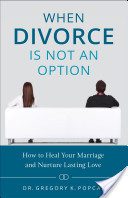 habits and yesterday we looked at Rituals of Connection. Today, I’ll describe the second habit, Cultivating Emotional Rapport & Benevolence*.* After a brief explanation, you’ll have a chance to take a quiz that can help you evaluate how healthy this habit is in your marriage.
Healthy Marriage Habit #2: Emotional Rapport and Benevolence:
Why Is This important?
Galatians 6:2 says “Bear one another’s burdens, and so fulfill the law of Christ.”
Happy couples do exactly this in good times and bad times. They look for ways to take care of each other and make each other’s lives a little easier or more pleasant, especially in times of stress and disagreement between them.
In the healthiest relationships, couples exhibit a 20:1 ratio of positive to negative interactions in the course of their everyday interactions and conversations (Gottman, 2011). That can seem overwhelming on the face of it|—|as if the only thing happy couples do is dance around in a state of blissful merrymaking, showering each other with presents and loving words. Relax. That’s not the case at all. “Positive interactions” include simple acts like smiling at your partner when you walk into the room, acknowledging each other’s presence and looking into each other’s eyes when you talk, and brief touches as you walk past each other, as well as giving meaningful compliments, thoughtful tokens of affection, and being intentionally affectionate with one another.
Sometimes, it can be hard to convince couples of the incredible power these simple actions have on the overall well-being of a marriage. On more than one occasion, I have had couples challenge me by saying, “I feel like we’re paying you a lot of money just for you to tell us to be nice to each other!” It may feel that way, but there is a great deal more going on than meets the eye. Studies such as the Gottman article I referenced earlier show that, when it comes to marital health, the devil (and for that matter, the angel) is in the details. Saving your marriage, for the most part, is not about big, dramatic gestures. It is about becoming more aware and sensitive and intentionally making more positive the ten thousand times you interact with your spouse each day and currently don’t give a second thought to.
Simple actions such as the ones I just listed do two things. First, they help your mate feel cared for and valued in the moment, which draws you closer to each other and makes you actually want to be together instead of feeling like you want to flee the room every time your spouse makes an appearance. Second, these simple practices make you more likely to give each other the benefit of the doubt when you accidentally step on each other’s toes. It’s hard to take offense and react defensively to each other when you see that you are looking out for each other, happy to see each other, and trying to take care of each other thirty-eight times out of forty. If you’re working to make all those little interactions just a little more positive, it’s easier to let those other two out of forty times slide when you step on each other’s toes. We’ll discuss ways to develop this habit in chapter 5, but you can begin today just by doing the kinds of things I just identified. (And it’s okay to fake it if you don’t feel it just yet. As long as your intention is to feel it someday, that’s good enough.) Don’t expect your spouse to respond right away. It might even take a few weeks before your mate notices that there’s something different in the way you’re approaching him or her. I promise, though, if you stick with it, it will begin to make a difference.
Healthy-Marriage Habit #2: Emotional Rapport and Benevolence Quiz.
How important is developing this skill to YOUR marriage?
Answer true (T) or false (F) for each question.
T F 1. My spouse and I look for little ways to make each other’s life easier or more pleasant each day.
T F 2. My spouse and I know and understand each other well.
T F 3. My spouse and I know and understand each other’s needs.
T F 4. My spouse and I are thoughtful and sensitive to each other’s likes and dislikes.
T F 5. My spouse and I share frequent, meaningful, nonsexual, physical affection.
T F 6. My spouse and I look for little ways to support and encourage each other each day.
T F 7. My spouse and I know how to encourage each other when we feel down.
T F 8. My spouse and I find comfort in each other’s arms when we’re stressed.
T F 9. My spouse and I turn to each other for comfort when we are upset or frustrated.
T F 10. My spouse and I try to be gentle and caring toward each other even when we are frustrated or stressed.
Give yourself 1 point for each T.
You scored ______ out of a possible 10 points.
A score of 8 or higher means that maintaining Emotional Rapport and Benevolence is a real strength in your relationship.
A score of 4 through 7 means that you could significantly improve your marriage by giving greater attention to increasing your experience of Emotional Rapport and Benevolence.
A score of 3 or lower indicates that this is a critical area for improvement in your relationship.
How’d you do? Even if you feel like your marriage is, in general, in good shape, if you’d like to strengthen your ability to cultivate Emotional Rapport and Benevolence in your marriage, check out When Divorce is Not An Option: How to Heal Your Marriage and Nurture Lasting Love. Or, for more personalized assistance, contact the Pastoral Solutions Institute (740-266-6461) to learn more about our Catholic-integrated tele-counseling practice for couples, families, and individuals. Let us help you experience all the love God has in store for you!
Previous Post

October 14, 2014
The Extraordinary Synod on the Family--Processing the Explosion
Next Post
October 22, 2014 Want Faithful Kids? These 4 Secrets Will Make It Happen
Browse Our Archives
Select a Category Anxiety atheism Attachment Church Conflict Resolution Counseling Depression faith Family forgiveness Gender Happiness Health Humor Marriage Mental Health Mental Illness Mindfulness morality More2Life Radio Parenting Personal Wellness Personality Disorder Popcak Psychology News reconciliation Relationship religion self-help Sexuality Spirituality stress theology of the body Uncategorized
Select a Month June 2020 May 2020 April 2020 March 2020 February 2020 January 2020 December 2019 November 2019 October 2019 September 2019 August 2019 July 2019 June 2019 May 2019 April 2019 March 2019 February 2019 January 2019 November 2018 October 2018 September 2018 August 2018 July 2018 June 2018 May 2018 April 2018 March 2018 February 2018 January 2018 November 2017 October 2017 September 2017 August 2017 June 2017 May 2017 April 2017 March 2017 February 2017 January 2017 December 2016 November 2016 October 2016 September 2016 August 2016 July 2016 June 2016 May 2016 April 2016 March 2016 February 2016 January 2016 December 2015 November 2015 October 2015 September 2015 August 2015 July 2015 June 2015 May 2015 April 2015 March 2015 February 2015 January 2015 December 2014 November 2014 October 2014 September 2014 August 2014 July 2014 June 2014 May 2014 April 2014 March 2014 February 2014 January 2014 December 2013 November 2013 October 2013 September 2013 August 2013 July 2013 June 2013 May 2013 April 2013 March 2013 February 2013
Follow Us!
TAKE THE
Religious Wisdom Quiz
What city was Job from?
Select your answer to see how you score.
Uz Edom Shiloh Susa
Related posts from Faith on the Couch

Set Your Child Up For Success: The Relationship...

Not a Gumball God - A Gospel Meditation...

Four Ways to Keep Your Relationship Afloat In...

Did Pope Francis Need To Apologize? (And What...
TRENDING AT PATHEOS Catholic

Rejecting Doom: Christian Hope And Human Action
Christianity is a religion of hope. We are to have hope and...

It’s What Comes From Within Which Matters
One of the most difficult things for us to understand is why...

Why I Choose the Eucharist Over the Sermon
Choose the Eucharist, Not the Sermon What are we supposed to get...

5 Design Elements Found in Spiritually Rooted Homes
Putting Spirituality Into Home Decor Our homes are more than our living...

Credo: A Story of God Told with the...
About 10 years ago, I began to imagine a personal "Credo" that...

The Anatomy of Divine Revelation in Catholic Thought
The claim that God has made Himself known to human beings is...
view all Catholic blogs
Ad-Free & Subscriber Log-In Subscription Support
- About Us
- 2026 Calendar
- Videos
- Podcasts
- Library of World Religions
- Faith In Media Tracker
- Advertise With Us
- Write for Us
- Privacy Policy
- Terms of Service
- Do Not Sell My Data
- Contact Us
- Radiant Digital
- Manage Newsletter Subscriptions
- Unsubscribe From Notifications
- Sitemap
Copyright 2008-2026, Patheos. All rights reserved.
Subscription Support Ad-Free & Subscriber Log-In
Follow Patheos