
BuddhistCatholicContemplativeEvangelicalGeneral ChristianHinduJewishLatter-day SaintMuslimNew VisionsProgressive Christian
Beliefs
- Buddhist
- Catholic
- Contemplative
- Evangelical
- General Christian
- Hindu
- Jewish
- Latter-day Saint
- More Voices
- Muslim
- New Visions
- Pagan
- Progressive Christian
Topics
- Religion News
- Food and Religion
- Sports and Religion
- Religious Art
- Religious Music and Entertainment
- Religious Events
- History and Religion
- Style and Religion
- Politics and Religion
- Women in Religion
- Recreation Outdoors and Religion
- Business Finance and Religion
- Careers Workplace and Religion
- Education and Religion
- Family Parenting and Religion
- Health Fitness and Religion
- Home and Religion
- Relationships and Religion
- Technology and Religion
- Travel and Religion
Columnists
- Buddhist Columnists
- Business Finance and Religion Columnists
- Careers Workplace and Religion Columnists
- Catholic Columnists
- Contemplative Columnists
- Education and Religion Columnists
- Evangelists Columnists
- Family Parenting and Religion Columnists
- General Christian Columnists
- Health Fitness and Religion Columnists
- Hindu Columnists
- History and Religion Columnists
- Home and Religion Columnists
- Jewish Columnists
- More Voices Columnists
- Latter Day Columnists
- Muslim Columnists
- New Visions Columnists
- Nonreligious Columnists
- Pagan Columnists
- Politics and Religion Columnists
- Progressive Columnists
- Recreation Outdoors and Religion Columnists
- Relationships and Religion Columnists
- Religion News Columnists
- Religious Art Columnists
- Religious Events Columnists
- Religious Music and Entertainment Columnists
- Sports and Religion Columnists
- Style and Religion Columnists
- Technology and Religion Columnists
- Travel and Religion Columnists
- Women in Religion Columnists
Resource Library
- 2026 Calendar
- Library of World Religions
- The 100 Most Holy Places on Earth
- Patheos Answers
- Podcasts
- Videos
- Faith Leaders Database
- Anglican Episcopalian
- Bahai
- Baptist
- Buddhism
- Christianity
- Confucianism
- Eastern Orthodoxy
- Hinduism
- Holiness and Pentecostal
- ISKCON
- Islam
- Judaism
- Lutheran
- Methodist
- The Church of Jesus Christ of Latter-day Saints
- New Age
- Paganism
- Presbytarian and Reformed
- Protestantism
- Religion Behind the Scenes
- Roman Catholic
- Scientology
- Shia Islam
- Sikhism
- Sufism
- Sunni Islam
- Taoism
- Zen
- See all religions
Research Tools
 Ad-Free & Subscriber Log-In Subscription Support
Ad-Free & Subscriber Log-In Subscription Support
Follow Patheos 

- Trending:
- Forgiveness
- |
- Marriage
- |
- Consciousness
- |
- Death Penalty
- |
- Election
- |
- Halloween
 Faith on the Couch
- Home
- Catholic
- How Do We Respond to Moral Failures?
How Do We Respond to Moral Failures?
Last updated on: February 20, 2013 at 1:57 pm by Rachael Popcak and Dr. Gregory Popcak
How Do We Respond to Moral Failures? 2013-02-20T13:57:39-06:00 Rachael Popcak and Dr. Gregory Popcak
Patheos Explore the world's faith through different perspectives on religion and spirituality! Patheos has the views of the prevalent religions and spiritualities of the world.
 Over on the Patheos Atheist Channel, Dan Fincke of Forward Thinking asks an interesting question….
How and when (if ever) should we take it upon ourselves to punish someone in our lives for a moral failure? How does this vary depending on various possible relationships we might have to the the morally guilty party? Consider, for example, how or whether we might punish our friends, our partners, our parents, our colleagues, strangers we encounter, etc. What sorts of values and principles should guide us when we presume to take it upon ourselves to be moral enforcers?
For the traditional Christian (as opposed to the po-mo Christian, for example) the answer is love. We have absolutely no right to “punish” people for moral failings (c.f., Matt 5:7; 7:1). “Punish” comes from the Latin root, “punire” meaning, “to inflict pain.” It is simply not our place to inflict more pain on a guilty person than they are already experiencing in their guilt.
That said, we do have a right, and even an obligation rooted in love (defined as the commitment to work for the good of others) and justice (defined as the virtue that ensure that each person receives what is rightfully theirs), to hold people accountable to themselves (if their moral failing hurts them) and/or to us (if their moral failing has damaged us or our relationship.
But holding someone accountable–in the classical Christian context–simply means seeing that the person is committed to healing the damage caused by their actions and, ideally, giving them the skills to not make the same mistake again. This is the heart of the principle of “restorative justice” which has deep roots in Catholic Social teaching and forms the basis of the Christian response to both personal and social failings. But what does all this look like in practice in your life and relationships?
The old Ignatian practice of “charitable interpretation” can be helpful here. Rooted in the idea of loving the sinner bur hating the sin, Charitable interpretation doesn’t mean making excuses for bad behavior. Traditionally, it means attempting to interpret another person’s behavior in the most reasonably generous way possible, while still being willing to address any issues/problems that stem from the behavior.
One way to apply the principle of Charitable Interpretation is to assume that every behavior, even the obnoxious, irritating, frustrating, sinful, and destructive behaviors, represent someone’s flawed attempt to meet an otherwise positive intention or need. If I can work with someone to figure out what they were trying to do, and give them more efficient, more respectful ways to meet that intention or need, the bad behavior should go away. It isn’t always quite that easy, but even in more complicated situations, the process is fairly straightforward. Generally speaking if you help someone find a more efficient, less offensive, way of meeting their needs, they are more than willing to take it.
For instance, if a dad tends to yell at his kids, often it’s because he doesn’t have a better way to get them to behave. If someone can help that dad find a more effective way to parent that doesn’t involve yelling, he can stop yelling. Or, if a friend indulges in some offensive habit, it’s usually to meet some need (cope with stress, bid for help or attention, etc.) If I can help my friend identify the need and help him find a more efficient, less offensive way to meet the need, the obnoxious habit should stop.
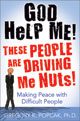
Again, it’s rare that things are ever this straightforward and I talk about how to apply these principles at some length in my book, God Help Me, These People Are Driving Me Nuts! Making Peace with Difficult People. But the bottom line is that the Christian can do a lot more good by helping an offender find more efficient and godly ways to meet the needs that underlie moral failings than we can by inflicting pain on the offender. It’s all part of the way we cooperate with God’s grace as we seek to create a healthy peace between us and others. A peace that is grounded in justice and love.
Previous Post

February 20, 2013
When Your Sister is Also Your Wife... (aka Humanae Vitae was Right.)
Next Post
February 20, 2013 40 Days to a Better Marriage Tip--Wed 2/20
Browse Our Archives
Select a Category Anxiety atheism Attachment Church Conflict Resolution Counseling Depression faith Family forgiveness Gender Happiness Health Humor Marriage Mental Health Mental Illness Mindfulness morality More2Life Radio Parenting Personal Wellness Personality Disorder Popcak Psychology News reconciliation Relationship religion self-help Sexuality Spirituality stress theology of the body Uncategorized
Select a Month June 2020 May 2020 April 2020 March 2020 February 2020 January 2020 December 2019 November 2019 October 2019 September 2019 August 2019 July 2019 June 2019 May 2019 April 2019 March 2019 February 2019 January 2019 November 2018 October 2018 September 2018 August 2018 July 2018 June 2018 May 2018 April 2018 March 2018 February 2018 January 2018 November 2017 October 2017 September 2017 August 2017 June 2017 May 2017 April 2017 March 2017 February 2017 January 2017 December 2016 November 2016 October 2016 September 2016 August 2016 July 2016 June 2016 May 2016 April 2016 March 2016 February 2016 January 2016 December 2015 November 2015 October 2015 September 2015 August 2015 July 2015 June 2015 May 2015 April 2015 March 2015 February 2015 January 2015 December 2014 November 2014 October 2014 September 2014 August 2014 July 2014 June 2014 May 2014 April 2014 March 2014 February 2014 January 2014 December 2013 November 2013 October 2013 September 2013 August 2013 July 2013 June 2013 May 2013 April 2013 March 2013 February 2013
Follow Us!
TAKE THE
Religious Wisdom Quiz
Who said: "Let us be glad and rejoice and give Him glory, for the marriage of the Lamb has come"?
Select your answer to see how you score.
Jesus An angel A voice from heaven (or the multitude) John
Related posts from Faith on the Couch

Parents, Is Sheltering In Place Burning You Out?...

Nailed It! Do I Have to Be "Crafty"...

Quarentine Blues: How Can Your Family Cope While...

Hurting/Angry Over Mass Suspensions? Finding Spiritual Consolation in...
TRENDING AT PATHEOS Catholic

Rejecting Doom: Christian Hope And Human Action
Christianity is a religion of hope. We are to have hope and...

It’s What Comes From Within Which Matters
One of the most difficult things for us to understand is why...

Why I Choose the Eucharist Over the Sermon
Choose the Eucharist, Not the Sermon What are we supposed to get...

5 Design Elements Found in Spiritually Rooted Homes
Putting Spirituality Into Home Decor Our homes are more than our living...

Credo: A Story of God Told with the...
About 10 years ago, I began to imagine a personal "Credo" that...

The Anatomy of Divine Revelation in Catholic Thought
The claim that God has made Himself known to human beings is...
view all Catholic blogs
Ad-Free & Subscriber Log-In Subscription Support
- About Us
- 2026 Calendar
- Videos
- Podcasts
- Library of World Religions
- Faith In Media Tracker
- Advertise With Us
- Write for Us
- Privacy Policy
- Terms of Service
- Do Not Sell My Data
- Contact Us
- Radiant Digital
- Manage Newsletter Subscriptions
- Unsubscribe From Notifications
- Sitemap
Copyright 2008-2026, Patheos. All rights reserved.
Subscription Support Ad-Free & Subscriber Log-In
Follow Patheos