
BuddhistCatholicContemplativeEvangelicalGeneral ChristianHinduJewishLatter-day SaintMuslimNew VisionsProgressive Christian
Beliefs
- Buddhist
- Catholic
- Contemplative
- Evangelical
- General Christian
- Hindu
- Jewish
- Latter-day Saint
- More Voices
- Muslim
- New Visions
- Pagan
- Progressive Christian
Topics
- Religion News
- Food and Religion
- Sports and Religion
- Religious Art
- Religious Music and Entertainment
- Religious Events
- History and Religion
- Style and Religion
- Politics and Religion
- Women in Religion
- Recreation Outdoors and Religion
- Business Finance and Religion
- Careers Workplace and Religion
- Education and Religion
- Family Parenting and Religion
- Health Fitness and Religion
- Home and Religion
- Relationships and Religion
- Technology and Religion
- Travel and Religion
Columnists
- Buddhist Columnists
- Business Finance and Religion Columnists
- Careers Workplace and Religion Columnists
- Catholic Columnists
- Contemplative Columnists
- Education and Religion Columnists
- Evangelists Columnists
- Family Parenting and Religion Columnists
- General Christian Columnists
- Health Fitness and Religion Columnists
- Hindu Columnists
- History and Religion Columnists
- Home and Religion Columnists
- Jewish Columnists
- More Voices Columnists
- Latter Day Columnists
- Muslim Columnists
- New Visions Columnists
- Nonreligious Columnists
- Pagan Columnists
- Politics and Religion Columnists
- Progressive Columnists
- Recreation Outdoors and Religion Columnists
- Relationships and Religion Columnists
- Religion News Columnists
- Religious Art Columnists
- Religious Events Columnists
- Religious Music and Entertainment Columnists
- Sports and Religion Columnists
- Style and Religion Columnists
- Technology and Religion Columnists
- Travel and Religion Columnists
- Women in Religion Columnists
Resource Library
- 2026 Calendar
- Library of World Religions
- The 100 Most Holy Places on Earth
- Patheos Answers
- Podcasts
- Videos
- Faith Leaders Database
- Anglican Episcopalian
- Bahai
- Baptist
- Buddhism
- Christianity
- Confucianism
- Eastern Orthodoxy
- Hinduism
- Holiness and Pentecostal
- ISKCON
- Islam
- Judaism
- Lutheran
- Methodist
- The Church of Jesus Christ of Latter-day Saints
- New Age
- Paganism
- Presbytarian and Reformed
- Protestantism
- Religion Behind the Scenes
- Roman Catholic
- Scientology
- Shia Islam
- Sikhism
- Sufism
- Sunni Islam
- Taoism
- Zen
- See all religions
Research Tools
 Ad-Free & Subscriber Log-In Subscription Support
Ad-Free & Subscriber Log-In Subscription Support
Follow Patheos 

- Trending:
- Forgiveness
- |
- Marriage
- |
- Consciousness
- |
- Death Penalty
- |
- Election
- |
- Halloween
 Faith in Public Life: Rev. Jen Butler
- Home
- Progressive Christian
- Politics and Religion
- Jeffress & Graham: Talk of Violence Breeds Violence
Jeffress & Graham: Talk of Violence Breeds Violence
Last updated on: October 7, 2019 at 4:23 pm by Rev. Jen Butler
Jeffress & Graham: Talk of Violence Breeds Violence 2019-10-07T16:23:54-04:00 Rev. Jen Butler
Patheos Explore the world's faith through different perspectives on religion and spirituality! Patheos has the views of the prevalent religions and spiritualities of the world.
The Book of Proverbs is replete with warnings about the dangerous power of speech: “Death and life are in the power of the tongue, and those who love it will eat its fruits” (18:21 NRSV)
While a quick glance at the president’s twitter account shows that such warnings don’t sway him, I would hope they would shape the words of pastors in his orbit. Sadly, such is not always the case.
 Speaking on FOX News last weekend, Rev. Robert Jeffress recklessly and hyperbolically predicted “a Civil War-like fracture in this nation from which this country will never heal” if President Trump were removed from office via impeachment. The president swiftly tweeted this claim to his 65 million followers. Trump didn’t have to threaten violence in his own voice — the pastor did it for him. Franklin Graham, a staunch support of the president, responded more subtly, tweeting “Dr. @RobertJeffress warned on @FoxNews that impeachment could ‘cause a civil war-like fracture in this nation from which this country will never heal.’ I don’t know about that, but I can tell you this could lead to conflict that nobody wants if they continue down this road.”
This rhetoric isn’t just divisive, it’s dangerous in a world where social media spreads our messages further and faster than ever before.
In partnership with Over Zero, Faith in Public Life has trained clergy from all over the country in recognizing and countering speech that increases the risk of violence. Working with interfaith groups on the local level, we explore how the road from stability to ethnically and religiously targeted violence is paved an inch at a time with language, and examine what faith communities can do about it.
When looking at the rhetoric that has preceded large-scale violence committed on the basis of identity — from Nazi Germany to Rwanda to white supremacist violence in the U.S. — clear patterns emerge that divide an “us” from a “them” and pit the groups in a zero-sum conflict for survival. According to Oxford University political scientist Jonathan Leader Maynard, the targeted “them” group is portrayed as subhuman, collectively guilty of crimes against “us,” and a threat to “our” survival. And in subtler ways, cultural narratives portray violence by the “us” group as virtuous, necessary for survival, and a step toward a brighter future.
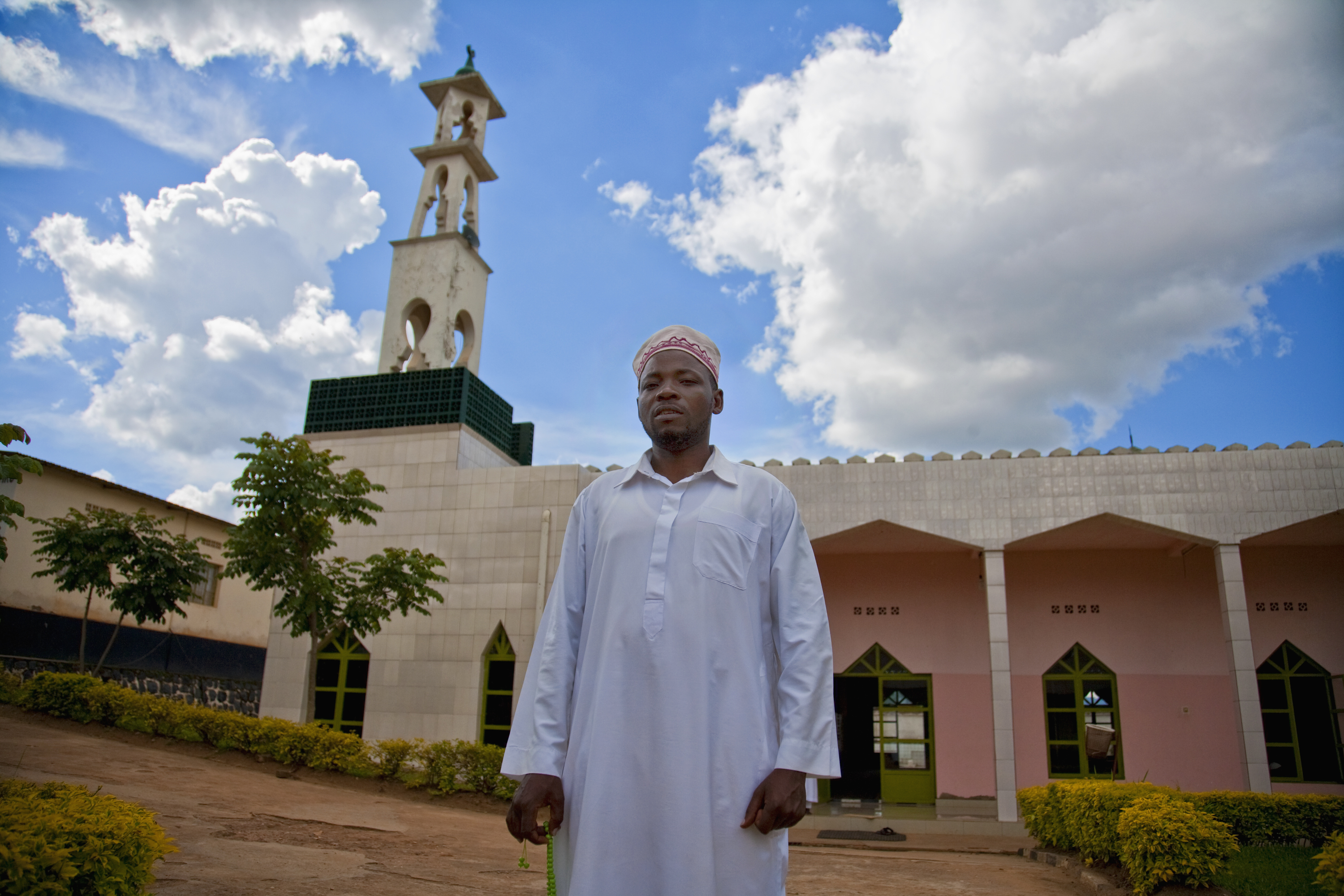 But faith leaders can be guardians of peace. For instance, Rwandan Muslims resisted the genocide. In the months before the atrocities, imams recognized the increasingly dangerous language in their communities, and spent Ramadan of 1994 telling their congregations that part of being a good Muslim was resisting the temptation to take part in violence. Mosques then concealed Tutsis from militias, and Muslim leaders helped Tutsis flee the country under cover of night at the peak of the slaughter.
While President Trump’s white evangelical support has decreased significantly since he took office, he still had 73% approval rating among them in a July NPR/PBS/Marist poll thanks in part to stalwart support from the likes of Jeffress and Graham. The president is desperate to hold onto evangelical support, and is using apocalyptic rhetoric to do so. In addition to echoing Jeffress’s claim about civil war, he is already falsely calling impeachment a coup. And his extensive history of dangerous language against Latinos, Muslims, immigrants and refugees helped inspire massacres at a Walmart in El Paso and the Tree of Life synagogue in Pittsburgh.
As dangerous rhetoric escalates, we need religious leaders — in particular white evangelical pastors — to defend the humanity of those whom Trump attacks. Some members of the Evangelical Immigration Table have done this admirably. Conservative evangelicals must also set a norm that being a patriotic member of their community means respecting constitutionally mandated political processes and resisting the temptation to resort to violence when we disagree with the outcome of those processes.
Jeffress and Graham are threatening democracy and insulting Christianity by not being clear that members of their communities should remain peaceful. Instead, they have helped weaken the social norm against political violence by portraying it as within the realm of possibility while not condemning it.
My prayer is that all who bear the awesome responsibility that rests in the pulpit remember not only Proverbs’ warnings about reckless speech, but also its words about the benefits of virtuous language: “Rash words are like sword thrusts, but the tongue of the wise brings healing” (12:18 NRSV).
[To learn more about what faith communities can do to counteract the language that increases the risk of violence, check out Over Zero’s web site and the Holocaust Memorial Museum’s resources on the topic.]
Previous Post

September 24, 2019
Congress: What kind of nation do you wish us to be?
Next Post

November 14, 2019 On reparations by my alma mater
Browse Our Archives
Select a Category Uncategorized
Select a Month August 2021 July 2021 March 2021 January 2021 September 2020 July 2020 June 2020 May 2020 April 2020 March 2020 February 2020 January 2020 November 2019 October 2019 September 2019 August 2019 July 2019 June 2019 May 2019 March 2019 February 2019 January 2019 November 2018 October 2018 September 2018 August 2018 July 2018
Follow Us!
TAKE THE
Religious Wisdom Quiz
Commanded to go to Nineveh, I fled in the opposite direction on a ship to Tarshish. Who am I?
Select your answer to see how you score.
Elijah Hosea Jonah Jeremiah
Related posts from Faith in Public Life: Rev. Jen Butler

The Quest for Rest: Sabbath as Resistance
Faith in Public Life: Rev. Jen Butler

CRT: Telling the Truth about American History
Faith in Public Life: Rev. Jen Butler

Congress Must Deliver a Holy Recovery
Faith in Public Life: Rev. Jen Butler

Christian Nationalism and the Struggle for LGBTQ Equality:...
Faith in Public Life: Rev. Jen Butler
TRENDING AT PATHEOS Progressive Christian

Why Christians Have a Sacred Duty to Vote:...
The Bible offers strong support for the sacred duty to vote. Here...

What Being a Modern-Day Apostle Means to Me
In my last column, I discussed the ins and outs of modern-day...

Did Ancient China Once Worship the God of...
Across human history, a common thread weaves through the origins of the...

Love Your Neighbor – Including Earth-Kin: Lev. 19,...
God’s command to love your neighbor means acting in an ethical and...

Lead a Church Study of “Jesus and Lao...
Guest writer Jack Thomas (The Irreverent Reverend) reflects on leading his church...

Principles for Understanding the Apostolic Ministry Today
Whenever people discover that my formal ministry title is "apostle," as in...
view all Progressive Christian blogs
Ad-Free & Subscriber Log-In Subscription Support
- About Us
- 2026 Calendar
- Videos
- Podcasts
- Library of World Religions
- Faith In Media Tracker
- Advertise With Us
- Write for Us
- Privacy Policy
- Terms of Service
- Do Not Sell My Data
- Contact Us
- Radiant Digital
- Manage Newsletter Subscriptions
- Unsubscribe From Notifications
- Sitemap
Copyright 2008-2026, Patheos. All rights reserved.
Subscription Support Ad-Free & Subscriber Log-In
Follow Patheos