
BuddhistCatholicContemplativeEvangelicalGeneral ChristianHinduJewishLatter-day SaintMuslimNew VisionsProgressive Christian
Beliefs
- Buddhist
- Catholic
- Contemplative
- Evangelical
- General Christian
- Hindu
- Jewish
- Latter-day Saint
- More Voices
- Muslim
- New Visions
- Pagan
- Progressive Christian
Topics
- Religion News
- Food and Religion
- Sports and Religion
- Religious Art
- Religious Music and Entertainment
- Religious Events
- History and Religion
- Style and Religion
- Politics and Religion
- Women in Religion
- Recreation Outdoors and Religion
- Business Finance and Religion
- Careers Workplace and Religion
- Education and Religion
- Family Parenting and Religion
- Health Fitness and Religion
- Home and Religion
- Relationships and Religion
- Technology and Religion
- Travel and Religion
Columnists
- Buddhist Columnists
- Business Finance and Religion Columnists
- Careers Workplace and Religion Columnists
- Catholic Columnists
- Contemplative Columnists
- Education and Religion Columnists
- Evangelists Columnists
- Family Parenting and Religion Columnists
- General Christian Columnists
- Health Fitness and Religion Columnists
- Hindu Columnists
- History and Religion Columnists
- Home and Religion Columnists
- Jewish Columnists
- More Voices Columnists
- Latter Day Columnists
- Muslim Columnists
- New Visions Columnists
- Nonreligious Columnists
- Pagan Columnists
- Politics and Religion Columnists
- Progressive Columnists
- Recreation Outdoors and Religion Columnists
- Relationships and Religion Columnists
- Religion News Columnists
- Religious Art Columnists
- Religious Events Columnists
- Religious Music and Entertainment Columnists
- Sports and Religion Columnists
- Style and Religion Columnists
- Technology and Religion Columnists
- Travel and Religion Columnists
- Women in Religion Columnists
Resource Library
- 2026 Calendar
- Library of World Religions
- The 100 Most Holy Places on Earth
- Patheos Answers
- Podcasts
- Videos
- Faith Leaders Database
- Anglican Episcopalian
- Bahai
- Baptist
- Buddhism
- Christianity
- Confucianism
- Eastern Orthodoxy
- Hinduism
- Holiness and Pentecostal
- ISKCON
- Islam
- Judaism
- Lutheran
- Methodist
- The Church of Jesus Christ of Latter-day Saints
- New Age
- Paganism
- Presbytarian and Reformed
- Protestantism
- Religion Behind the Scenes
- Roman Catholic
- Scientology
- Shia Islam
- Sikhism
- Sufism
- Sunni Islam
- Taoism
- Zen
- See all religions
Research Tools
 Ad-Free & Subscriber Log-In Subscription Support
Ad-Free & Subscriber Log-In Subscription Support
Follow Patheos 

- Trending:
- Forgiveness
- |
- Marriage
- |
- Consciousness
- |
- Death Penalty
- |
- Election
- |
- Halloween
 Faithful Peacemaking
- Home
- Progressive Christian
- The Urgency of Faithful Peacemaking: Five Guiding Principles
The Urgency of Faithful Peacemaking: Five Guiding Principles
Last updated on: June 6, 2022 at 11:10 am by Lindsey Paris-Lopez
The Urgency of Faithful Peacemaking: Five Guiding Principles 2022-06-06T11:10:01-05:00 Lindsey Paris-Lopez
Patheos Explore the world's faith through different perspectives on religion and spirituality! Patheos has the views of the prevalent religions and spiritualities of the world.

The Urgency of Now
The world desperately needs faithful peacemakers.
As I begin this blog, called to seek and speak the truth in hope and love, I feel the hunger of the moment, the “fierce urgency of now,” as Martin Luther King put it.
The world is on fire. A global pandemic continues to devastate. Wars rage throughout the earth, shattering lives, destroying land, and leaving people impoverished, homeless, and bereaved. And here in the United States, the powers of greed and cruelty hold us in their merciless grasp. The mass shootings in Buffalo, Uvalde, and Tulsa are the latest surges in a raging, bottomless sea of violence.
And I worry that my small voice won’t make a difference.
The Call of the Spirit
I have to push through my doubt, letting the Spirit animate the hope within me until it breaks through the barriers of insecurity. I remind myself that I am not alone; we are not alone. The broken hearts of the whole world are crying out for change, and Love hears us, amplifies our cries, and invigorates us into action.
Even when hope seems dim, the Spirit pushes us to listen and act. We may call it the Holy Spirit or the Human Spirit. However we understand it, it’s the urgency of the moment, the impulse of Love that moves within and among us. It’s the breath of life that empowers and emboldens us. It’s a desire for justice and healing so strong that it breaks through the walls of lies that seek to entrap us, the lies of nihilism and resignation that tell us nothing can be done. Something must be done, so something will be done.
That’s the faith I mean when I say “faithful peacemaking.” It’s the courage to trust ourselves and each other to be instruments of Love’s peace. Whatever our perspectives and beliefs may be, as long as we hear the cries of our aching world, we are called to the same mission of healing. Love calls us all to a common purpose of transforming this world from a cauldron of conflict to a community of compassion. Faithful peacemaking responds to that call.
My Five Guiding Principles for Faithful Peacemaking
So I want to make this blog a space for dialogue and discernment, where Love can guide our thoughts, words, and actions so that we may bring more compassion, empathy, and hope into the world. With that in mind, here are my five guiding principles for faithful peacemaking. I invite you to share yours too.
1. God is Love. I believe that Love is the ultimate power at the heart of everything. We are all made in the image of Love. And in the end, Love will prevail. Ultimate power comes from connection, not superiority; from vulnerability, not invincibility. Because God is Love, God’s concern is not whether or not we adhere to a particular religion, but whether or not we act in love. Anyone who makes love their guiding principle honors Love.
2. Faithfulness is commitment to justice. I put faith in Jesus as the ultimate embodiment of Love. I seek to follow him in compassion and nonviolence to build a world that meets the needs and affirms the dignity of all. But others who share this commitment come to it by way of different paths. I want to work with all who trust that the struggle for restorative justice is worthwhile, even when trust in outcomes seems impossible. That commitment is what I call faithfulness. It’s why I believe in partnerships between people of all religions and no religion at all when it comes to healing our aching world.
3. We must recognize and reject the human tendency to deify violence. In a nation saturated with guns, with a larger military budget than those of the next nine nations combined, more faith is invested in weapons and warfare than in the potential of people to come to know and serve each other. We tend to find ultimate power in violence.
Scripture attests to humanity’s mistaken deification of violence when it attributes death, destruction and despair to God’s wrath. But on the cross, Jesus shows God’s solidarity with the outcast and the condemned. Death is what God suffers, not what God commands, when we kill each other through weapons or apathy, through hate or fear. Whether you see scripture as story or history, there is transformative power in interpreting it through a peacemaking lens.
Violent interpretations of scripture give ammunition and a veil of righteous justification to violence. A peacemaking lens on scripture — revealing violence’s human, not divine, origin and emphasizing God’s desire for mercy, not sacrifice — can help reverse the weaponization of Christianity and the brutal culture militant Christianity feeds. Interpreting scripture through an anti-violent lens is crucial to my approach to peacemaking.
4. “Thoughts and Prayers” go hand in hand with “Policy and Change.” “Thoughts and prayers” alone is blasphemy when used to delay or derail policy and change. But thoughtfulness is an integral part of change, and prayer at its best is listening to and acting upon the transformative spirit of love.
Everything must change. We must wean ourselves from our addiction to weapons and war. We must transform enmity into empathy, rivalry into relationship. Basic needs for food, shelter, and healthcare going unmet must be satisfied. Conflict must be transformed into compassion. All of it must start with the hope that many find in prayer and the dialogue that comes from thinking, listening and speaking “in good faith” with each other.
Faith is not a substitute for change, but a catalyst for it. Faithful peacemaking is about deepening understanding and cultivating compassion in order to build relationship and trust that makes working together possible. When we start with the understanding that we are interconnected and our well-being comes from working with rather than against each other, progress becomes possible.
5. “All will be well.” (Julian of Norwich) This principle is a leap of faith for me. Often it’s harder to believe than doubt. But when I take a deep breath and repeat this mantra, hope to persevere seeps in.
Mother Julian’s words remind me that Love will redeem us all. This promise helps me to visualize the Beloved Community that faithful peacemaking seeks to build. It takes the labor of Love that comes through all of us. It’s not an invitation to leave the work in divine hands, but a call to recognize that our hands are divine when they do Love’s work. When everything looks bleak, this promise saves me from demoralization and despair. I hope it comforts and invigorates you, too.
Becoming Beloved Community Together
My principles for faithful peacemaking may not be the same as yours. But if you feel the impulse of Love stirring within you to meet the urgency of now with courage and compassion, then I want to be in dialogue and partnership with you. Through Love, we can build and become the Beloved Community together. So let’s get busy; there’s so much to do!
Image: “Peace Sign” by Candace Seplow on Unsplash
Previous Post

July 13, 2023
Heaven Is Within Us: Wrestling With Doubt on the Death of a Loved One
Next Post
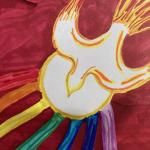
June 11, 2022 Pride and Pentecost
Browse Our Archives
Select a Category Biblical Interpretation Church Holiday Lectionary Peacemaking Pride Uncategorized
Select a Month July 2023 June 2023 February 2023 January 2023 December 2022 November 2022 October 2022 September 2022 July 2022 June 2022
TAKE THE
Religious Wisdom Quiz
What question did Jesus ask Saul on the road to Damascus?
Select your answer to see how you score.
Why do you hate me? Saul, Saul, why do you persecute me? Do you not know who I am? Why do you persecute my followers?
Related posts from Faithful Peacemaking

Heaven Is Within Us: Wrestling With Doubt on...

Following the Call of the Spirit: Resurrecting Faith...

Saying Yes to the Spirit: A Meditation on...

Advent Hope: Awakening to the Divine in a...
TRENDING AT PATHEOS Progressive Christian

Why Christians Have a Sacred Duty to Vote:...
The Bible offers strong support for the sacred duty to vote. Here...

What Being a Modern-Day Apostle Means to Me
In my last column, I discussed the ins and outs of modern-day...

Did Ancient China Once Worship the God of...
Across human history, a common thread weaves through the origins of the...

Love Your Neighbor – Including Earth-Kin: Lev. 19,...
God’s command to love your neighbor means acting in an ethical and...

Lead a Church Study of “Jesus and Lao...
Guest writer Jack Thomas (The Irreverent Reverend) reflects on leading his church...

Principles for Understanding the Apostolic Ministry Today
Whenever people discover that my formal ministry title is "apostle," as in...
view all Progressive Christian blogs
Ad-Free & Subscriber Log-In Subscription Support
- About Us
- 2026 Calendar
- Videos
- Podcasts
- Library of World Religions
- Faith In Media Tracker
- Advertise With Us
- Write for Us
- Privacy Policy
- Terms of Service
- Do Not Sell My Data
- Contact Us
- Radiant Digital
- Manage Newsletter Subscriptions
- Unsubscribe From Notifications
- Sitemap
Copyright 2008-2026, Patheos. All rights reserved.
Subscription Support Ad-Free & Subscriber Log-In
Follow Patheos