
BuddhistCatholicContemplativeEvangelicalGeneral ChristianHinduJewishLatter-day SaintMuslimNew VisionsProgressive Christian
Beliefs
- Buddhist
- Catholic
- Contemplative
- Evangelical
- General Christian
- Hindu
- Jewish
- Latter-day Saint
- More Voices
- Muslim
- New Visions
- Pagan
- Progressive Christian
Topics
- Religion News
- Food and Religion
- Sports and Religion
- Religious Art
- Religious Music and Entertainment
- Religious Events
- History and Religion
- Style and Religion
- Politics and Religion
- Women in Religion
- Recreation Outdoors and Religion
- Business Finance and Religion
- Careers Workplace and Religion
- Education and Religion
- Family Parenting and Religion
- Health Fitness and Religion
- Home and Religion
- Relationships and Religion
- Technology and Religion
- Travel and Religion
Columnists
- Buddhist Columnists
- Business Finance and Religion Columnists
- Careers Workplace and Religion Columnists
- Catholic Columnists
- Contemplative Columnists
- Education and Religion Columnists
- Evangelists Columnists
- Family Parenting and Religion Columnists
- General Christian Columnists
- Health Fitness and Religion Columnists
- Hindu Columnists
- History and Religion Columnists
- Home and Religion Columnists
- Jewish Columnists
- More Voices Columnists
- Latter Day Columnists
- Muslim Columnists
- New Visions Columnists
- Nonreligious Columnists
- Pagan Columnists
- Politics and Religion Columnists
- Progressive Columnists
- Recreation Outdoors and Religion Columnists
- Relationships and Religion Columnists
- Religion News Columnists
- Religious Art Columnists
- Religious Events Columnists
- Religious Music and Entertainment Columnists
- Sports and Religion Columnists
- Style and Religion Columnists
- Technology and Religion Columnists
- Travel and Religion Columnists
- Women in Religion Columnists
Resource Library
- 2026 Calendar
- Library of World Religions
- The 100 Most Holy Places on Earth
- Patheos Answers
- Podcasts
- Videos
- Faith Leaders Database
- Anglican Episcopalian
- Bahai
- Baptist
- Buddhism
- Christianity
- Confucianism
- Eastern Orthodoxy
- Hinduism
- Holiness and Pentecostal
- ISKCON
- Islam
- Judaism
- Lutheran
- Methodist
- The Church of Jesus Christ of Latter-day Saints
- New Age
- Paganism
- Presbytarian and Reformed
- Protestantism
- Religion Behind the Scenes
- Roman Catholic
- Scientology
- Shia Islam
- Sikhism
- Sufism
- Sunni Islam
- Taoism
- Zen
- See all religions
Research Tools
 Ad-Free & Subscriber Log-In Subscription Support
Ad-Free & Subscriber Log-In Subscription Support
Follow Patheos 

- Trending:
- Forgiveness
- |
- Marriage
- |
- Consciousness
- |
- Death Penalty
- |
- Election
- |
- Halloween
 Faithful Democrats
- Home
- Politics and Religion
- A Better Politics: Modeling Civility, Embracing Difference
A Better Politics: Modeling Civility, Embracing Difference
Last updated on: January 26, 2015 at 12:35 pm by Guest Contributor
A Better Politics: Modeling Civility, Embracing Difference 2015-01-26T12:35:38-07:00 Guest Contributor
Patheos Explore the world's faith through different perspectives on religion and spirituality! Patheos has the views of the prevalent religions and spiritualities of the world.
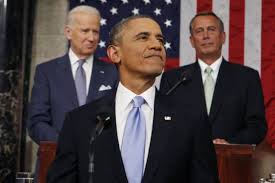 Toward the end of President Obama’s sixth State of the Union address last week unexpected applause prompted the President to improvise. After declaring “I have no more campaigns to run,” much to the delight of some Members of Congress, the President grinned, and reminded the audience why: “I know, because I won both of them.” I smiled as my Facebook and Twitter feeds immediately erupted with praise for the President’s quick wit. The Huffington Post labeled it as the “best moment” of the speech.
I admit, the President’s retort made me grin. I was excited to see President Obama in his element, advancing his vision for the remainder of his presidency. Already bolstered by a steadily improving economy, President Obama declared in no uncertain terms how he plans on making the economic recovery complete. Parents need paid sick leave. Women deserve the same compensation as their male counterparts. Community college should be free for eligible students. Veterans must have increased access to educational and job opportunities. The President seemed genuinely excited for the future, convinced our country can improve despite the challenges we face.
Yet, all of the attention on misplaced applause and the President’s comeback obscures the context from which the “I have no more campaigns to run” comment emerged. Referencing his keynote speech at the 2004 Democratic National Convention in Boston, one that catapulted him into the national political scene, President Obama reiterated his vision for an America marked by civility. The President stated:
“A better politics isn’t one where Democrats abandon their agenda or Republicans simply embrace mine. A better politics is one where we appeal to each other’s basic decency instead of our basest fears. A better politics is one where we debate without demonizing each other; where we talk issues, and values, and principles, and facts, rather than “gotcha” moments, or trivial gaffes, or fake controversies that have nothing to do with people’s daily lives.”
The President’s call for civility is not limited to those in positions of political power. As our country gears up for another Presidential election season, we are all bound to engage in conversation with those who do not share our exact political or religious beliefs. What struck me most about the President’s remarks is his insistence that civil, political discourse doesn’t try to obscure difference. In interacting with those who think differently about various issues, our goal is not to either convert the person to our way of thinking or focus solely on what we agree upon.
Progressive people of faith needn’t shy away from democratic principles. We must remain committed to expanding economic opportunities for lower and middle class individuals. We must ensure women have access to reproductive health care. We must work for compassionate and comprehensive immigration reform. We must stand by those who are targeted because of the color of their skin, or their gender expression and sexual orientation.
Standing firmly by our convictions does not necessitate partisan bickering or name calling. In our effort to secure a bright and equal future for the larger society, we must recognize the humanity even in those with whom we passionately disagree. We must take the time to listen closely to our political “enemy” without the sole desire to change their minds. When we are quick to listen and slow to speak, we gain a much better understanding of what causes a person to hold a particular viewpoint. I am still able to hold to my political and religious beliefs without assuming I have all the answers or there is no truth in opposing opinions.
When we do this we can find creative solutions to the problems facing our communities, country, and world. I’m not suggesting we give credence to every position or allow for civil dialogue to become grounds for virulent hate speech. Some ideas are dangerous and some speech, especially if it incites violence, is unacceptable.
My faith in God, though, compels me to make space at the table for those who think very differently than I do. I am reminded the struggle for justice and equality is not about me or my vision for the world. It is about working across religious, political, and cultural lines to help create a better society at large.
I’m not politically neutral, after all I did enjoy the moment when the President quickly halted the cheers of his Republican colleagues. But my own particularity won’t prohibit me from trying to model civility and humility in conversations with those who think differently. This stance is often construed as naïve or overly optimistic; however, I am not presuming these conversations will be easy, or that change will happen quickly. We may still roll our eyes when an opponent voices their concerns. Our political arena may still be rife with partisan bickering and gridlock. But maybe, if we stick to our principles while remaining in relationships with those who think differently, the generations that follow will find ways to break down barriers and work for true progress.
Kyle Cristofalo received his Master of Divinity from Emory University where he concentrated in Justice, Peacebuilding, and Conflict Transformation. Kyle most recently served as a fellow at the Presbyterian Church (U.S.A.) Office of Public Witness in Washington, D.C., working primarily on issues relating to Israel/Palestine, as well as immigration.
Previous Post

December 31, 2014
A New Year’s Hope: End the Death Penalty
Next Post
February 2, 2015 Rethinking Civic Engagement in a Culture of Quid Pro Quo
Browse Our Archives
Select a Category About Us About Us Action Center Advertise Ask a Theologian Ask a Theologian Blogs Books Campaign Blog Candidate Spotlights Commentary Donate Facebook Featured Writers Fellows Fellows From the Pulpit General Information Hillary Clinton Interfaith Blog Latest Media Center Media Center Media Center MyBlog MyBlog News Newsflash Newsflashes Our Team Reader Blogs RSS Sermon of the Week Shop Social Networking Static Items Support Talking Points Test blogs The Basics Theology Uncategorized YouTube
Select a Month November 2020 October 2020 February 2020 August 2019 July 2018 July 2017 March 2017 February 2017 August 2016 July 2016 June 2016 December 2015 November 2015 October 2015 September 2015 August 2015 July 2015 June 2015 May 2015 April 2015 March 2015 February 2015 January 2015 December 2014 November 2014 October 2014 September 2014 August 2014 July 2014 June 2014 May 2014 April 2014 March 2014 February 2014 January 2014 June 2013 April 2013 March 2013 February 2013 January 2013 December 2012 November 2012 October 2012 September 2012 August 2012 July 2012 June 2012 May 2012 April 2012 March 2012 April 2009 March 2009 February 2009 January 2009 December 2008 November 2008 October 2008 September 2008 August 2008 July 2008 June 2008 May 2008 April 2008 March 2008 February 2008 January 2008 December 2007 November 2007 October 2007 September 2007 August 2007 July 2007 June 2007 May 2007 April 2007 March 2007 February 2007 January 2007 December 2006 November 2006 October 2006 September 2006 August 2006 July 2006 January 2006 August 2004
Follow Us!
TAKE THE
Religious Wisdom Quiz
What does James say we should be quick to do and slow to do?
Select your answer to see how you score.
Quick to obey, slow to question Quick to pray, slow to doubt Quick to listen, slow to speak and slow to become angry Quick to forgive, slow to judge
Related posts from Faithful Democrats

King, Isaiah, and the Politics of Now

Stone Soup for the Soul: An Intern’s Lesson...

TRENDING AT PATHEOS Politics and Religion


Gas Prices: What Would Jesus Pay?
Many of my conservative Christian friends have been having a field day...

Jesus Was a Social Deviant: A Brief History...
Americans like to say that this country was founded on the...

On Max Lucado Preaching At Washington National Cathedral
There has been a bit of controversy over the past week about...

Digital Deception: How We Ended Up Here And...
The American experiment has reached its moment of reckoning, and we seem...

“The evangelical vote is more diverse than you...
Rev. Jim Ball, EFB Co-Chair, is one of the voices featured in...
view all Politics and Religion blogs
Ad-Free & Subscriber Log-In Subscription Support
- About Us
- 2026 Calendar
- Videos
- Podcasts
- Library of World Religions
- Faith In Media Tracker
- Advertise With Us
- Write for Us
- Privacy Policy
- Terms of Service
- Do Not Sell My Data
- Contact Us
- Radiant Digital
- Manage Newsletter Subscriptions
- Unsubscribe From Notifications
- Sitemap
Copyright 2008-2026, Patheos. All rights reserved.
Subscription Support Ad-Free & Subscriber Log-In
Follow Patheos